
In the Mood of Albert Edelfelt
This week, I present you a Finnish artist Albert Edelfelt and talk about my upcoming exhibition.
This month, Albert Edelfeltin säätiö – Albert Edelfelt’s foundation contacted me. They invited me to participate in a group exhibition in their villa starting in August. I went to sign the contract this week.
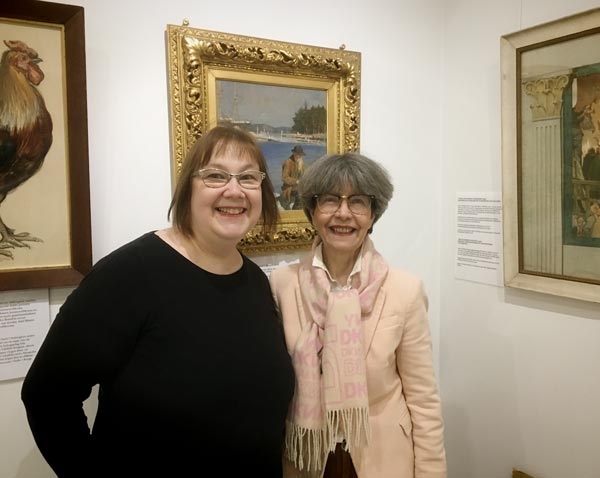
This is very happy news! If you have read my blog for some time, you know I love art history. Even if I follow contemporary art actively, old paintings inspire me more. Many of the techniques that I use for my paintings are old, even if the expression is abstract or half-abstract. So, one of my secret dreams has been to display my paintings with historical ones.
Albert Edelfelt
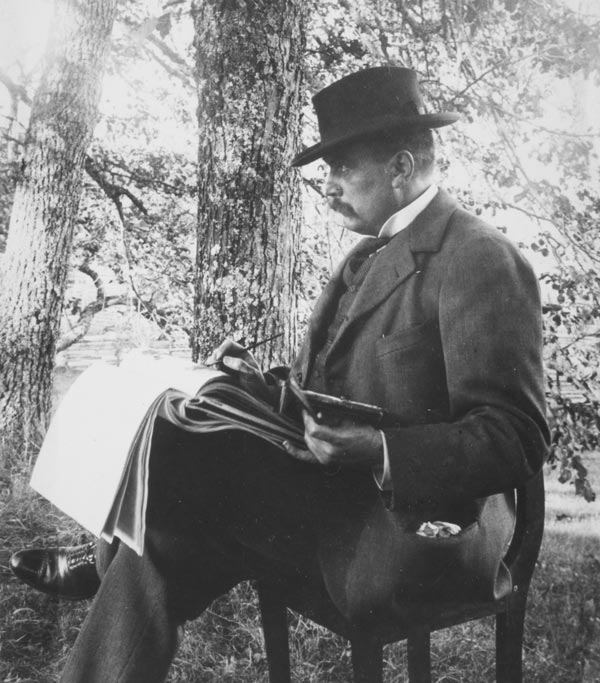
Albert Edelfelt (1854 – 1905) was one of the most famous Finnish painters. He painted portraits and landscapes and, in my opinion, was exceptionally skillful in sceneries that had a group of people. He also made illustrations, studied and worked in Paris, and lived in Haikko, Finland, where his foundation is also located.
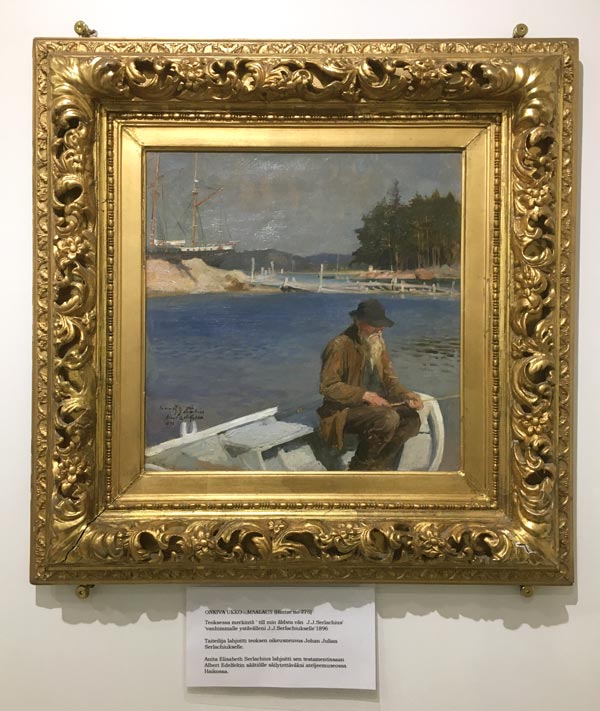
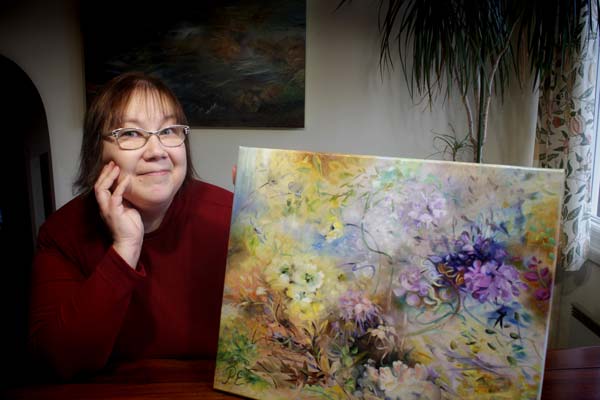
Here’s a better picture of the painting “Onkiva ukko” – a guy fishing – that you can see in the background of the first photo, taken in Villa Albert of Albert Edelfelt’s foundation.
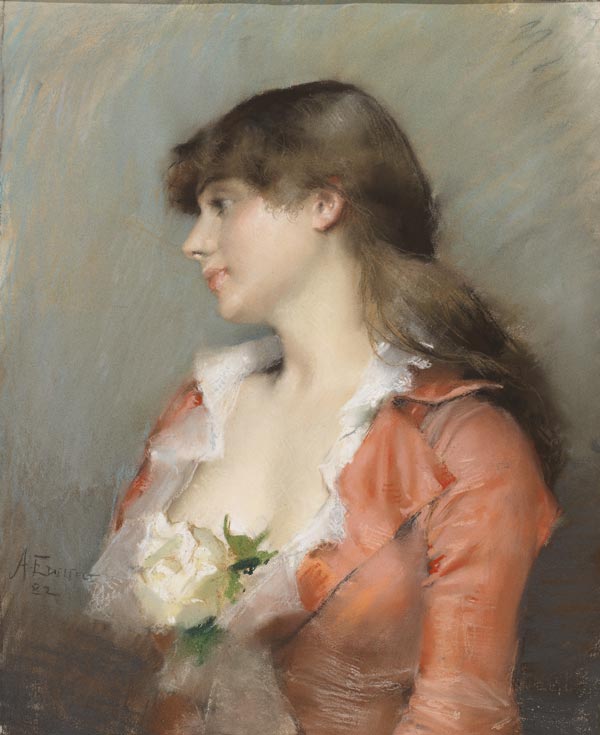
One of Albert Edelfelts most famous paintings, especially in France, is the portrait of Louis Pasteur. And many of his female portraits are so romantic, look at this one, for example!
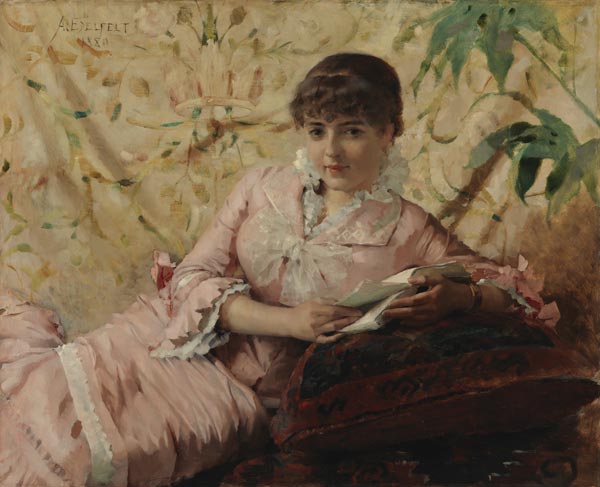
And look how careless the strokes are here, still expressing the essential so skillfully!
But Albert Edelfelt didn’t only paint young beauties. See this one:
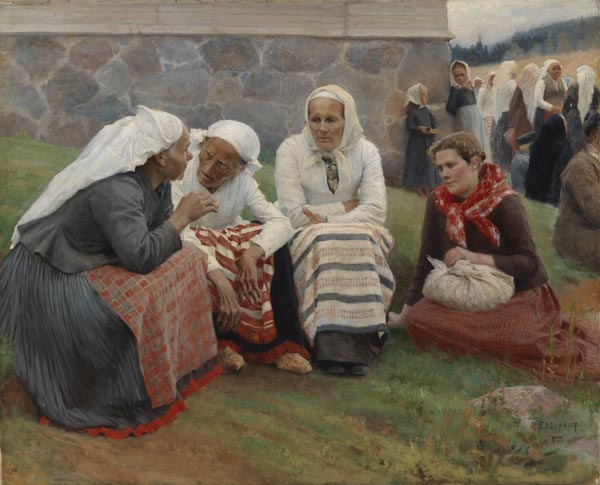
Browse more here: a big collection of Albert Edelfelt’s paintings
Last year, there was Albert Edelfelt’s big exhibition in France, and it’s now in Göteborg, Sweden, then later in May in Finland.
Villa Albert and The Haikko Area
Edelfelt’s studio is still up. It’s a small wooden cottage and a popular sight. Villa Albert is a new building in the same courtyard. It has a gallery space and a gift shop.
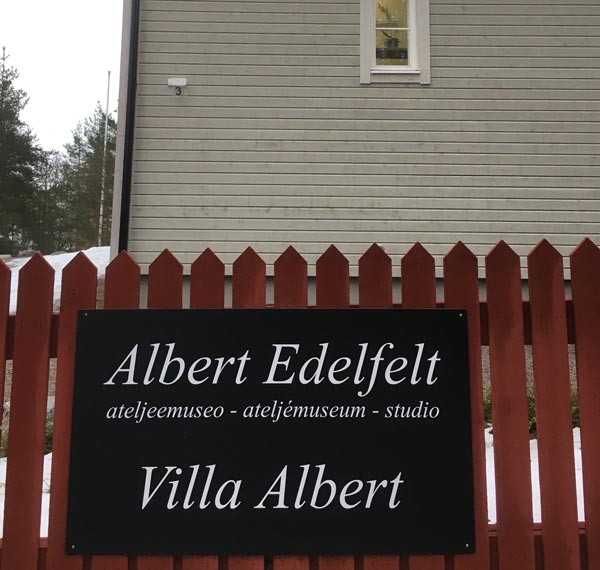
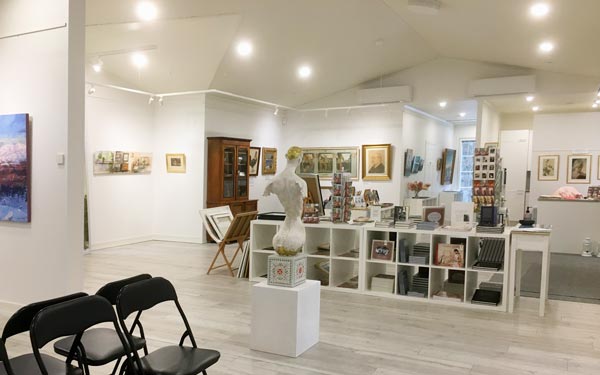
The Haikko area is beautiful. The sea is right there, and a beautiful manor hotel, Haikon kartano, is only a walk away.
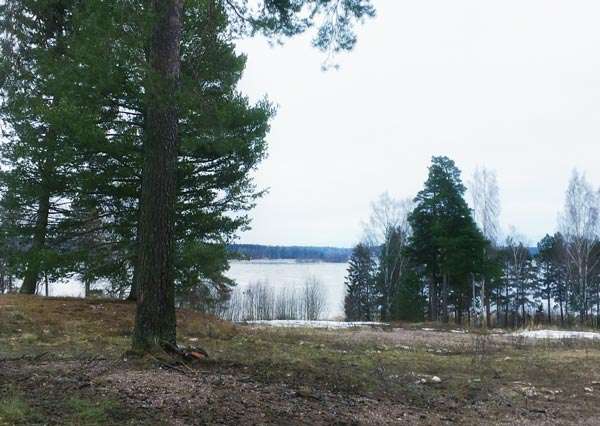
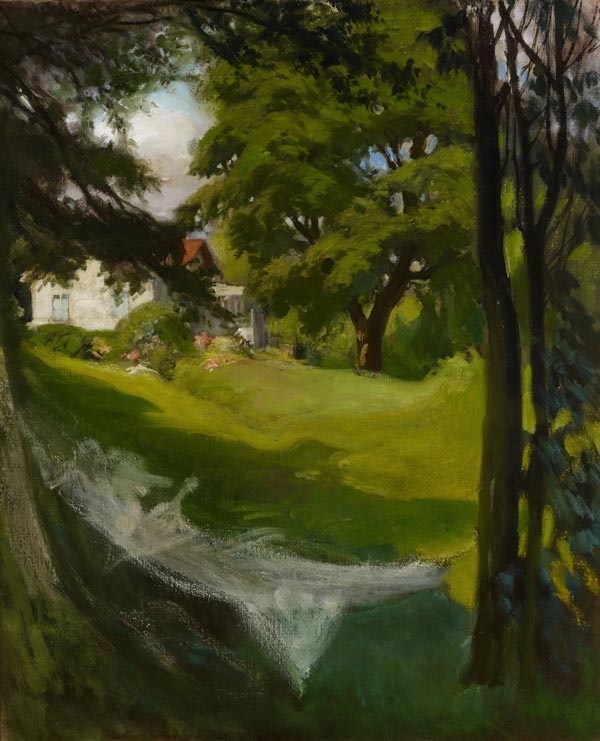
This area is very different in summer, much more welcoming than in the picture that I took this week. Here’s Albert Edelfelt’s painting of his villa in Haikko, currently privately owned but still up and located near the studio.
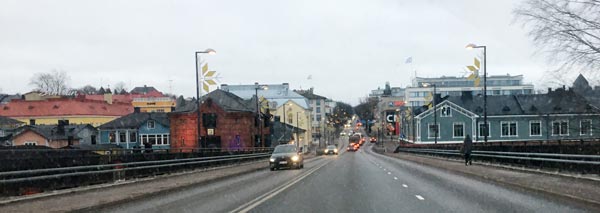
It takes only 15 minutes to drive to an atmospheric old town Porvoo, which is also a very popular tourist attraction.
Artists in the Mood of Edelfelt
I will be painting a new series for the exhibition called “Taiteilijat Edelfeltin tunnelmissa” – Artists in the mood of Edelfelt. Even if Albert Edelfelt was a portrait painter, my intention is not to paint portraits but plants. I am excited to pick inspiration from his work, though!
The exhibition will have four other artists too: another painter Kristina Elo, photographers Maarit Lehto and Niclas Warius, and a sculptor, Kaj Lindgård. I am very happy to be displayed with these wonderful artists.
Aug 8 to Oct 10, Taiteilijat Edelfeltin tunnelmissa (Artists in the Mood of Edelfelt), Villa Albert, Haikkoo, Porvoo.
Coming Up in This Blog
This spring, you will see me painting for the exhibition, and I will also share some details of Albert Edelfelt’s life. Between those, I will be posting more playful posts – drawings and journal pages – so, as usual, art history, my oil paintings, and more illustrative work will alternate in this blog. I hope you find all this very inspiring.
Dolls and Angels – Video Blog Post
This week, I have a video blog post for you! I talk about dolls and angels – winter, the new class Doll World and Christmas memories, among other things!
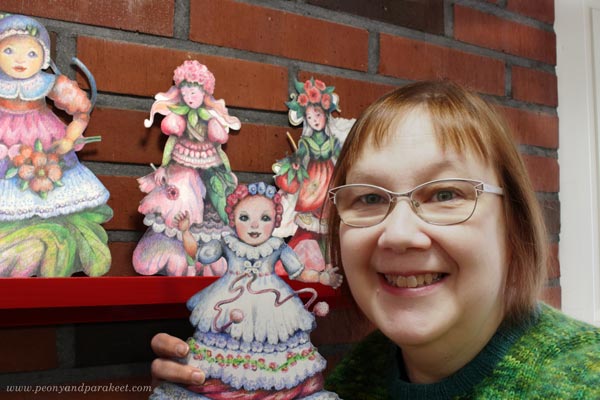
You will also see my table at the recent sales event. I hope you enjoy the video!
Dolls and Angels – Watch the Video!
Links to Related Blog Posts
- The previous video blog post
- Instructions for drawing a winter angel
- Preparing for the sales event
- The half-body figure: Creating a Protector of Good
- The painting: Winter Night’s Poem
- About painting a series: Inspired by Nature
Related Online Classes
- Doll World – Sign up here!
- Make a chapter for your colored pencil journal: Fun Botanicum
- The evolution from drawing to coloring and then to painting: 1) Inspirational Drawing, 2) Intuitive Coloring, 3) Floral Freedom
Inspired by Nature – Finishing a Series of Paintings
This week, I celebrate a big finish – the series of ten nature-inspired oil paintings that I started in July!
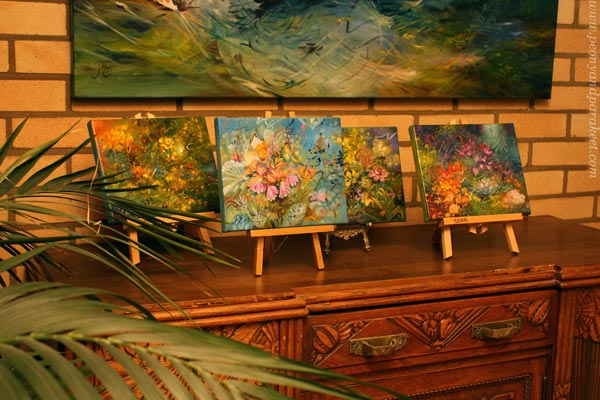
The series has four small, four medium-sized, and two big paintings. All of them are some kind of floral landscapes.
Small Paintings + Video!
I worked from big to small. I like to start the series boldly and then pick ideas from them for smaller pieces. This is the last painting – Rapunzel of the Garden:
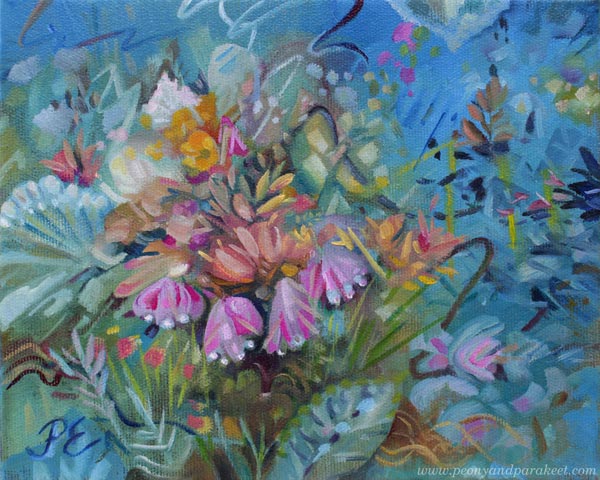
Because of the small size, this painting required very thin brushes and a lot of precision. Here’s a 1-minute video where you can see me painting it:
These are the rest of the small paintings:
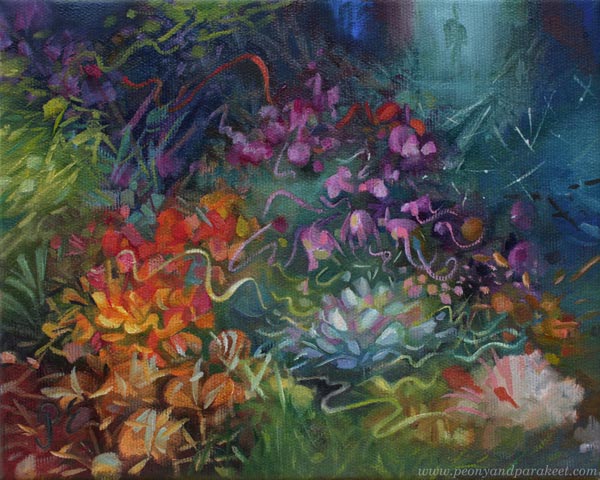
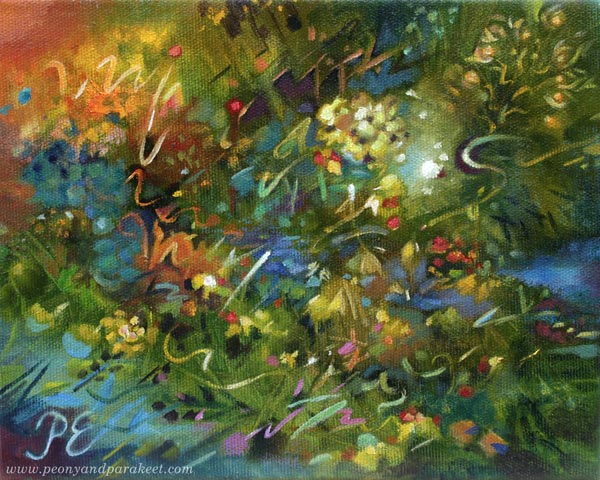
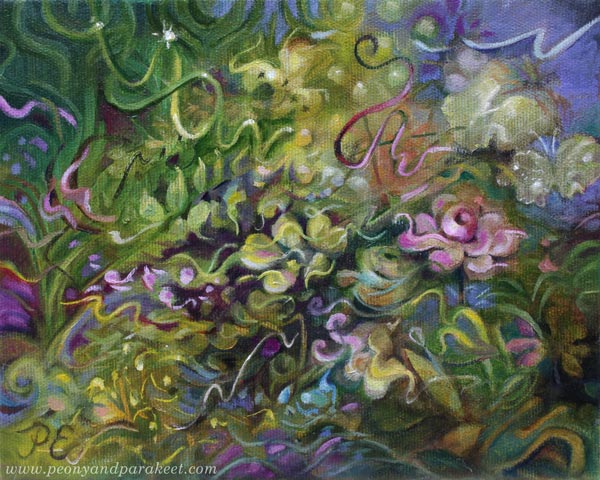
I like the idea of having a secret tiny treasure, so I try to make the small paintings look like that.
Medium-Sized Paintings
The medium-sized paintings are in two parts: two are smaller, and two are bigger. I like to paint “sisters” – so two paintings in a row or at the same time so that they complement each other. It’s an easy way to create variation in the series.
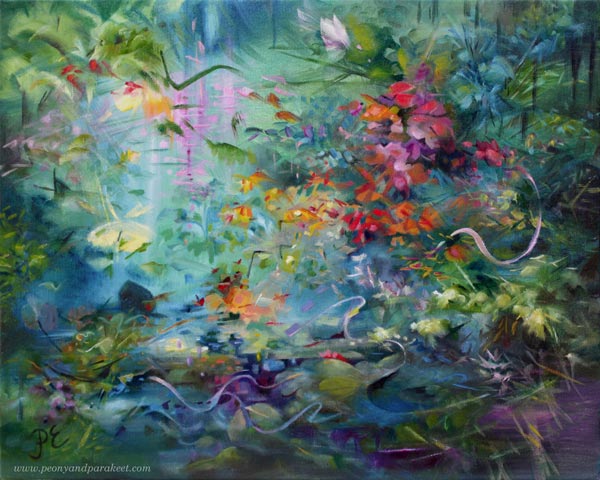
I like to name each painting of a series so that the titles have some kind of similarities. For example, the previous series all had celestial bodies in their names, and the one before that was a V-series – all the titles started with the letter V. This time, the similarity is not perhaps so evident, but it’s there – all the titles have a genitive form.
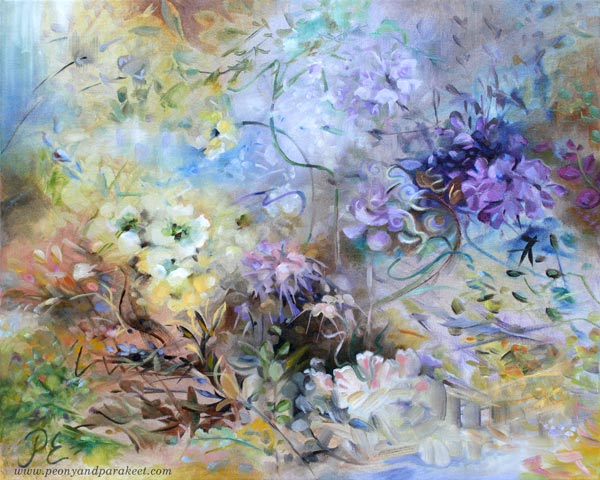
Four seasons are also present in this series. Expressing seasons is an idea that I could repeat in future series too.
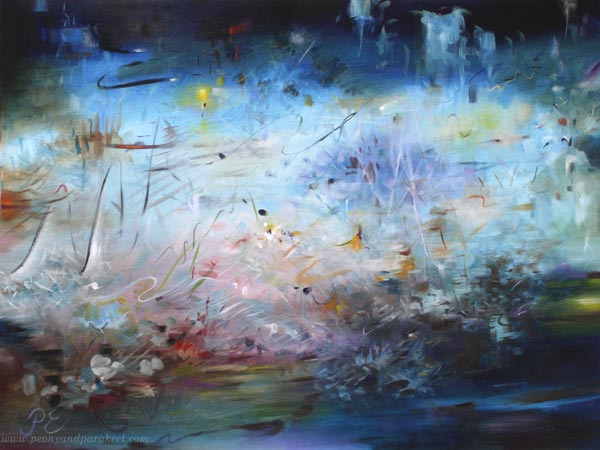
Currently on display at the exhibition “Talven taikaa” in Galleria K, Vantaa, Finland.
In every series, there are paintings that have seeds for the next one. In this series, I like how abstract I went with Winter Night’s Poem, and the natural look in The Echo of Moss inspires me a lot. These two will set the foundation for the next series.
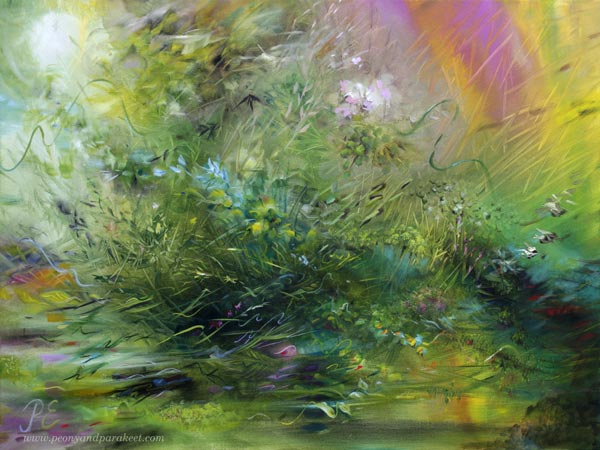
Usually, I am exhausted after finishing a series, but this time not so much. I have many ideas and already ordered the canvases. I like to plan the size of the series and the sizes of the paintings beforehand. Before I even begin to make any background studies, I have ideas on interiors they could fit or galleries or exhibitions they could go to, and decide the size based on those.
Big Paintings
Even if all my paintings are my children, I can’t help picking my personal favorite of the series. In this one, it’s Tiger’s Eye.
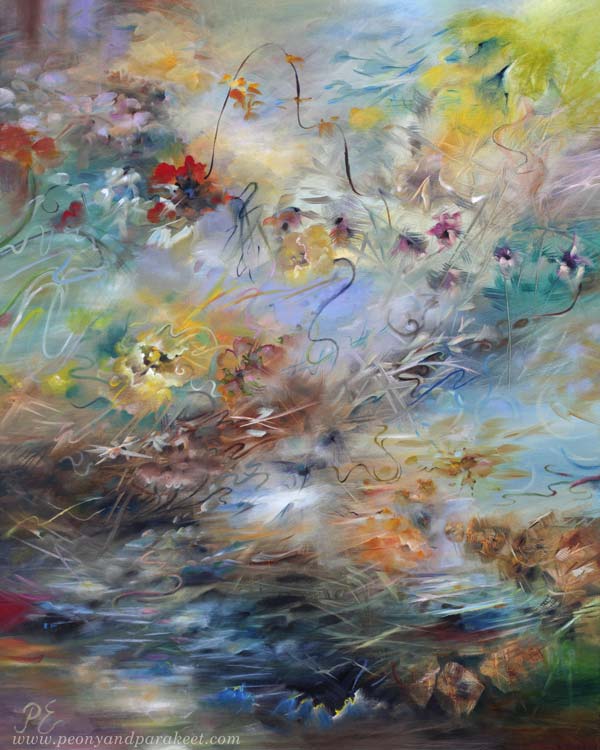
Currently on display at the gallery Gumbostrand Konst & Form.
See more pics in this blog post!
Tiger’s Eye is a sister to another big painting – Queen of the Night.
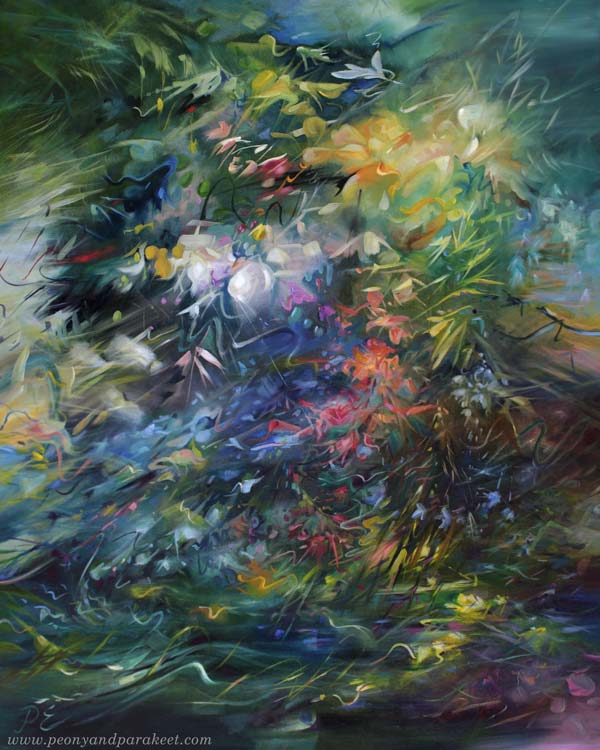
I like the drama in these big paintings.
Nature Inspired The Series of Paintings
Often, people ask an artist: “What inspires you?” and the artist responds, “Nature.”
But I think that it’s really important for an artist to get more specific. For me, it’s the plants – who they want to be and what kind of world they hope to build. I love to imagine what kind of personalities plants have.
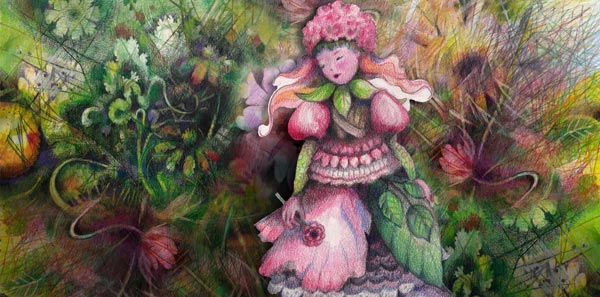
In the upcoming class Doll World, the plants become alive as flower girls!
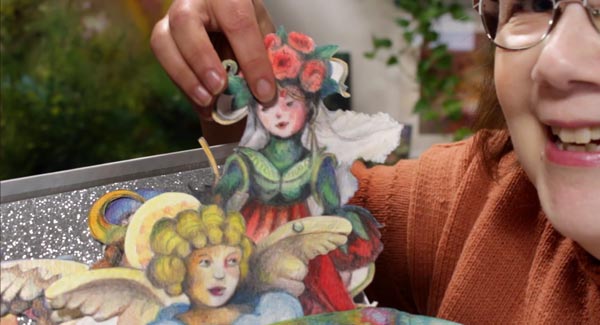
Come to draw people in nature-inspired dresses – Sign up here!
Preparing for Sales Events
This week’s post is about something that I have been doing lately: preparing for sales events!
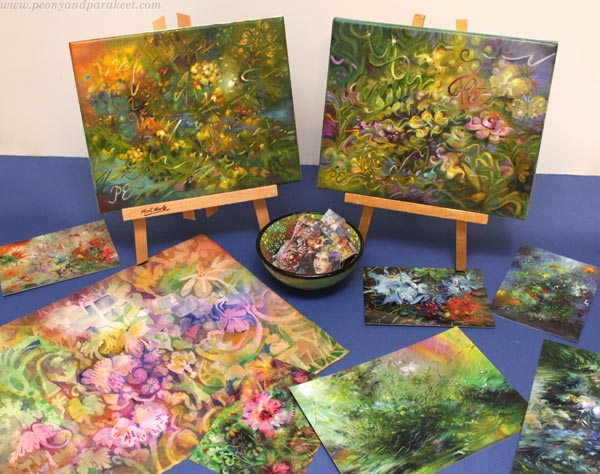
I participate in four events:
- A curated group show organized by the big gallery Gumbostrand Konst & Form
- A winter-themed group show organized by the local artist association where I am presenting Talviyön runoelma – Winter Night’s Poem
- 2-day Christmas sales event organized by the local artist association Vantaan taiteilijaseura
- Black Friday course sales event organized by me on this website!
For me, this is a lot! Fortunately, I have had time to prepare. For example, I got the deadline for the suggestions for the curated group show on Sept 1st. I was then able to apply and have new work specifically painted for the gallery.
Of these four, I am most anxious about the 2-day Christmas sales event even if it’s the smallest one! I have a sales table there, and I haven’t been preparing one for ages. I enjoy selling face-to-face, so it’s also something that I look forward to. It’s also great to see all kinds of sales items on one table and make a nice selection.
Selecting Sales Items – Delivering the Experience of an Original
Even the smallest sales table is a chance to strengthen your artistic voice and communicate your art brand. Most customers may buy postcards and other affordable items only, but still – we want to give them the whole experience. People have come back to me saying: “I remember you. I bought one card from you a couple of years ago, and I look at it every day.” I like to think that with the card, they also buy a piece of the world I am presenting to them. That’s why I always try to include original art as well.
Here’s one of the small paintings that I just finished. It’s called Samettikukan sointi – The Sound of the Marigold.
The Sound of the Marigold is a sister to a piece that I showed you earlier called Ruusun henki – The Spirit of the Rose. But when I placed the paintings side by side, I wanted to make adjustments to the rose painting so that its’ color scheme is less similar. So here’s the new version of The Spirit of the Rose:
Here are the two versions together so that you can compare the changes.
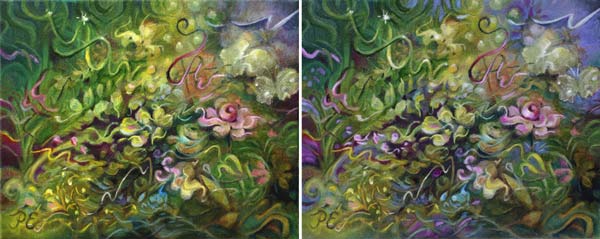
I am going to have small stands for them so that they will stand out from the rest of the selection.
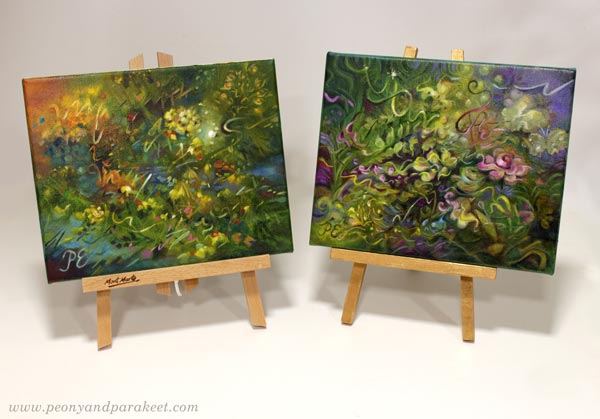
There are also a couple more small oil paintings. They are still in progress, but I hope to finish them soon so that they have time to dry.
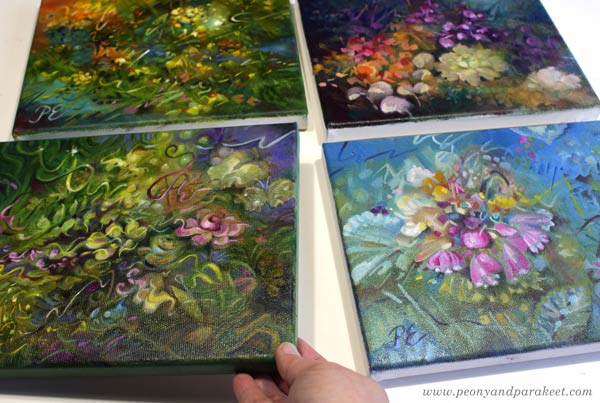
I have noticed that people who don’t regularly go to art events forget the difference between a photo and an actual painting. – like it would be the same browsing the feed or picking a postcard as watching an original.
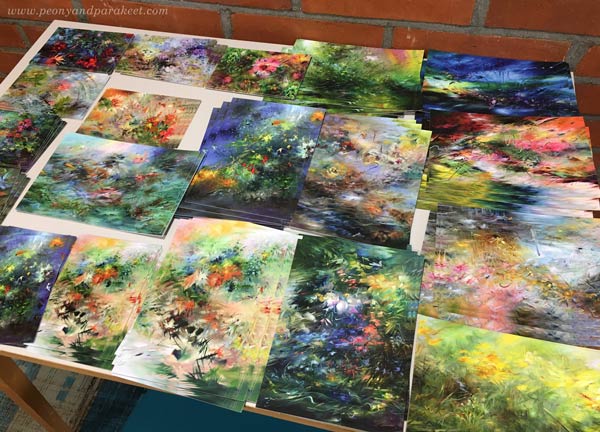
On my sales table, prints will dominate in quantity. And because most of them are pictures of oil paintings, I also want to deliver the experience of an original oil painting. With the four small ones, I can hopefully present one medium-sized original, maybe Forest of Wishes.
What A Part of Your Audience Expects to See
In my experience, some people are interested in a specific art technique. Previously, when I had the sales table at a similar event, there were some who wanted to talk about watercolor painting and were disappointed that I only had one example or so. These are people who are art hobbyists themselves and who are potential customers for my classes.
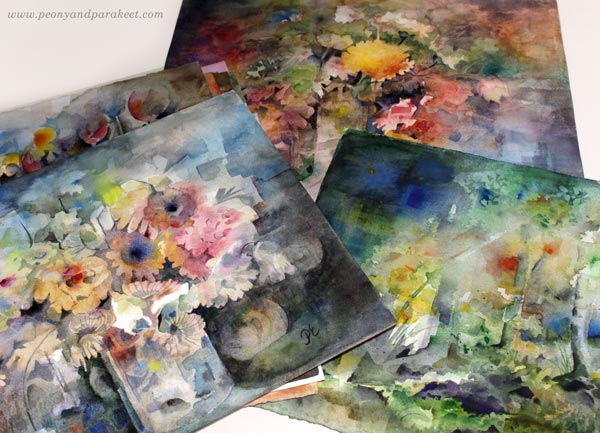
I used to paint a lot in watercolor, but lately, not so much because they don’t sell as well as oil paintings and have a low price point. Because I need to make a living and because I enjoy creating big paintings, I have focused on oils. But this time, I thought I would take a bunch of watercolor paintings with me and set the price lower than expected. If I still actively sold watercolor paintings, I wouldn’t do that, but now I see the chance to reach this part of the audience and show my watercolor work.
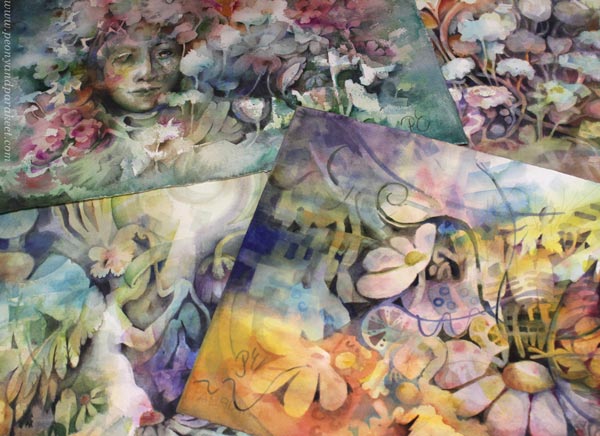
Because most elements of my style were developed in watercolor first, these pieces fit well with cards that have oil paintings.
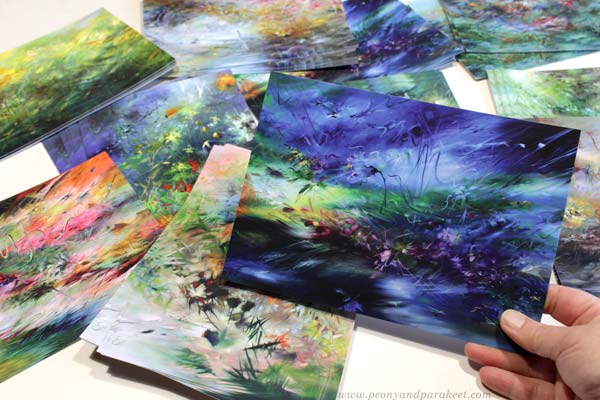
These cards came out gorgeous! They have a satin finish and are bigger and thicker than standard postcards. I ordered them as well as the cards from Moo.com (affiliate link, but I would recommend them without one too!)
What to Leave Out
Many times, I have put everything I have on the sales table, and that’s never been a good thing. You might have potential best sellers, but bringing items that don’t make sense to them will ruin the sales. For example, I brought fabrics with my designs and some craft items to an event focused on fine art. And vice versa, I took some original art to a craft show. Yes, you might get some sales from the odd items, but confuse most of the audience.
Price can be a reason to exclude some too. For example, if the organizer takes a percentage of the sales or if the price of the sales table is high, selling the most affordable items doesn’t necessarily make sense. And vice versa: when people come for good finds on their way to the shopping center, selling the biggest and most expensive pieces can be hard.
This painting – Tiger’s Eye – has been waiting to get to a curated exhibition that interests art collectors. Now I am happy to pack it and two other paintings for a big gallery show.
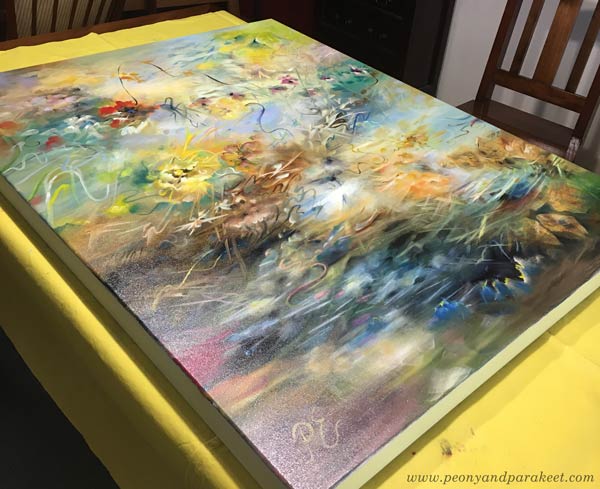
My oil paintings always get a varnish and a hanging wire so that they are ready for hanging on the wall.
In my experience, original art that is ready to hang is more tempting to buy than pieces that require, for example, framing. However, if the price point is very low, it doesn’t always make sense to frame the pieces. Whatever the case, it’s always good to present a unified collection and leave out some that are too different in size, style, or frame than others.
When selecting work for the small postcards, I left out many paintings I like and value. For example, many of my big paintings are not so great for postcards. Their details get lost in the tiny size, and their subject is more suitable for decorating interiors than sending wishes.
And then some paintings are quicker but more suitable; for example, Kukkiva maa – Flowering Earth that I painted in acrylics for the class Floral Freedom.
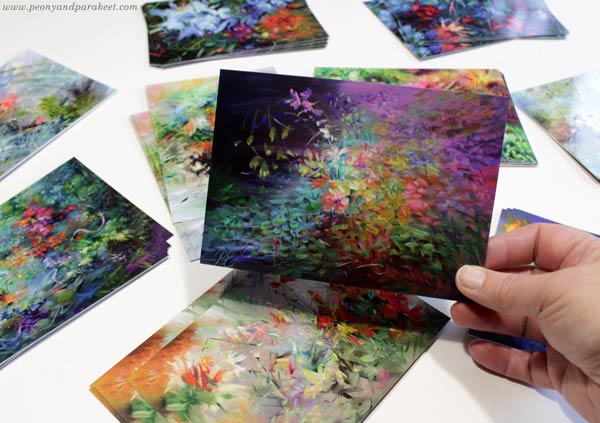
I think it’s perfect for a postcard – full of colors and flowers!
How You Will Be Remembered
Many times when I have been preparing for the events, my behavior has been on my mind: Am I able to show my enthusiasm? How could I not only make sales but be remembered afterward too?
But the best answer here is quite technical. You should have something to give that has your contact information on it. And all your products should have your name and website – or at least an email – on them. I use the same tactics, the same generosity that is, that I have used with selling online courses. I give something for free and invite people to see if I am suitable for them. On the sales events, I have small cards that have different pictures – details of my art – and I invite people to pick one that they like.
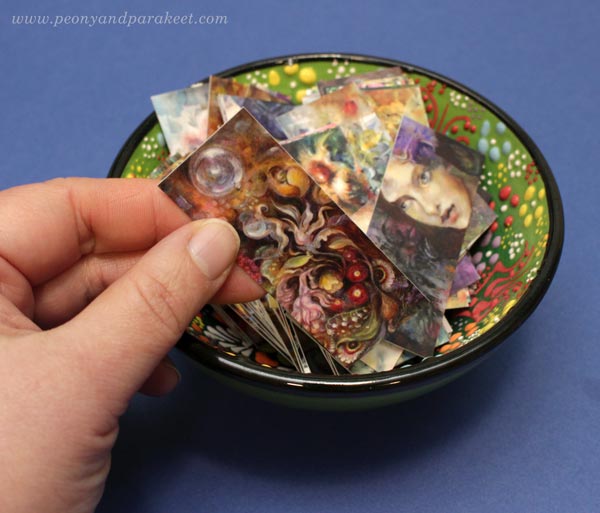
This begins a conversation about their likings about them, and when they have the mini card, I can serve them better and be remembered too.
The postcards also have contact information printed on the back.
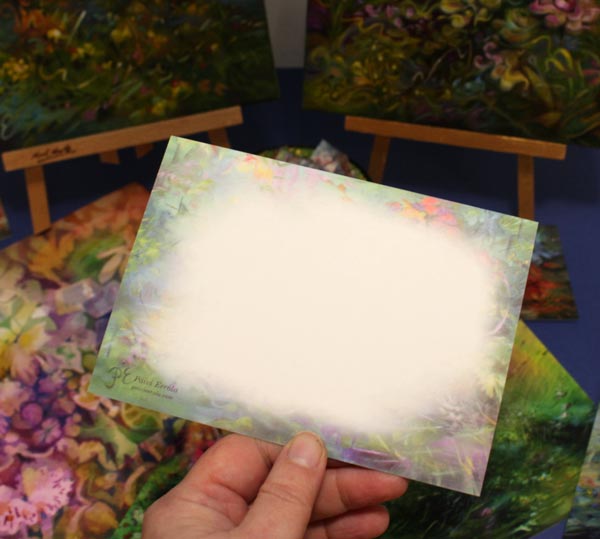
There’s also another artwork as a frame.
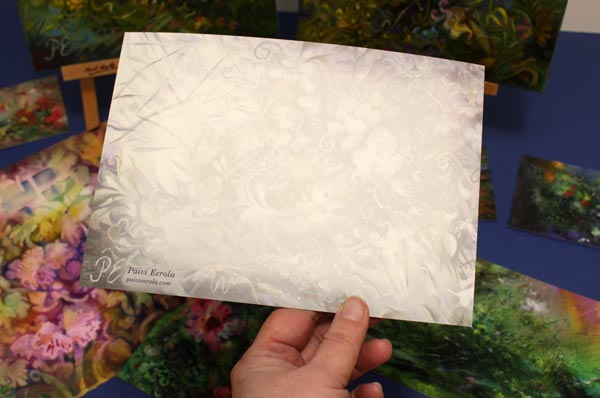
I think about these features as generosity as well. I have taken the time to design the back to make the cards even more valuable.
Sales Events Are the Opportunity to Test
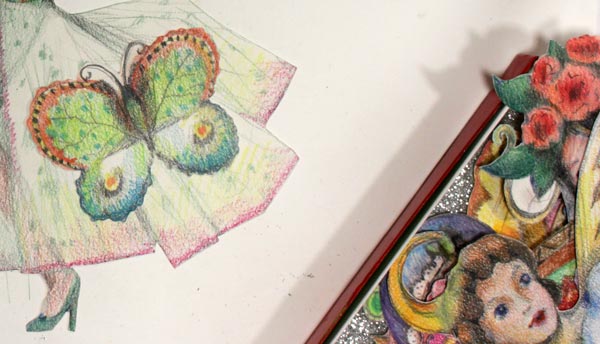
Even if it’s good to have a unified style and selection, the sales event is also an opportunity to test new ideas and approaches. I like to do tests that are not big new things but hidden in the small stuff. This time, I made a postcard of my colored pencil work to see how many people can recognize the medium and how many are interested in this style of drawing.
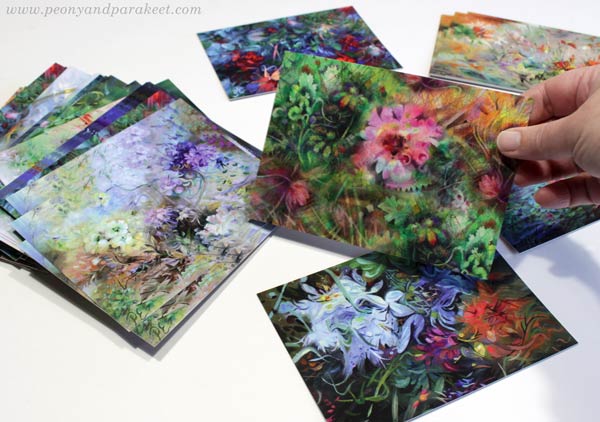
This postcard is composed digitally of many colored pencil pieces.

As you know, I am not just an oil painter, but also love colored pencils. It would be fun to talk about them too.
This leads us to my course sales event on Black Friday weekend. All classes will be on sale and registration for the new class Doll World will open. Doll World will begin at the beginning of January.
During the years, I have learned that if I love the class, there’s a possibility that you will love it too. The same goes for all art really. We have to pamper it and give attention to its needs. And when the course or the painting asks: “Will there be anyone for me?” we must say: “Yes, my dear – kyllä kultaseni – sometimes it will just take a little bit of time.” We both feel vulnerable about this.
P.S. The engineer in me says that this is not a comprehensive article about setting a sales table. But I intend to share some pics when I set the actual table on December 3-4 at Galleria K, Vantaa, Finland. So stay tuned for Black Friday sales and future blog posts!