
5 Tips for Quick Abstract Flowers
This week, we paint quick abstract flowers freely without any references.
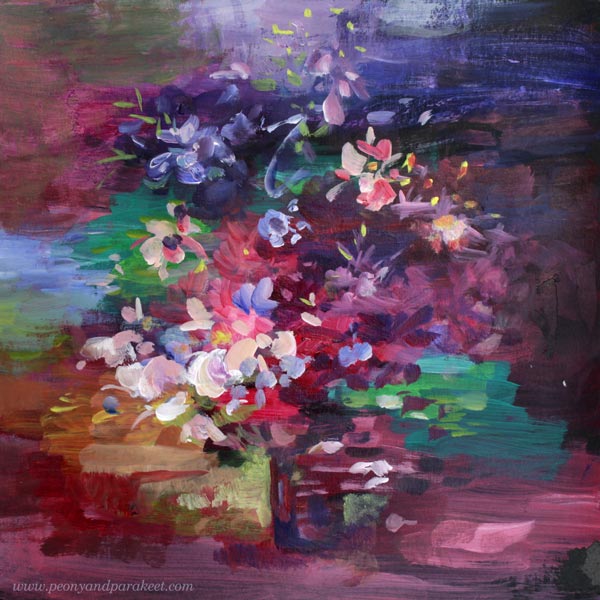
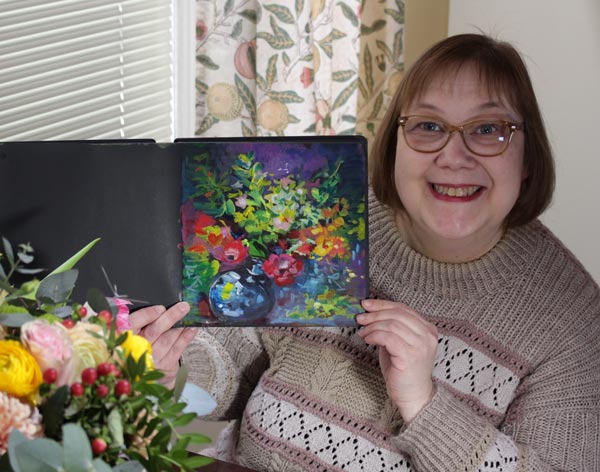
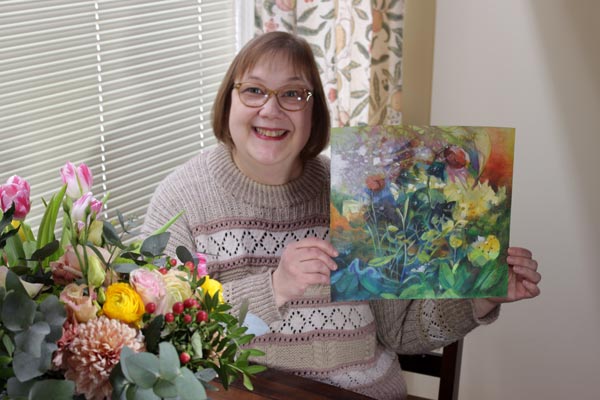
I have a black Dylusions Creative Journal and make small paintings there occasionally. It is especially good when there’s still paint left on the palette at the end of the painting session. I think it makes sense to use all the paint, and not throw the leftovers in the trash.
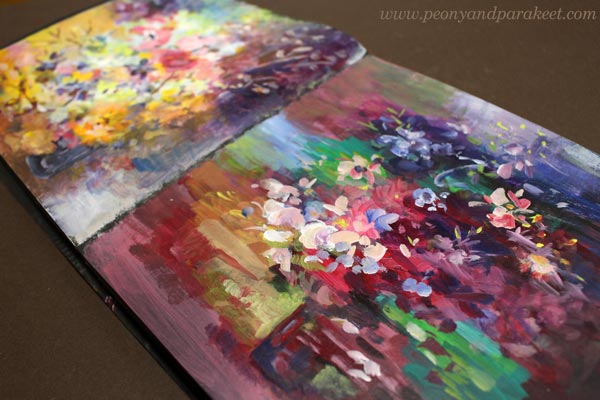
I don’t use any gesso but paint directly on the page.
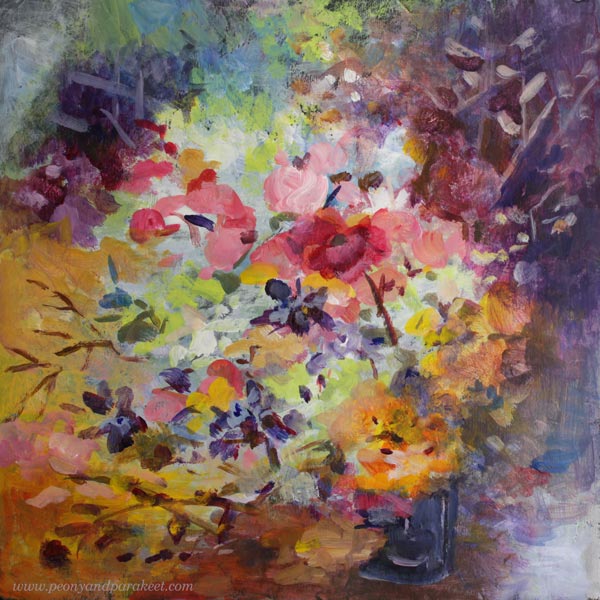
When I painted pieces for the course Liberated Artist Revisited, I noticed that there had been a long break in acrylic painting and some of the tubes had started to harden.
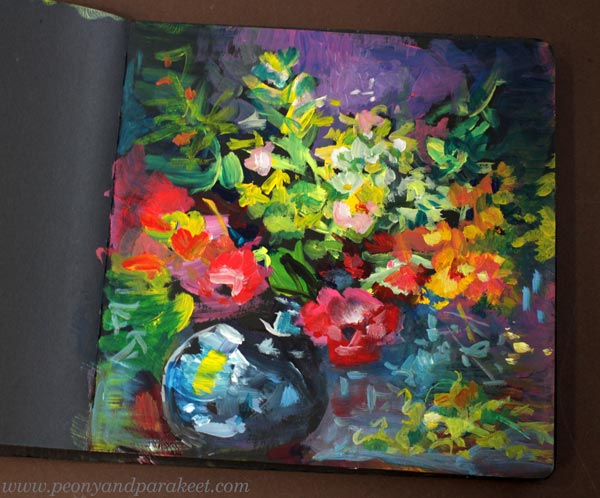
It motivates me to paint in the black art journal again because I don’t want those paints to go to waste. And sometimes it’s nice to paint something small quickly and see what comes out most effortlessly.
Quick Abstract Flowers – Five Tips!
I like painting abstract flowers, and thick paints are very suitable for abstract flower paintings. Here are my five tips for painting flowers quickly.
1) Start from the Old Mess
The fastest way is to start from an old painting.
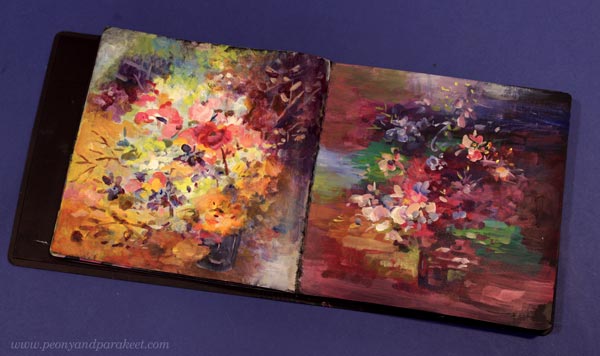
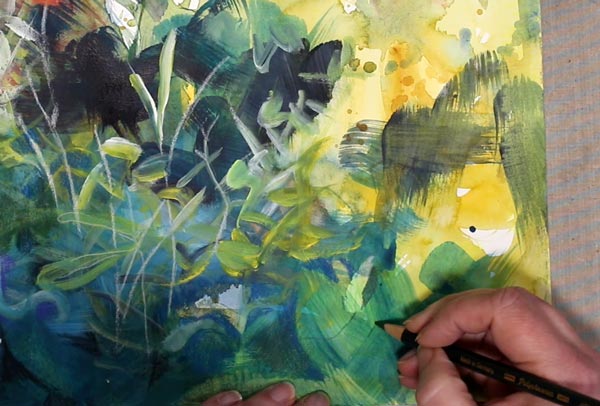
I have a lot of pages in my journal where I’ve hastily painted shapes with leftover paints.
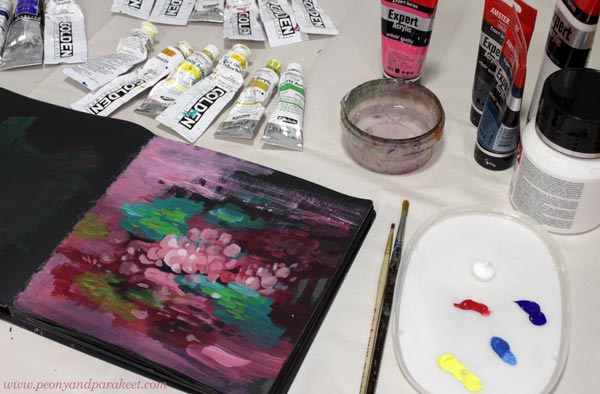
Continuing the beautiful mess feels much more effortless than starting a new one from the beginning.
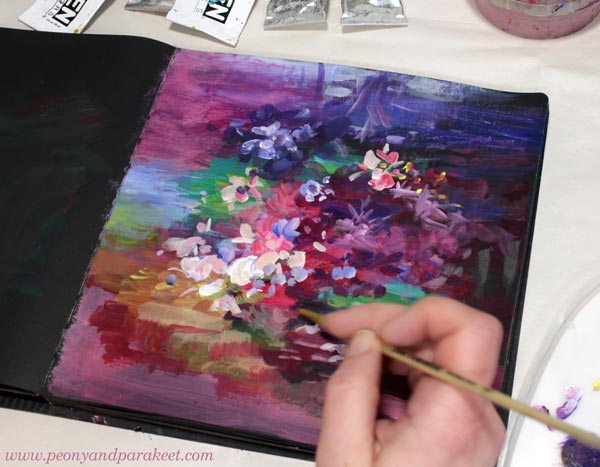
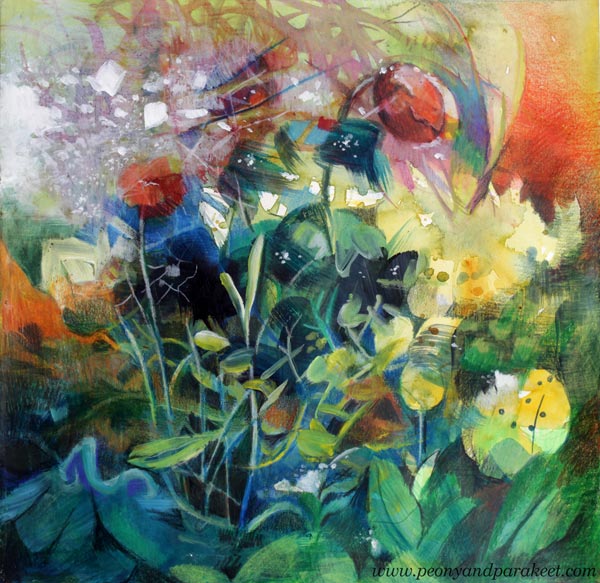
For example, here’s one page that still waits its turn to become a finished painting.
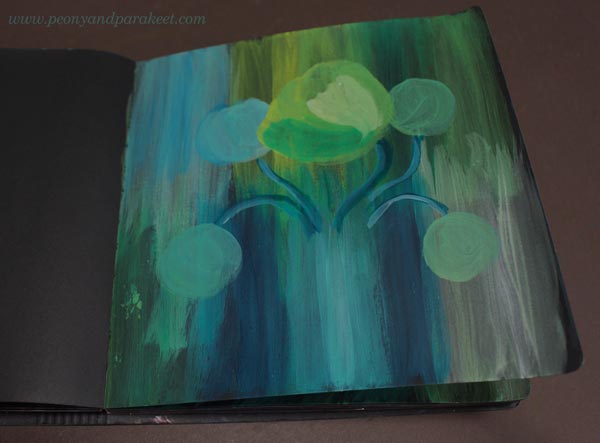
Most of my beginning messes are much more messy though!
2) Dark-Bright-Light
Include all three degrees of darkness in one painting.
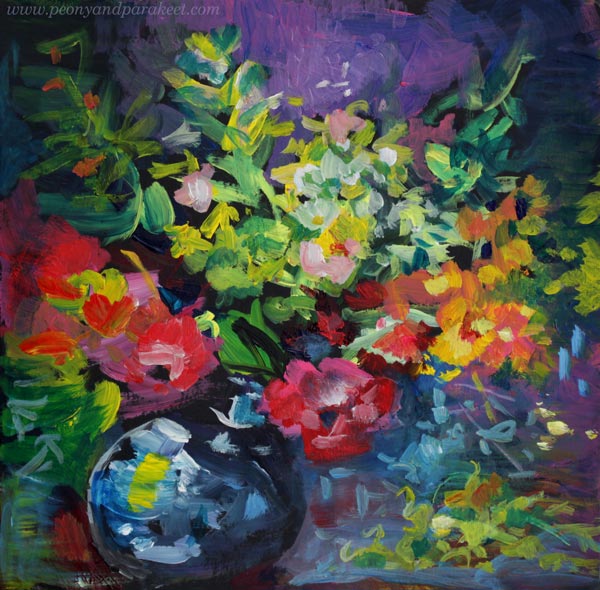
Make color mixes and compare them in terms of darkness. By including all three – dark, bright, and light – you can achieve depth and atmosphere.
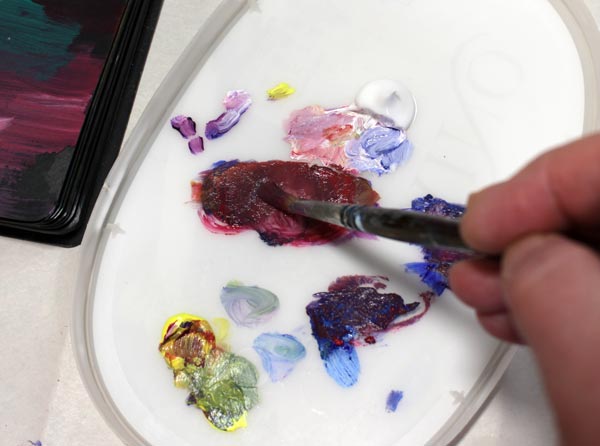
Make clear larger areas so that you can point to different places in the background and say, there is dark, there is bright, and there is light.
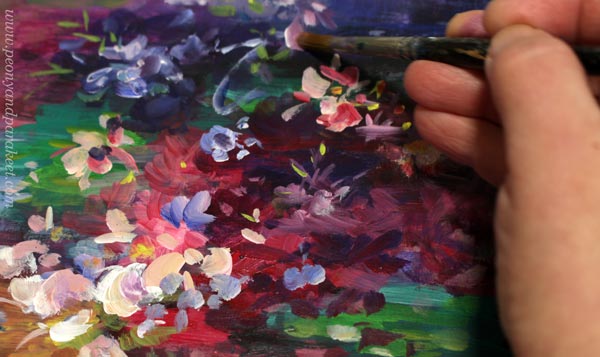
Flowers can have all three – dark, bright, and light colors.
3) Forget the Real Flowers!
Don’t think too much about the real flowers.
Don’t think about what a rose looks like or what flowers you want in your painting. All that stiffens your expression.
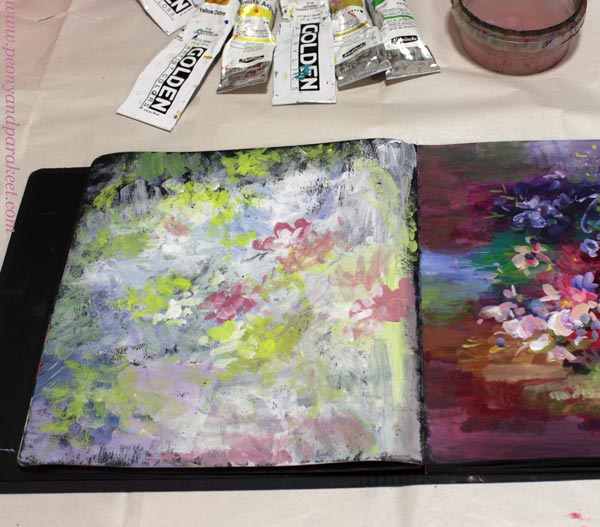
Focus on the colors and let the flowers form from the brushstrokes.
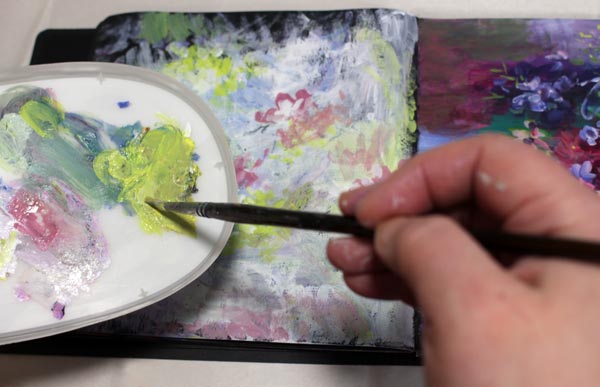
After all, a flower is just a few colorful strokes and a line for the stem.
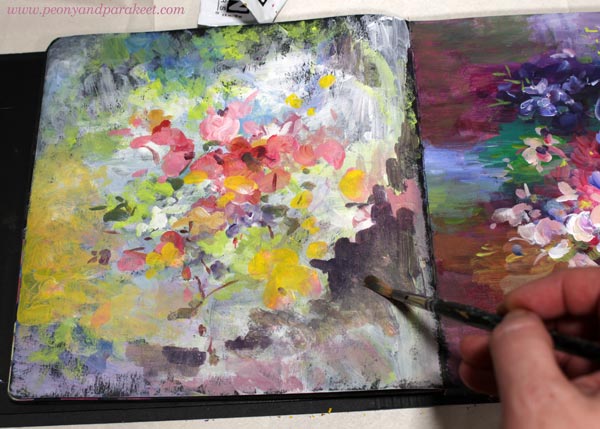
Use your imagination when you look at your work in progress!
4) Leave Room for Spirit
Not everything needs to be defined or look like a flower.
Flowers are concrete matter, so let the colors express the spirit!
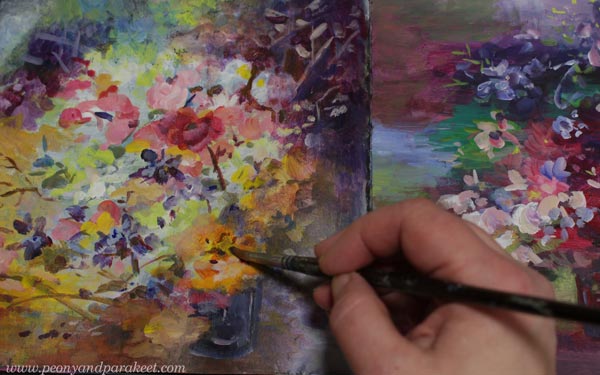
If you want to be extra quick, sharpen just one flower near the center and leave the others more abstract and vague.
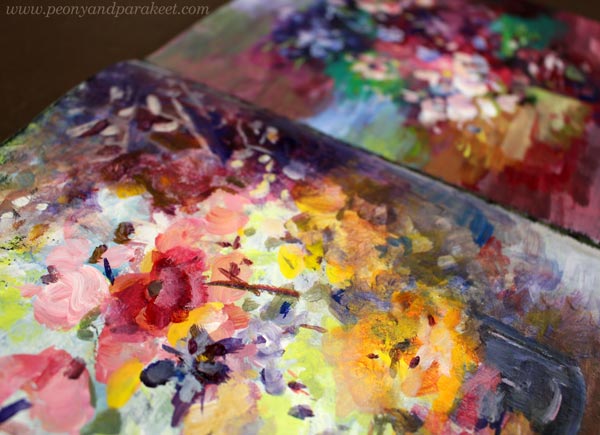
5) No Forced Feelings
Open yourself up to an emotional experience.
The speed of the painting depends highly on how soon you get an emotional connection with yourself and what you are doing. Let even the darkest thoughts come. For creativity, everything genuine is equally good.
The beauty of making art is that imagination creates abundance and eternal life from almost nothing – from the leftover paint and leftover energy. And the more often you create, the more you get out of it!
Liberated Artist Revisited – Buy Now!
In Liberated Artist Revisited, we time-travel to meet the teacher – Paivi from 2015, and create new art with her.
This course is both for the left and right brain. The young Paivi gives systematic instructions while the older Paivi enjoys her freedom and ponders about art-making and life in general.
Liberated Artist Revisited is a limited edition – only available for purchase until the end of March 2024! >> Buy Now!
New Beginnings in Art-Making
Let’s think about new beginnings and give one to our art-making!
In recent months, I have felt that a new era has begun in my life. It has been surprising. I have thought that I am already too old for anything new – that the new beginnings in life have already been experienced, at least in terms of working life. But it just so happened that my work as an artist has a new beginning thanks to the grant for creating digital art.
At the same time, I have gained a new perspective on the past and my artistic development. Now, it feels that life with its changes is full of new beginnings, and art, too, is full of them! There are big beginnings and then smaller beginnings within them.
Valuing Randomness and Intuition
I developed the latest course Liberated Artist Revisited, because I wanted to relive the idea of the old course Liberated Artist. I wanted to relive that time in 2015 when a new beginning meant letting go of excessive control and surrendering to happy accidents and intuition. Because isn’t it the case that whenever a new era begins, we need faith in chance and intuition – so, the art of letting go!
At the current new beginning, I have been thinking about what I have to give up. Because, couldn’t you say that life with its changes is full of not only beginnings, but endings, and ask if the same applies to art? While making the course Liberated Artist Revisited, I listened to Paivi from 2015.
Younger Paivi was very prompt: Step A and Step B and so on. If I compare her and I, I am partly different and partly similar. I would do some things differently now but in many ways., I am still quite the same artist. The new course Liberated Artist Revisited is a dialogue between the old and the new. You could also say that I have changed as an instructor a bit. Nowadays, I want to open up your artistic thinking, not so much to exclude options.
Life is so grand that everything that once had a beginning, stays in our hearts for a long time, even if it has ended. It’s the same in art. I can smile at Päivi after more than eight years, but not ironically, but warmly. “It’s wonderful to create something new with you again,” I say to young Päivi, and it’s also wonderful to invite you all to a new course again!
Liberated Artist Revisited – Buy Now!
Liberated Artist Revisited is a limited edition – only available for purchase until the end of March 2024! >> Buy Now!
Enrich Your Art – Play with Shapes!
This week it’s time to get inspired by shapes and start playing with them!
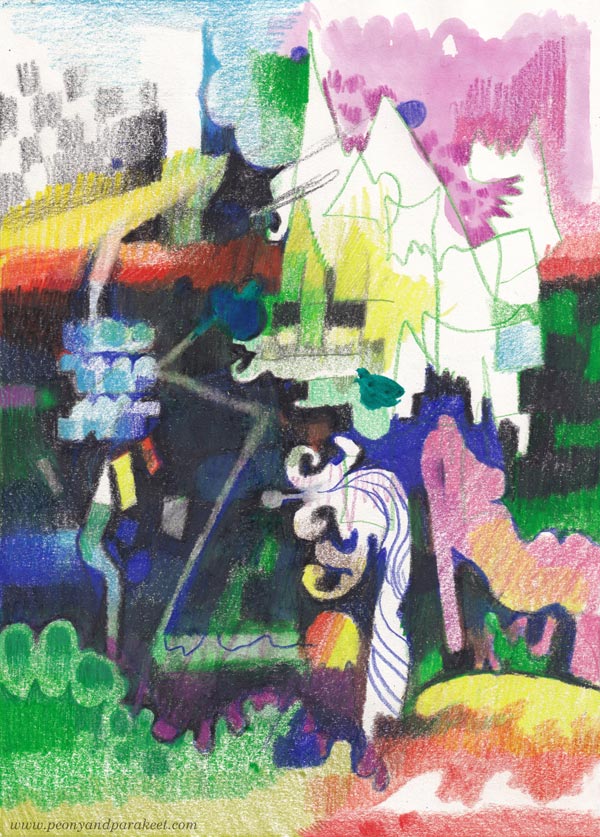
My dear reader, I guess you follow my blog because you love colors. And yes, isn’t it wonderful to choose, for example, a colored pencil from among several different colors: “Should I pick pink or red, hmm?“
I have a degree in industrial design and maybe that has influenced me to think like this:
A color is a child. A form is a mother.
Colors take spurts freely on the paper while forms set limits. But you can play with form too!
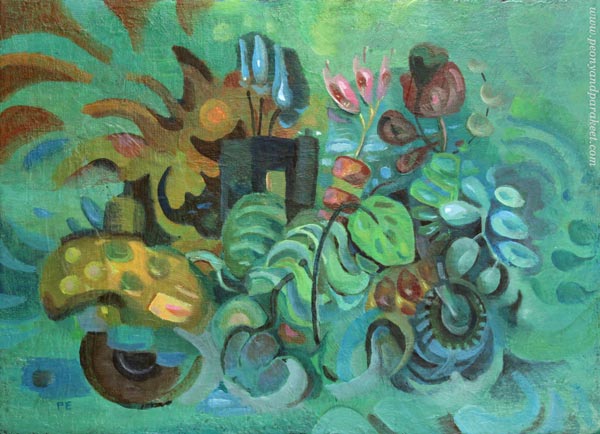
See more about making this in this blog post!
There is no need to turn the mother into an old woman who only sees the reality.
The soul of any shape is abstract and yet, even a simple shape has an expression. It’s fun to draw random shapes and then carefully alter them.
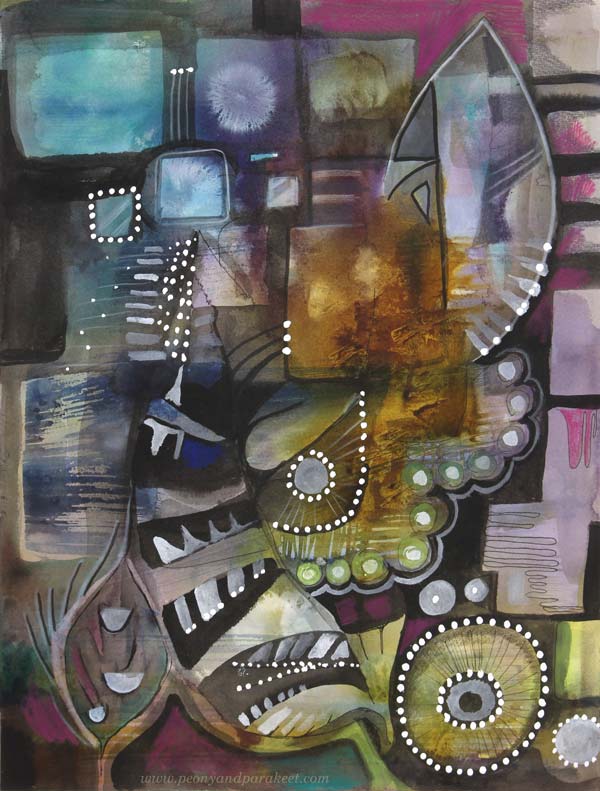
See more about making this in this blog post!
Shapes form a design language that you can constantly enrich. Don’t just draw isolated geometric shapes, but combine them to get more interesting ones!
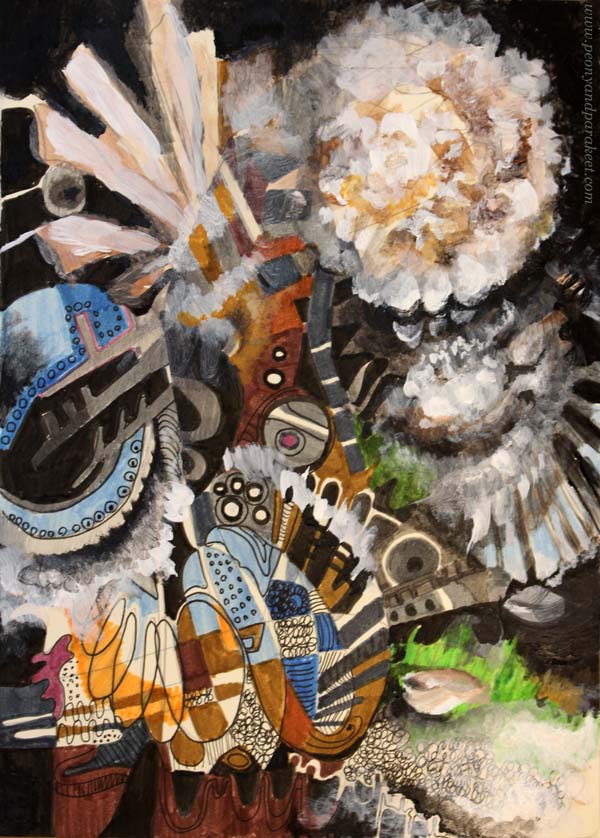
More about making this in this blog post!
When you have a shape on paper, give your full attention to it.
Art Play with Shapes
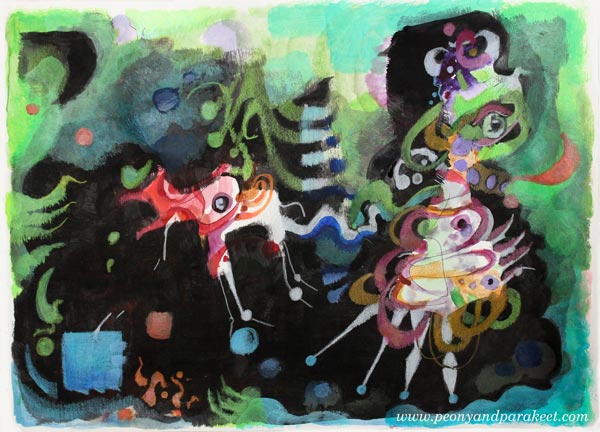
Talk to the shape! Interview it!
Don’t ask what she represents, but what kind of world she would like to create around herself.
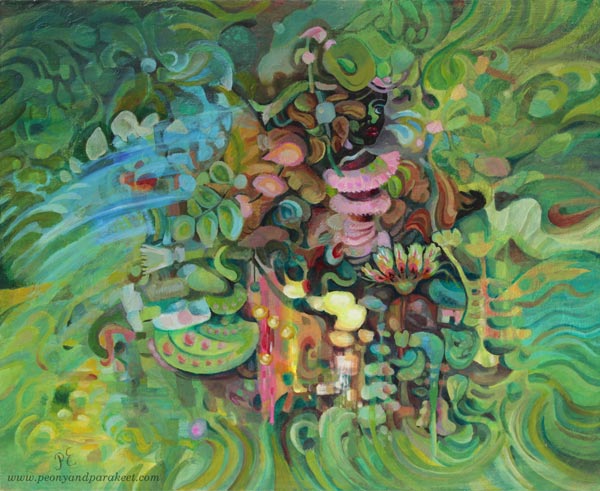
See more about making this in this blog post!
Ask where she belongs, and what kind of shapes she would like to meet.
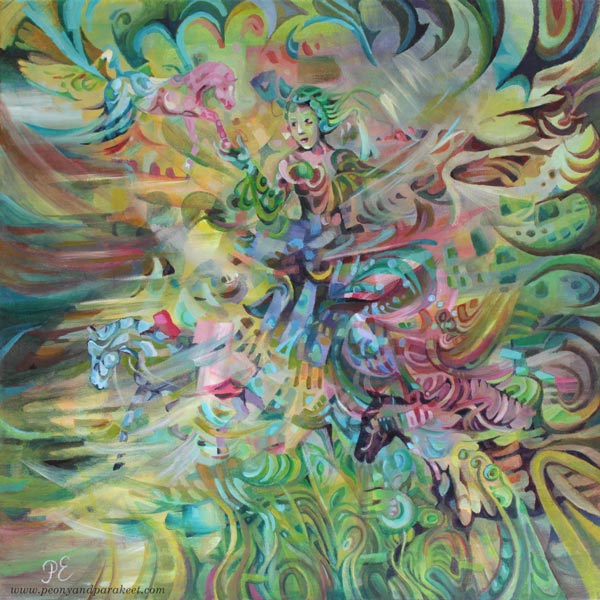
See more about making this in this blog post!
Shapes can take you to imaginative places where realistic and abstract meet. Once you have been traveling for some time, you will notice that the delicacy of art is in the form, and the color – the child – is there only as a spice.
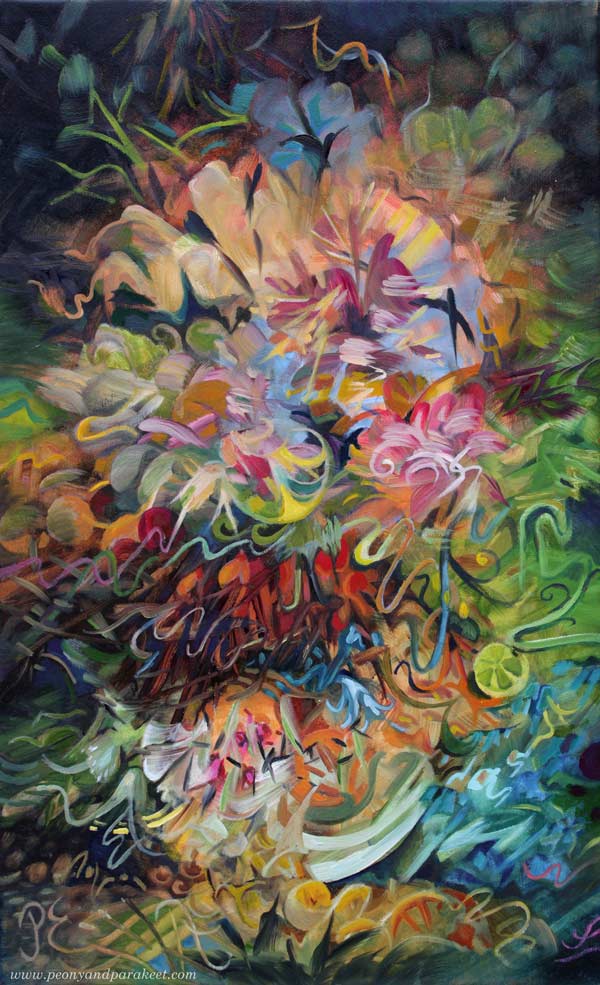
See more about making this in this blog post! – See more pics on the Finnish Art Store Taiko!
Art play with shapes – What are your thoughts? Tell us in the comments!
Now and Then – Development of Style
I started a grant project in October. The project lasts a year and covers half of my working time. I am making a digital artwork that can be experienced with virtual glasses. This will definitely give a boost for my artistic development, including the style as well.
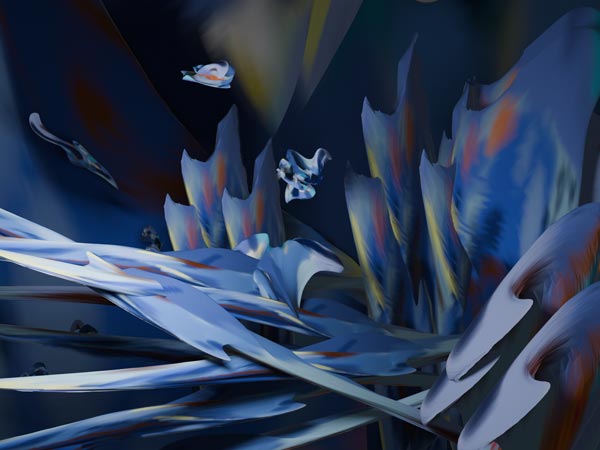
I used a fun sculpting app called Nomad and a 3D modeling software called Blender.
This image is based on replicating one shape only.
One of the recent practical changes is that I have given up using a Mac computer and bought a new Windows gaming laptop, which I call Turandot. I am now writing this blog post with her. She must have imagined that she would be owned by a young man, but no – she has a woman in her fifties. Turandot must have sounded like a great name to her, but after googling it, she might have been upset: Puccini’s opera! Well, she just has to adjust and learn my style.
Style Development – Looking Back
The new big project has made me think back and explain it all to Turandot. Ten years ago, I wanted to learn to paint so well that I would be satisfied with my paintings: “I could then die happy!” I thought that as an artist I had to abandon what I have been until then and build a new vision and a new world of my own.
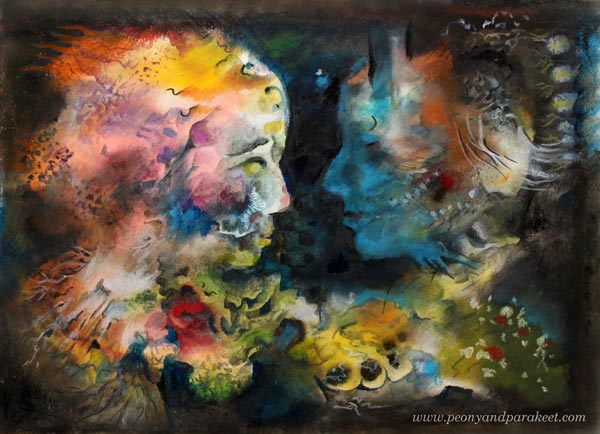
When my paintings started to reach the level I had hoped for, I felt first grateful and then empty. I couldn’t see forward anymore.
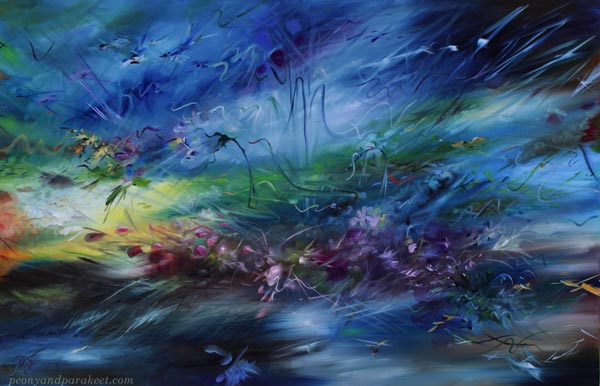
See the gallery of my oil paintings!
Now, however, I’m on the brink of something new again and the crises of the past seem strange: how was I so hopeless? Why didn’t I realize that everything meaningful that I’ve done in my life will tie into my art over time?
Always a Beginner
My artist friend said that I have developed quickly as an artist. However, it doesn’t always feel that way. I always have self-criticism and always notice things to improve. That’s why it feels frustrating now when I’m starting over again and building a three-dimensional digital expression. At the same time, I remind myself that the beginning of today is much further than the beginning 10 years ago – there is a lot that I already know and what I can already see, not only style-wise but in a more general level as well.
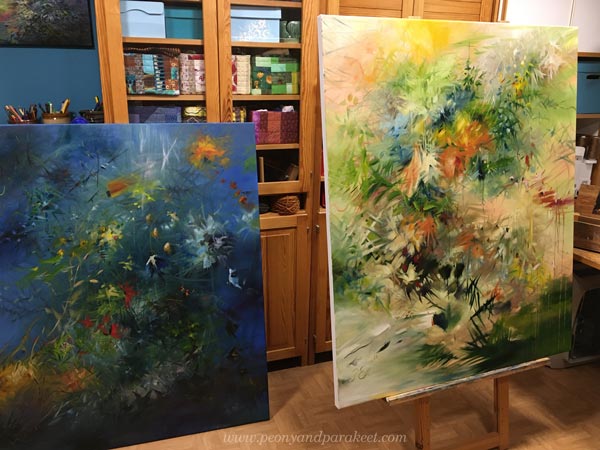
The balance between encouraging yourself and criticizing yourself is essential when making art. You have to be able to observe your pictures as if they were created by someone else and at the same time, you have to see forward – what all this could be and where it could lead when I will learn more skill and imagination.
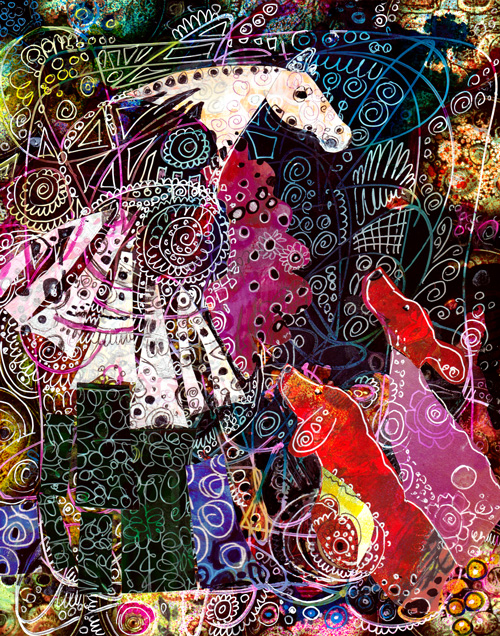
Fortunately, I haven’t listened to those who say that everything you do must be in the same style and form a unified experience. When you’re a beginner, forcing a certain style only leads to getting stuck at a level where you really don’t want to stay. When you’ve done enough, your own style pushes out naturally.
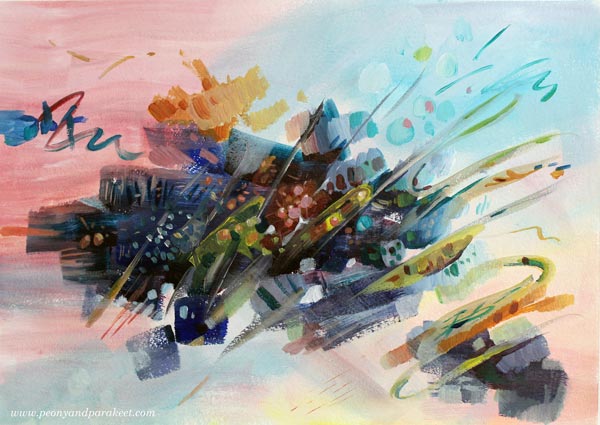
Yarn, Thread, Line, and a Telescope!
10 years ago, my line was clumsy and closed, while now it’s elegant and curious, like a telescope that lets me see beyond what I’m currently aware of.
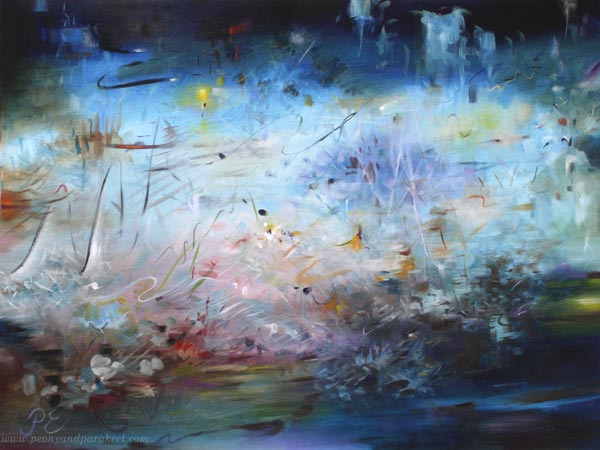
I’ve always liked knitting and embroidery. Thread and line have a lot in common. That’s where my style started.
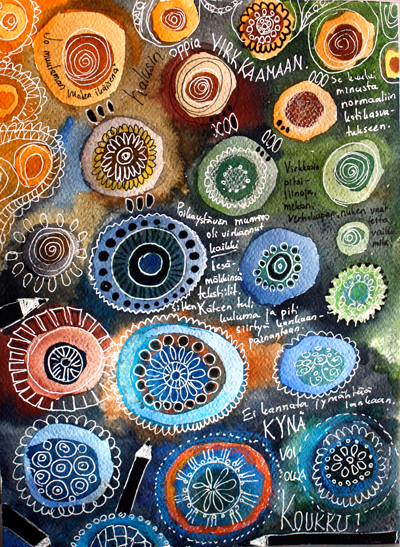
Collageland teaches this style!
Now my task is to continue developing my style and step into the world of digital art. However, I will still be drawing and painting next year, so there is no need to worry that this blog will change too much!