
Get Creative in Drawing Ornaments!
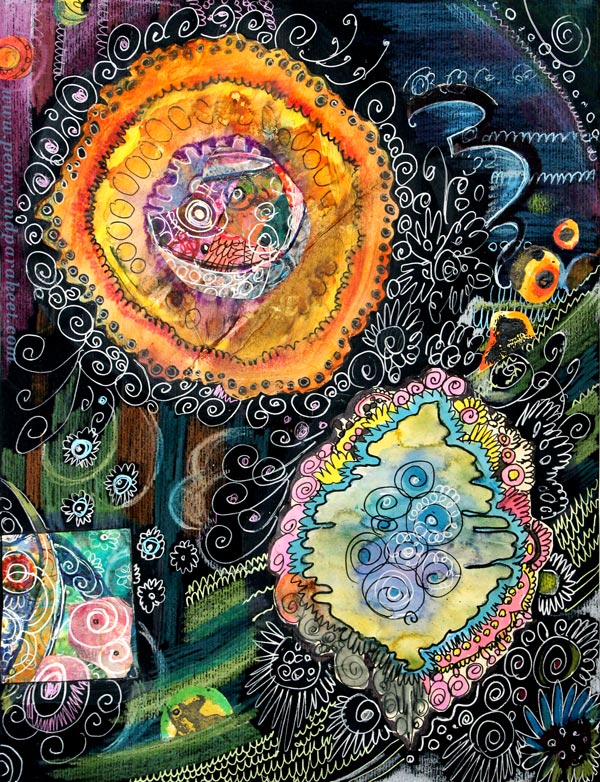
This month, the focus is on art history. Art history is often talked about in a very serious tone, but let’s examine it through imagination and start by drawing ornaments!
Ornament Tells a Story from Childhood
It’s fascinating that even if the ornaments are stiff and organized compositions, one can express a whole story.
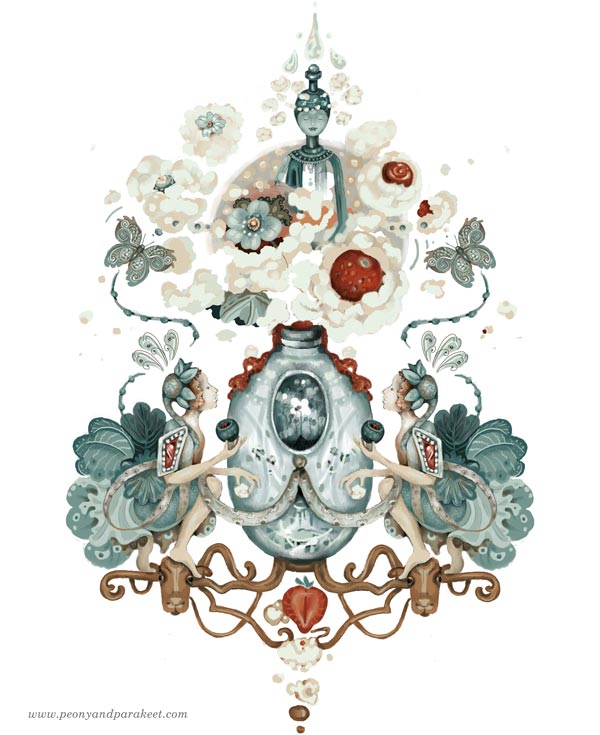
The background of this drawing is a funny story from my childhood. When the school asked each student’s favorite food, I answered “Mansikoita ja kermavaahtoa!” – Strawberries and whipped cream” while the others listed macaroni dishes or meatballs. Both the teacher and the students were quite shocked by the answer, but I wondered how anyone would prefer to eat something so modest and usual.
This story tells a lot about how I’ve always wanted to get away from the mundane. I still want to draw things so that they look like a luxurious celebration rather than a gray everyday life. I like drawing jewels, lace, floral motifs, and swirls, and you can have a lot of those on the ornaments.
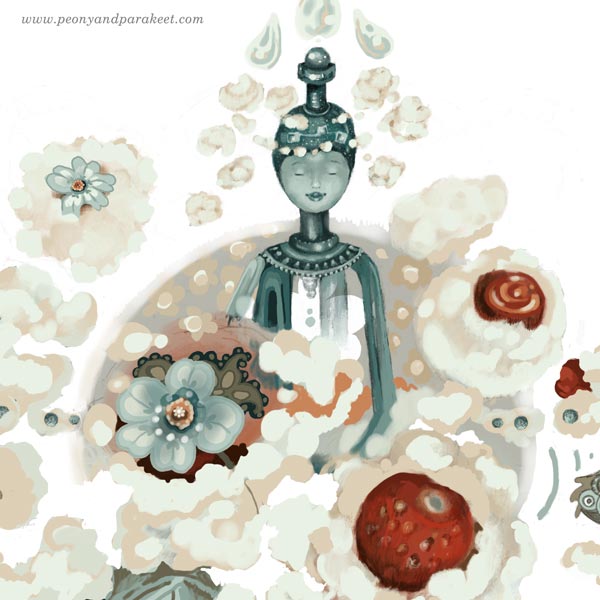
I often want to include people or animals too. For example here, I wanted to make the whisk half-human, and draw two fairies that enjoy the dessert.
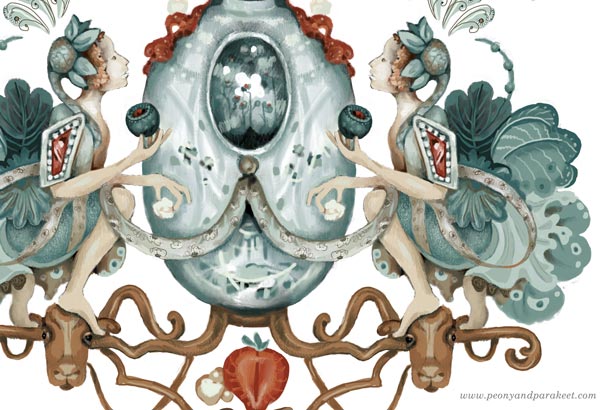
The method that I teach for human poses in the course Doll World was very helpful here.
Inspiration from Antiques, Old Buildings, and Paintings
There are plenty of ornaments in my photo archive. When I visit old buildings, I go through doors, ceilings, wall panels, and floors, looking for nice ornaments.
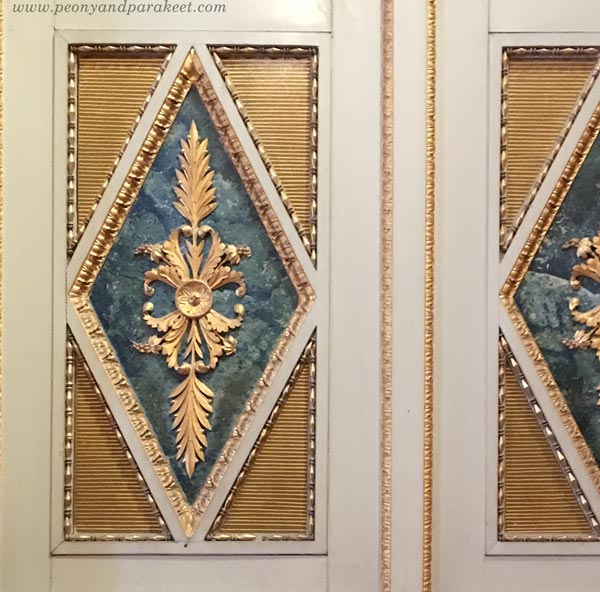
I also love to examine antiques closely.
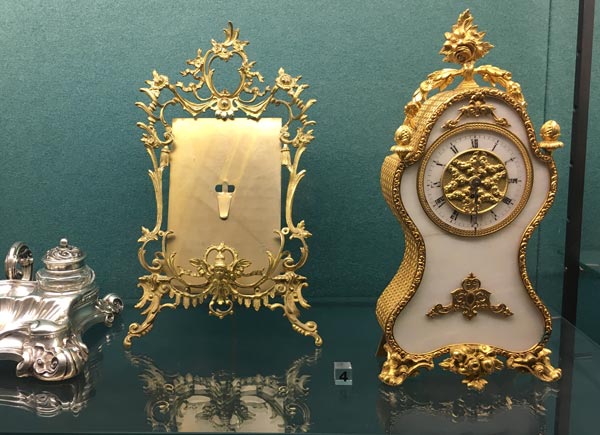
Old paintings often have lovely frames. Whenever I photograph one, I always try to include the frame in the picture.
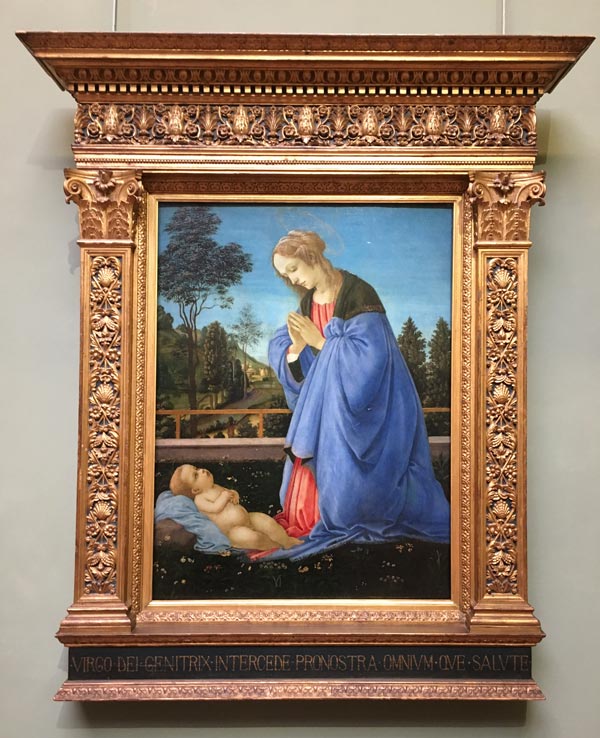
This frame is like an ornament representing a palace!
Lots of Simple Shapes
The decorative appearance of the ornaments can mislead you into overestimating their complexity. When an ornament is taken apart, the shapes can be quite simple.
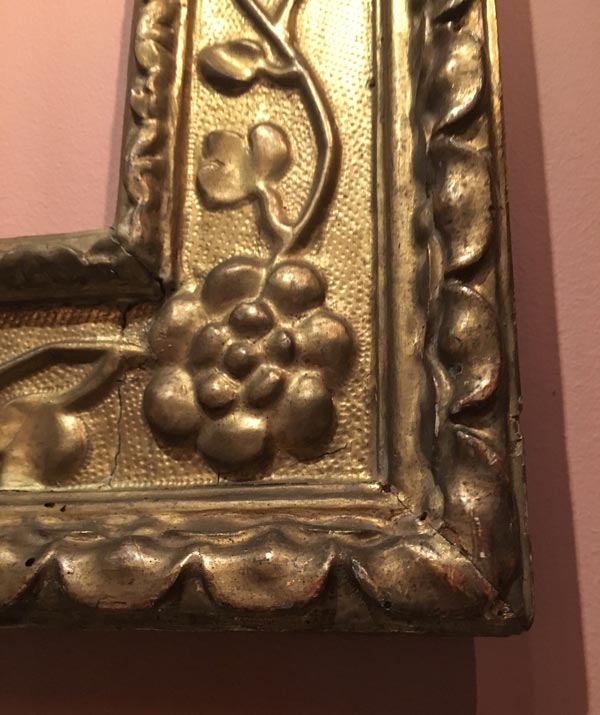
I love this kind of sophistication based on quantity and repetition, with which you can express anything – humorous subjects …
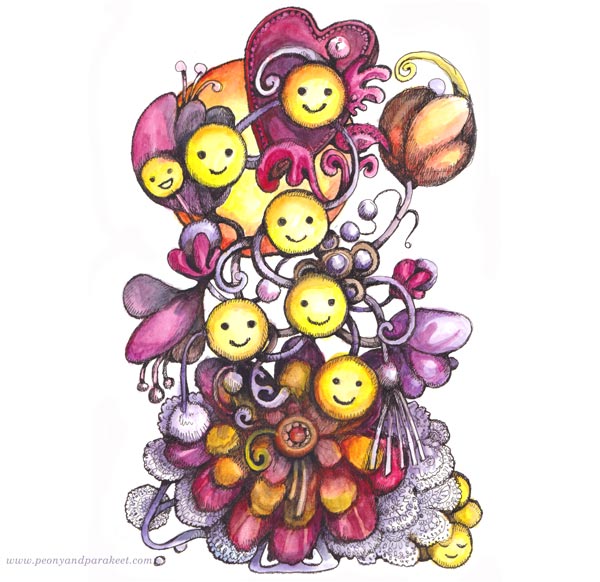
… or more serious.
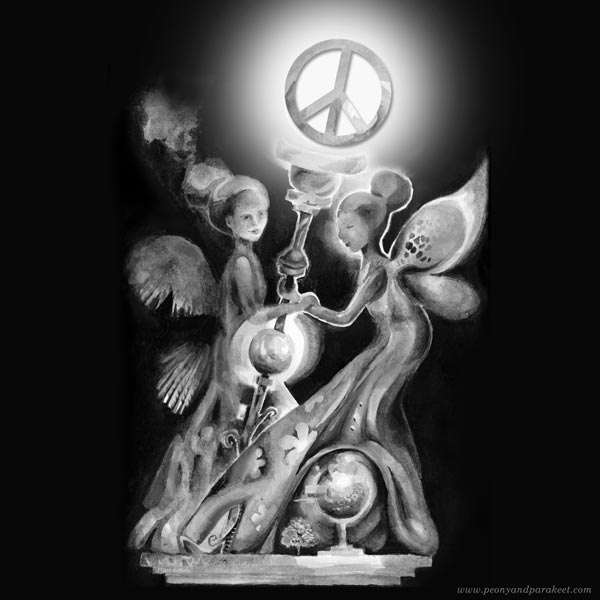
This example shows well that you can also express light when drawing ornaments.
Ornaments Can Both Hide and Reveal
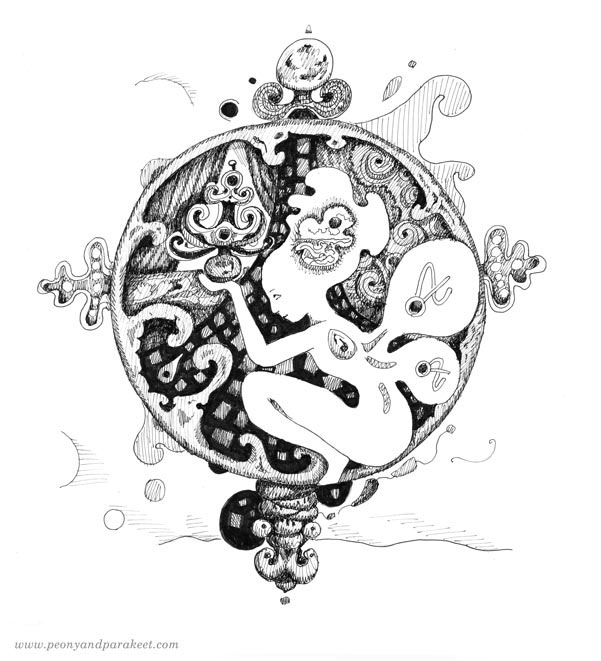
I am fascinated by the fact that although the subject can be drowned in decorative forms, it can also be brought out more directly and more concisely than in a regular drawing. Time travel to the past can become surreal when the horizon disappears and the items are arranged as part of a floating structure.
Ornaments as Collage Art
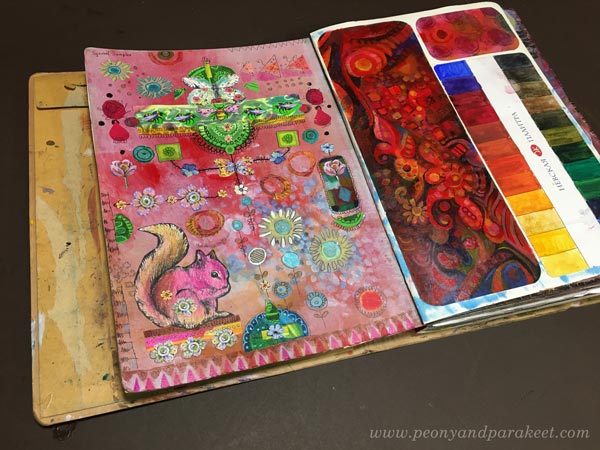
If drawing the whole ornament in one go feels too demanding, remember that the ornaments can also be collage art. You can glue individual elements so that they form a decorative tree or medallion. I have put together many kinds of ornaments from hand-drawn animals and hand-decorated papers.
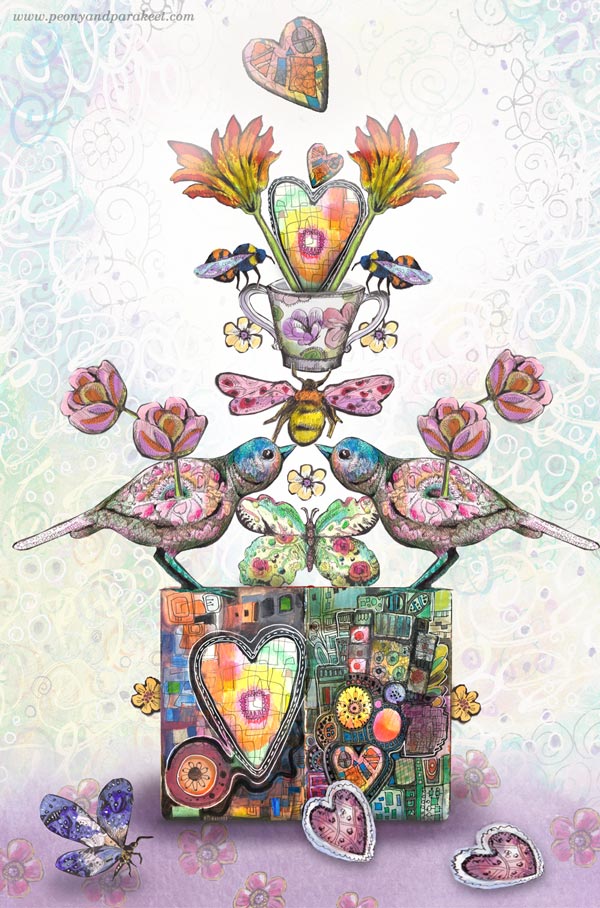
You can also scan or photograph the drawings and assemble the ornament digitally with an image processing program. Here are animal figures and flowers from the course Animal Inkdom and a teacup from the course Magical Inkdom.
Drawing Ornaments is Expressing the World
After working with ornaments for a while, you begin to realize that the world is largely based on them. Surface patterns are everywhere. The beauty of organic forms can be found in all living things.
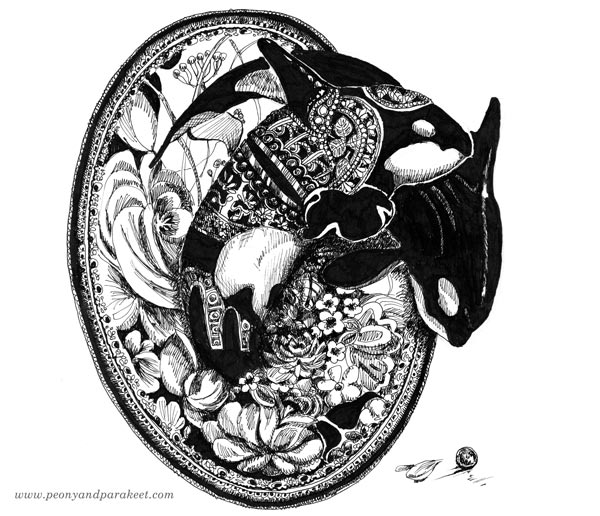
Ornaments build a bridge between the living and the non-living. They make the living an object and the object alive.
Hidden Love for Ornaments and How it Shows
I think that many of us have an innate need to design ornaments. Maybe you dream about designing fabrics or have a huge stash of them. Maybe you collect jewelry or save photos of them. Maybe you feel that something is lacking if you only draw or paint complete images and are not able to rearrange the composition so that it’s something more stylish and less representational.
I only realized this tendency of mine when I made ornaments as part of the illustration for a children’s book. Back then, I used transparent marker paper to design the symmetry, and my desk was full of different versions.
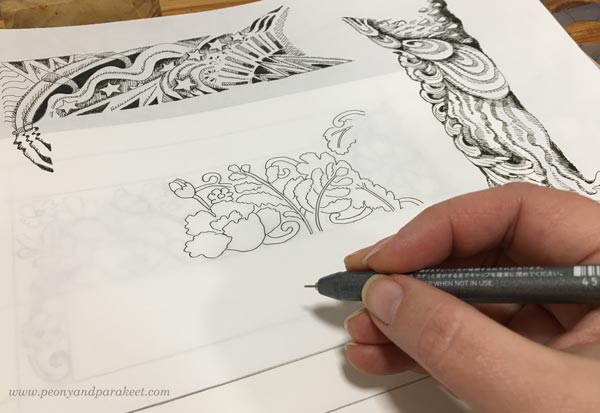
One day when picking the pen, I suddenly felt happy and meaningful: “I should do this more!” Since then, I have not underestimated even the smallest encounters with ornaments.
Drawing Ornaments Inspired by Embroidery
I relax from my work as an artist by doing cross-stitch and those projects also inspired me to draw ornaments.
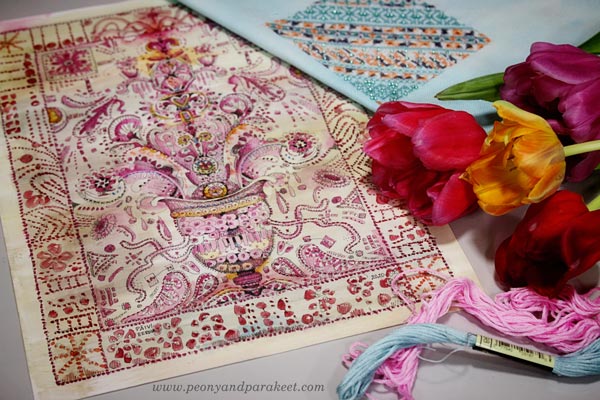
See here how to draw and color an embroidery-inspired ornament – Doodler’s Sampler Step by Step!
Drawing Ornaments without Perfect Symmetry
I drew the last ornament with the ProCreate app. The good things about it are that the background can be kept separate so that the background colors can be varied and it is easy to create symmetry. However, I think completely symmetrical ornaments are a bit too stiff and boring, so I also made quite a lot of asymmetry for this ornament.
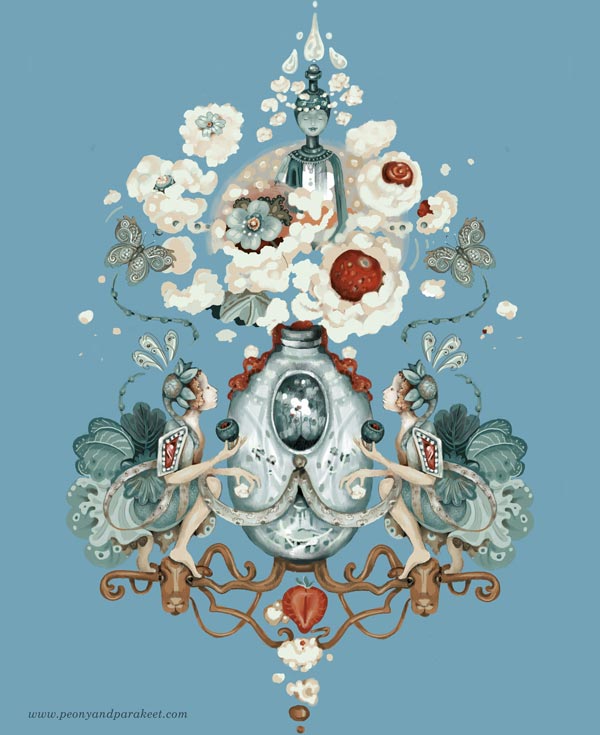
I hope you will start drawing ornaments right away whatever technique you choose!
Related Courses
- Doll World – drawing human poses – Buy here!
- Animal Inkdom – drawing animals – Buy here!
- Magical Inkdom – drawing fantasy – Buy here!
- Collageland – inspired by embroidery – Buy here!
Birth of the Attic Paintings
What stories define you as an artist, and how could they inspire you to move forward?
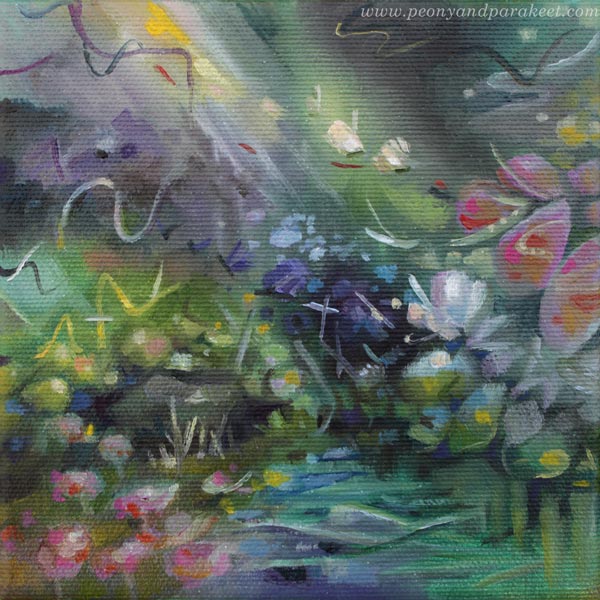
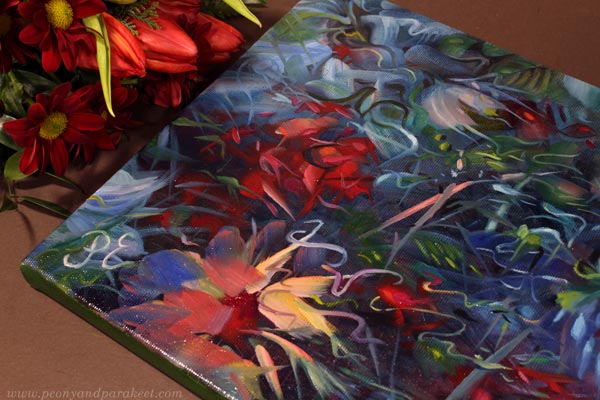
“Satumaa” is a Finnish word that’s something like “fairytale land.” This painting is only 15 x 15 cm!
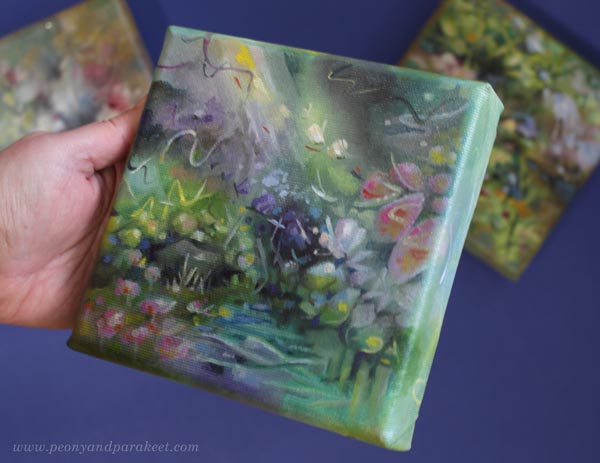
I call these miniature pieces attic paintings. Here’s the story behind them.
Päivi’s Attic
When I was a child, I dreamed about running a shop. My main interest there was in product development. I wanted to design things and offer an attractive selection. We lived in a wooden house with a big attic, and I established my shop there. It was called “Päivin puikko” – Päivi’s Needle and had a modest selection of hand-crocheted things.
I remember the joyful sound of footsteps on the staircase when my two sisters came to visit. They were a lot older than me and had coins with them too. When they admired the little handmade items on the table, the feeling of acceptance ran through me. One sister grabbed a long chain and asked how much it was. “Twenty pennies,” I said. “But this is so long,” said the sister, ” you worked hard for it, I give you fifty.” Sold!
Stories That Define Us
The stories where we experience big feelings define us. I realized that when I tried to figure out how much I have to raise the prices of my paintings. It was necessary as I have grown as an artist, and the general prices have come up too. But a little child in me said: “Don’t!”
“Why,” I asked.
“Because your paintings are already too expensive for my shop in the attic,” she whispered.
And yes, I couldn’t imagine selling my big paintings in that little corner. Yet, I wanted to have something for her too.
“Here’s what we do,” I said to the child. “I will raise the prices, but I will paint some small studies for you, only 150 EUR each.”
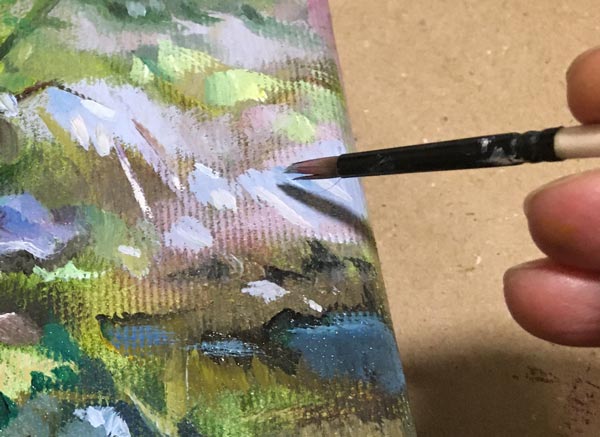
And that’s how these miniature paintings were born.
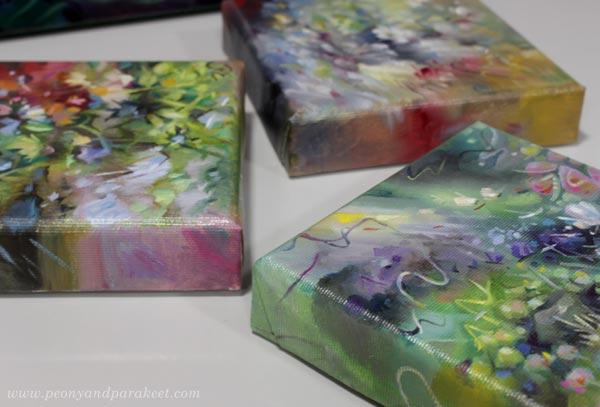
I call these attic paintings. The size is only 15 x 15 cm, and they are born from left-over paints. They are the same high-quality oil paints that I use for bigger pieces, but I often have leftovers on the palette after a painting session.
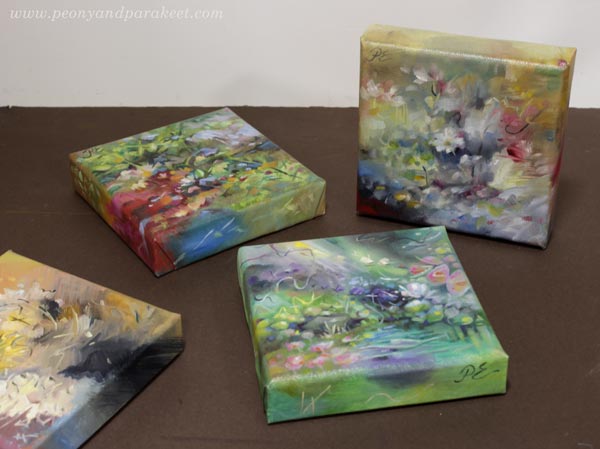
I am now much more comfortable with the higher prices when I have something for the attic – and for gift shops too!
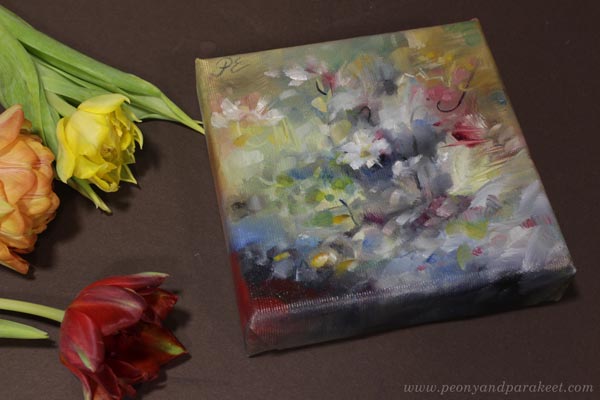
Valkovuokko
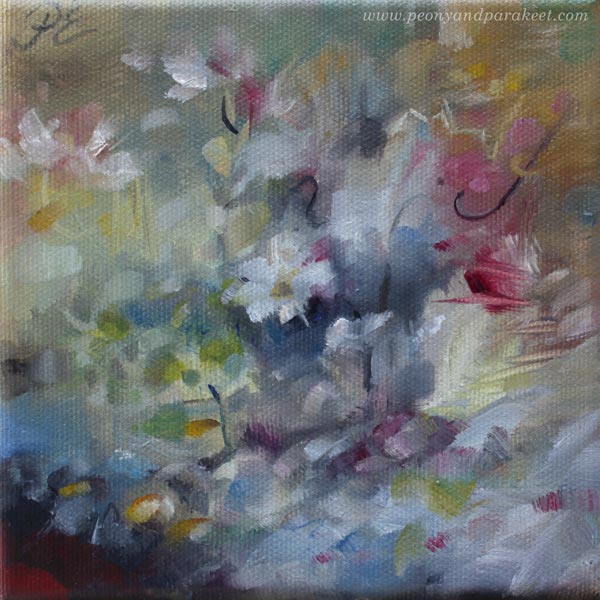
The English word for “Valkovuokko” is “wood anemone.”
Mansikkapaikka
“Mansikkapaikka” is “a strawberry place” in English. I was thinking about wild strawberries here.
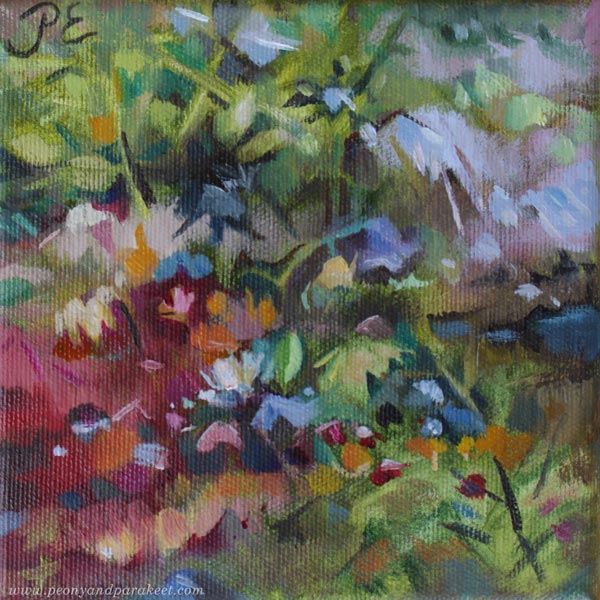
These small canvases work well for studies. It’s good now when I am practicing Albert Edelfelt‘s painting style for my upcoming exhibition in Villa Albert.
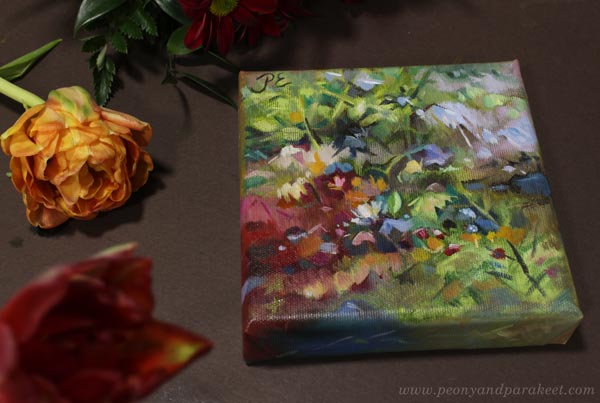
Mansikkapaikka is inspired by Edelfelt’s painting Ahomansikoita.

Satumaa
I like to paint sceneries that are overly romantic and full of fantasy.
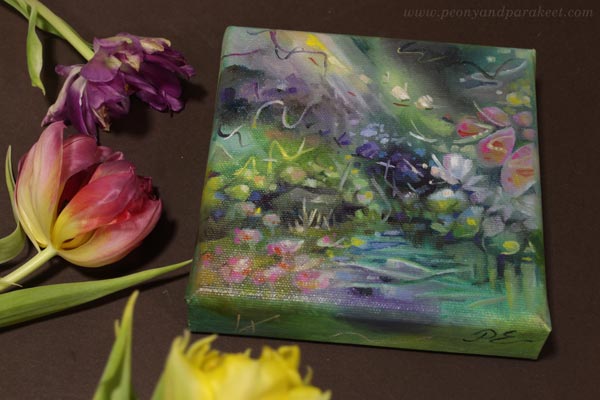
Satumaa was inspired by an older painting called “Luvattu maa – Promised Land.”
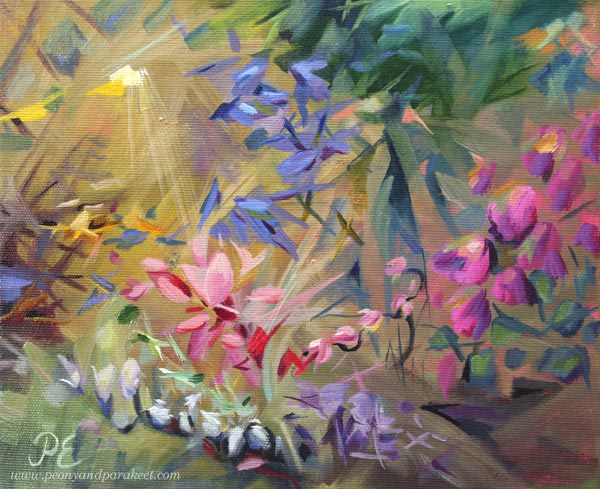
Promised Land was so much fun to paint that I wanted to repeat the idea of using a limited selection of shapes and expressing plants traveling toward the light.
Attic Paintings – Expansion of Style and Love for Plants
I placed “Mercury Temperatures” with the attic paintings to see how the small ones go with the bigger ones.
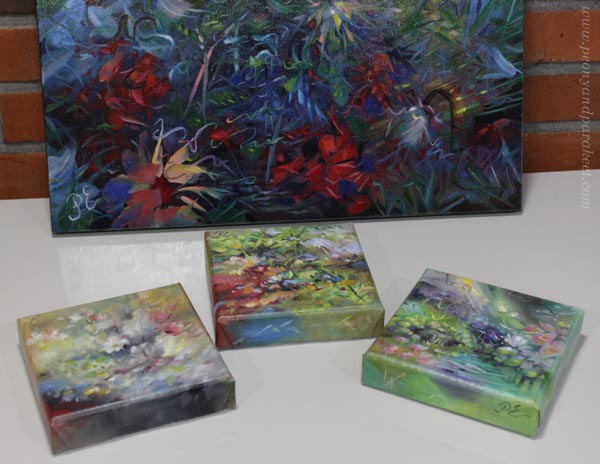
My love for plants and yearning for nostalgia and fantasy are well presented in both, I think!
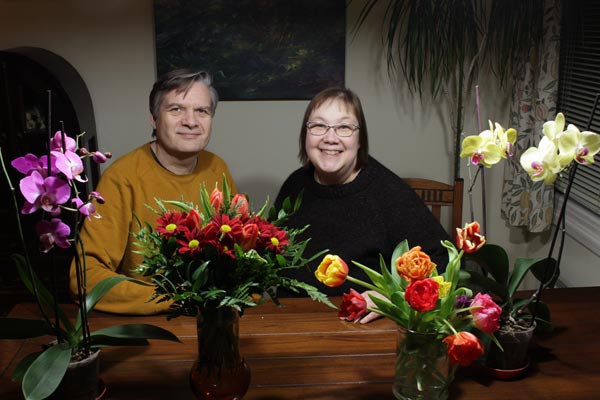
My husband and I are enthusiastic about plants, especially decorative ones. Our home is like a flower shop now when I have got some bouquets for my birthday and when orchids are blooming.
When I think about the shop in the attic, I wonder how I could not see its influence earlier. The stories that define us can prevent us from growing. But the stories can also be the key to solutions that enable growth and change.
What do you think?
Learning from Artistic Influences – Answering a Question
This week, I have a letter for you who want more from your art. Success looks different in different stages, but wherever you are in the artist’s journey, intuition says that moving forward will be tedious. So, it’s tempting to find a shortcut.
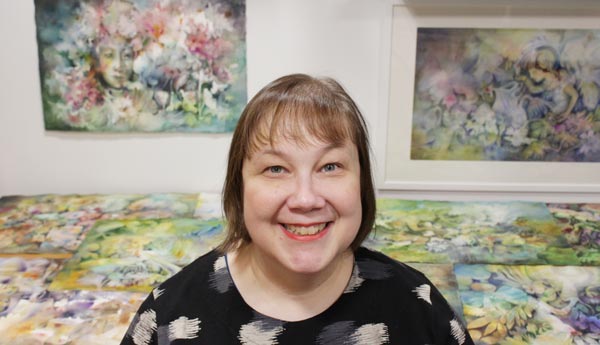
Last week, I got a message from a reader asking if I could recommend one or two artists that have influenced your work. “Who, in your opinion, is someone a new artist must learn about?” she wrote.
Here’s my answer to the message with some additional explanations and images.
Listing Artistic Influences
There are a lot of things that have influenced my work, starting from the slow and long summer days as a child in Nothern Karelia, browsing art history books in a local library, studying computer engineering and learning conceptual thinking, studying industrial design and learning the basics of visual communication through shapes, reading Paul Klee’s Pedagogical Sketchbook, learning old master techniques first in a couple of courses, then on my own, etc.
Two artists that I have admired in the past few years have been Peter Paul Rubens, a Baroque painter, and Wassily Kandinsky, an abstract art pioneer.
(These artists have inspired me to teach as well. In the last section of Floral Fantasies, you learn old master’s techniques, and in Floral Freedom, you learn abstract art through Kandinsky’s and Klee’s ideas.)
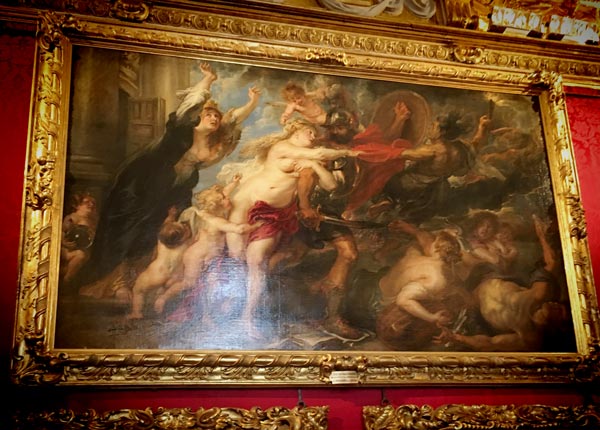
Read more about my visit to Palazzo Pitti in 2017!
However, these may not be the answers you want to hear. The answer that is most beneficial for you is to ask yourself what’s the root reason for the question.
Questioning Your Direction
When I was searching for an answer to that question about ten years ago, I wanted to find a direction that would take me to the art world. I knew my skills weren’t spectacular, so I wanted to find someone successful who creates art that is simple enough. But then I realized that my taste was a way further, and the only admiration I had for those artists was in their courage to come up and the success as far as I was then able to define it.
I believe in intuition, and based on that, I assume that you are at the intersection, wondering whether to start going further forward: becoming braver to share your work, build stronger technical skills, and move to the next level in what influences your art and how.
In the next level, the answers become more complicated and multi-faceted. You should learn more about art history and all kinds of contemporary art, go to art museums and galleries, and stop to think not only on the level of “I like that red” but on a more conceptual level: “what does that red represent and how could that effect be created in other ways too?”
Expanding Knowledge and Inspiration for Art
As an artist, you belong to the chain of creative generations, and your roots are long and broad.
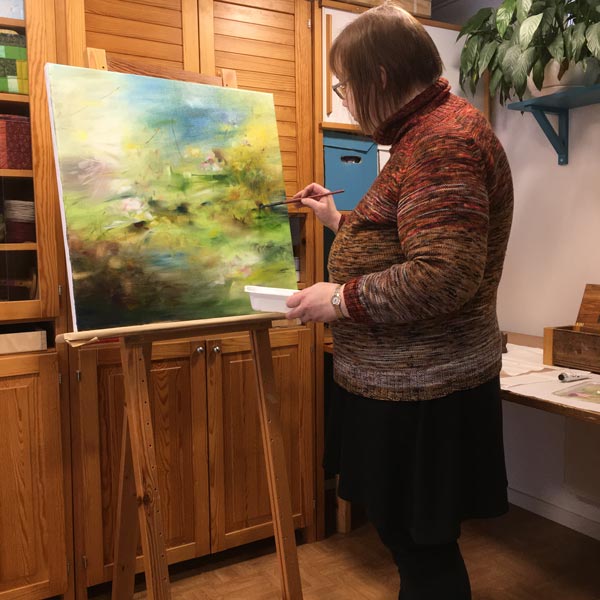
You might also be in a spot where you need to start looking for inspiration outside art, expand into designing, illustration, architecture, and further: nature, culture, and whatever fields are close to you. Art happens when things collide. The nature of art is to expand, not narrow down.
My letter ends here, but how would you have answered the question? Leave a comment!
In the Mood of Albert Edelfelt
This week, I present you a Finnish artist Albert Edelfelt and talk about my upcoming exhibition.
This month, Albert Edelfeltin säätiö – Albert Edelfelt’s foundation contacted me. They invited me to participate in a group exhibition in their villa starting in August. I went to sign the contract this week.
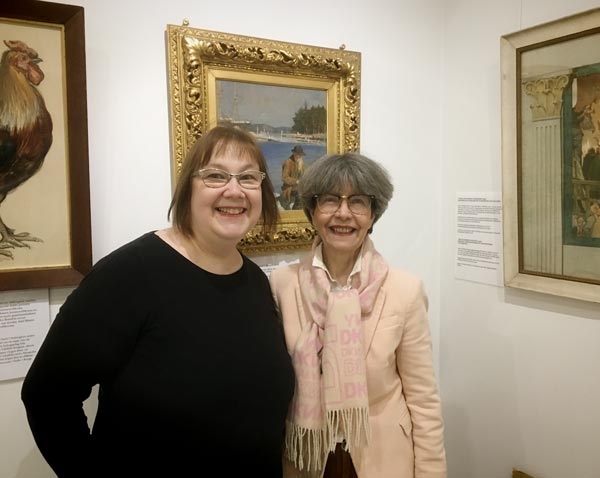
This is very happy news! If you have read my blog for some time, you know I love art history. Even if I follow contemporary art actively, old paintings inspire me more. Many of the techniques that I use for my paintings are old, even if the expression is abstract or half-abstract. So, one of my secret dreams has been to display my paintings with historical ones.
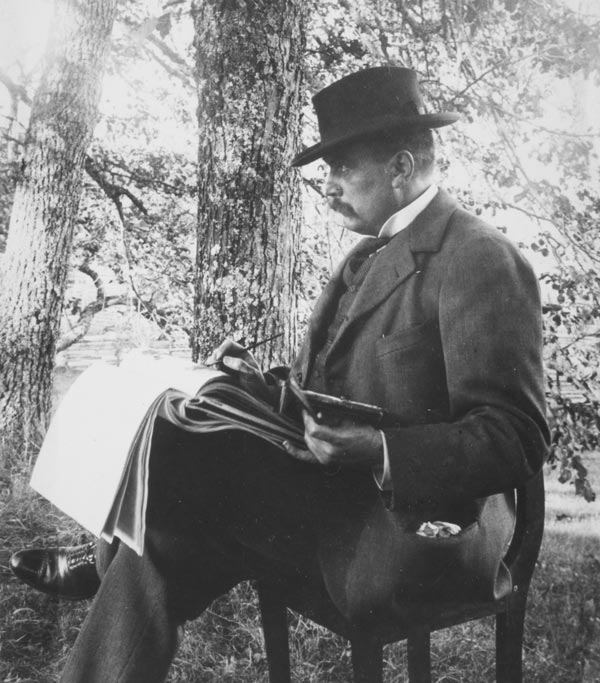
Albert Edelfelt
Albert Edelfelt (1854 – 1905) was one of the most famous Finnish painters. He painted portraits and landscapes and, in my opinion, was exceptionally skillful in sceneries that had a group of people. He also made illustrations, studied and worked in Paris, and lived in Haikko, Finland, where his foundation is also located.
Here’s a better picture of the painting “Onkiva ukko” – a guy fishing – that you can see in the background of the first photo, taken in Villa Albert of Albert Edelfelt’s foundation.
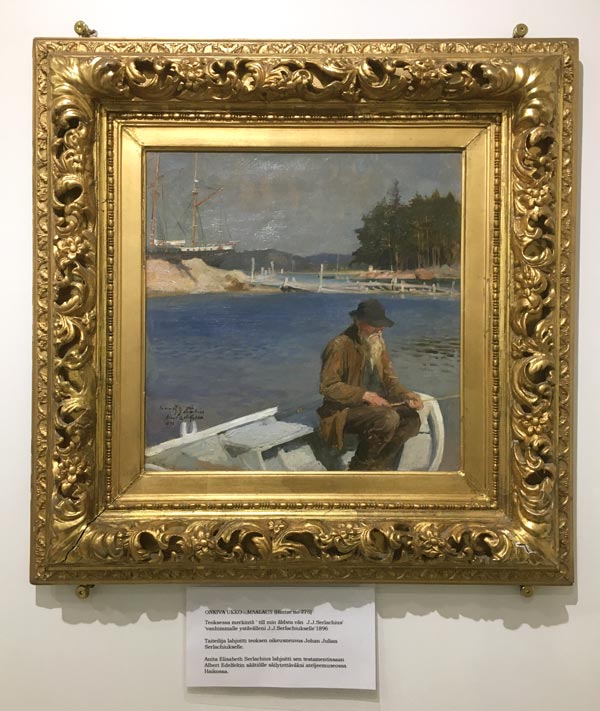
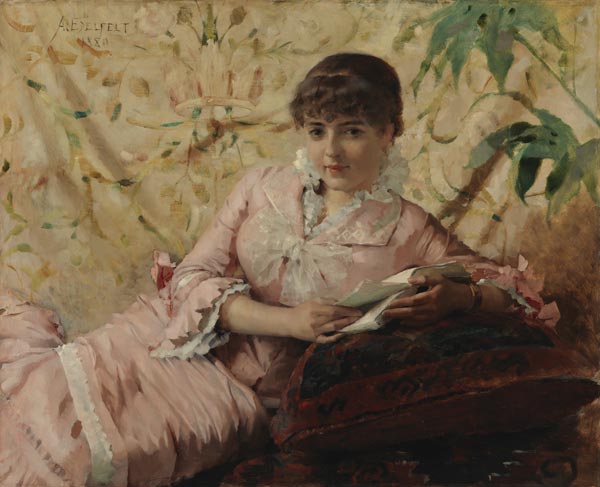
One of Albert Edelfelts most famous paintings, especially in France, is the portrait of Louis Pasteur. And many of his female portraits are so romantic, look at this one, for example!
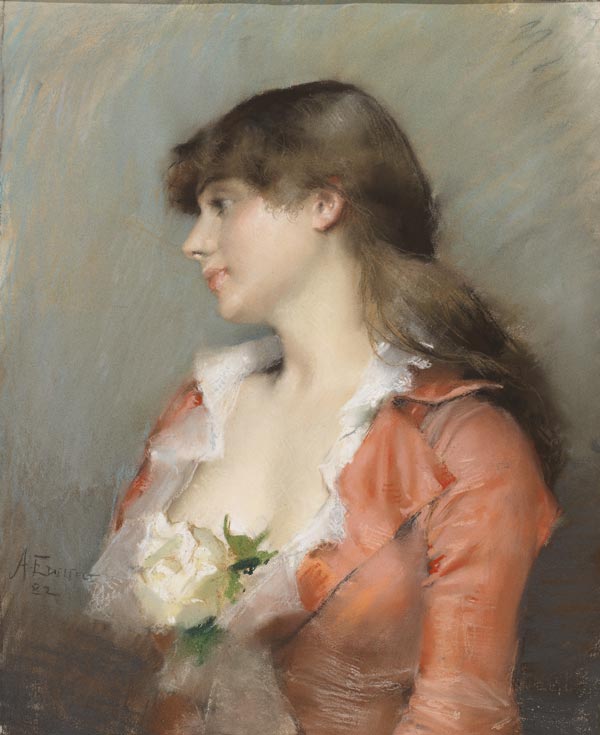
And look how careless the strokes are here, still expressing the essential so skillfully!
But Albert Edelfelt didn’t only paint young beauties. See this one:
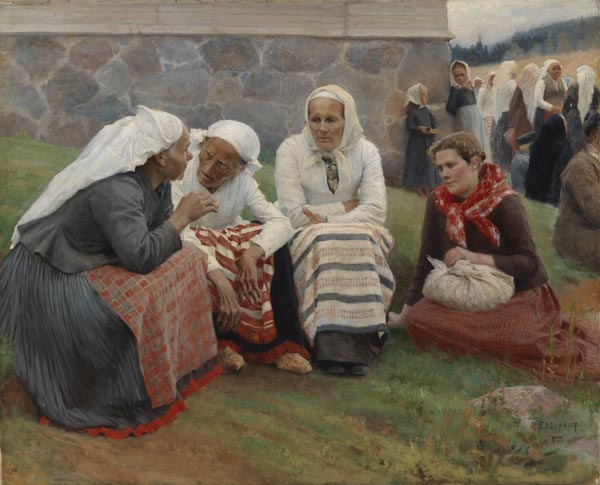
Browse more here: a big collection of Albert Edelfelt’s paintings
Last year, there was Albert Edelfelt’s big exhibition in France, and it’s now in Göteborg, Sweden, then later in May in Finland.
Villa Albert and The Haikko Area
Edelfelt’s studio is still up. It’s a small wooden cottage and a popular sight. Villa Albert is a new building in the same courtyard. It has a gallery space and a gift shop.
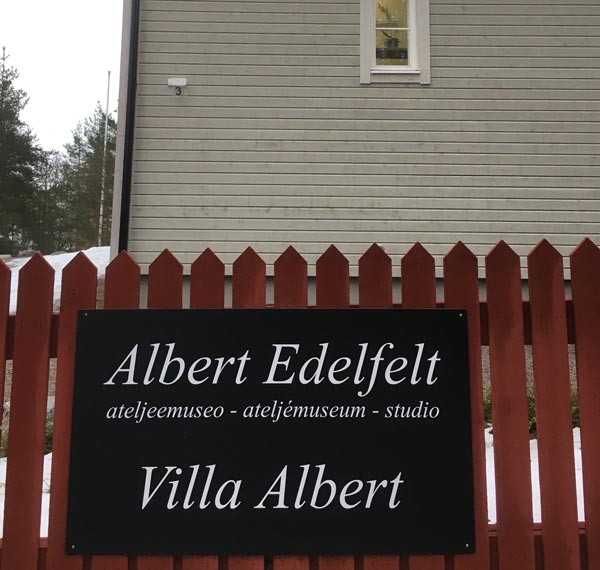
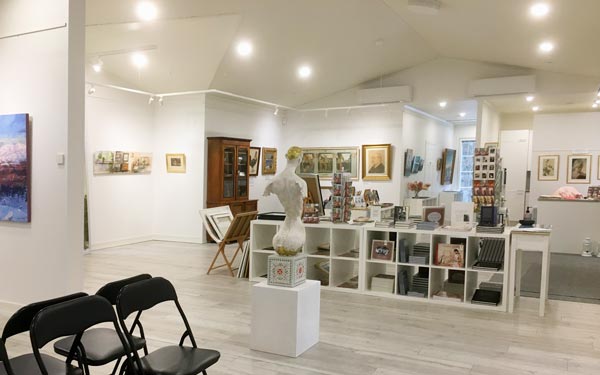
The Haikko area is beautiful. The sea is right there, and a beautiful manor hotel, Haikon kartano, is only a walk away.
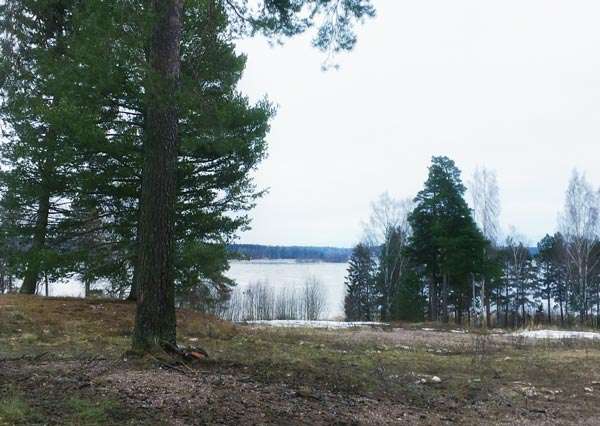
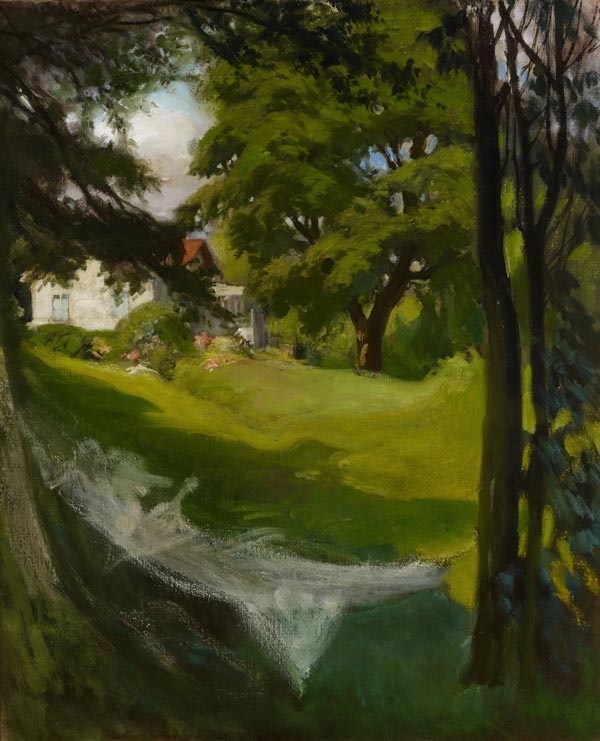
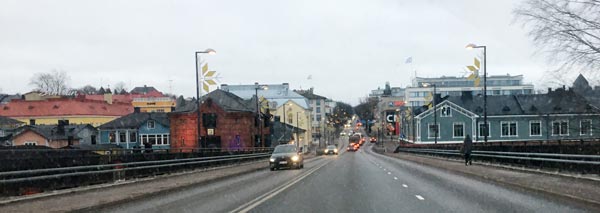
This area is very different in summer, much more welcoming than in the picture that I took this week. Here’s Albert Edelfelt’s painting of his villa in Haikko, currently privately owned but still up and located near the studio.
It takes only 15 minutes to drive to an atmospheric old town Porvoo, which is also a very popular tourist attraction.
Artists in the Mood of Edelfelt
I will be painting a new series for the exhibition called “Taiteilijat Edelfeltin tunnelmissa” – Artists in the mood of Edelfelt. Even if Albert Edelfelt was a portrait painter, my intention is not to paint portraits but plants. I am excited to pick inspiration from his work, though!
The exhibition will have four other artists too: another painter Kristina Elo, photographers Maarit Lehto and Niclas Warius, and a sculptor, Kaj Lindgård. I am very happy to be displayed with these wonderful artists.
Aug 8 to Oct 10, Taiteilijat Edelfeltin tunnelmissa (Artists in the Mood of Edelfelt), Villa Albert, Haikkoo, Porvoo.
Coming Up in This Blog
This spring, you will see me painting for the exhibition, and I will also share some details of Albert Edelfelt’s life. Between those, I will be posting more playful posts – drawings and journal pages – so, as usual, art history, my oil paintings, and more illustrative work will alternate in this blog. I hope you find all this very inspiring.