
Watercolor Panoramas to Express Travel Memories
I try to have a wide range of topics on this blog, but now I am posting watercolor sceneries again! (See the last week’s post). I have quickly become addicted to them! It all started with buying Daniel Smith watercolors and realizing that many members of my community Bloom and Fly love watercolors. I try to grow my skills in most of the media that the members use. Then I can give advice that’s not only great in theory but also works in practice.
Not So Traditional Landscape Painting
A lot of reasons were needed for landscape painting because so far, it has been one of the most boring genres of visual art to me. I haven’t ever been the kind of person who travels with a tiny watercolor kit and sits down near the sights to paint the surroundings. I do usually carry a camera – often just my phone – when traveling or walking in nature but never before have I understand the fascination of the traditional landscape painting.
But last week, I realized that because art is freedom, I can be as wild and expressive as I want. That made the landscape painting a fun game. It gives me the opportunity to re-live the travel memories, get lost in the process, and then come out with a piece that’s like a souvenir from that creative experience.
Watercolor Panoramas – Playing with Expression
This time, I was not painting just one piece like last week, but five small panoramas at one go. I carelessly chose the reference photos for the last part of the process. I will talk about the process later in this post, but let’s talk about the expressive ideas first.
A) How Would The Place Currently Look?
When painting watercolor panoramas, it was interesting to see what travel memories come to mind and how they got merged with the current life.
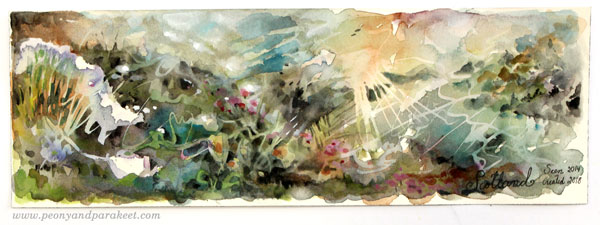
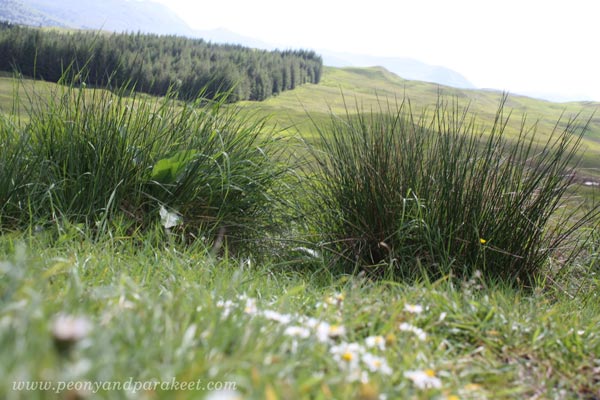
When we were in the Scottish countryside in 2014, it was a sunny day in June. The heat felt very similar to Finland’s summer. It was pleasant, not suffocating at all, and remembering it made me ponder how the spring would look there now – perhaps quite similar to Finland too.
This was the photo that I used as inspiration when finishing the painting.
B) The Chain of Memories
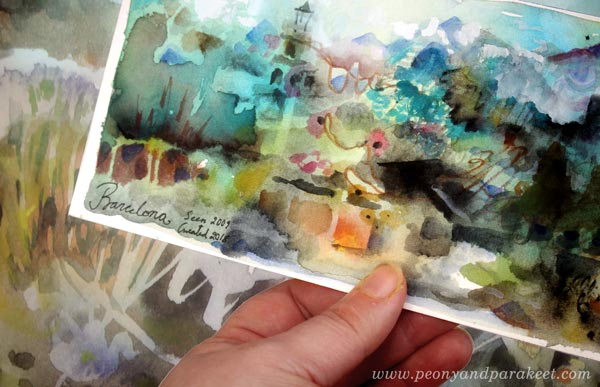
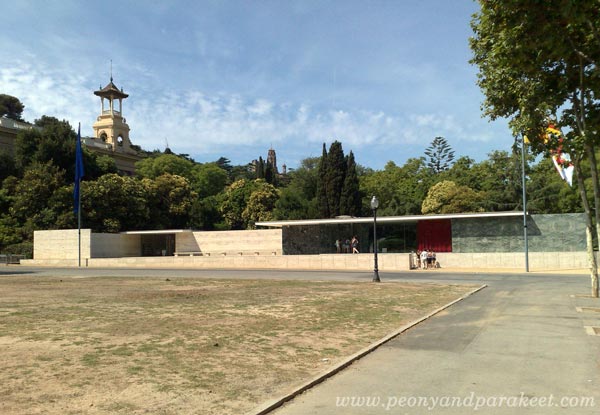
Barcelona was my husband’s suggestion in 2009. I wasn’t excited until I remembered Mies van der Rohe’s Barcelona Pavilion. And of course, the pavilion was also the first thing that came to my mind when I painted the panorama. But I also remembered Catalonia’s National Art Museum, Gaudi’s architecture, the mountains that surrounded the valley, the sea views, a lot!

The long chain of memories and locations started from this (not so artistic!) snapshot showing Barcelona Pavilion.
C) The Emotional Experience
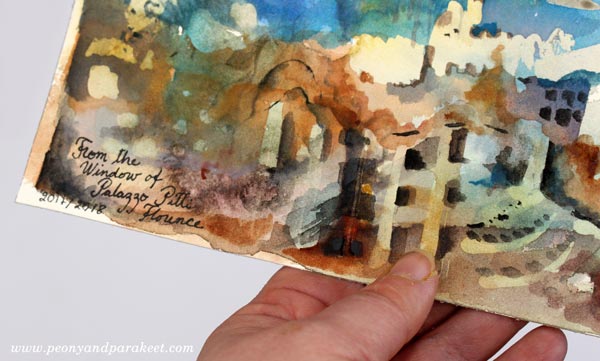
Last summer, we visited Palazzo Pitti in Florence, Italy. The place has inspired me ever since. I remember entering the museum and seeing the first room filled with chandeliers. It was a hot and relatively quiet evening in Florence, but my mind was buzzing. It’s like I was trying to get exposed to as much art and beauty as I could.
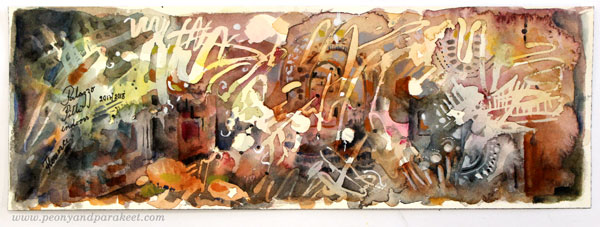
Here’s the photo that I had in hand when finishing the watercolor panorama above.

D) Being Far, Seeing Far
When being far away from home, it’s possible to see the life from a different perspective. It’s like rewriting some parts of the personal story. In the brilliant Palazzo Pitti, I had the same experience than when visiting Hermitage Museum in St. Petersburg, Russia: I should trust my points of view more, and not hold back. When I looked out of a window of Palazzo Pitti, it didn’t matter what other people saw there. I saw what I saw, and that’s true to me.
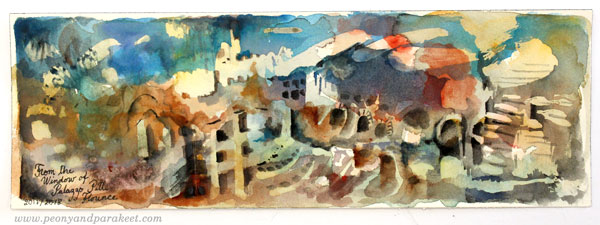
Here’s the reference photo that I almost deleted when I came back from the trip because it wasn’t so pretty. While painting, I realized that good reference photos are not only those which show the best scenes. The ones that remind from the best moments are also worth saving and painting.

E) Highlighting What Matters
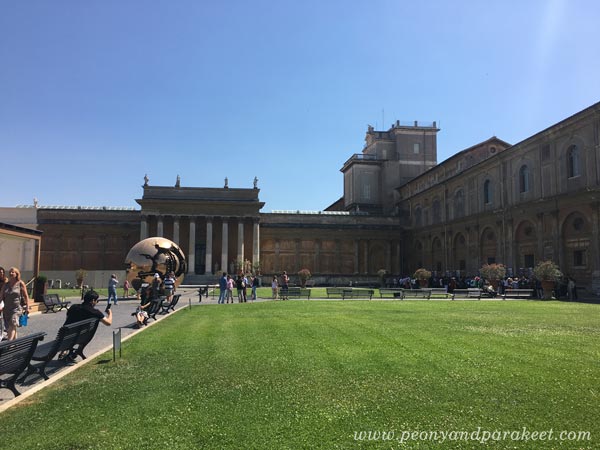
While traveling in Italy last summer, we visited Vatican Museums too. Some of the things that stuck in my mind were the huge maps on the walls and the incredible number of tourists. While painting, I thought how the old maps could be seen as symbols for the curiosity to know the globe.
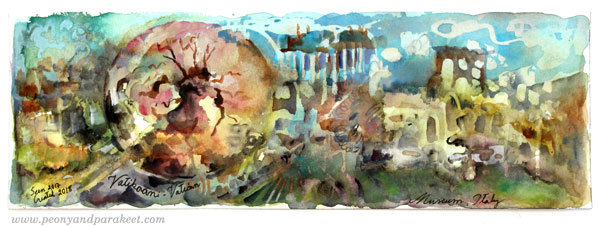
The statue of the reference photo (Arnaldo Pomodoro’s Sphere within a Sphere) expresses the complexity and fragility of the world. I made it dominate the scene in the watercolor panorama and made it look a bit like a round map. To me, it’s much more important than the buildings!
Watercolor Panoramas – My Process
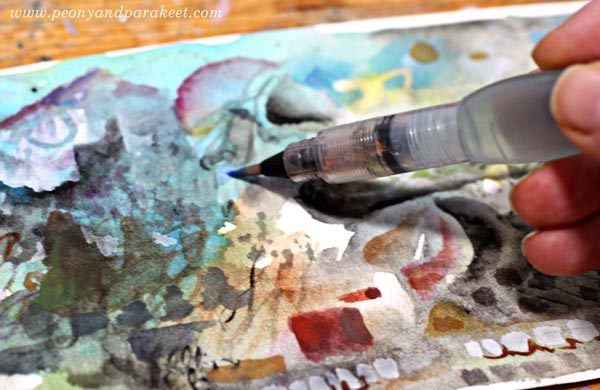
The idea for panoramas was accidental. I happened to find oblong pieces when going through the watercolor papers. I often like to paint a square, so I had cut away the excess of a blocked paper. I don’t usually work in this small scale. However, using a thin water brush most of the time, made it quite easy.
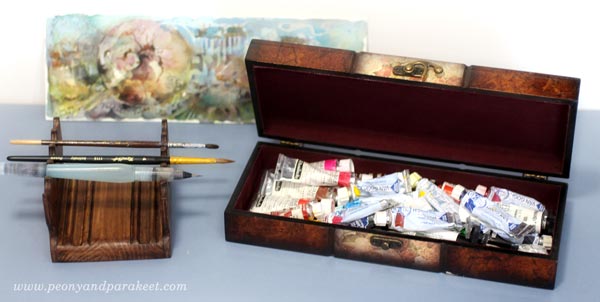
For the colors, I used a mixed collection of watercolor and gouache paints.
1) Background – Traveling to the Mind
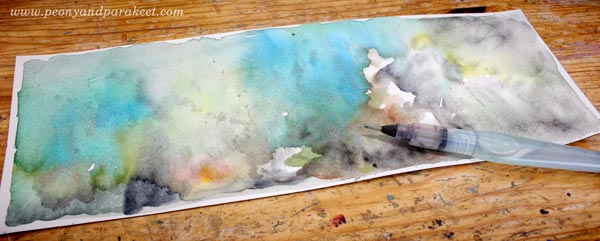
The fact that I didn’t use any reference photos until in the end, made the painting fun. The first layers were splashing and blending. I had no idea about the scene or the location that would appear on paper!
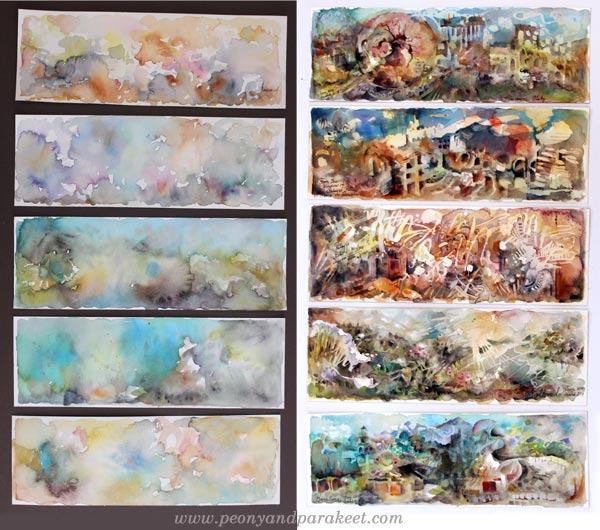
I took a photo of the backgrounds and then another one when the paintings were finished. Can you recognize which belongs to which?
2) Doodling with Watercolor and Masking Fluid
After I had painted the background, I started doodling. Working with five watercolor panoramas at the same time was handy. I could work with one painting while others were drying. I used both pigments and masking fluid for doodling. Some backgrounds had watercolor doodles first. Others went straight to masking.
At this point, I started thinking about a reference photo that could suit the painting. For some panoramas, I found the picture quickly. But there were a couple that raised no memories at all, so I just doodled this and that!
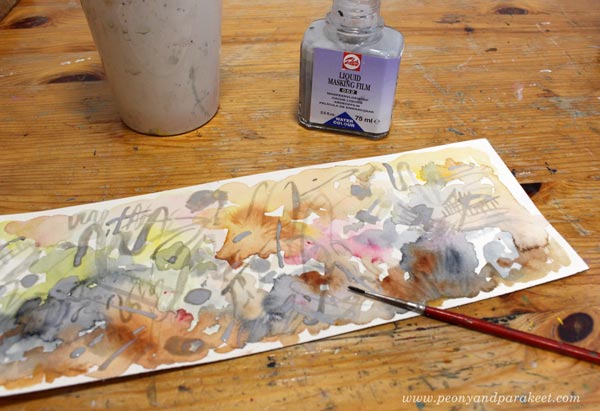
After the masking fluid had dried, I was having fun again. I splashed the paint and enjoyed the wonders of watercolor.
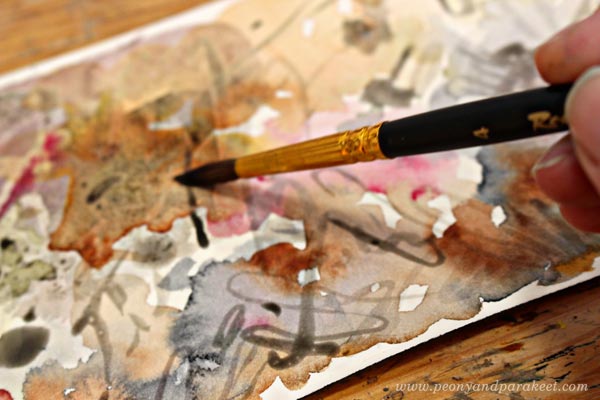
After the topmost layers had dried, I removed the masking fluid. Here’s “Scotland.”

3) Finishing the Painting with a Reference Photo
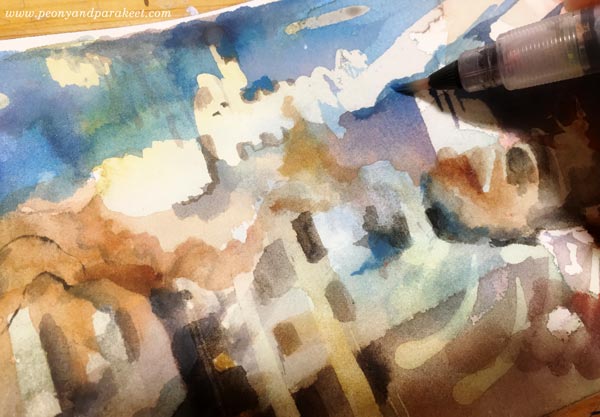
When aiming for an expressive and loose image, the reference photo is more like an inspiration photo. I can glance at it, pick some ideas and elements from it but I don’t follow it to the detail. I let my associations and memories override the photo and build an inner vision of the place. (My class Inspirational Drawing guides you to master this process more in detail.)
Why I Have Never Learned Watercolor Painting from the Books
Some elements of the panoramas are more abstract, some more recognizable. It’s important to cherish the abstract nature of art when making room for expression.
I must confess that during the years that I have experimented with watercolors, I have found the books and videos difficult to comprehend and adapt. Watercolor tutorials usually follow the reference photos very carefully. To me, it doesn’t make sense. I need to know “the code” – the logic and the principles behind the image, not just the image. After you’ve got the code, you can express much more!
As an artist, I have always been more interested in what something expresses than how it looks. I have often felt disappointed by the lack of the expression part in tutorials, so I try my best to focus on the expression when teaching others.
The Magic of Finishing Touches
To me, the most challenging step in creating is finishing. The first two steps are usually just happy happy happy, but then there is a danger that the project becomes sad sad sad.
The watercolor panoramas were quite easy to finish, but if I have bigger struggles, I use the camera for the whole creative process. Then I take a photo of my work and look at it in several ways, enlarge it, make it smaller, etc. It’s fast and makes the finishing much easier than just staring at the actual piece. In May at Bloom and Fly, I will show how to use a camera and other digital tools to make the most out of your art, even if the actual creating would happen manually.
The Summer Season (July-August) of Bloom and Fly is Watercolor Journey
>> Sign up here!
Painting a Loose Scenery with Daniel Smith Watercolors
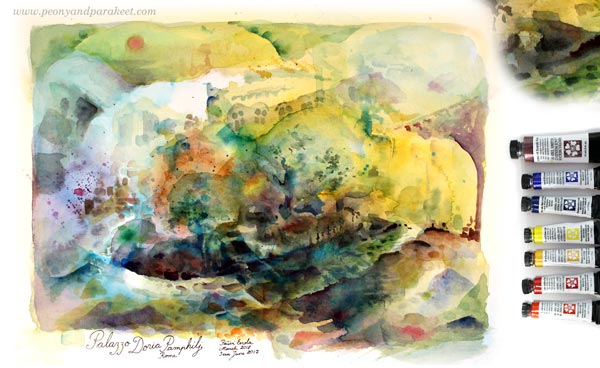
Last week, I did it. I bought some Daniel Smith watercolors because I had heard about them so much and for so long that I had to try them too. I bought the “Watercolor Essentials” set of 6 small tubes and a tube of Iridescent Scarab Red – a brownish red that has a green glow. Exciting!
Inspired by Ippolito Caffi
But what to paint? The idea came this week when I went to see Ippolito Caffi’s architectural paintings and landscapes at Sinebrychoff Art Museum in Helsinki. It’s the kind of art that I personally don’t like to create, but I enjoyed the exhibition. Here’s Piazza del Pantheon by Caffi, an oil painting on cardboard.
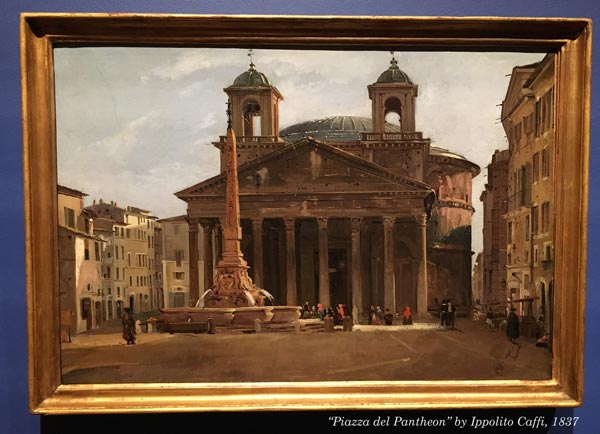
As said, realistic architectural urban scenes and landscapes are not what usually come to my mind when I start creating. But after watching a lot of scenes from Italy brought memories from my trip to Florence and Rome last summer. So why not pick a random photo of the trip and start painting?
Palazzo Doria Pamphilj
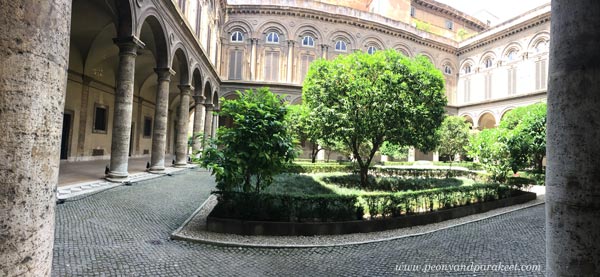
The photo that I quickly chose was taken at the inner court of Palazzo Doria Pamphilj, Rome. The palace has a wonderful art museum that I blogged in July 2017. I thought that I could use it as a loose reference and create something totally different, abstract perhaps. Painting a scenery with watercolors felt too traditional to me. So I just started splashing water and blue paint.
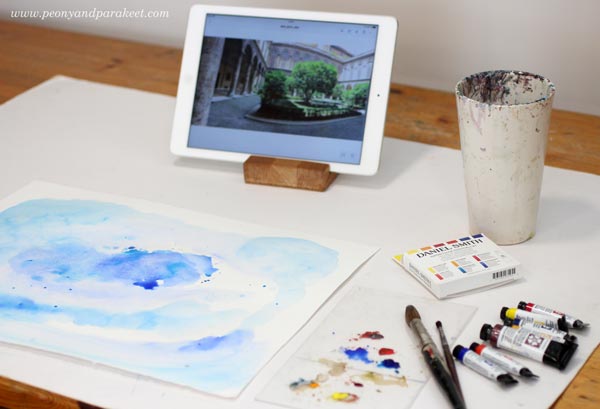
Scenery with Daniel Smith Watercolors
Daniel Smith watercolors are lively. Not only colors are lively but the pigment seems to travel quickly, and it creates wonderful effects.

Here’s my painting after playing with big brushes and water.
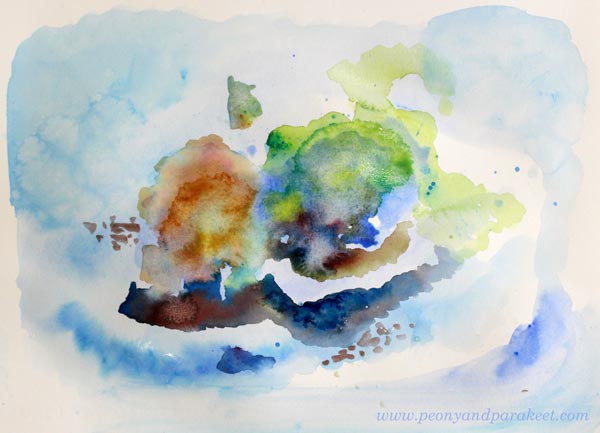
Then I changed to a water brush that is quite narrow. I love using this brush. It’s so easy to paint small details with it.
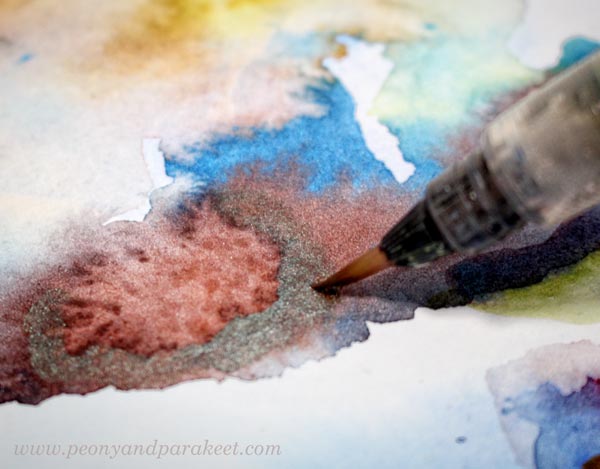
Iridescent Scarab Red looks interesting! Very different from any of the watercolors that I know. At this point, I thought about making a fantasy scene of some kind.

Time to loosen up!
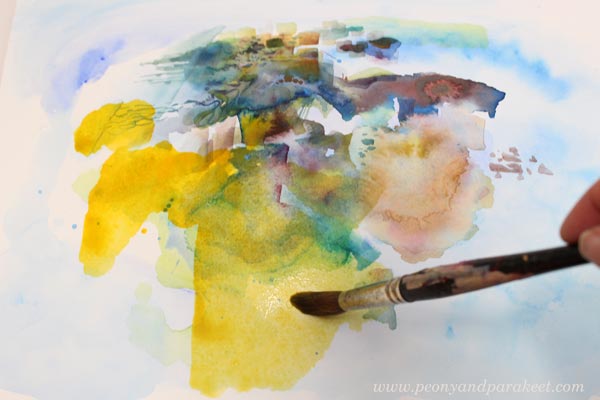
The more I painted, the more tempting it became to paint Palazzo Doria Pamphilj as I experienced it. It was a really hot summer day when I visited it. It’s located in the middle of busy Rome, yet its thick walls seem to isolate the museum from the city.
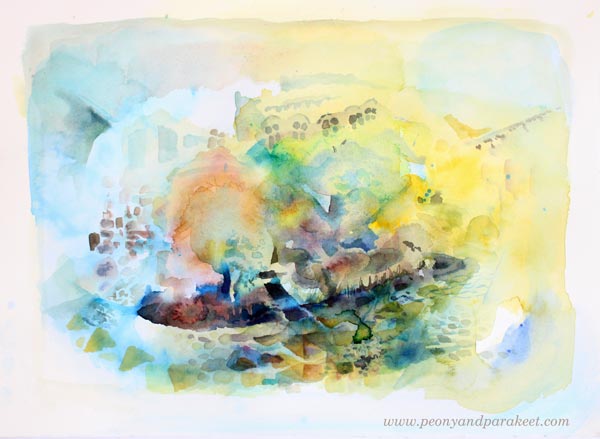
I let the image be visible while I was working but did not follow it to detail.

I found Daniel Smith’s watercolors easy and fun. I don’t like the color selection of the Essentials set so much, and the paints are really expensive compared to any other brand. The owner of the art supply store said that he likes to sell the essentials set at a fairly low price because once you try them, you are hooked and need some more. He may be right! But because I spend quite a lot of money in top quality oil paints, I might not buy more Daniel Smith shortly.
Finished Painting and Signature
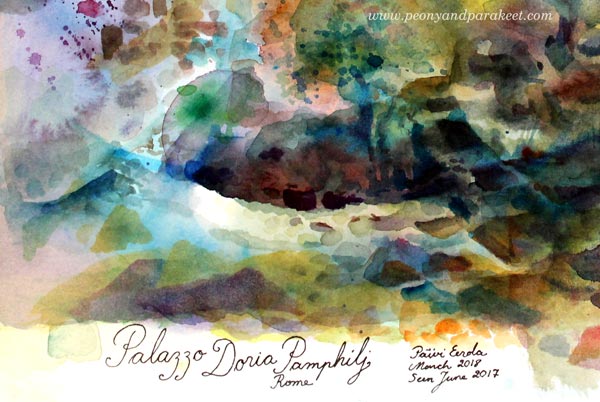
The painting of Palazzo Doria Pamphilj became quite loose, but it’s ok. I enjoyed connecting with the memories, and this is a bit like a souvenir from the place.
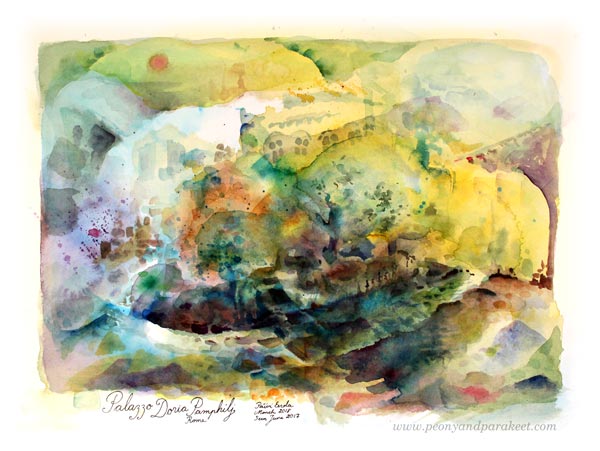
At my recent visit to the museum, I also saw Giovanni Battista Piranesi‘s amazing graphic works. They had beautiful signatures, so I also added one to the watercolor painting. I think it finishes the painting nicely.
This project is a perfect example of how being a bit adventurous can open new ideas. Landscape and architectural painting don’t feel so boring to me anymore! I have ideas for next quick paintings too. This kind of exploration is not only fun but also important for the creativity. If you limit yourself to one theme, to one type of work, creating becomes tedious. To me, this kind of small and quick projects give ideas and energy to bigger paintings.
Create with an Inspiring Community – Join Bloom and Fly!
When you have been creating art for a while, it’s time to let go of step-by-step instructions, get a little looser, and explore the opportunities that art has for you.
Bloom and Fly is a community for you who wants to explore visual and adventurous ideas, get feedback and suggestions for your art, and connect with like-minded art enthusiasts. We have a private Facebook group, monthly themes, live sessions, and weekly opportunities for practical help and feedback.
Registration is now open for Spring season (April – June 2018): Sign up here!
10 Rococo Art Ideas for Creative Romantics
This week I share some old and new pieces that are inspired by Rococo and give art prompts for all who are like-minded romantics. Let’s send greetings to Marie Antoinette, and create some Rococo-inspired art!
1) Masquerade
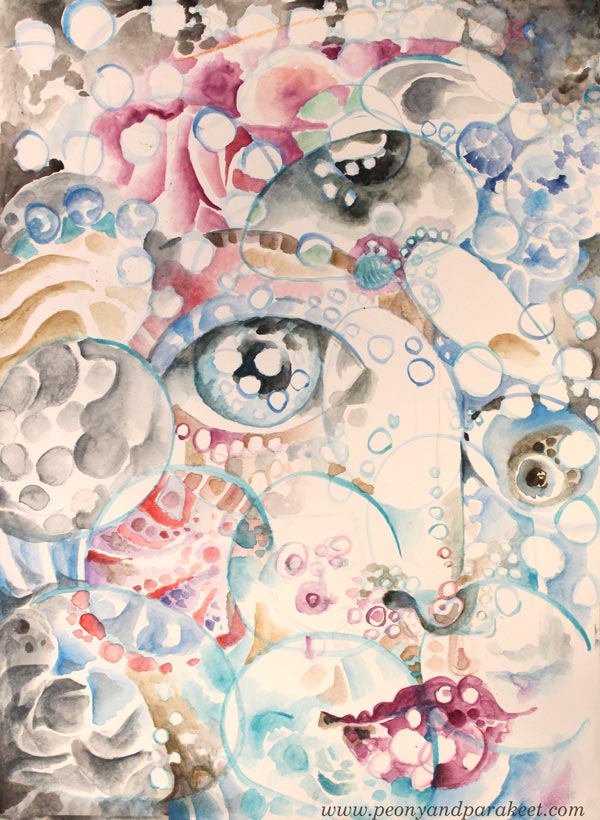
2) Passion for Jewels
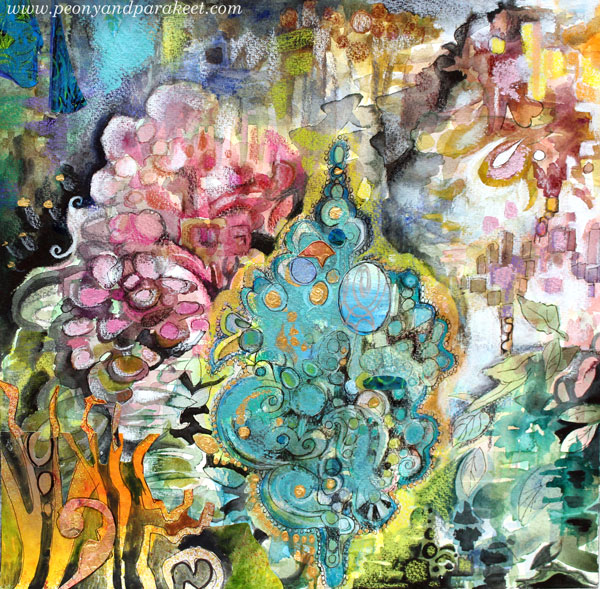
3) Bird’s Nest
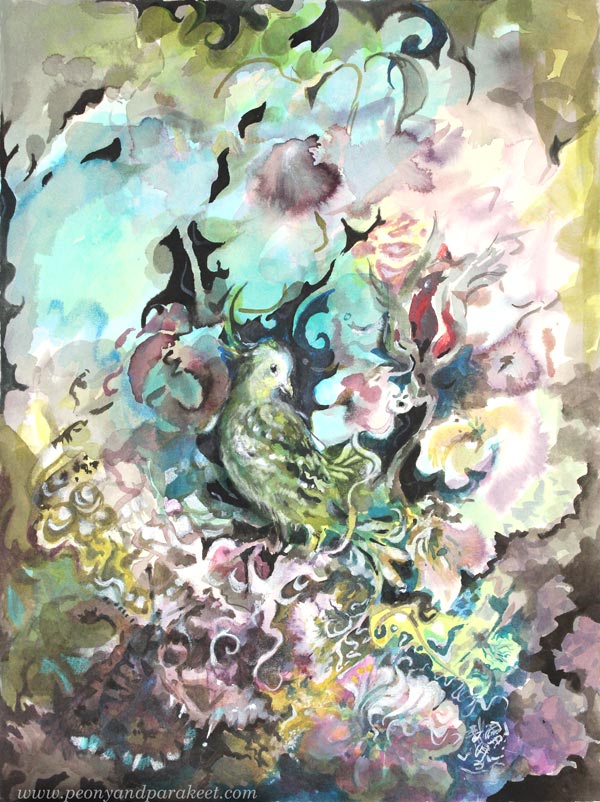
4) Listening to Mozart
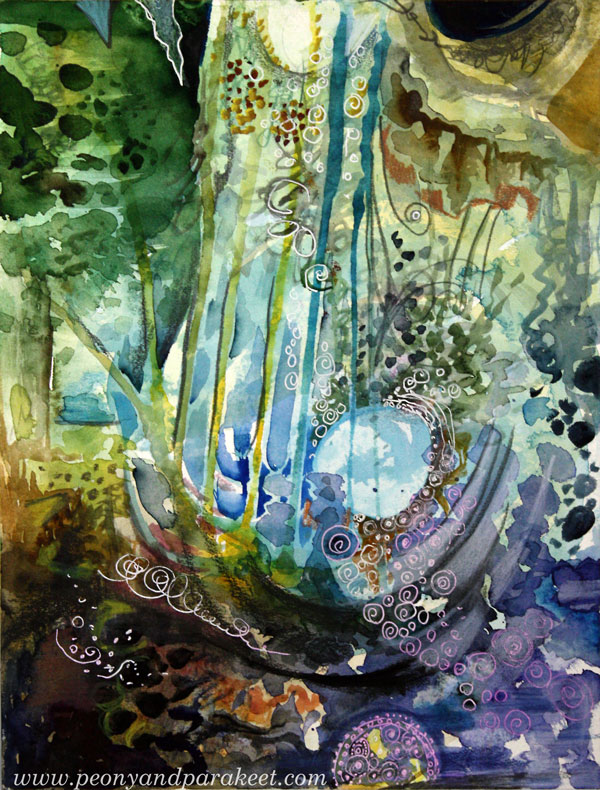
5) Anyone Can Fly
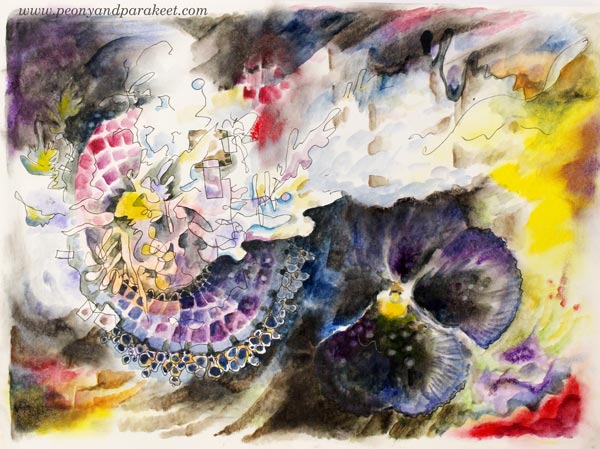
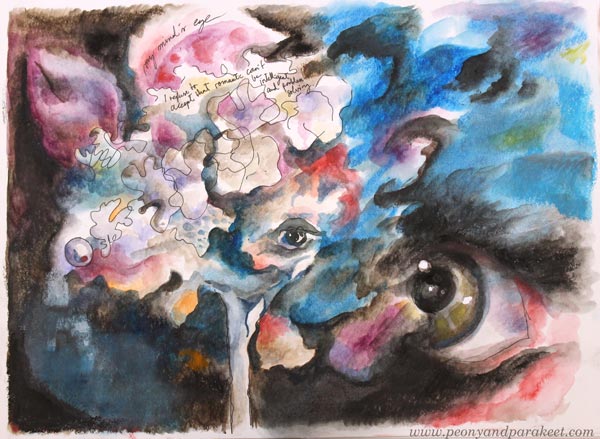
6) Eye of a Romantic
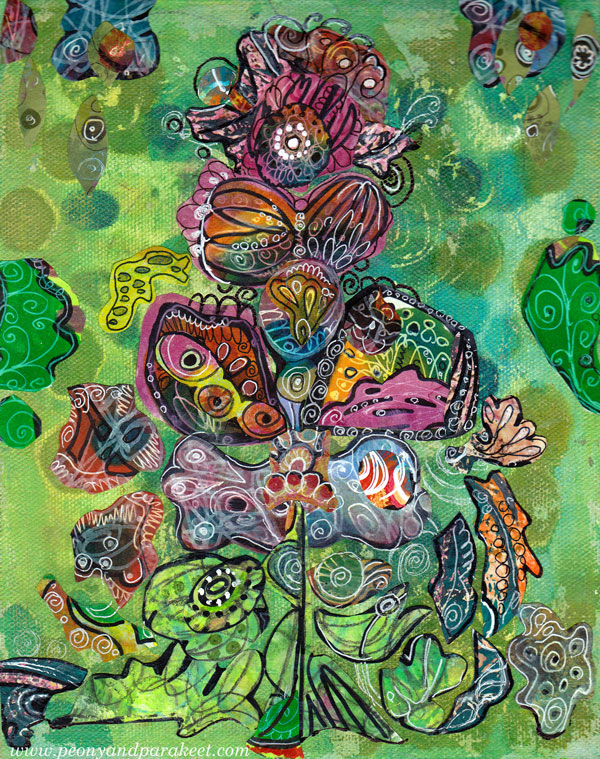
7) Ornamental Figure
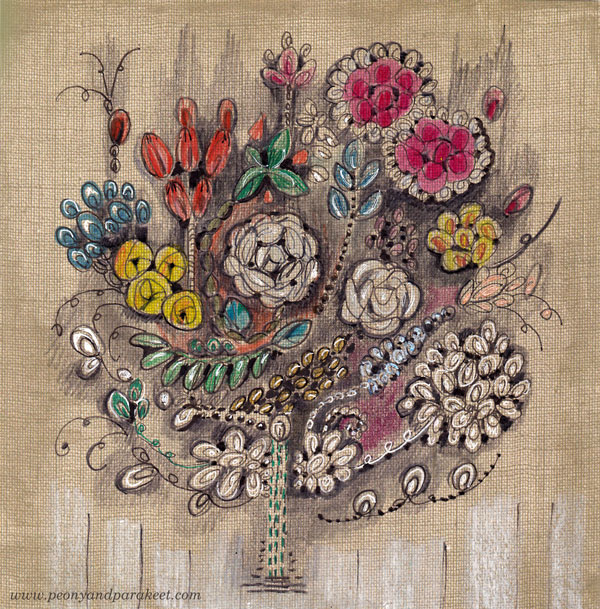
8) Mimicking Embroidery
9) Loose Ornament
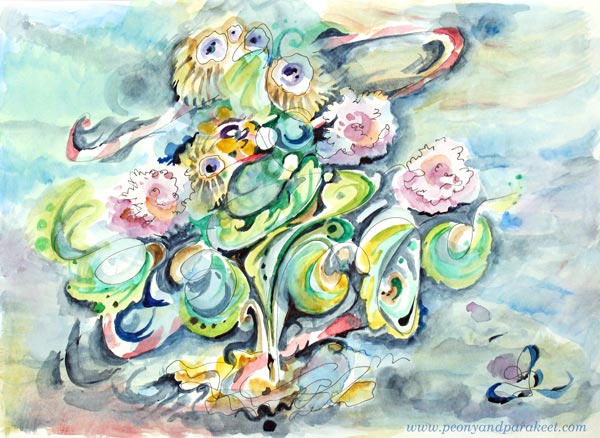
10) Softness All-Around
Join Bloom and Fly – Move Forward with an Inspiring Community!
Bloom and Fly is a community for you who wants to explore visual and adventurous ideas, get feedback and suggestions for your art, and connect with like-minded art enthusiasts. We have a private Facebook group, monthly themes, live sessions, and weekly opportunities for practical help and feedback.
Bloom and Fly is geared for those who have been creating for some time. It doesn’t offer regular step-by-step walk-throughs where everyone creates the same project. You will get ideas, tips, and process photos around the monthly theme but if you are a beginner, buy one of my self-study classes (for example, Inspirational Drawing 2.0) to accompany your membership!
Registration is now open for Spring season (April – June 2018): Sign up here!
Intuitive Painting with a Reference Image
Intuitive painting with a reference image – can it be possible? Let me show you how!
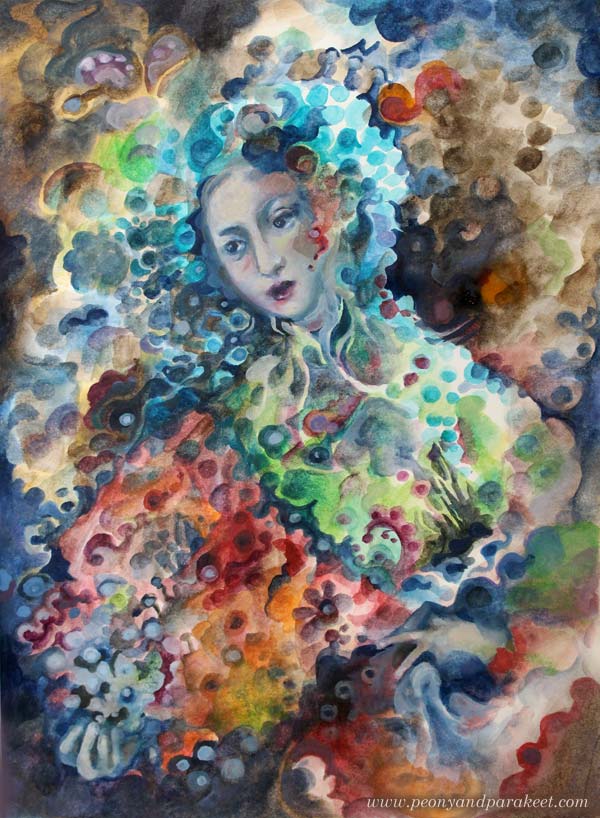
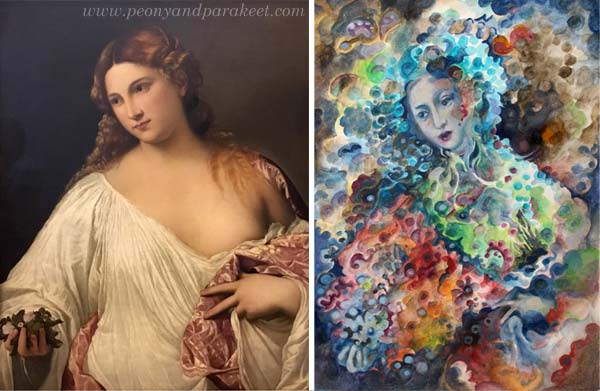
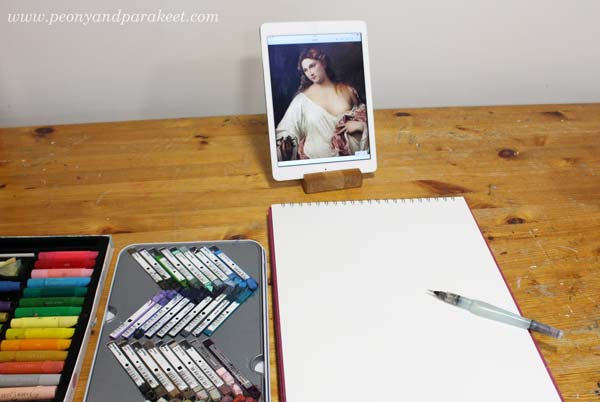
Here’s a painting from my sketchbook. It’s called “Madama Butterfly.” My reference image was this Renaissance painting called “Flora” by Tiziano Vecellio, 1515-1520. I took the photo last summer when visiting Uffizi Gallery, Florence, Italy.
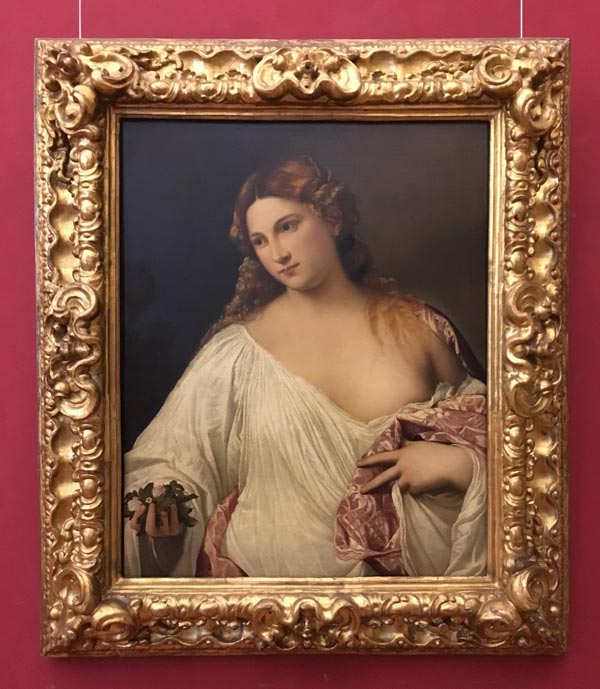
There are very little similarities in these two pieces. The pose is fairly similar, the composition and the facial features have some similarities, but that’s it. The style, the theme, and the technique are all different.
The Supplies And the Setting
I like to do fairly quick paintings on my big A3-sized sketchbook. For this sketchbook, I often use Derwent Artbars, a water brush, and Faber-Castell Gelatos because they are easy to layer and I am more relaxed than when working with tube paints. I use acrylic or oil paints for canvas paintings, and working with them is more serious. This time I wanted to demonstrate a concept or a method rather than creating a 30-hour painting.
1) From Intentional to Intuitive Painting
The first idea was to pick the pose and the composition loosely from the reference image and then add geometric shapes to fill the space.
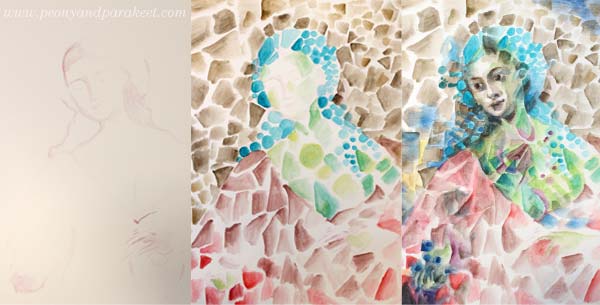
After sketching the foundation of the figure, the triangles, rectangles, and circles were fun to paint without looking at the reference at all. I painted the face roughly, and then I used the reference image as a guide. But because at this early stage, I didn’t know what I want to express and what kind of person the figure could be, I didn’t bother to spend time perfecting the facial features. At this point, my painting resembles cubistic pieces from the early 20th century.
2) Changing the Style
When creating art for the sketchbook, I like my style to be a bit more illustrational than when I make bigger paintings. Even if I love cubism, I wanted my piece to be a bit more current.
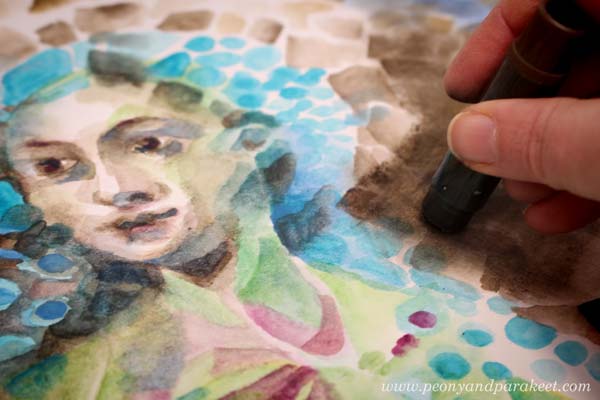
Nowadays, illustrations often use geometric shapes but rather than triangles or rectangles, the shapes are often round, and scallop edges seem to be a bit hit. So I started changing the painting by altering the shapes. This routine work gave me plenty of time to connect with my inner world and work intuitively from one association to another. I tend to be both nostalgic and romantic, so I thought how portrait painters often spend time with the clothing even if they are just a shell. Why not use it as a canvas for the memories, the ideas, and the achievements of the person?
3) From Intuitive to Intentional
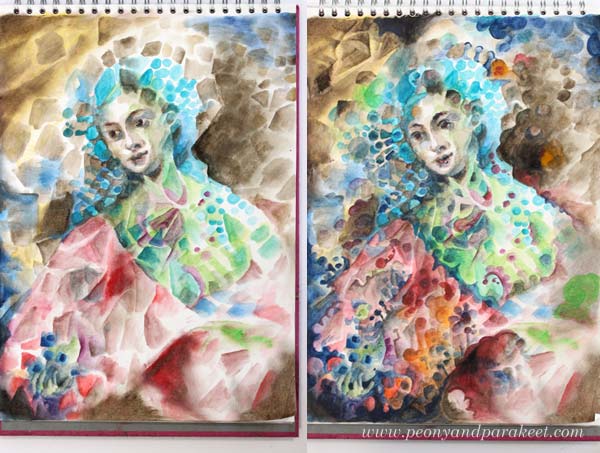
After rounding hundreds of triangles and rectangles, I realized that I was painting Madama Butterfly, the opera that I just saw last Saturday! I finished the face after this realization and adjusted other elements so that they fit with the theme.
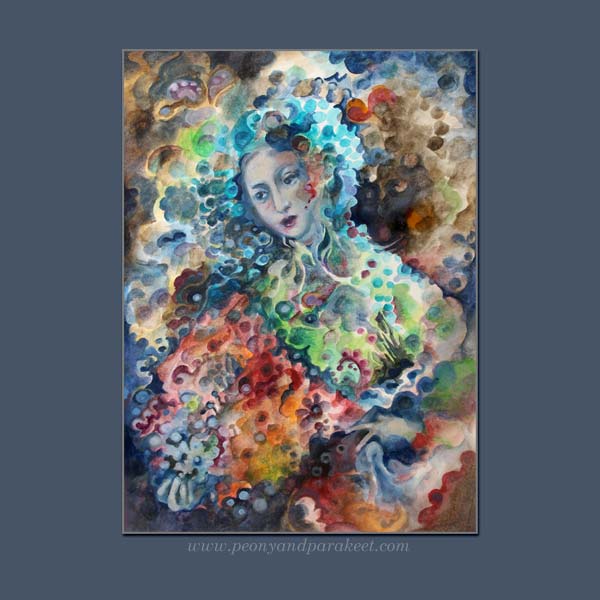
More Intuitive Inspiration from Opera
This is not the first time I have been intuitively inspired by opera!
>> Tosca
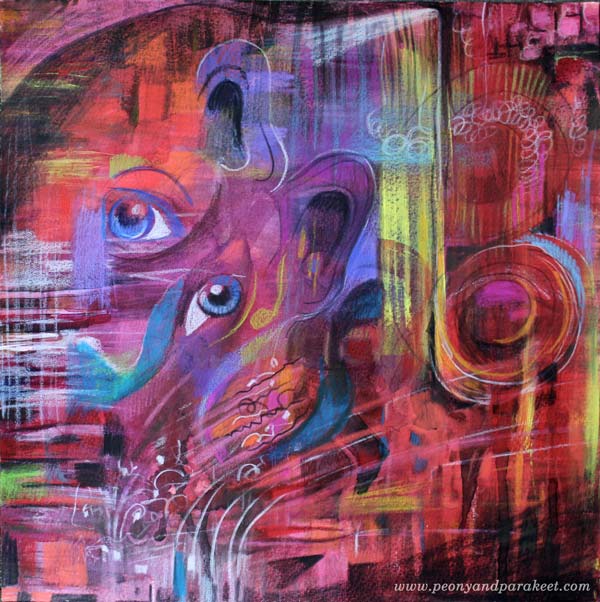
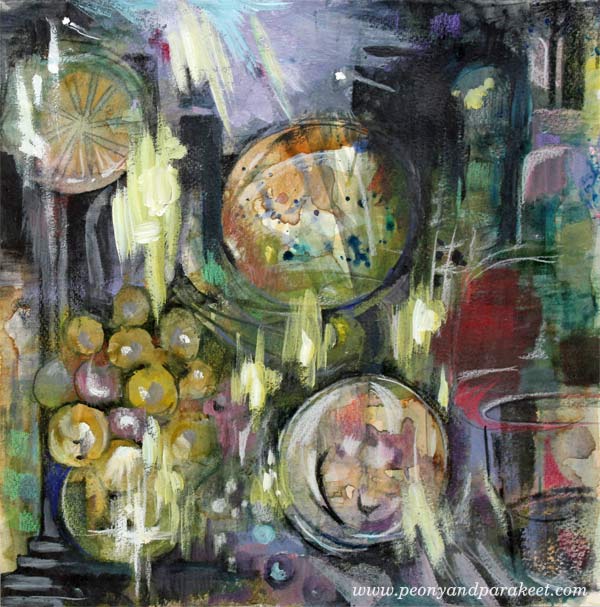
>> La Traviata
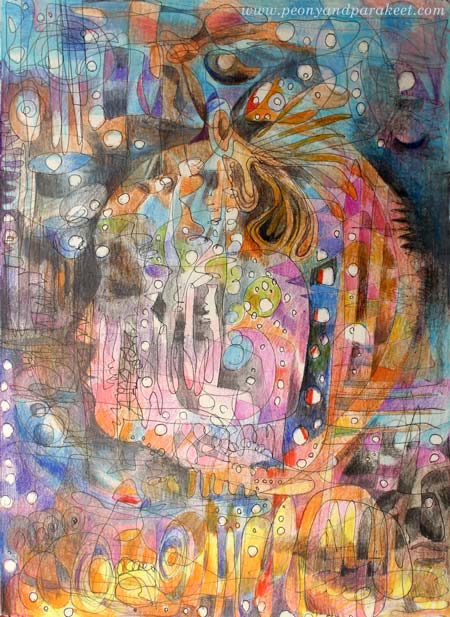
And there’s also a video about
>> Kaija Saariaho’s Emilie
More About Simple Shapes
>> What to create from simple shapes – 6 ideas
Self-study classes:
>> Planet Color – release your mind by focusing on color!
>> Modern Mid-Century – put a modern twist to simple shapes!
Let me be your mentor in creating: Subscribe to my weekly emails!