
Can Fine Artists Craft? Can Crafters Make Art?
In this week’s post, I share my newest painting and other creative projects, and talk about linking art and crafts together.
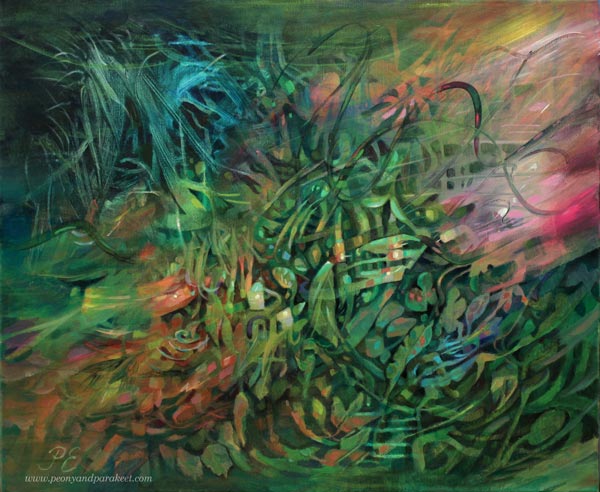
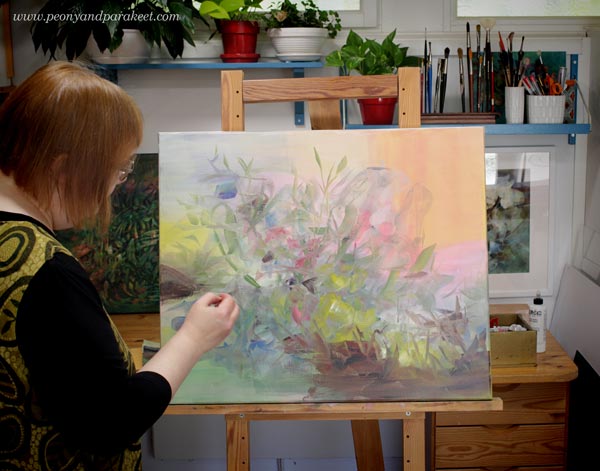
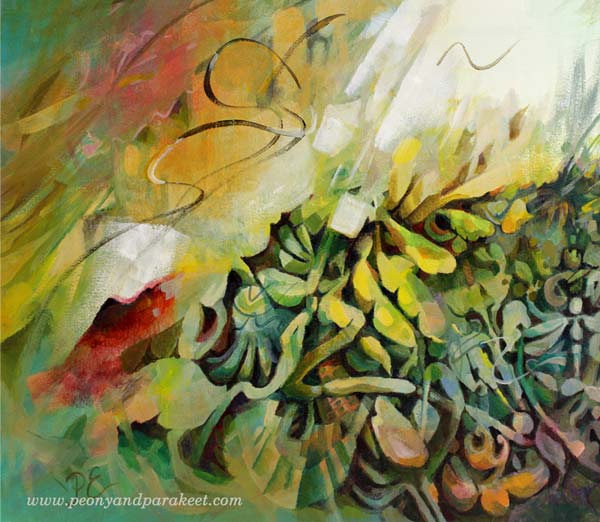
Here’s my new painting called “Elämän nälkä – Hunger for Life.” It’s made in acrylics. and the size is 54 x 65 cm (about 21 x 25,5 inches). I started it before my dog Cosmo passed way, but it feels very timely, expressing how we want to live and survive, even if life is not in our control.
How I Created This Painting
My paintings often start with a specific color in mind, and this one was all blue in the beginning, and the orientation was vertical.
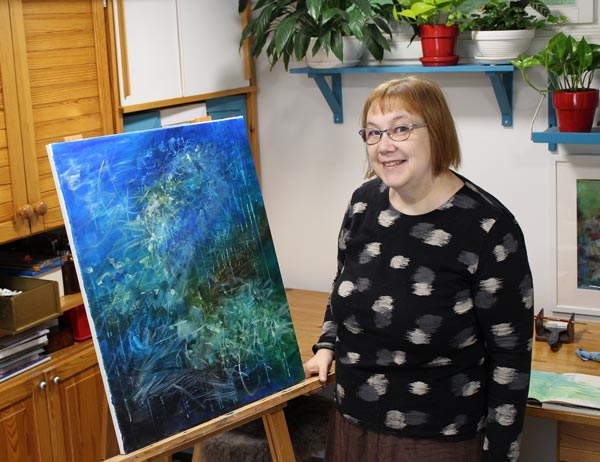
Then I turned it around and added more colors, then turned around again!
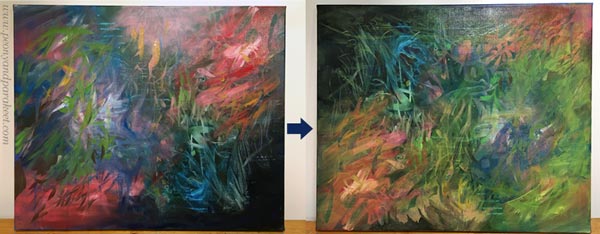
I wanted everything in this piece to be wild and free. It’s enjoyable to paint this way.
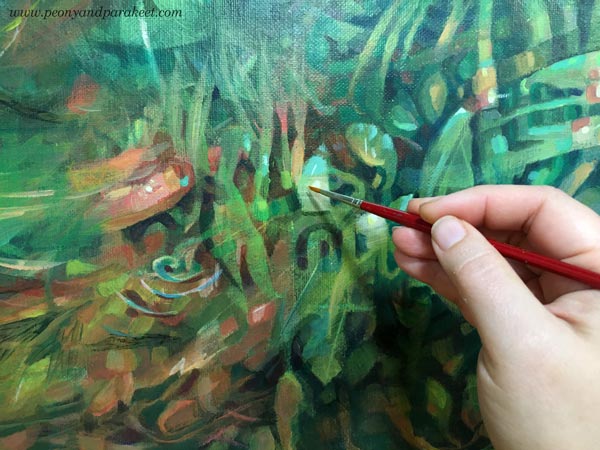
My favorite part of the painting is the top corner. It’s so sinister, and yet, so beautiful!
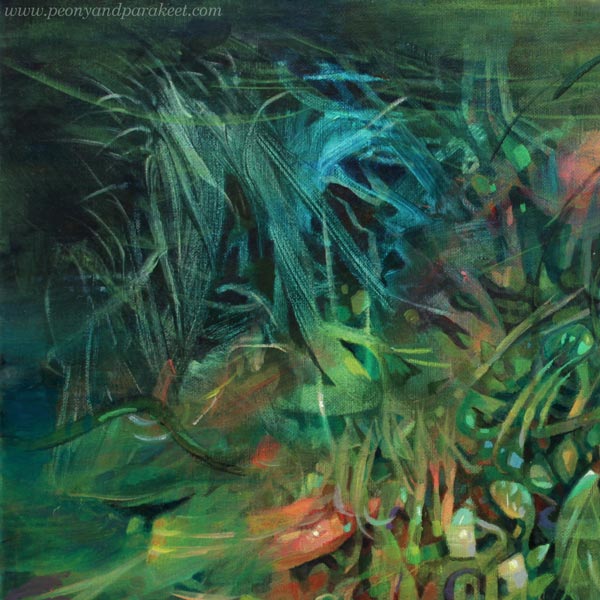
Here’s the whole painting again. I really like this one even if the atmosphere is gloomier than usual.
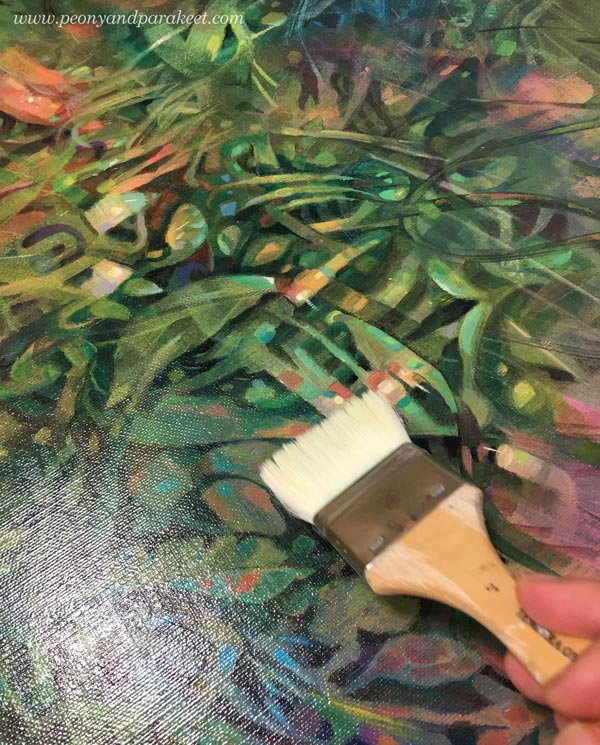
I always take the final photos before varnishing, because it’s easier to take pictures when the painting isn’t glistening. However, I love how the varnish makes the colors glow.
Painting Feels Different from Crafting
For me, creating art is a strange mixture of letting go and paying attention to the tiniest details. It’s like I am the mother and caretaker for my paintings, but can’t fully control the children’s personality and actions.
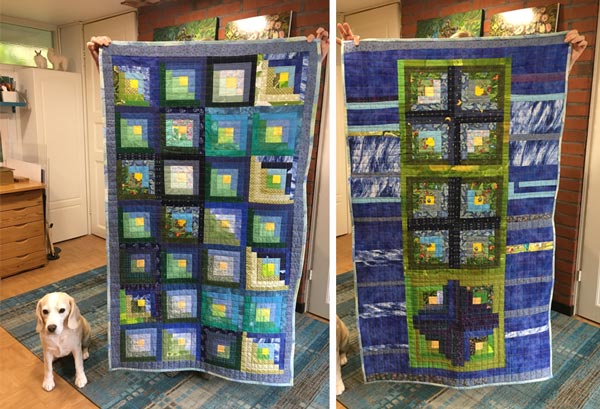
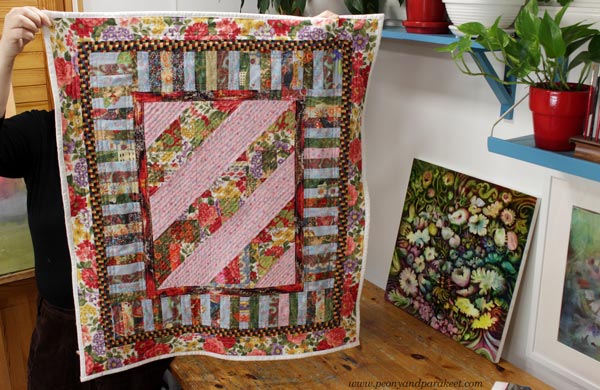
In my spare time, when quilting or knitting, it’s different. I can feel a sense of control, and I like it a lot. After saying goodbye to Cosmo, I sewed a quilt for Stella. I had the blocks ready, so the project was already half-way. About 20 years ago, I participated a quilt block lottery, where a group of quilters sewed similar kinds of blocks and happened to win them all. I had also sewn some more recently.
Art Inspiration from Crafting
My relationship for quilting and knitting has changed over the years. About 20 years ago, I thought that crafting is my way of creating art. But the more I got interested in painting and drawing, the less creative it felt. During the past 6 years, art-making and crafting have been strictly separated: visual art is the profession and crafting is the hobby.
This fall, my mindset has changed. I now realize that knitting is a way to give space for the internal processing that my paintings need. When I knit, my subconscious is sketching.
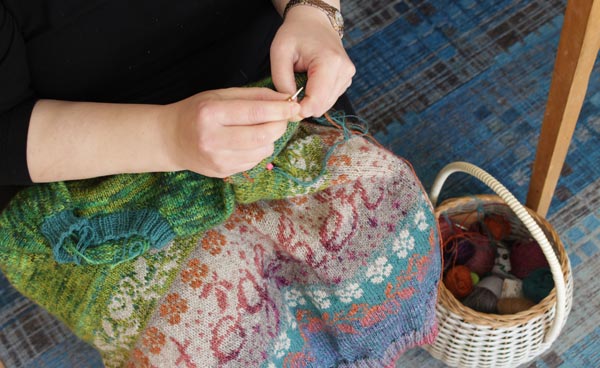
I love stranded knitting with many colors. My current project is Joji Locatelli’s All Together Sweater.
Here’s my current painting in progress. At least in this stage, it has some similarities with the sweater!
In general, I am more open to inspiration that I get from crafting, and vice versa. I made this quilt for my friend’s puppy.
Crafter, Craft Artist, Fine Artist – What’s Your Number One Creative Activity?
Many who create both art and crafts struggle with finding their style. For me, the working solution was to draw a clear line between the two. It made me see what things were missing in my artistic process, and what I needed to practice more. My artistic identity needed this isolation to make a clear hierarchy in what I create.
But now, I feel I can loosen up. Here’s what I wrote on Peony and Parakeet’s Facebook page last week:
“Art makes us more aware of what affects us and how we process it. Sometimes it means that we don’t want to immerse ourselves into something because it would not have a good impact on us. Other times it means that we want more of something because we know we need that. But for me, the most significant thing has been that accidental things happen, and I don’t need to filter everything. Both art and life run through us, and when the stream gets stronger, it will change not only us but our surroundings as well. When we say we want to loosen up, isn’t that what we really mean?”
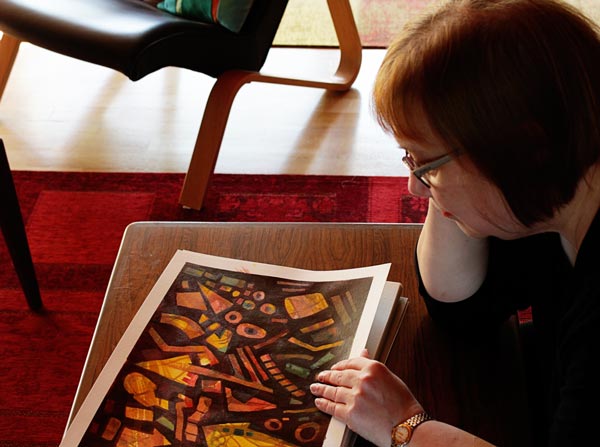
This month, I have done a lot more than just creating canvas paintings. I am working on a new class about abstract art and Paul Klee’s teachings. I have talked about Paul Klee before, but now I am creating a class that translates his teachings to a more expressive style. Hopefully, the class is launching at the end of November, stay tuned!
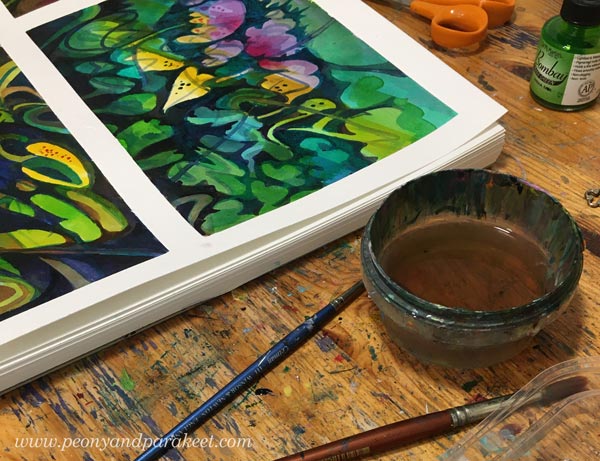
I have also finished an art journaling mini-course for an artist collaboration project. It will be for sale in October – so very soon!
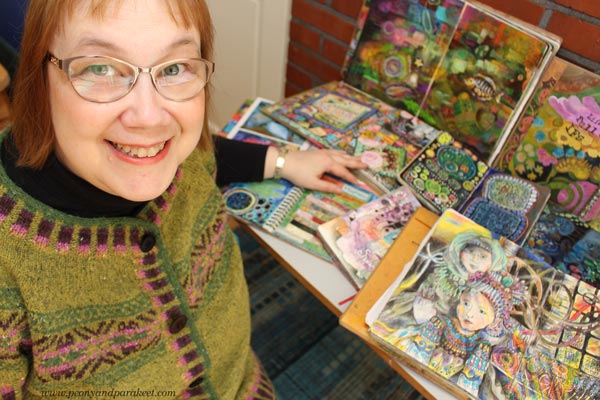
What’s Your Number One Creative Activity?
Here’s how I see myself now: I am a visual artist who creates abstract nature paintings mostly. I process my paintings by knitting, writing, art journaling, and doing daily walks. I live in a midcentury home, and my background is in design. I process my designs by growing plants and quilting. My paintings have design elements, and my designs have elements that are painted.
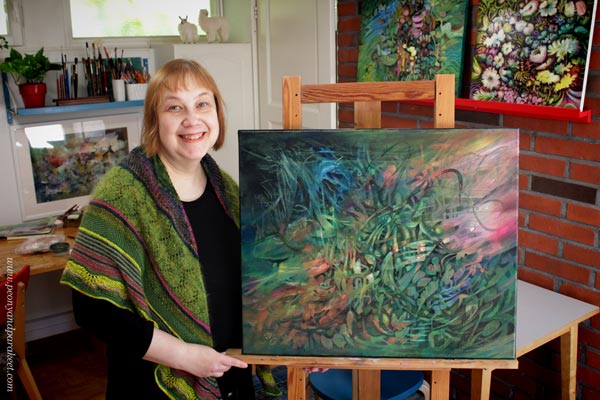
Painting is my number one thing. All the other activities serve it.
How would you define yourself through your creative activities? What’s your number one creative activity?
The Child and The Adult – Finding Clarity for Your Art
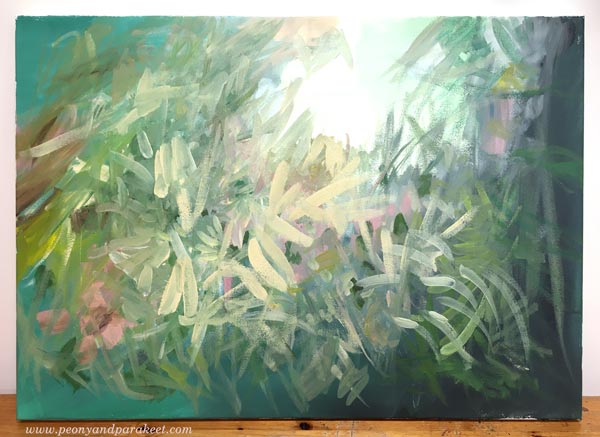
This week I show a new painting “Call of the Sun” and talk about finding clarity in art. This week’s post is especially for you who feels that your art is all over the place and you have no artistic direction.

Auringon kutsu – Call of the Sun, acrylics, 50 x 70 cm. Click the image to see it bigger!
The Child and The Adult – Who Do You Serve?
I used to think there are two kinds of artists – those who like to play and dream, and those who are more ambitious and aim to express their deepest emotions. Just recently, when I started this new painting, I asked myself: “What do you want to paint, Paivi?” And the answer was: “Horses!”
– You can’t paint horses only!
– Why?
– Because there’s more that needs to come out.
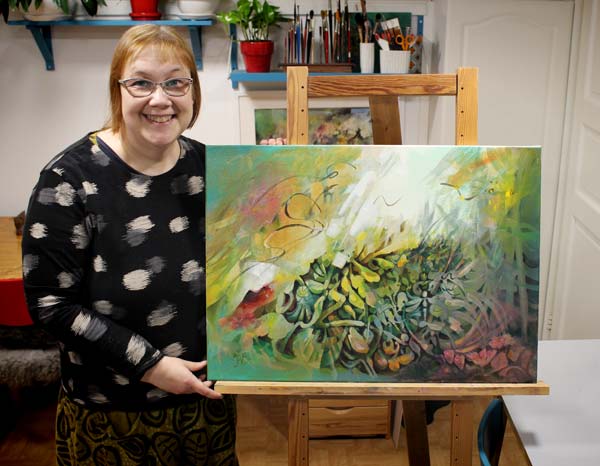
There was. There is. My inner child wants me to paint horses, but I am an adult too. If all my art is playful illustrations, I am desperately missing the adult in me.
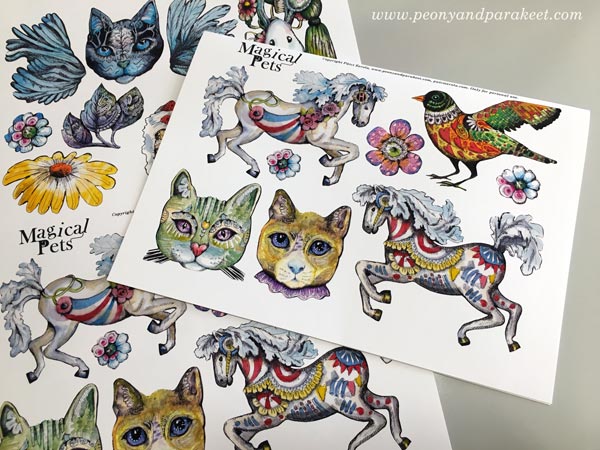
The Magical Pets image sheet is now available in my art shop. Or make your own in the classes Animal Inkdom and Magical Inkdom!
Concrete vs. Abstract
The adult in me wants to work in a way that does not appeal to the child. The expression is more intuitive and abstract and thoughts less concrete. I feel free when painting like this. It’s like life travels through me, and it heals my soul. It makes me feel that this is the best that art can offer.
But I also feel free when I grab a more childish painting. I imagine talking to the horse and how it responses with gentleness.
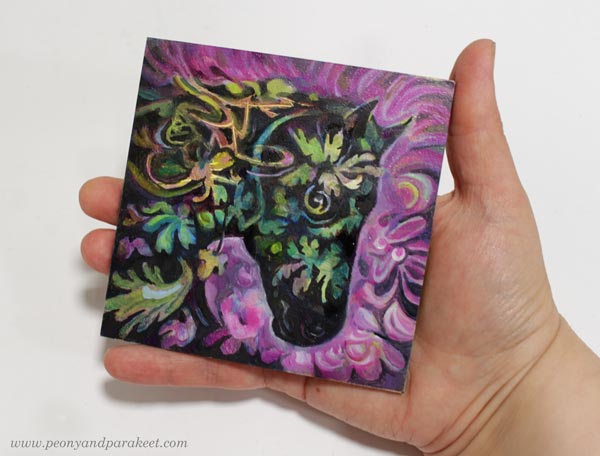
This, too, is the best that art can offer – the connection to childhood, to the person who didn’t want much more than a pet of her own.
The Child and the Adult – Don’t Lose Either One
Nowadays, my studio is both the playroom and the space for meditation. The inner adult needs to paint with the inner child and vice versa.
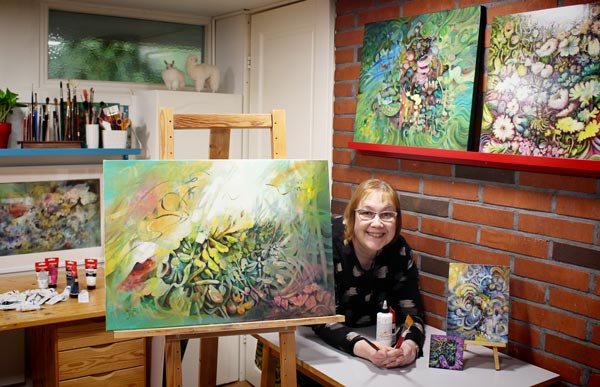
If the child gets neglected, other people’s expectations step in, and I lose myself. If the adult is away, I focus too much on the tangible things. Then the invisible side of the experience doesn’t come through. This realization has helped me in finding clarity for my art.
What are Invisible and Intangible Things?
Examples of intangible things that we can visualize in art:
- communicating the atmosphere with nature’s elements like light, air, and wind
- expressing emotions that contain mixed feelings, for example, the combination of love and melancholy
- inventing creative concepts like seeing similarities in the structure of plants and bridges
- focusing on experiences like flying instead of painting a bird
When we omit these kinds of intangible things, we are in danger of only creating shells rather than expressing a spirit.
Viewers Have Child and Adult Too
As viewers, we also have both sides: the child and the adult.
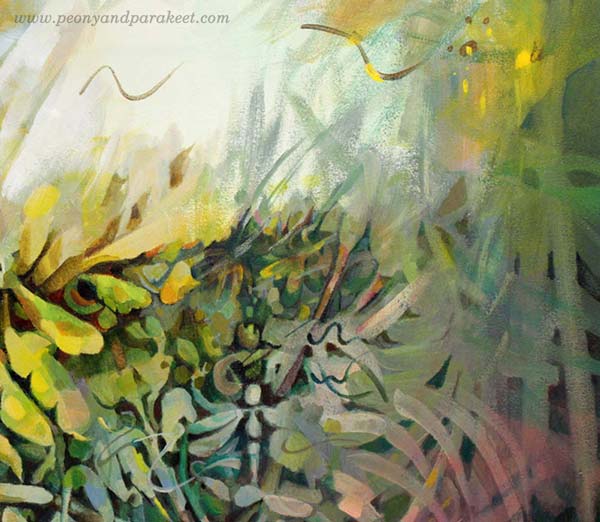
I painted a dragonfly for your inner child to play with while the adult can ponder about the more abstract strokes.
Sometimes simple lines and colors can express more than realistic objects.
Finding Clarity and Balance for Art-Making
For a long time, I haven’t been happy about my art. Especially this fall, it has changed. I have found what my child needs to be satisfied with the result, and what pleases the adult in me. Surprisingly, being able to satisfy the child has been crucial for me to getting forward in abstract painting. This one is in progress, and you will get more pics and stories about it when it’s finished.
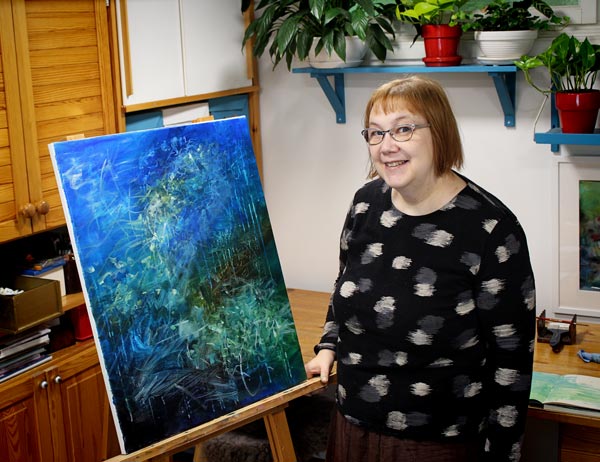
What do you think? Are you in the journey of finding clarity for your art? What would need to change in your art so that both the child and the adult are happy? Tell me, I am interested to know!
Why I Paint White Flowers – How Your Artistic Voice is Influenced by Others
There’s a lot of talk about finding your artistic voice, but very little about how other people affect it. So this week, I share a story about my mother and her influence on my art.
Painting the Same Thing Again and Again
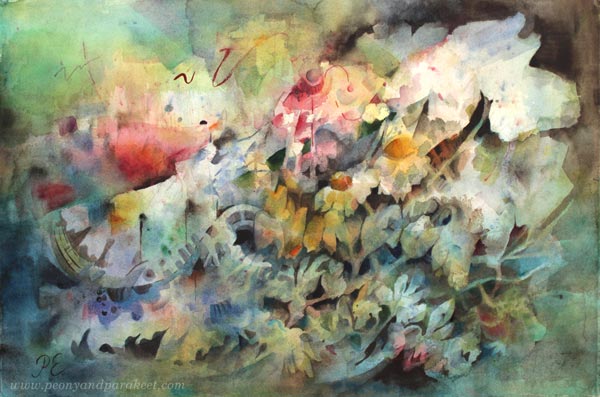
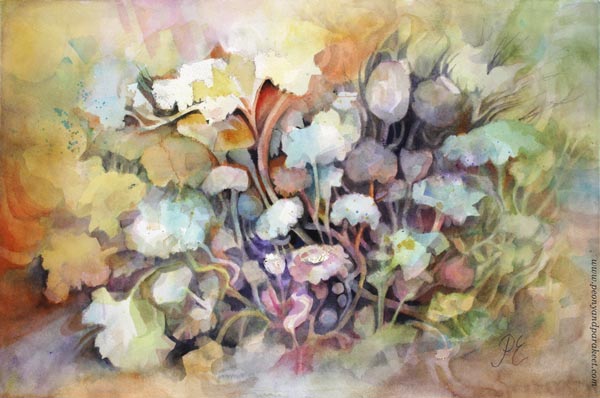
A couple of days ago, I was on a morning walk near my home in Southern Finland. The air was fresh as well as the view, dominated by the blue sky and white clouds. My beagles’ busy noses and a glimmering brook followed a sown field that had already started to green. Both birds and earphones fed entertaining listening. But all I could think of was my painting. Was it finished? Should I add more color to the flowers? What else did I need to adjust to make most of the tens of hours? I was alone with my dogs, but the inner critic kept me company: what kind of artist doesn’t even know the meaning of her images?
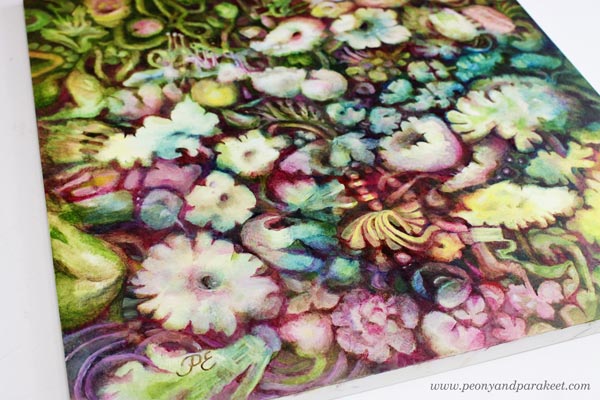
Yes, I am no artist at all. I paint white flowers, the easiest anyone can imagine, and the worst that my mother knew. “No white flowers,” she repeated to my father when her wedding anniversary came close, and he was about to buy a bouquet. “White flowers mean death.” And now, long after she has passed away, all I want to paint is white flowers.
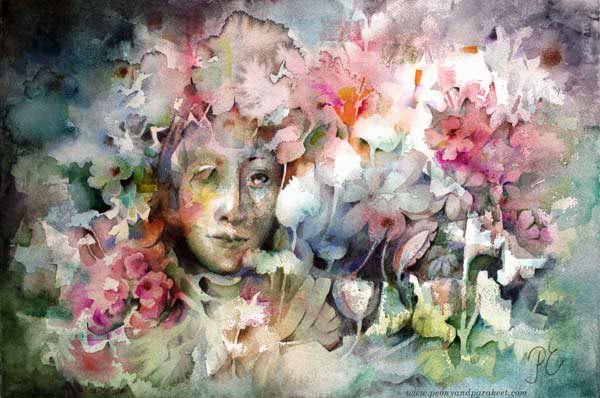
Commenters are Your Art Coaches
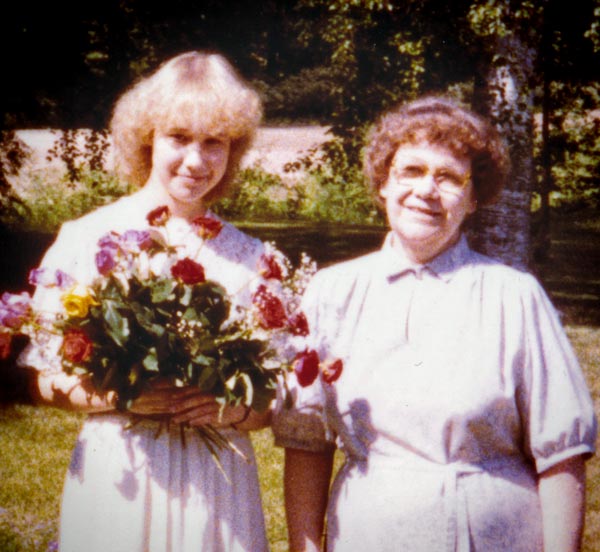
Rebelling had no place in my upbringing during the 1970s and 1980s. As a teenager, I tried to respond to my mother’s corrections and criticism with an ignorant smile. Not for long. She didn’t hesitate to tell that it wasn’t a proper reaction. She was both a direct and shy person. Her presence was almost invisible in public gatherings, but at home, in her empire, she was the master of rights and wrongs. So when I showed drawings to her, she either approved or disapproved. She didn’t talk to me as directly as to my father – what to do or what not – but her words and facial expressions told everything.
My mother was like a strict gymnastic coach with high expectations, but she lacked one essential skill – the ability to show how the tricks could be done. She was as honest to herself as to anyone in this matter and put her energy for finding time, supplies, and art education for me. Time to create was the easiest part. My mother was a housewife. She had left her job at a young age right after she got married. She didn’t want her daughters to have the same destiny, so she did her best to keep me out of the kitchen and constantly reminded me how children would prohibit me from doing what I love.
We lived in a small town near the Russian border, and our family wasn’t wealthy. The only income came from my father’s pension. In the evenings, my mother wrote all the expenses on a small black book. But purchasing pens and paper was mandatory. To her, it was the lowest level of civilization, more important than books. Our town had one bookshop that sold some supplies, but after we got more knowledge from local art groups and competitions, it became evident that I needed a better and broader selection. So every month, when my parents drove to a bigger town, I was often with them, selecting paper, paint boards, crayons, and acrylic paints from a real art supply store.
A Praised Piece Sticks into Your Mind
When I was some years over ten, in one spring morning, I decided to try out a new set of crayons. It was just a warm-up, a quick landscape without using any reference. “Look, mother, what do you think,” I said like so many times before. She looked at the image, tightened her lips, but unlike her, she didn’t say much. Later, when I opened a narrow kitchen closet to pick an iron, I stopped. The landscape was taped inside the wooden door. “I like to look at it,” she said after seeing my puzzled face.
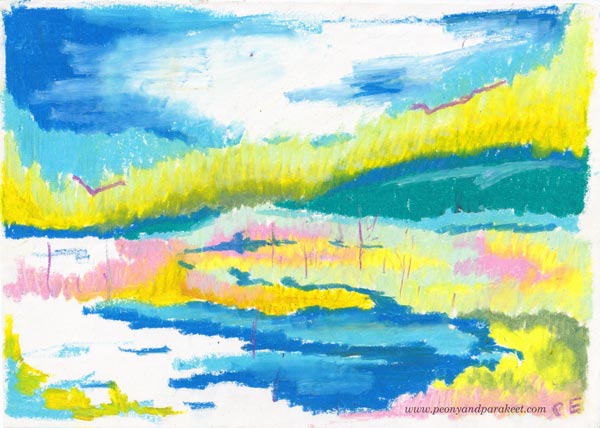
I was devastated. That little landscape didn’t deserve the place. So many times I had poured my heart out on paper and soon found out that it wasn’t to her liking. And now – I didn’t even color all the paper!
Finding the Why Behind Your Artistic Voice – Connecting the Appraisals and Repetitions
Fortunately, my mother was not the only one commenting on my art. My two big sisters had different opinions, and my teachers and friends as well. One piece didn’t satisfy them all, but there were always kind words from someone. It encouraged me to keep painting and drawing, as everyone, especially my mother, expected.
After my mother’s death, one stormy weekend, I traveled to the childhood home to pick things that I wanted to keep before we would sell it. The house was cold, but I knew it was the last time when I would see it like it used to be. Everything was clean and tidy. Performing tasks effectively with high quality had always fascinated my mother. “If I could choose what my profession was, it would be a researcher of work – if such a profession existed.”
When I got up the stairs to an attic, the sight would surprise anyone but me. The attic had always been nearly empty. In one corner, under a sloped sealing, my father had built a small closet for safe storage. I opened its little door, and there they were, neatly in a big cardboard box – my paintings and drawings. Not all, but a collection that my mother had curated over the years, the little crayon drawing included.
So a few days ago, when I was walking by the field and looking up in the sky, my mother came to me in the form of the freshly colored landscape. I now knew that my urge to paint white flowers hadn’t been an act against my mother, but a yearn for her acceptance that blank white blobs had once given to me. Now my question is: can I let go of them, or do I want to keep her in my art forever.
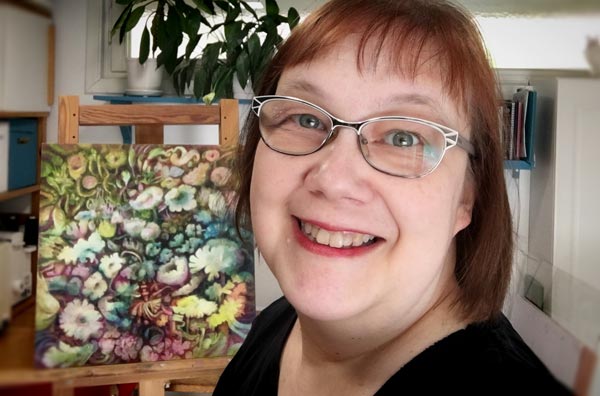
Who has influenced your art? Can you recognize how?
P.S. I also teach drawing and painting flowers in the class Floral Fantasies.
Expressive Watercolor Card – Free Video Tutorial

This week I have a video tutorial for you. We’ll paint an expressive watercolor card that connects several artistic approaches together.
Fine Art, Illustration, or Design?
Visual art is often divided into categories like fine art, illustration, and design. I am not a one-category artist, but interested in all of them. I need to do fine art to let go and feel free. Illustrating connects me with the outside world and other people. And I have started creating surface designs again because simplifying is a game that keeps fascinating me, and I love to develop products.
This week, let’s create a card – you could also say “a product.” It has a clear structure, so “a design,” but it can also be an illustration with a message. My card is about a house filled with plants, and I think I am illustrating my home. Visitors sometimes comment: “Wow, you have a lot of houseplants!” Almost every room in our house has plants, and their welfare constantly worries us, especially during winter when there’s less daylight.
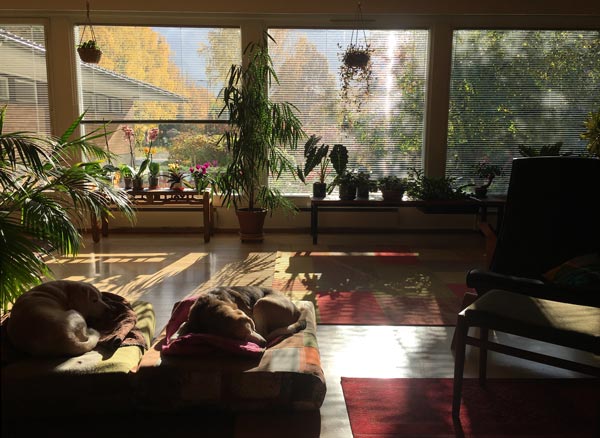
But this card is not an illustration at all when thinking about how it started. The way it’s created makes it fine art. I painted freely and didn’t have any pre-defined images or ideas for it. However, I had a method that can produce many kinds of images. So, the method gives practical guidelines for painting, but the result can be different each time.
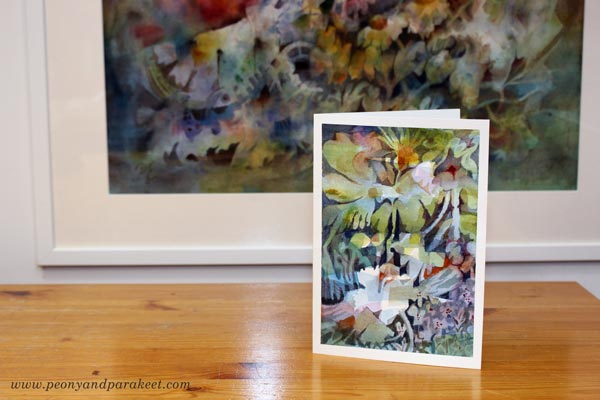
Expressive Watercolor Card – Paint With Me!
Watch the video and start painting!
In the video, I use the negative painting technique a lot. Even if you can use any technique that suits you, negative painting is the best technique when you want to make lines and shapes more elegant and the painting more finished. Dive deeper into this wonderful painting technique in the class Magical Forest.
Magical Forest – Dive Deeper into Expressive Watercolor Painting

Learn essential watercolor techniques like negative painting and layering, and express with light! In Magical Forest, we paint magical nature sceneries with flowers, trees, water, and fantasy.
Hop along! The class ends as late as at the end of April, and you will get the published lessons right after the registration. >> Sign up here!