
The Power of Boredom
When I was a child, my most prevalent feeling was boredom. It felt like childhood was a long wait for things to happen, life to start. I was at the mercy of others and dreamed of the time when I could do it all by myself.
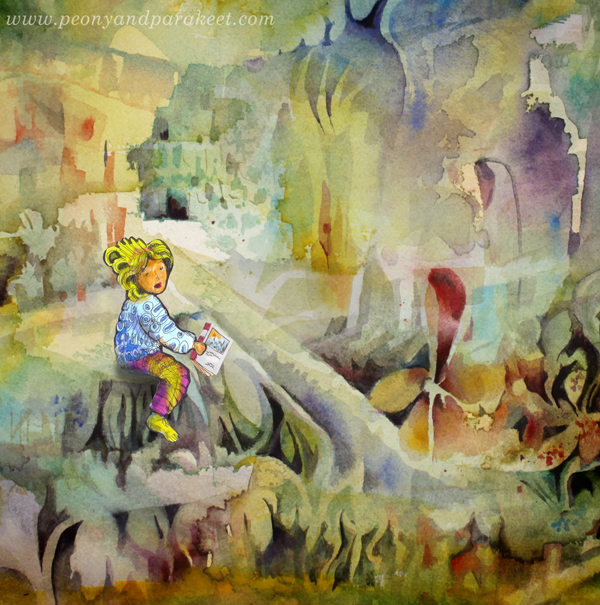
At that time, in the 1970s, there was no iPad to keep me company. Instead, I often grabbed the only picture book from the shelf where my parents kept their books. It was a softcover book about old paintings. I was staring at Monet and Manet while my mother cooked us dinner. The book wasn’t big, and the images were small. But this way, culture was introduced to me at a young age. Having this one book on the shelf, my parents unknowingly affected my life’s journey.
I was browsing the book in a colorful living room.
It had yellow, orange and red textiles and a grey sofa. Later, the colors were changed to warm green, and brown. It was all fine before my mother bought greyish mint green curtains. She was exhilarated about the color and kept talking about how well mint green fitted with the rest of the decoration. I, in turn, was in shock – cool green doesn’t fit with the warm tones! Every time I was in that room, the curtains made me feel uncomfortable. I waited for the day to pick my own palette!
My sisters were living in a red room. It also had white, so it was quite cheery, but I didn’t like the colors. Even the table had a red frame, and it bothered me quite a bit. When my sisters moved away, and the room became mine, my parents traveled to the nearest big town Joensuu to buy new wallpaper. And when they came back, surprisingly, my father, who never had anything to say about the colors, had chosen little yellow roses! “Aww … everything has to be changed to yellow now!” I cried. My mother agreed. They bought curtains that had yellow flowers, a yellow clock, a carpet that had yellow and brown, and sunny yellow bedcovers for the two beds that the room still had.
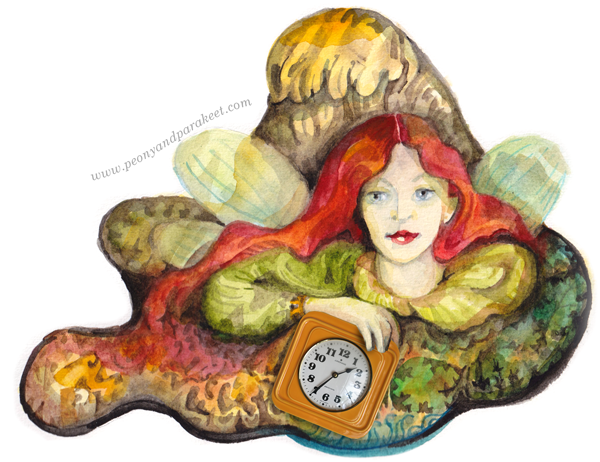
I was thinking about these colors all the time.
Did everything match? What I liked and what I didn’t like? I assumed that all people were similar, contemplating their color choices, walking around their homes, thinking about the tint of the curtains.
My first art book got abandoned when I started using the local library. It had huge books filled with master paintings. For years, I sat in the library and waited for my life to begin. I admired the colors, and Picasso and Matisse became my favorites.
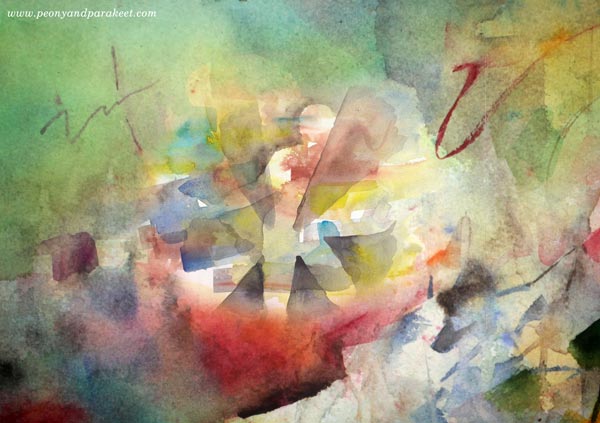
At a young age, I knew that green is not only green. It could be muddy green or mint green or something between. And when I was accepted in the local icon-painting group, I also learned that there can be a strictly defined range of tones. It was so satisfying when my teacher told me that I had produced not only an acceptable but beautiful blue for the background. We all used the same amount of the same pigments, and still, every one of us had a slightly different blue. Amazing!
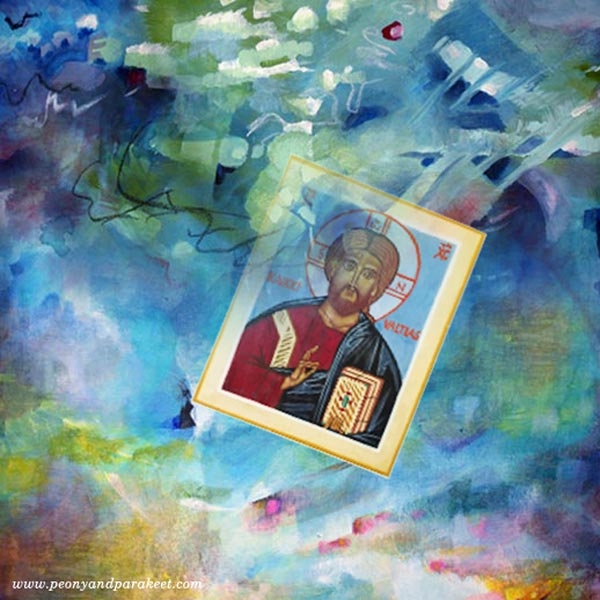
When walking to my home from a group session held at the cellar of the nearest church, I looked at the dark starry sky and admired its deep shade against the white snow. The number of colors that I was able to see was growing all the time.
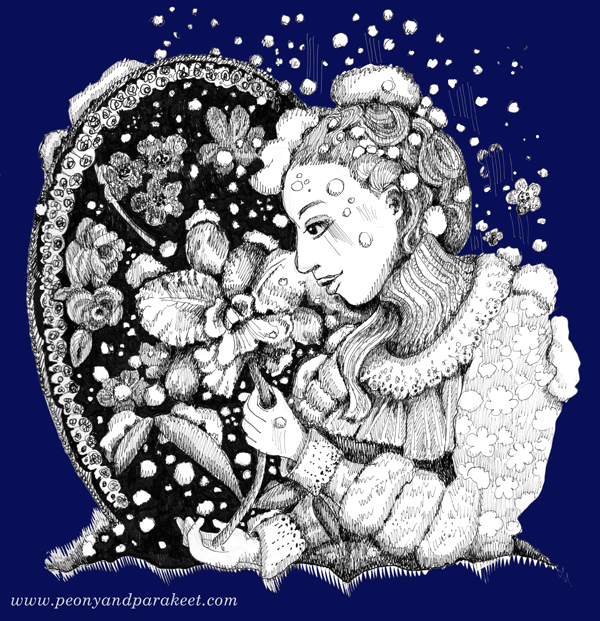
All this seemed insignificant back then.
I was just filling the moments of boredom while waiting for my life to begin. And then, finally, I grew up, moved away, went to study, met my future husband, got a dog and a good job, built a career, bought a house.
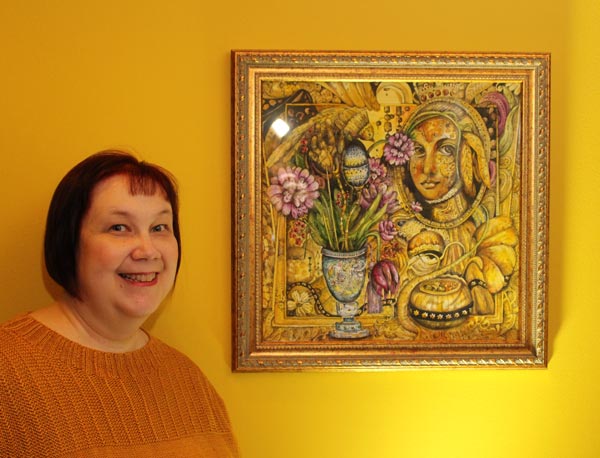
But when I am creating, these events feel less important. Instead, I want to get back to those childhood years trying to remember every single dull moment and detail, including the tone of my yellow bedroom. I am dependable on that boredom. It defines me as an artist. Everything genuine and sincere in my art can be connected with my childhood, with the age of boredom.
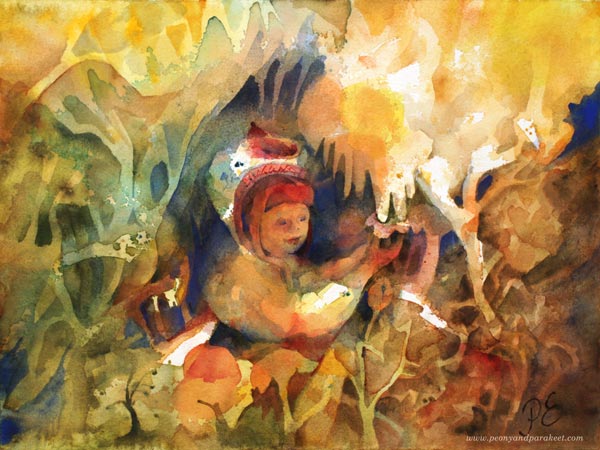
Does your childhood show in your art? Do you aim for the images that you see other people create, or are you geared to finding your own? This is one of the carrying themes in Lesson 2 of Magical Forest, starting on February 1st.
Hop along! The class ends at the end of April, and you will get Lesson 1 right after the registration. >> Sign up here!
From Portraits to Stories – How to Dive Deeper in Visual Expression
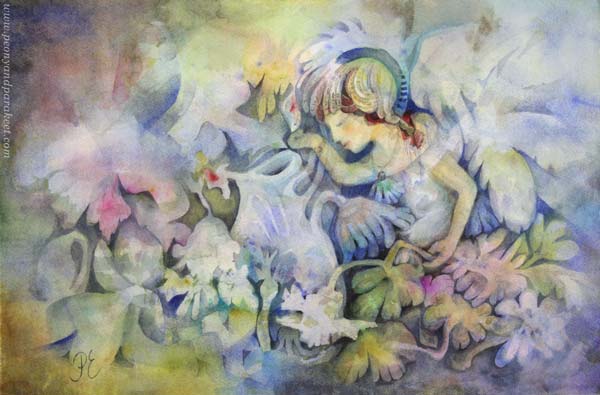
Here’s my latest watercolor painting called “Mirimer”. The name is a combination of “Miracles” and “Meri” (sea in Finnish). I love to invent these names that mix the two languages!
When I started this piece, I had two things in mind: I wanted to use Cobalt Blue Spectral (see the previous blog post about this gorgeous color), and I also wanted to continue my series of watercolor fairies.
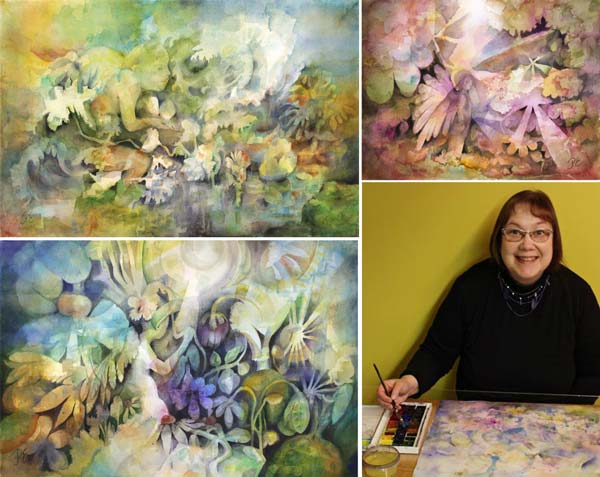
These fairies really speak to me. I feel that I should have started making these story scenes a long time ago and not wasted my time for stiff self-portraits, for example.
Life in Self-Portraits
As a teenager, I stared myself at the mirror and made self-portraits all the time. Any cardboard or piece of paper had my face!
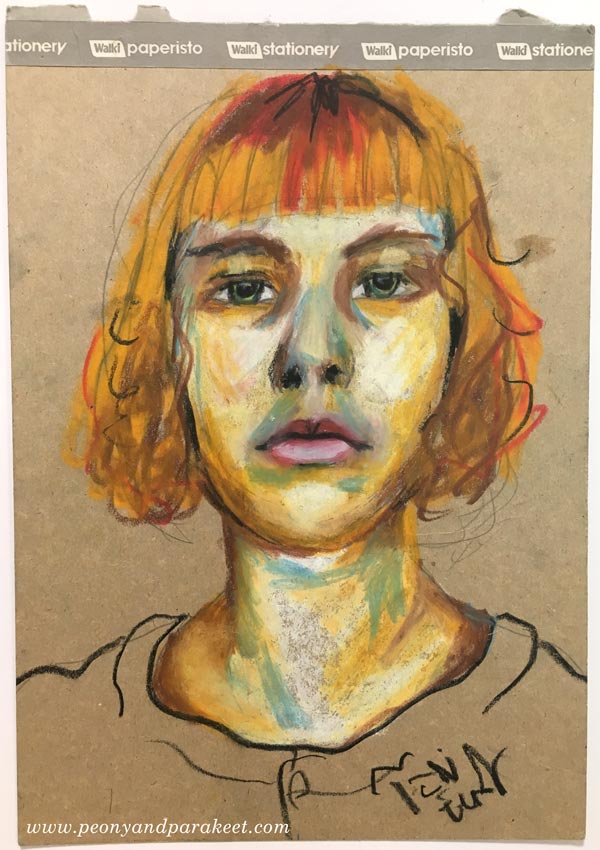
Every time I wondered if this would be a portrait of an artist: “Would my dream come true? Is this piece good or not?”
It has taken tens of years to move from literal self-reflection to expressing my emotions and my inner world. If I could turn back the time, I would peg myself to move from technique back to childish imagination, because there’s always enough time to learn the techniques, and never enough time to deepen the expression.
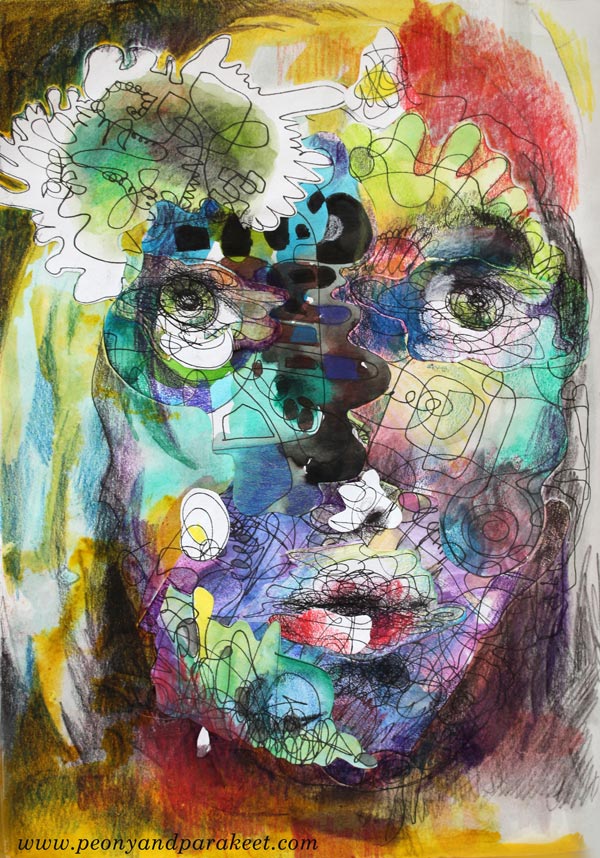
This is a self-portrait from a couple of years ago, and I like that the inner world finally begins to show.
However, for me, the greatest satisfaction of art is not in self-portraits or portraits in general. I want my art to move from portraits to stories, be more dynamic than just staring faces, tell about my experiences, and how I can see them in a new light. I believe that our inner world is full of stories that connect us to other people on a deep level. When I have thought about my artistic style or whether my art is “good” or “bad,” I have often neglected this story-telling aspect.
Mirimer – From a Portrait to a Story
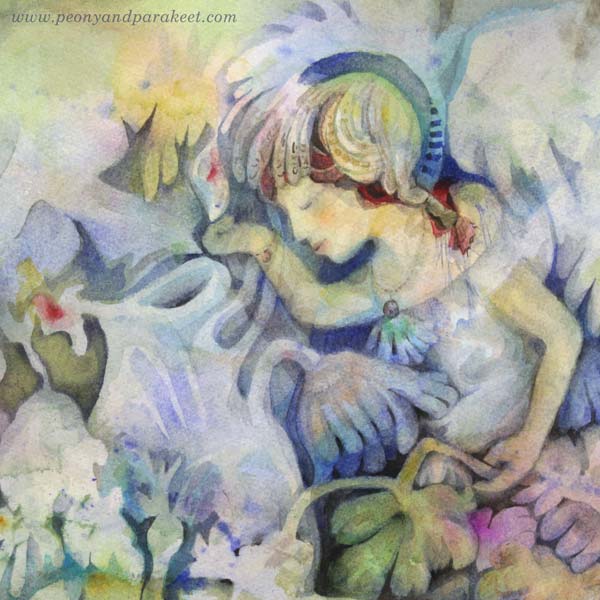
When painting “Mirimer”, there was a magical moment when I heard my mother calling my name. She passed away tens of years ago, and I thought I had forgotten the exact tone in her voice, but the painting brought back the memory. It must have been because of the blue color, her favorite. I realized that I wasn’t painting a portrait of a fairy anymore. I was painting the story of accepting loss as a part of life.
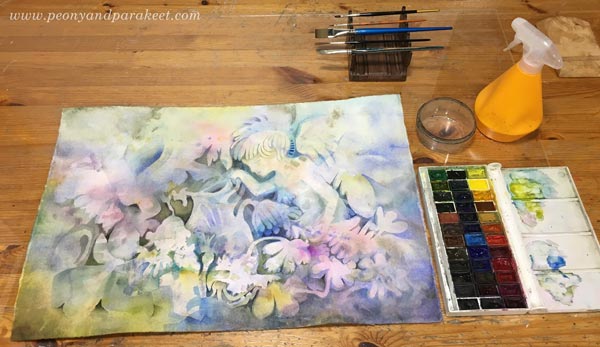
Mirimer became a blue-hooded angel, and the drops of water got some red to indicate that life carries pain that we can’t get to choose.
Illustrating Stories by Lucas Cranach
Stories also came to my mind when I went to see Lucas Cranach’s exhibition in the Sinebrychoff Art Museum. Lucas Cranach (The Elder) and her son, Lucan Cranach (The Younger), were not only German master painters in the 16th century, but they also knew how to run an art business. They had a workshop, an illustration studio, which had many employees, a logo, a style that everyone had to follow, and they produced prints too. So even if they lived in the Renaissance, they did what most artists today dream about. They built a visual world around stories that people yearned for.
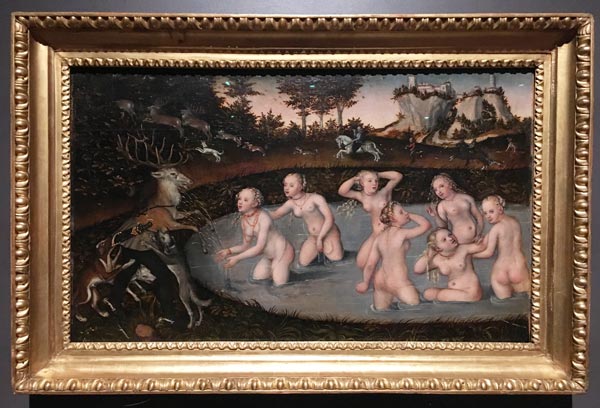
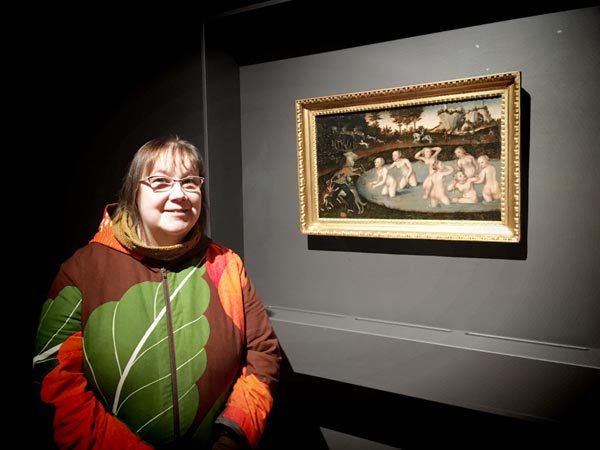
Many of the Caranachs’ stories were from Greek mythology. This painting, my favorite from the exhibition, tells a story about Actaeon turning into a stag when Diana and the nymphs splash water on him. They don’t like him to watch them, and his dogs begin to attack him too!
In the painting below, there’s Venus and her child, a little cupid. The cupid has been stealing honey and the bees have bitten him.
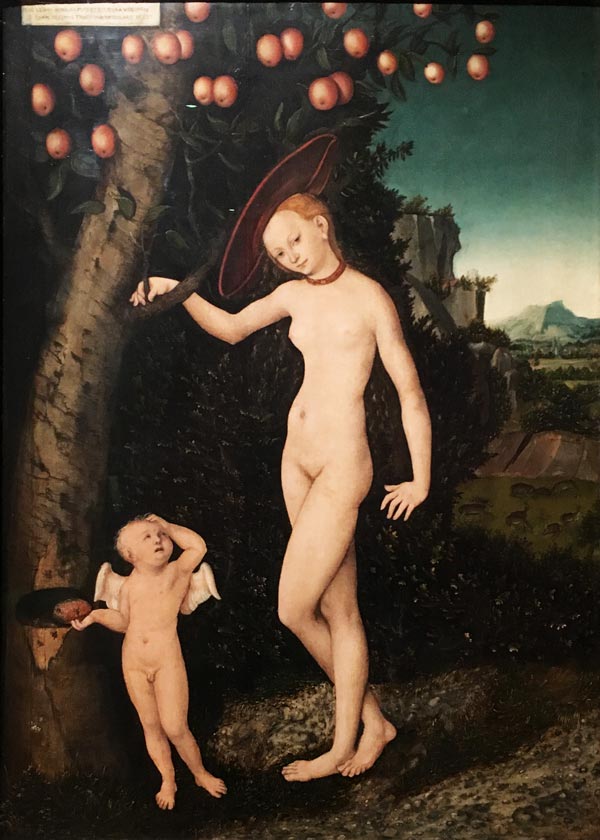
There’s also an old poem, written in Latin on the top corner of the painting too:
As Cupid was stealing honey from the hive
A bee stung the thief on the finger
And so do we seek transitory and dangerous pleasures
That are mixed with sadness and bring us pain
From Portraits to Stories – 5 Tips
- Allow more intuition and imagination into your process: Add splashes and other unexpected elements. Spend time with a color that speaks to you. Instead of actively painting something, spend time discovering and highlighting what already can be seen.
- Grow your skills from faces to body gestures. Learn to process a shape that’s on paper, in your head too so that you can find alternative ways to continue the painting.
- Play with the scale of the elements. We tend to make shapes that are all equal in sizes. But if you want to paint a tiny fairy, for example, you need huge flowers to indicate the small size.
- Let go of strict outlining, and leave room for spots of light and shadows. There’s no story without the atmosphere, and the atmosphere is created by setting the lighting.
- Take time to let the story unfold. Often, the stories have many layers, and the first associations are just the path to deeper ones.
Magical Forest – Discover Stories by Painting!
Paint watercolor fairies and nature’s spirits in their magical surroundings. Enjoy freeing up your expression while exploring flowery woods, shallow ponds, leaf chapels, and adventurous sceneries. Magical Forest begins on January 1st >> Sign up Now!
Embracing Artistic Origin – How to Make Images That Feel Genuine
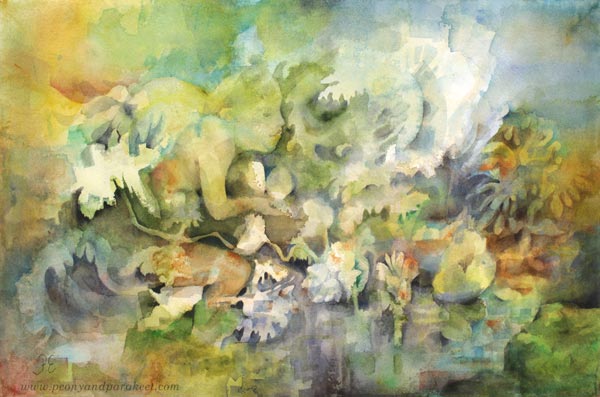
Here’s my recent watercolor painting called Aquanora (or “Akvanoora” if you say it in Finnish). I have always been passionate about art but never loved my paintings as much as I do now when I have been painting these wood spirits in watercolors (see this post and this one too).
I hope that this week’s post makes you ponder about your artistic origin. I claim that if you don’t recognize the origin when looking at your art, you don’t feel the connection with the images either.
My Cold and White Artistic Origin
The sad fact is that when I don’t paint, my life in Finland is about walking dogs and knitting. And most of the time, I dream about Europe’s glorious museums and palaces. Winters in Finland can be rough, and Stella and I don’t like them.
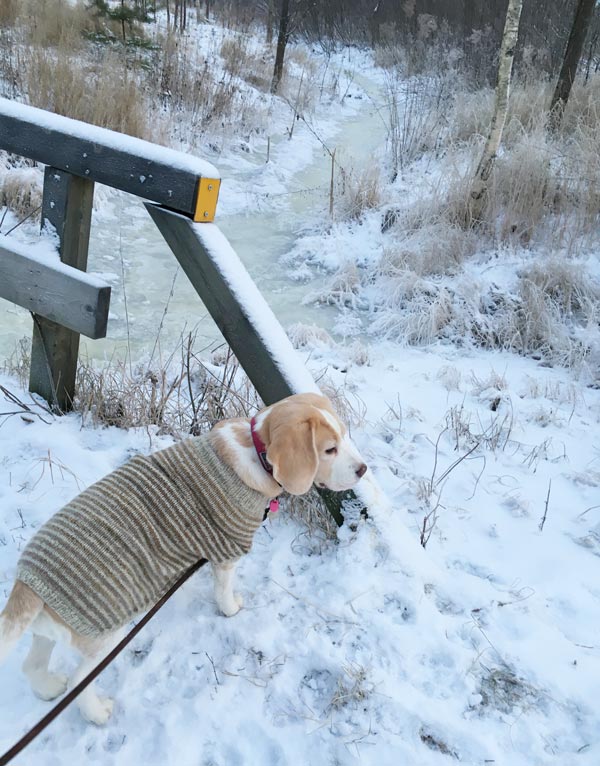
As you see from the photo, taken in winter a couple of years ago, Finland’s color is white. Not only winters are white, but Finnish people decorate their homes with white furniture. So even when it’s green and warm in summer, Finns stay cold in their white boxes. My home is considered very colorful, especially the bright yellow corridor gets glances. But recently, I have started to accept the Finn in me. I have come to love fresh white watercolor paper, filled with possibilities.
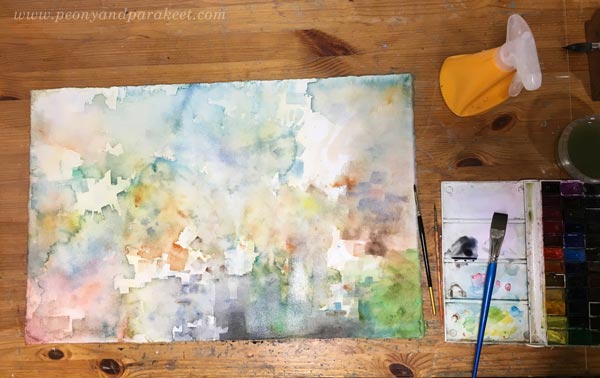
With watercolors, white has become my friend. Painting is like having a white fairy holding my hand, tightly at first, and then little by little she releases her grip.

Even if I would like to be the painter of the Renaissance palazzos, I am a Finn walking the dogs in bad weather, knowing the core of whiteness instead of gold.
Artistic Origin Can Be Opposite to Inspiration
We are often inspired by things that are new and exotic. Our origin can feel so common that it’s barely recognizable. It’s what we see and breathe every day and often, it’s what we want to escape when we create art. But the more I have created, I have started to think otherwise. Because I live observing moss and other nature’s wonders more than marble floors, maybe I should paint more of that greenness too.
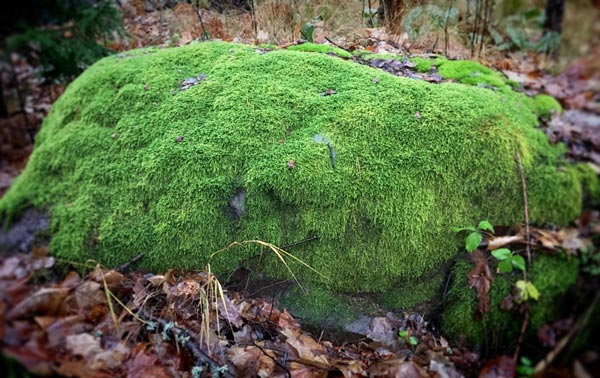
Namely, when European nobility played minuets in the 17th century, Finnish savages were freezing and starving in the land of thousand lakes and forests. So we know our stones, mosses, and swamps – the language of our nature – better than musical notes or calligraphed letters.
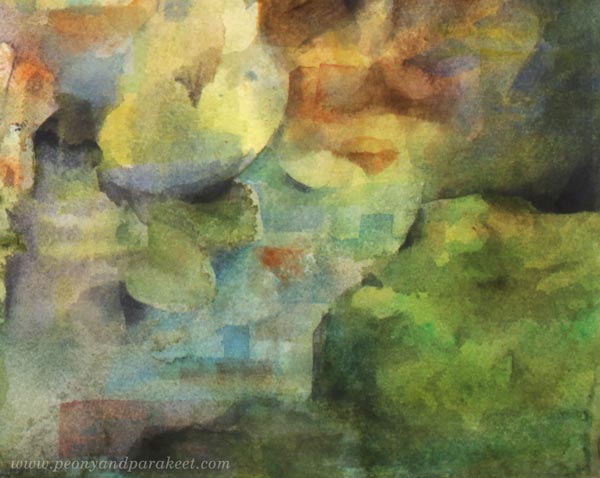
When European priests and saints trooped on huge church halls, Finns believed in Tapio, the god of the forest. Even if old beliefs are only old stories anymore, maybe it’s no wonder that these little fairies of mine rise from nature sceneries.
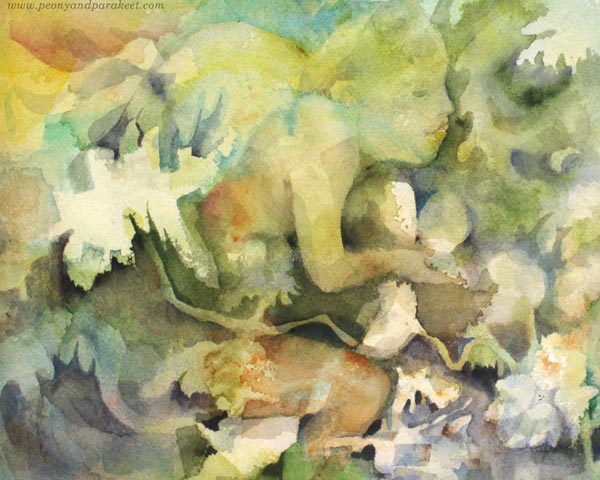
I have always thought that my art should not be spiritual because I don’t want to offend anyone. I don’t have any particular religious view myself, and because of that, I haven’t felt eligible to create spiritual art. But recently I have found it impossible to separate nature, spirituality, and imagination from each other. Nature can be our church, and for our imagination, there’s no conflict of dressing a wood spirit in a Renaissance outfit. By bringing the noble (inspiration), the wild (origin), and the playful (creativity) together, it can all fall into place. Art is about freedom after all.
How does your origin show in your art?
How could you deepen the connection?
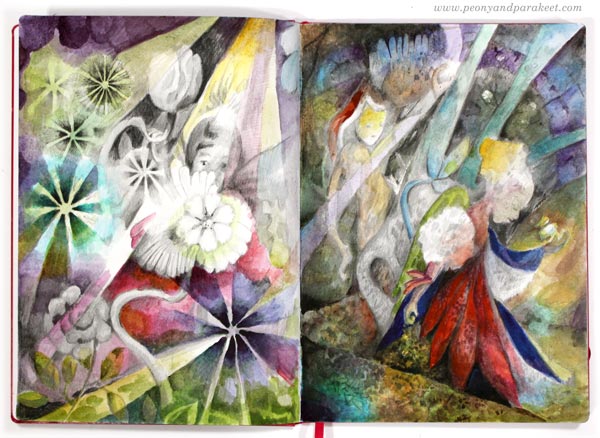
Coming Up – New Watercolor Class!
My sketchbooks are full of ideas for the upcoming class. It will be about nature’s light, textures, and spirits. There are intentional drawing exercises with pencil and intuitive painting projects with watercolors. I am looking forward to being your guide in the woods of creativity and self-expression. The class will begin in January and the early-bird sale is soon on Black Friday weekend. So stay tuned!
A Fairy Called Shyeling – Finding Your Silence Instead of Your Voice
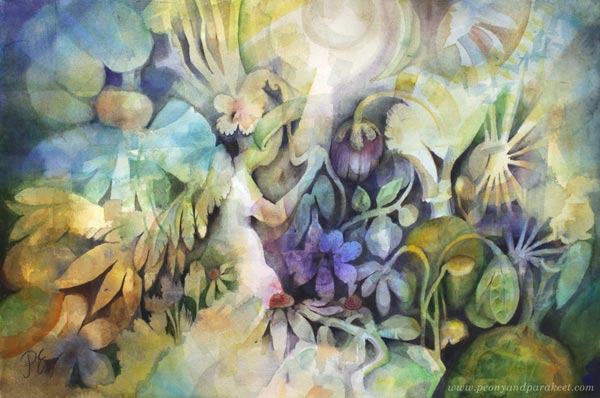
I call this watercolor painting “Ujokki” which is not a real word at all. “Ujo” means shy in Finnish. Maybe it could be something like “Shyeling” in English, expressing a timid and sensitive fantasy figure.
What Is The Shyeling?
The shyeling sees the little miracles of nature, the growth of the plants and how the light hits on the petals. She smells the soil, walks barefoot on the moss and listens to dewdrops falling on the ground. The shyeling is the most delicate and vulnerable part of us that we wish to connect and show through our art. It’s a silent power that originates from the memories and nuances rather than a loud voice demanding the ownership of the stage.
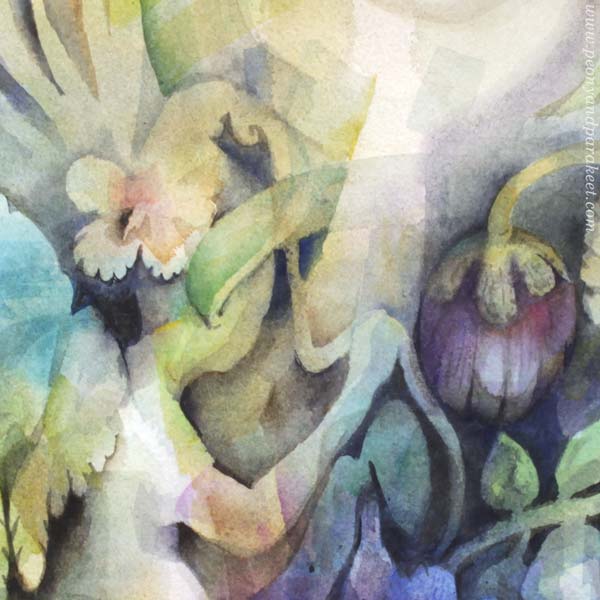
In my painting, the shyeling is pictured as a little flower fairy with big wings of imagination.
Why the Shyeling Is So Difficult to Find?
When I led IT projects and solved problems that involved different parties, personalities, and systems, the strength that I needed to possess was very different from what the shyeling has. Dealing with crises and interruptions echoed hard in my mind, and it scared my shyeling away.
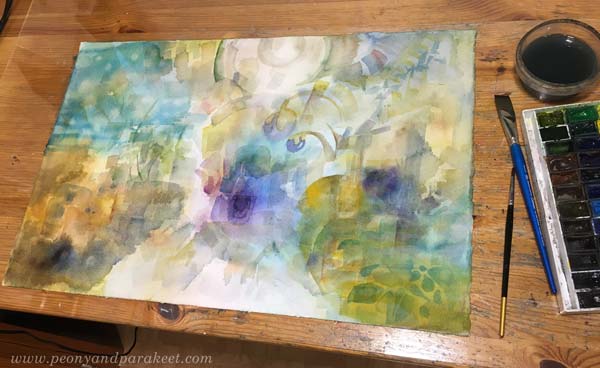
I have also mistakenly thought that shyelings are everywhere and for anyone. All my life, I have created art so that it pleases other people’s outer expectations. I haven’t even always noticed that. It’s been partly a subconscious and partly a practical thing. Shyelings don’t understand money, time, or numbers. They are weak and meaningless creatures in today’s busy world. But still, if we find ours, we don’t want to let go. We often talk about finding a visual voice, but I believe it’s more about finding our silent power.
Taming Your Shyeling
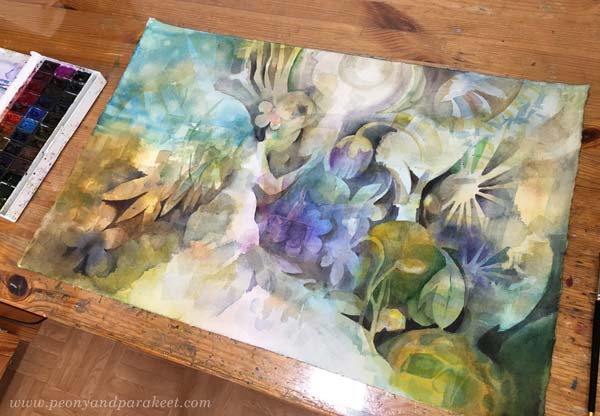
I have many paintings and drawings, where I have started to walk towards my shyeling but my impatience has taken over. The fact is that the less you have created, the longer the journey feels. But when you keep going, the destination will feel closer, and you will enter the zone where your shyeling skulks.
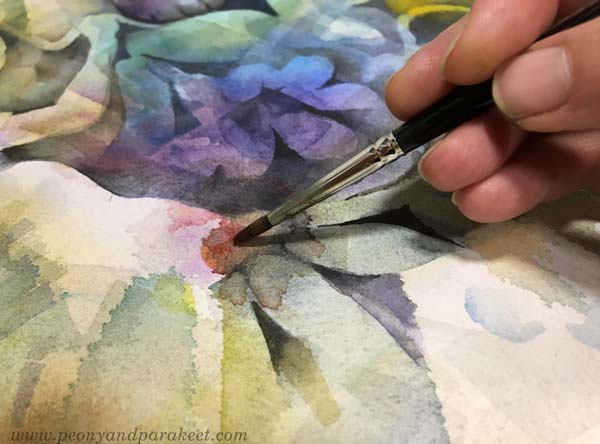
Also, remember that shyelings are like wild animals that need to be tamed. Taming needs skills, and skills need practicing. So be open to learning from other people’s shyelings. Yours might not be ready to appear from the bushes yet, but she’s been watching you, feeling more comfortable day by day.
Get Closer to Your Sheyeling!
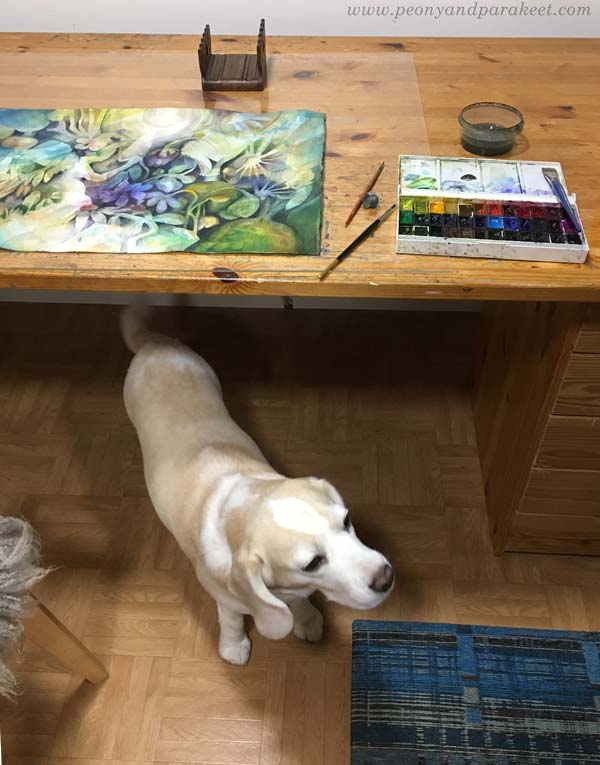
Recently, four things have taken me closer to my shyeling. First, I have stopped questioning my love for painting plants and flowers. If I like to do that, so be it. It’s not really about replicating the plants that I see anyway, but to use their shapes for creating new organic systems.
Do this: Create a piece about things that feel too familiar to you. Keep the idea process short, almost non-existent, create what you find the easiest. But, at the same time, lengthen the time that you usually take to create a piece like that. What do you discover during that extra time?
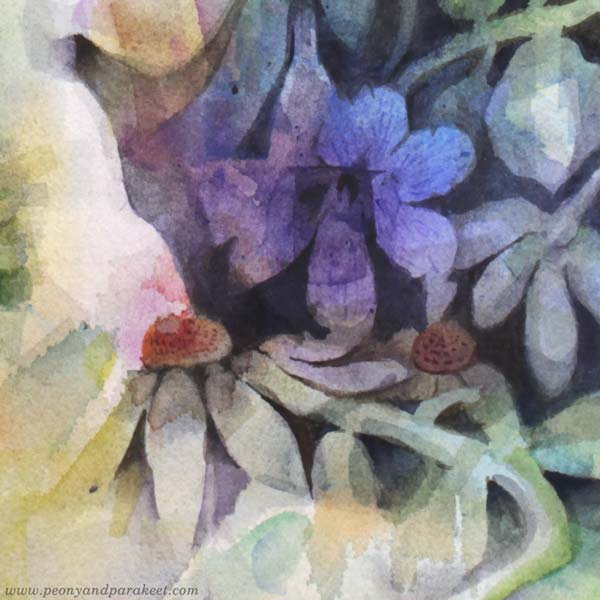
Second, I questioned why many landscape paintings look so empty to me. I found the answer from a childhood memory, always imagining nature as a luxurious place. I wrote more about this in the previous blog post.
Do this: Look at the old photos or dig our old things that reconnect you to the age when you were less than ten years old. What can’t be seen in the photos? What did you do when you were alone and nobody took pictures?
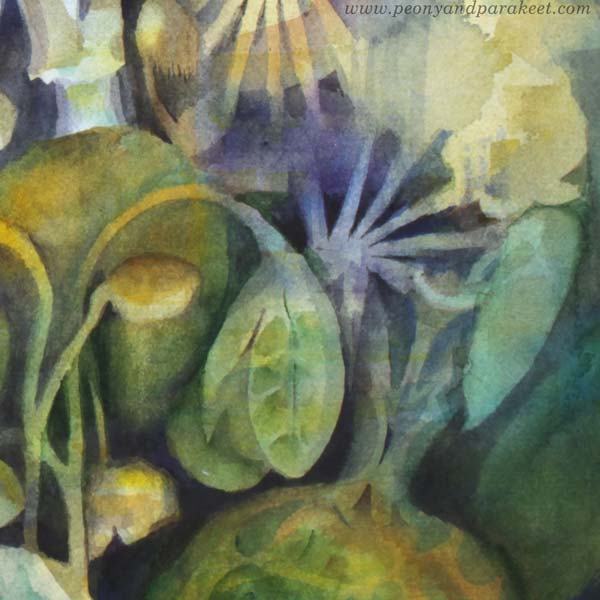
Third, I have challenged myself to become more skillful in expressing the atmosphere and space with light and shadows.
Do this: Evaluate your recent pieces so that you list things that lack there. Collect a list of things that you want to be present in your art. Then pick one thing that you start practicing more.
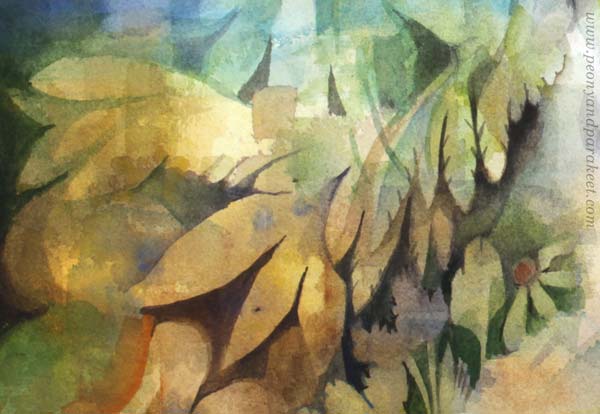
Fourth, I have practiced drawing and painting human figures without references. When I paint without references, I feel free and peacefully silent. Then there’s always a chance for my shyeling to appear.
What do you need to practice next to get closer to your shyeling?