
Colored Pencil Blogger – A Video Blog Post!
This week, I have a video blog for you. It’s full of art inspiration, especially if you want to fall in love with colored pencils.
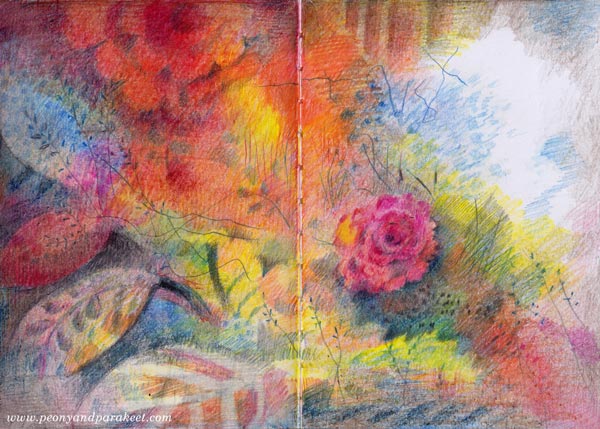
Stories and Inspiration – Watch the Video!
I decided that I have blogged about colored pencils so much that I can call myself a colored pencil blogger!
The video is longer than what I usually record. Is a 30-minute video too much? Tell me what you think!
Links to the Related Blog Posts
Posts about the colored pencil projects shown in the video:
- Coloring Page
- Angel
- Butterflies Journal Spread
- Hearts and Flowers Journal Spread
- Frozen Heart Journal Spread
- Drawing that I showed just quickly
- Previous video project
Posts about the paintings shown in the video:
Angel Drawing for the Inner Child
As a child, I had a collection of scrap reliefs – small pictures printed and cut from glossy paper. A very common one was a simple angel with a head between wings. This week, I created my version of an angel drawing.
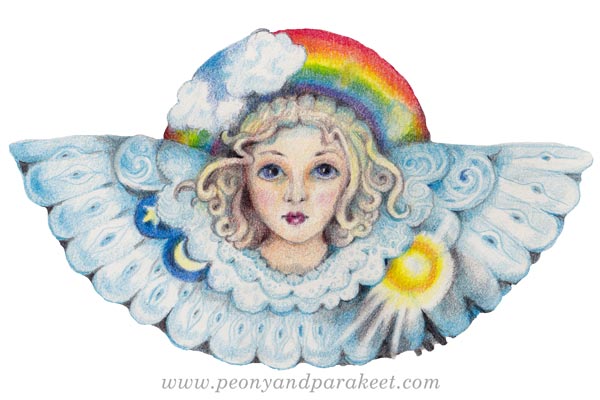
This is only a small piece on smooth watercolor paper, but the child in me likes it a lot!
My Approach to Drawing and Painting
My desire for art can be summed up in two parts. The first part is to go on an adventure by painting freely.
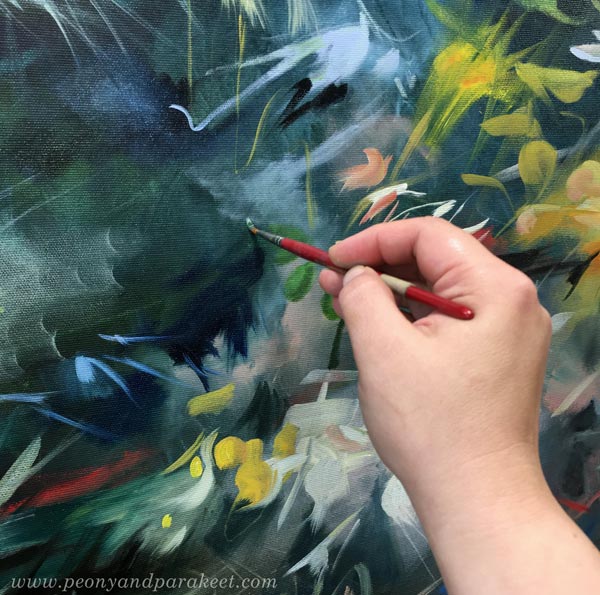
When I paint, I feel that it’s the only thing that I want to do and where I am good at.
But then, after washing the brushes, comes the second part. A child in me evokes and says: “Draw to me!” Like I often said to my father or to my sisters when I was only a few years old. The child doesn’t require much: “Something pretty!” (Watch a video about my inner child!)
Child’s Enthusiasm in Angel Drawing
I used to adore whatever my father or sisters drew. Now, similarly, I feel the acceptance of the child right from the beginning. No matter how I struggle with any detail, the child’s enthusiasm keeps me drawing.
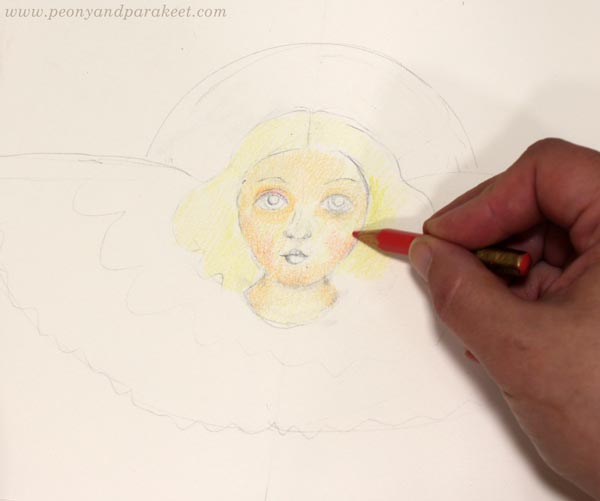
And even if I had just thought that I should only paint and do nothing else, drawing a small ornament feels as natural and enjoyable. The same creative stream seems to feed both parts of my artistic expression.
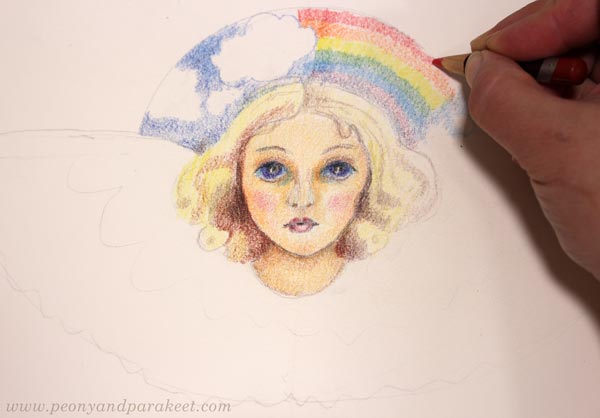
A simple sketch gets more ideas when I start adding details. Coloring a halo with yellow feels boring, so I draw clouds, then a rainbow. An unwritten story begins to flow into the image.
Small Tweaks to a Simple Sketch Make the Angel Drawing
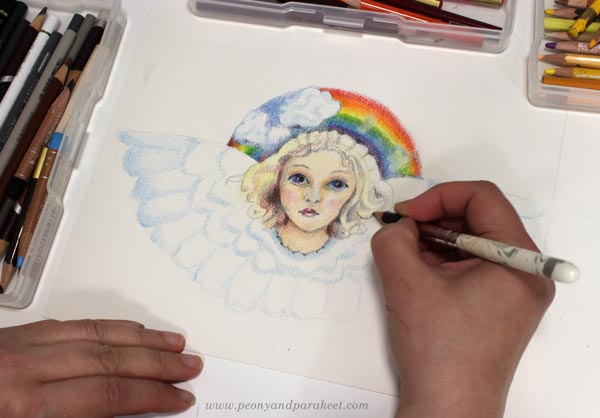
Simple shapes become more interesting when I keep drawing. Quick and simple wings get more decoration, and small adjustments to the face and hair add up.
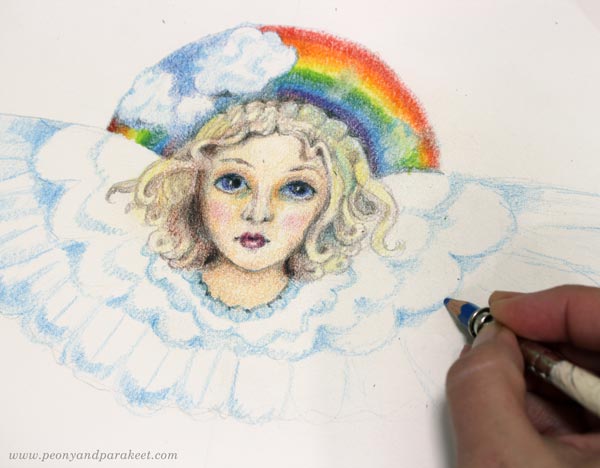
At best, I get the feeling that, like in painting, I can go in any direction and create a world of my own.
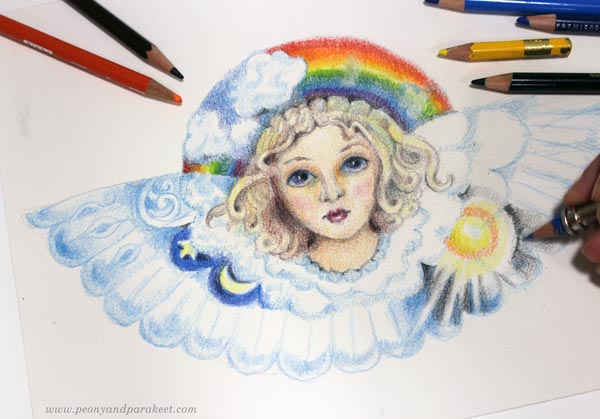
This little weather angel became a treasure to my inner child even before it was finished.
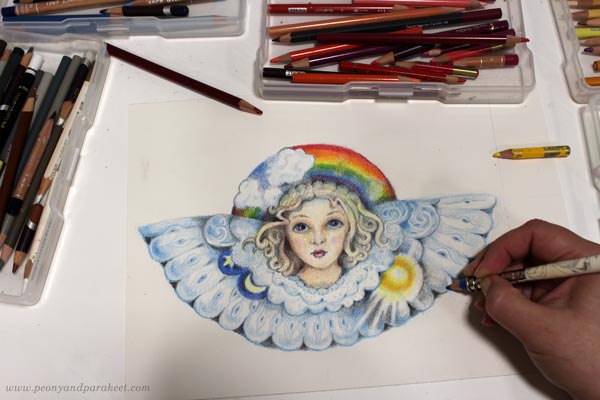
And when I handed the angel to her, she was thrilled to have her in the collection.
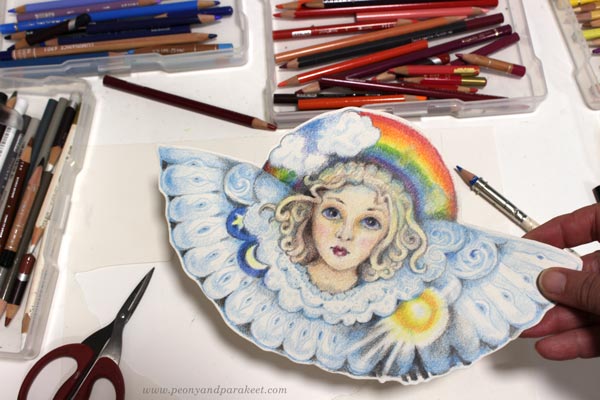
It feels that if I don’t cut the picture, it’s not ready for play!
Going Detailed with Colored Pencils
It has taken time to find colored pencil techniques to achieve similarly detailed touch like in Animal Inkdom and Magical Inkdom.
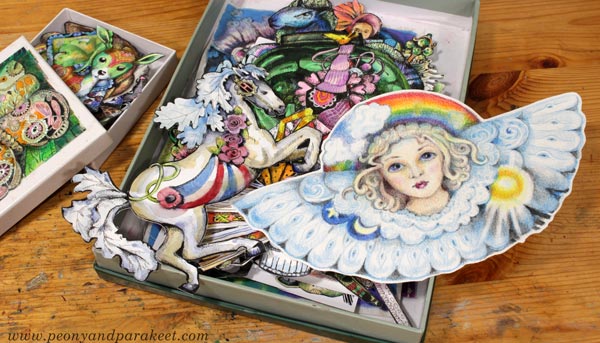
Making small pieces with colored pencils is more challenging than with ink pens, but maybe it doesn’t matter. I remember having a huge paper doll as a child. So, I could go larger without disappointing the inner child!
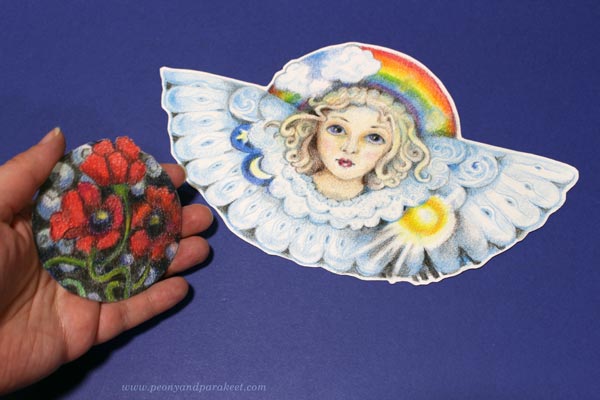
What would you like to create for your inner child?
Butterfly Art and Beyond
This week, I have some butterfly art, stories from the past, and plenty of inspiration for art-making.
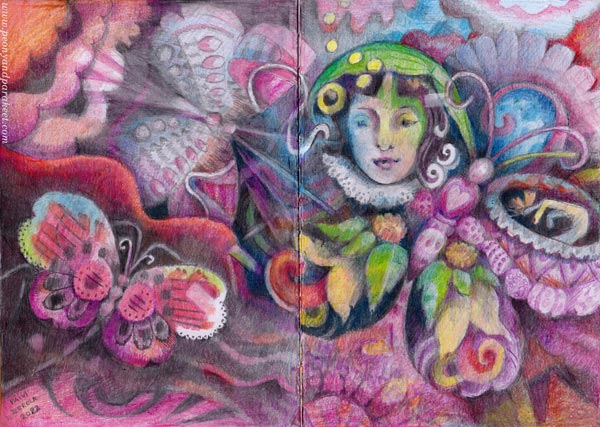
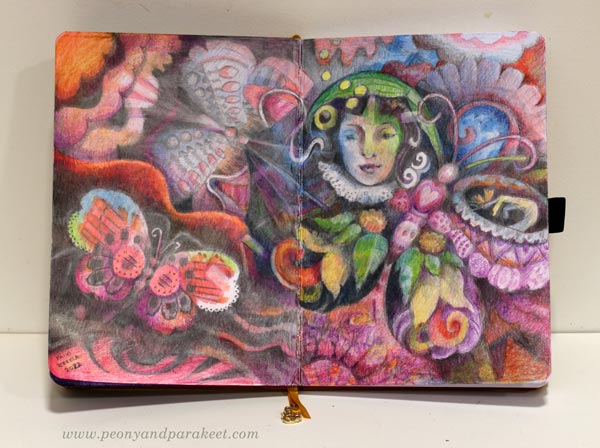
Here’s the newest spread of my colored pencil journal. I think it’s a little different than the pages so far – more detailed at least! You can see most of the previous spreads in this video; tell me what you think!
With this butterfly fantasy, I want to take you more than a hundred years back in time – to the end of the 19th century when a famous Finnish artist Helene Schjerfbeck (1862-1946) painted Violets in a Japanese Vase in 1890.
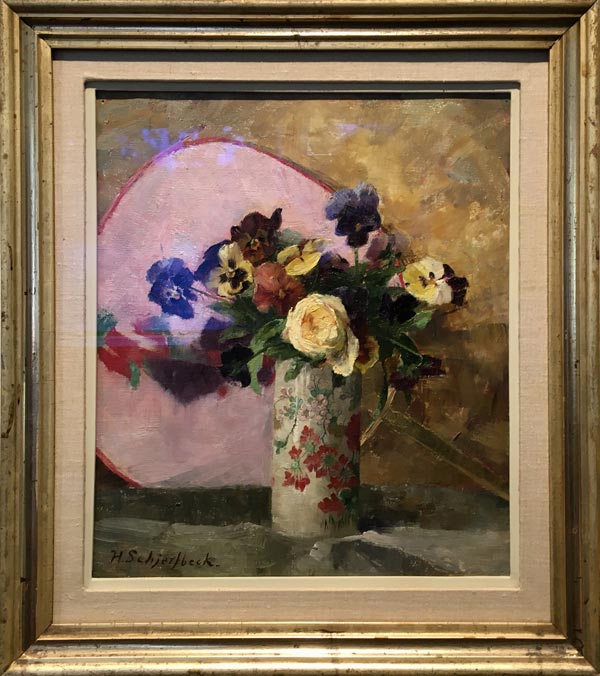
Although Helene wasn’t as famous back then, she had traveled and studied abroad. And now, she had just got back home after spending a year in Paris and England. After painting people, Helene was now drawn to make nature-themed pieces. It felt refreshing to change big and challenging portraits to small landscapes and still lives. Flowers became Helene’s consolation pieces. When she was sent to St. Petersburg to copy Russian masterpieces and thus bring educational reproductions to Finland (“here’s how the masters paint”), she painted flowers for her own joy in the evenings. (See Helene Schjerbeck’s later style and my adaptation for colored pencils in this blog post!)
I can relate to Helene. My main work is big oil paintings – abstract florals or landscapes – but I also make art that soothes and maintains rather than breaks through. While the first pieces of the new series are drying and waiting for their next layers, I feel drawn to the boxes of pencils.
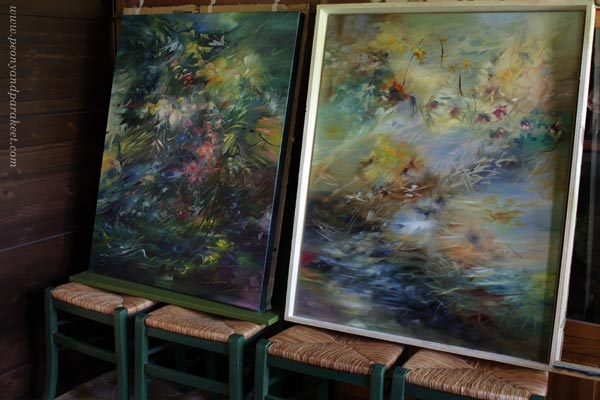
At the beginning of the week, after painting the whole Sunday, I wanted to draw something just for me. “Butterflies!” my inner child asked.
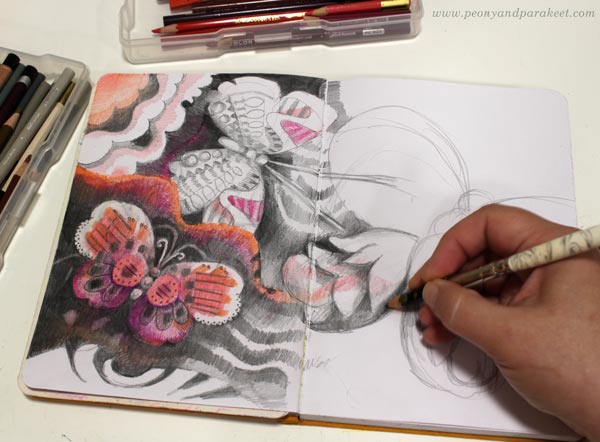
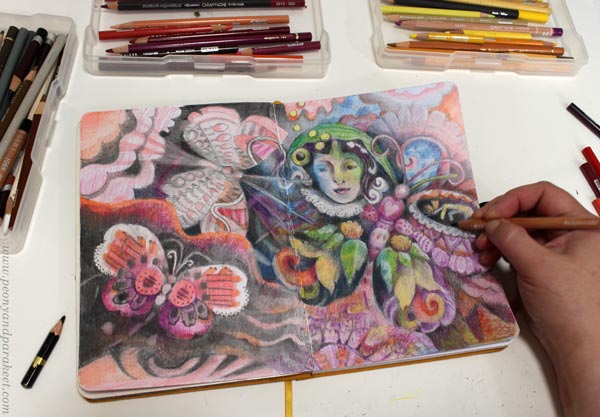
Here’s how far I got in one evening. This was before I traveled back in time to meet Helene – and another artist called Torsten Wasastjerna!
Fantasy Art in Villa Gyllenberg
In the middle of the week, my husband and I visited Villa Gyllenberg in Helsinki. It’s a museum that used to be the home of Signe and Ane Gyllenberg in the 20th century. The house was built in 1938, and it has a wonderful location near the sea.
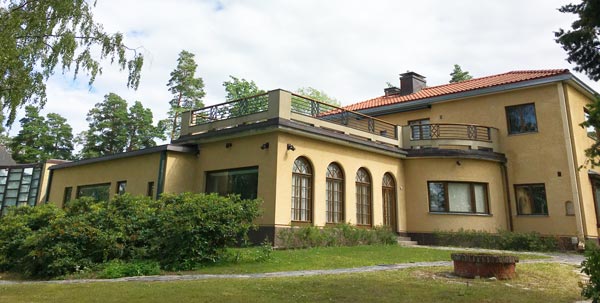
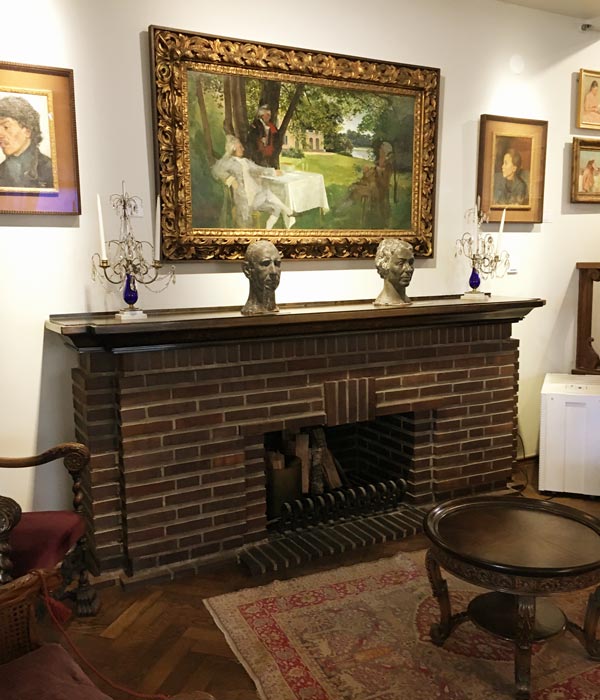
A part of the museum is a furnished old home with an extensive art collection, including Helene Schjerfbeck’s violet painting.
Just recently, Villa Gyllenberg got a new extension for art exhibitions. The new space has high walls and plenty of space, but still, there was something too big to fit there straight!
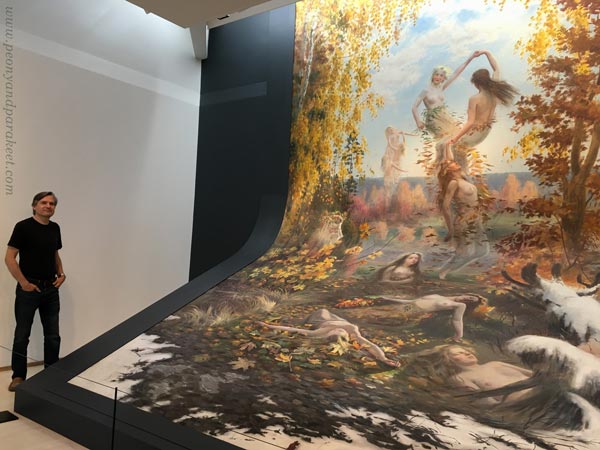
This is Torsten Wasastjerna’s oil painting Falling Leaves, made in 1897. It’s 550 cm high and 370 cm wide, one of the biggest Finnish paintings ever. My husband agreed to model beside it so that you get an idea of how big it is.
Inspired by Torsten Wasastjerna
Like Helene Schjerbeck, Torsten Wasastjerna (1863-1924) got an education in fine art and studied abroad too. But his consolation was fantasy. He did commission portraits to pay the bills but loved illustrating fairies and angels. He even wrote books. The first one was called Dröm och Värklighet – Dream and Reality.
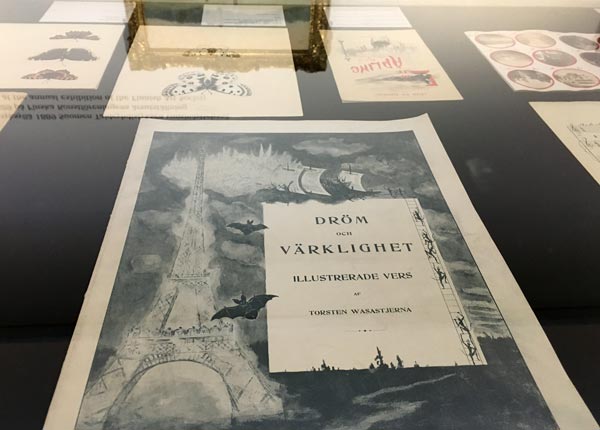
Torsten Wasastjerna’s fantasy world wasn’t as surreal as mine, but it felt close.
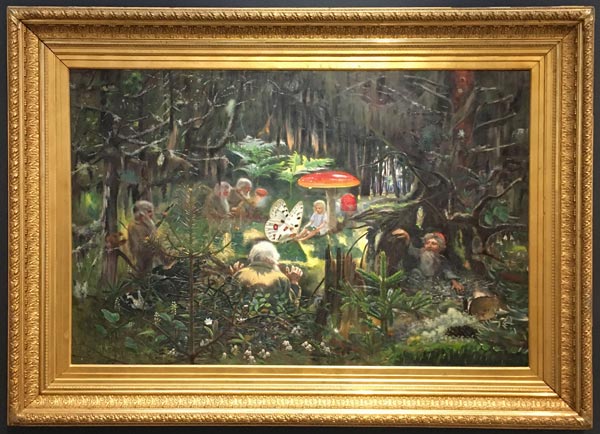
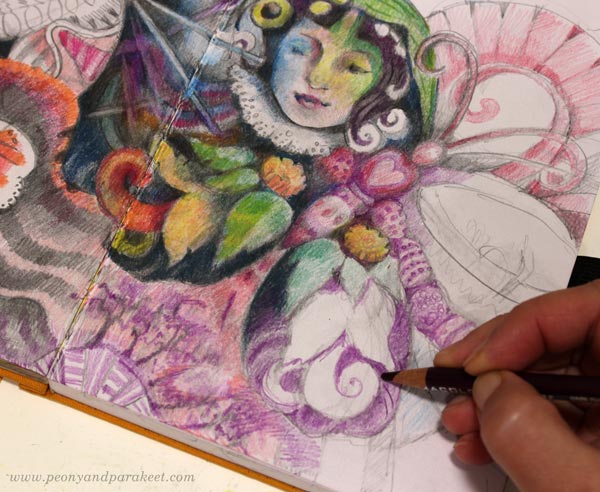
When I got back home, I was inspired to work on the butterfly piece with much more detail than I first had planned.
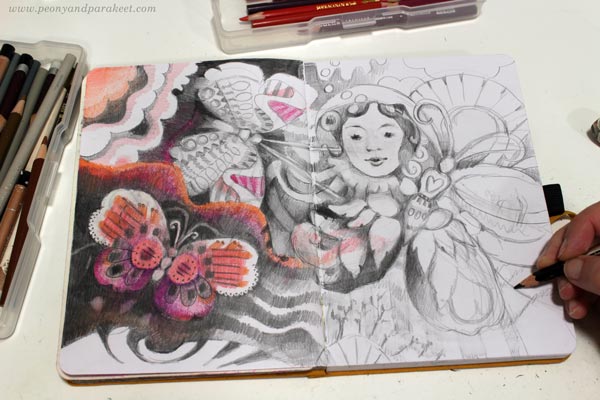
I added a person, a butterfly girl or a boy, to one of the wings.
Butterfly Art and Beyond
I am impressed by how dedicated Torsten was to his fantasy art, even if it was not valued by others.
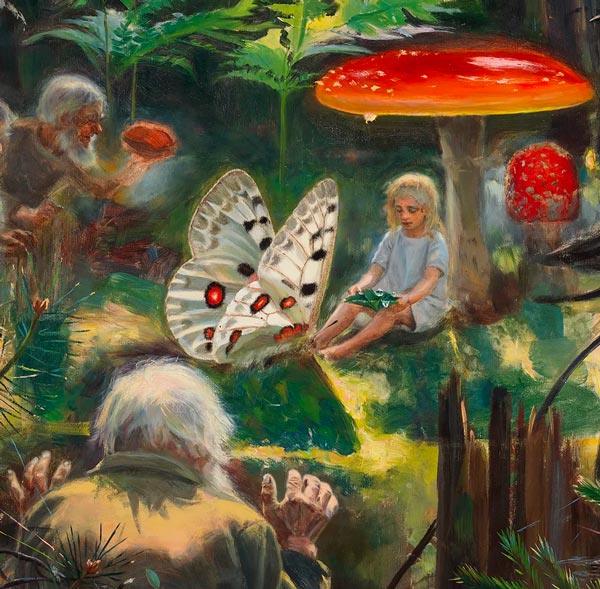
It made me think that I, too, can create “butterfly art” that goes beyond the butterflies – that challenges both my imagination and dedication.
So, I spent more hours than normally with this spread, adding details and then adjusting their shapes and colors.
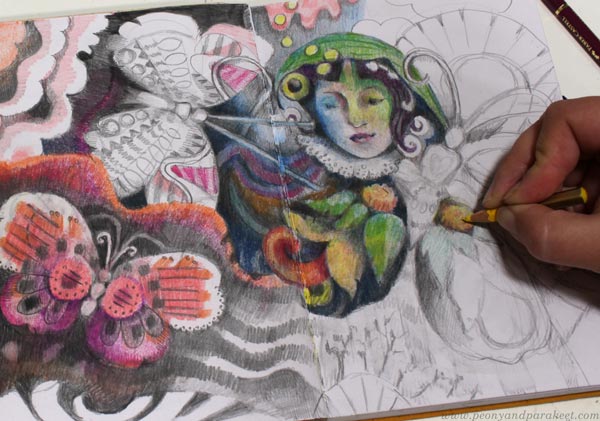
It felt like my pencils reached a new level, getting closer to my heart than before.
The world that is naturally and effortlessly born in my paintings fed the more illustrative work too.
All this makes me think about how important it is to go to see art and use that for inner discussions: how am I different, what are my consolation pieces, and how do I show my dedication to art? Then butterfly art can go beyond butterflies in the same way as Helene’s violets are not just “violet art.”
What do you think?
Hearts and Flowers – Draw Freely with Me!
This week we will grab colored pencils and draw freely in full color. Follow me step by step!
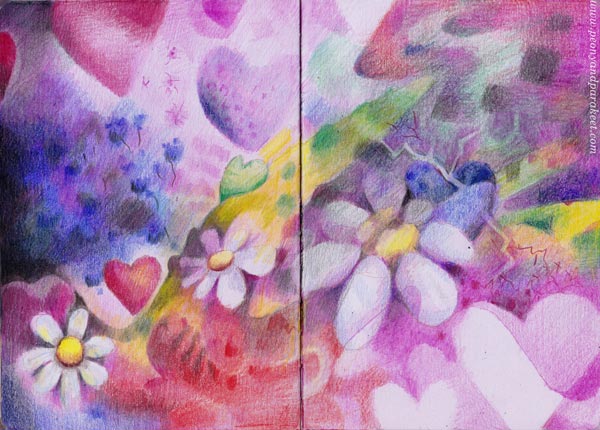
This exercise is set so that we start simple and then get more creative. If you are a beginner, you can stop earlier, and if you have more skills and patience, you can go to the very end. You only need paper and colored pencils. I drew the picture in my colored pencil journal.
Step 1 – Draw a Flower and a Heart
Pick a brown or blue colored pencil and draw a flower and a heart.
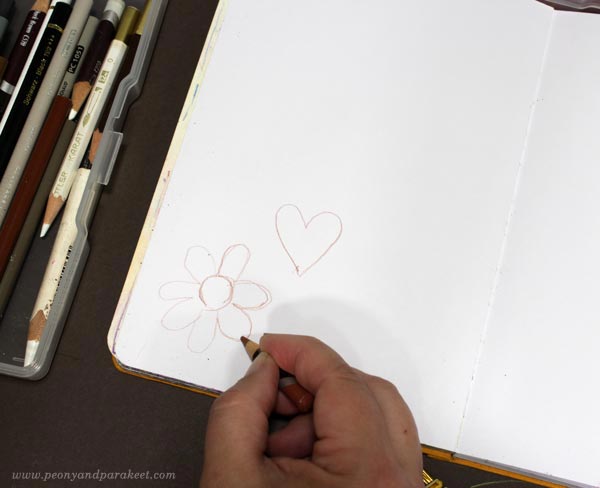
There’s nothing creative here, these are just the basic symbols of a flower and a heart. Place these on the corner of the page so that they are like a starting point for the rest of the image.
Step 2 – Draw a Tilted Flower and a Heart
Now draw a flower and a heart so that they look tilted. Having variation makes the image!
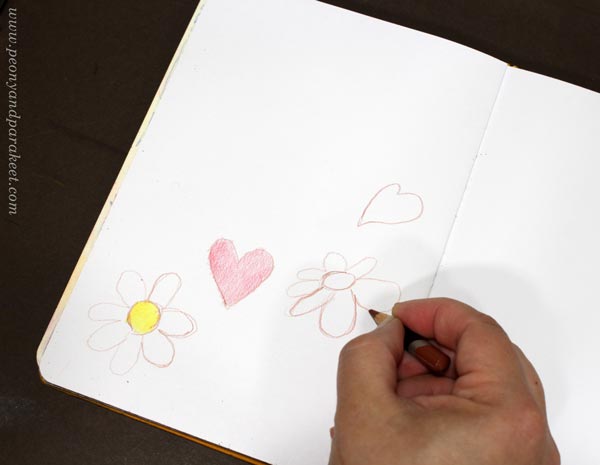
Instead of a circle, draw an oval for the center of the flower. Change the length of the petals gradually. Draw the other side of the heart smaller so that it’s not symmetrical anymore.
I like to add some color right away – not much, just a light layer as a warmup.
Step 3 – Draw a Big Flower and Then a Heart Behind It
I bet your flowers and hearts are pretty similar in size and placed separately – like mine are! Let’s add variation by drawing a big flower and by placing a heart behind it. So here, the heart is only partly visible.
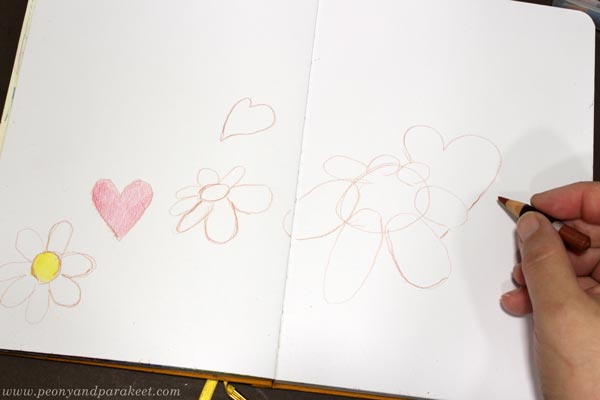
Again, I drew the flower a little differently than before. I made the petals go on the top of the center. Now when the flowers and hearts are all a bit different, they look more lively too.
Step 4 – Color the Hearts and Flowers and the Background Around Them
Now pick a wider selection of pencils and color the hearts and flowers. Also, choose a background color and add some of it to the background.
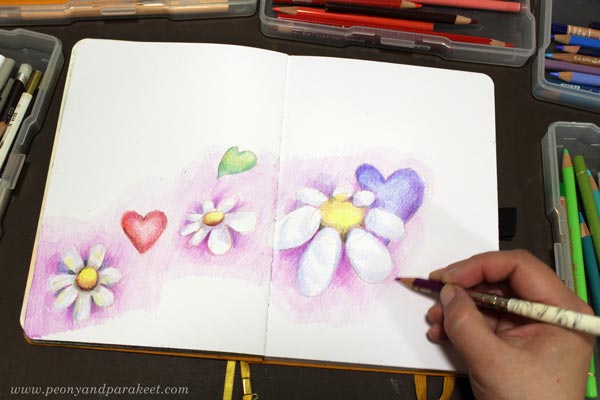
You can adjust the outlines if needed with the background color. Color lightly and leave most of the background blank.
Now you have a cute little drawing, but let’s draw more freely next!
Step 5 – Color Flowers on the Background
We now have stereotypes of flowers, but let’s go further and question them. When a flower wants to be free, it becomes less defined, and the center disappears. Make the background more lively by coloring three big blurry flowers freely.
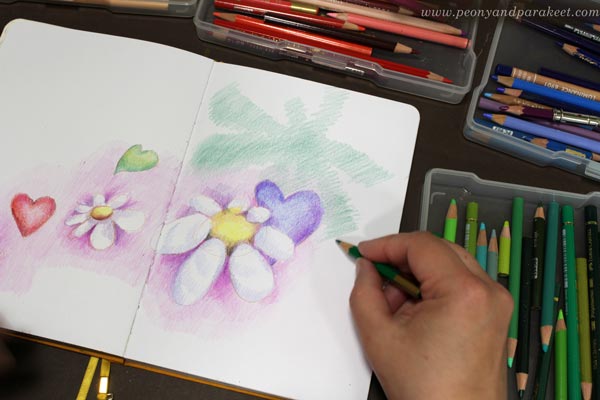
Without thinking about typical flowers, color stripes that go in different directions. They can have different lengths, be straight or curvy, and the result can look pretty odd!
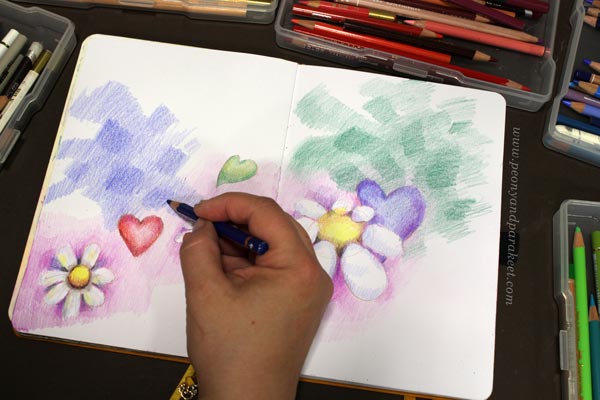
Then color rectangles on the top. Make three blurry flowers total – sets of stripes and rectangles, that is!
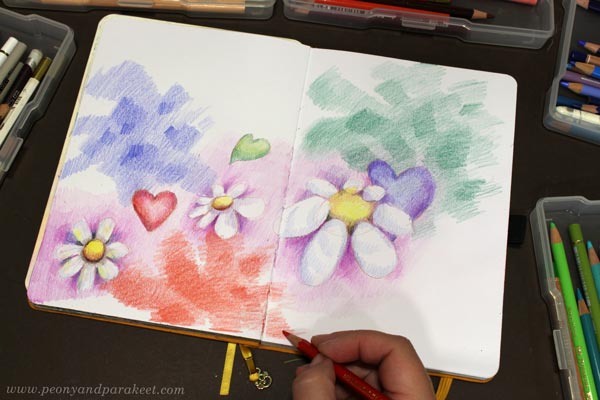
Connect the elements so that the new ones go a little behind the old ones. When you want to create an emotional connection, create a visual connection!
Step 6 – Color Hearts on the Background
Without outlining, color a set of hearts with the background color, and then make a second set of white hearts by coloring the background.
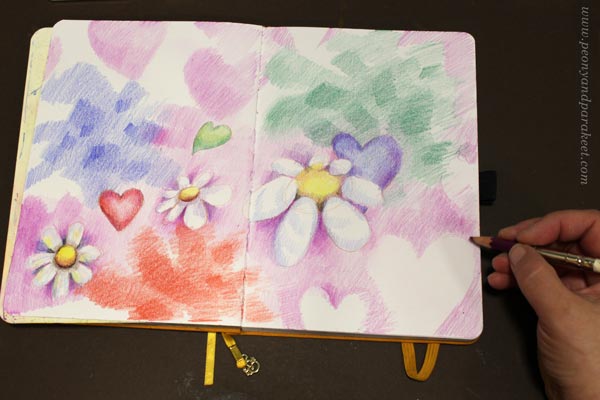
Color around the heart, not the actual heart! The hearts can have various sizes. Place a part of the hearts near the edges so that they are only partly visible.
Then add more background color so that it goes partly over the background elements and makes the image a little darker and calmer.
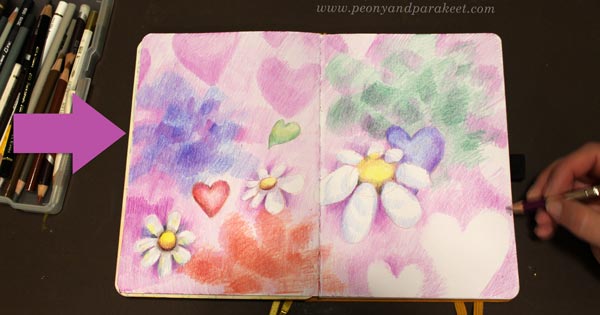
Now you have some free expression, but next, let’s go further and add more drama!
Step 7 – Color a Dark Path
Light always shines more brightly when there are also dark colors. Pick black and other dark pencils and plan a path that goes across your image from one corner to the opposite side of the center.
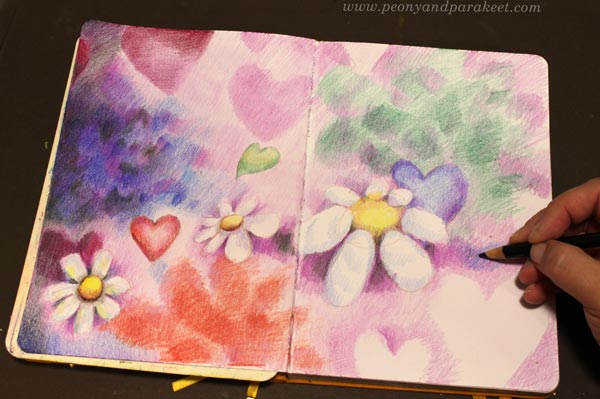
First, color the chosen corner and the nearest edge. Then move towards the center. There, add shorter stripes and spots that mark the path and highlight the best parts of the image.
Now you have set the basic lighting. But in nature, light often travels less straight and makes the overall impression less stiff.
Next, we will get creative and free up the light!
Step 8 – Draw a Freeform Line and Color Its Sides Differently
Take a deep breath, and practice first. Stand up, and move a pencil in the air so that it creates curves. Then sit down and draw a curvy and continuous line that goes across the page.
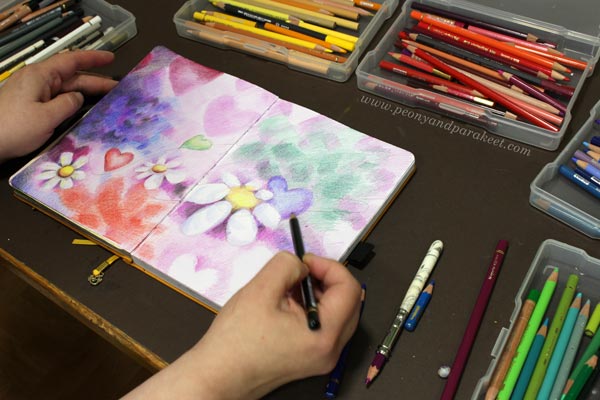
Draw freely and lightly!
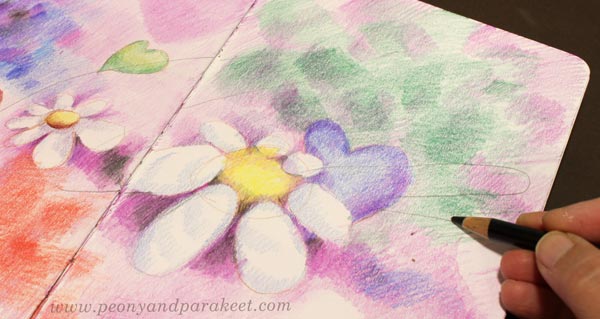
Then color around the line so that light and shadows alternate there. When darkening an area, notice that you can also color smaller shapes and patterns instead of using a solid color.
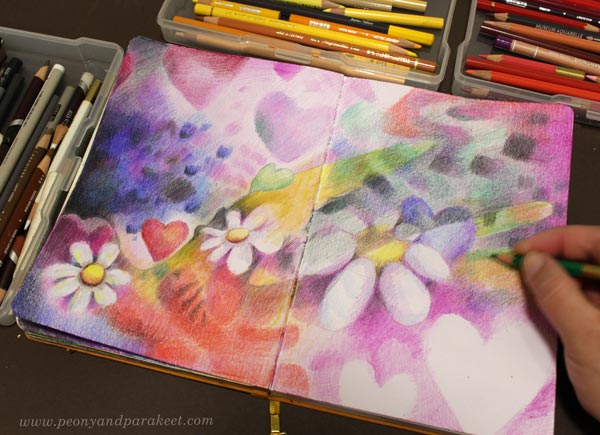
Hearts and flowers can also interact with the division so that they add more little curves to it.
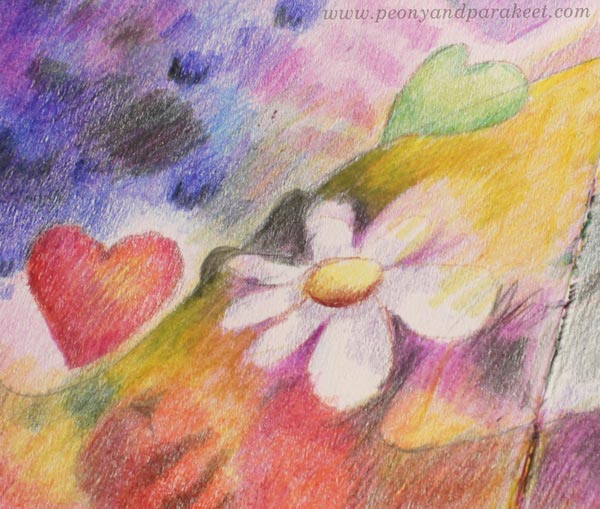
Here, the petals push the line away, creating small bumps.
If you want to add more interest to any other area, you can do the same: draw a line and then color the sides differently.
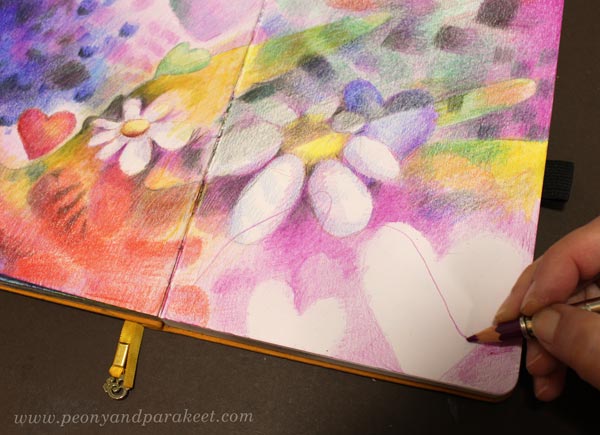
Now you have an atmospheric image, but does it have a message?
Next, let’s ponder what to express and color a little more!
Step 9 – Finishing with a Message
Ask yourself: what element do you like the best? My favorite thing was this blurry heart.
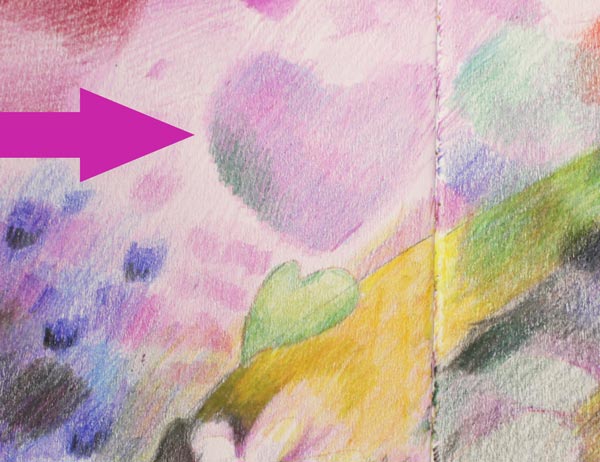
Even if it’s not a centerpiece like the big white flower, it felt like a force that affects the scenery the most. I often discover this kind of “background force” in my drawings and paintings. It seems to be the most strongly connected with the overall message that I want to tell.
The pink heart is like a lady who makes everybody fall in love with her. I want the overall scenery to look feminine but also have elements that include agony and the more desperate side of romantic feelings. I like the tension that I gave with some sharp lines and dramatic curves.
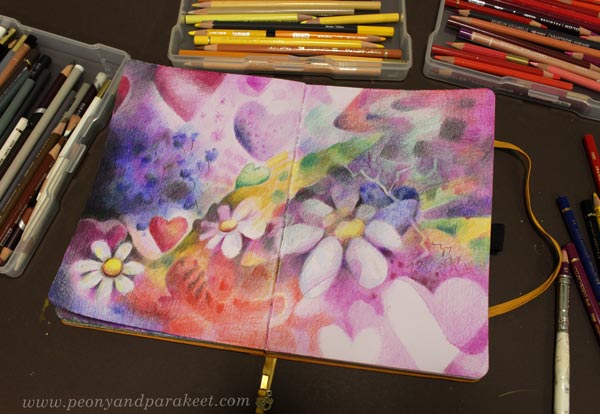
Because everything has two sides, often finishing with the message means adding more tension. It makes the image feel more real and more relatable.
I hope this inspired you to draw freely!