
Draw a Coloring Page and Color It Creatively!
This week, we draw a coloring page and color it creatively.
Inspiration from an Artist Friend Eeva Nikunen
This blog post is inspired by my artist friend Eeva Nikunen. She is a master at drawing coloring pages. She has many self-published books, and just recently, she drew the Alice in Wonderland coloring book for a famous British company Colouring Heaven. I especially love Eeva’s illustrations of men, and her drawing skills are superior, much further than mine. Of the two of us, she is more of an illustrator while I am a painter, but we both alternate with drawing and painting.
Inspiration from Historical Styles
The Victorian era inspires Eeva, and I love it too. In 2020, I illustrated a book called Fairy Experiments for Thinkers and Tinkerers. It had over 60 Victorian-style line drawings and one simple coloring page as well. I have used a similar drawing style in the classes Animal Inkdom and Magical Inkdom.
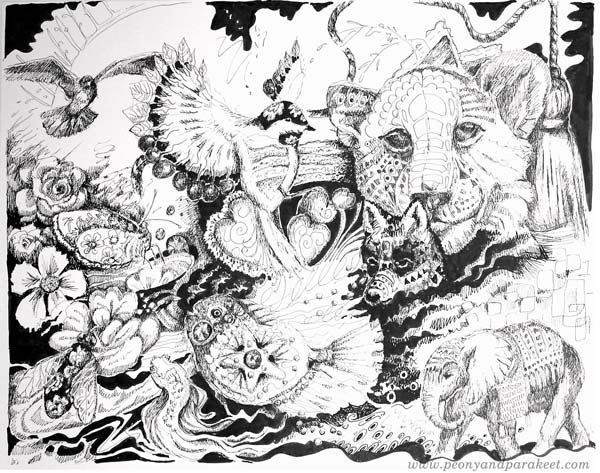
I also like Art Nouveau and Alphonse Mucha‘s illustrations. See this old blog post from 2015 where I draw in Art Nouveau style!
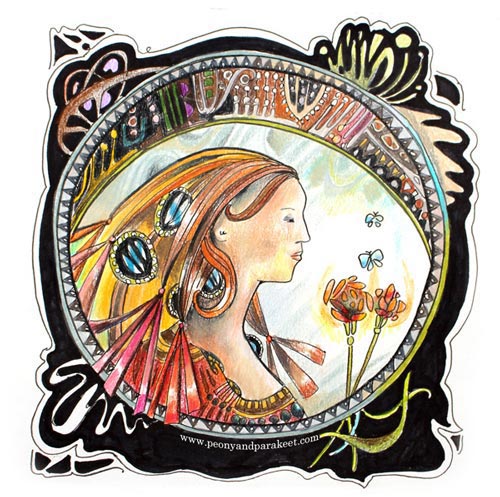
The blog post has a short drawing video too.
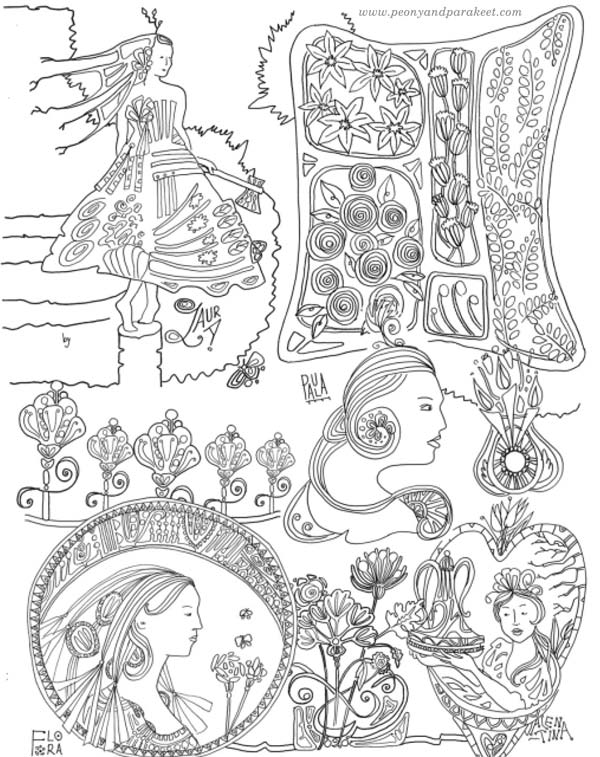
Art Nouveau has inspired me to create a set of coloring pages for the e-book Coloring Freely. Here are some samples of them.
Let’s Draw a Coloring Page!
There are great programs for drawing coloring pages like ProCreate and Adobe Illustrator. I like these programs, but I like to keep drawing with pens and pencils too. So let’s look at how to draw a coloring page by hand!
I started with a pencil, and the focus was first on the pose. When I had a rough idea of a woman romantically entering a scenery, I drew over the pencil lines with a black drawing pen. I like to use ink pens because I draw better when I can’t erase the lines. It makes me concentrate more, and my hand becomes steadier.
The sketch for the pose is number 1 in the photo. I think many of you would just throw it in the trash and think that the project is a disaster, but the secret is to keep going by tracing the sketch to another paper.
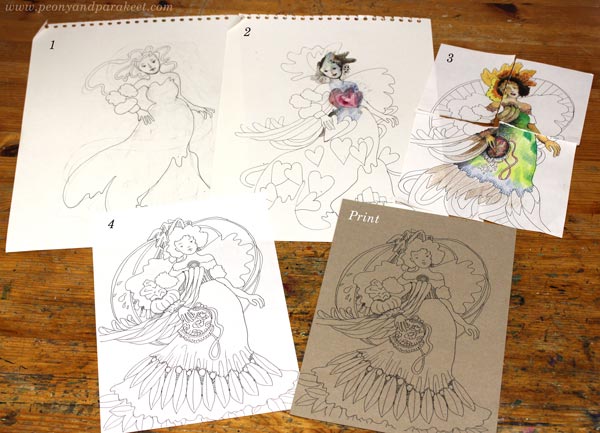

When tracing the old lines, you will get more ideas and new energy for adjusting the drawing. My second sketch had more elements, and I also started thinking about the facial expression of the character. When I ran out of ideas, I just drew hearts. Then I colored the sketch a bit to think about what the general idea of the image could be.
I like to develop ideas by drawing and coloring, not by thinking only. Many say they have images in their head, but mine are often too vague or too traditional. Drawing makes me more inventive and detailed. So, in the third sketch, the hearts were gone, and the lady had a bag, a leaf skirt, and a circle behind her. As you can see from the picture above, I threw the sketch away, but then when I thought about the blog post, I dug it out from the bin for the photo!
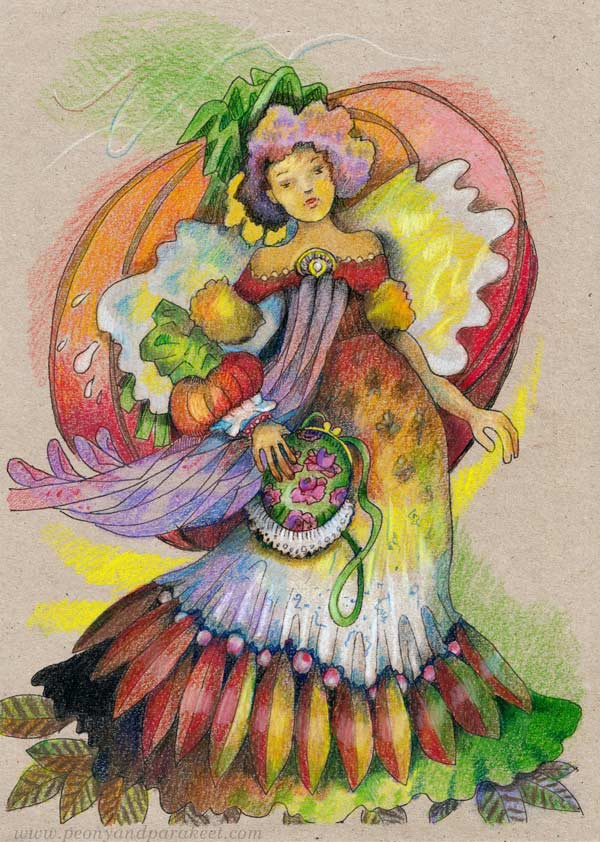
Here’s the third sketch without colors and the final version that I drew after coloring the third one for some time.
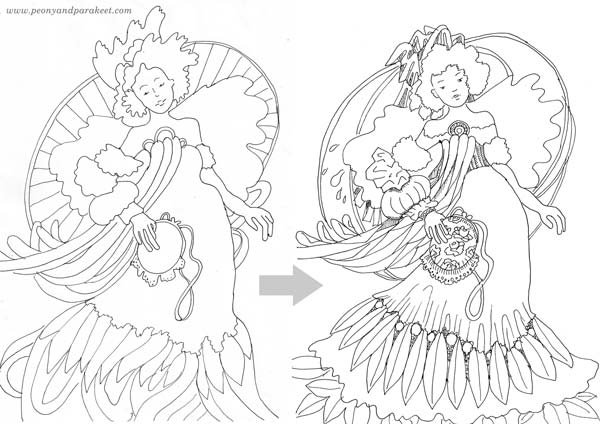
The final drawing is about saying goodbye to summer and hello to fall. The bag symbolizes summer and the circle became a giant pumpkin. If you compare my lines between the sketches, they become more delicate and detailed towards the end. The first sketch is a clumsy thing, but by redrawing the lady several times, I was able to make the design more flowing. Straight lines became curvier and curves got more notches, making the shapes more interesting. By leaving some of the elements visible only partly, the image looks more coherent and less floating.
Choosing Paper for Drawing and Coloring
The thin and smooth marker paper makes tracing easy. I got to know it when I was studying as an industrial designer. Art supply stores sell it. For coloring, I prefer thicker paper, so I scanned the image and printed it on a brown drawing paper.

Unbleached paper allows me to color a bit more carelessly and playing with pastels and whites is more fun.
Creative Coloring
An inspiring coloring page is not too detailed. I like pages that have some detailed elements, like the bag in mine, but that also have plenty of space for additional ideas. Then the coloring page can be treated as a foundation for creative coloring. For example, my page has pretty empty hem, and I can have fun by coloring freely – creating color changes and motifs that make the design more rich and stylish.
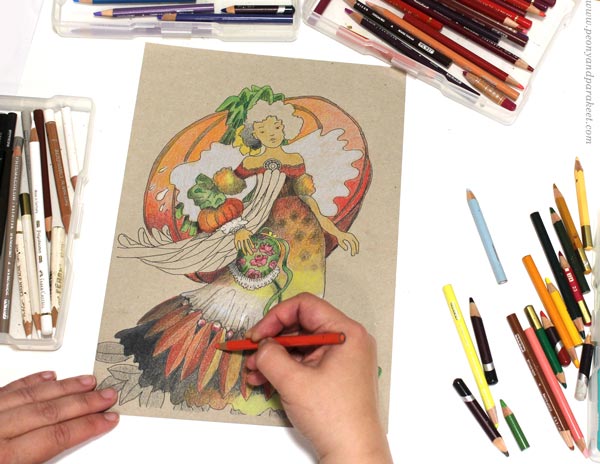
I also like to color over the lines so that coloring extends the original design.
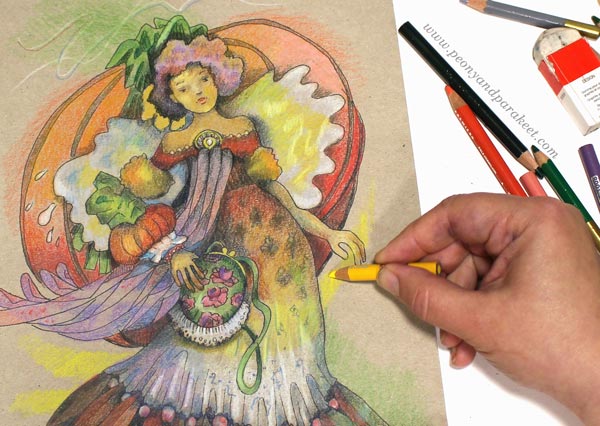
Compare the coloring page and the colored version below to see the additions made with colored pencils only!
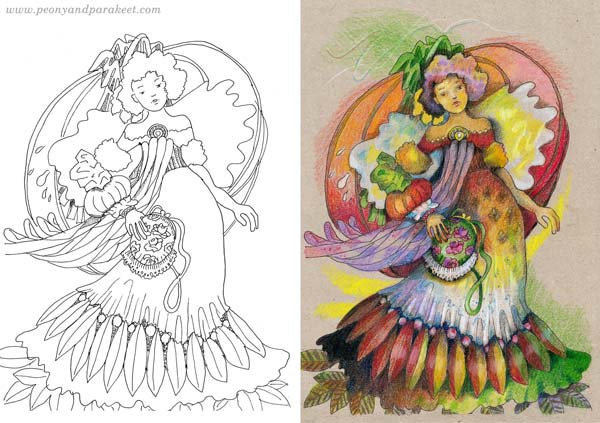
With colors, you can also change the style of the drawing. I think mine looks quite Alphonse Mucha without colors, but after coloring, less so. I like coloring shadows and making the design less flat than what Art Nouveau had.
The Intuitive Part of Intentional Art
After finishing a drawing that was born pretty intentionally, I like to ponder what had initiated it. I found this photo on my phone, taken a couple of days ago. The two-colored leaves looked so beautiful and bittersweet to me that I had snapped a picture of them.
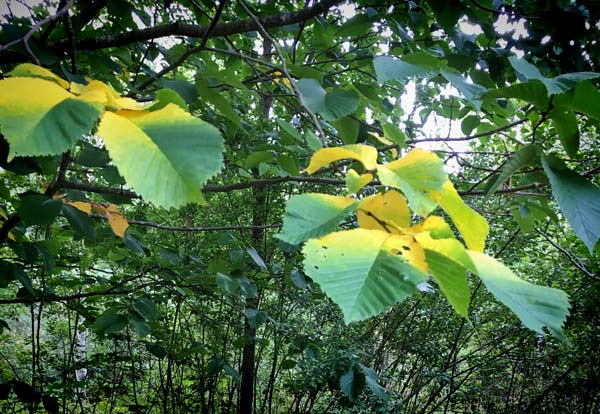
I am sad that summer is over but also acknowledge that summers and falls are not separate. One carries the other. It’s not fall’s fault that the summer is gone, and the present that the summer gave is dear to her.
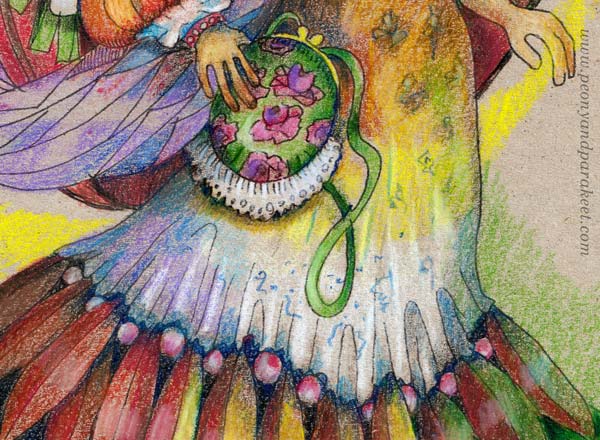
I hope this post inspires you to draw a coloring page through multiple sketches and then creatively color it!
Turning Memories into Paintings
This week, I talk about memories and art-making and how the connection between them can be loose but still important.
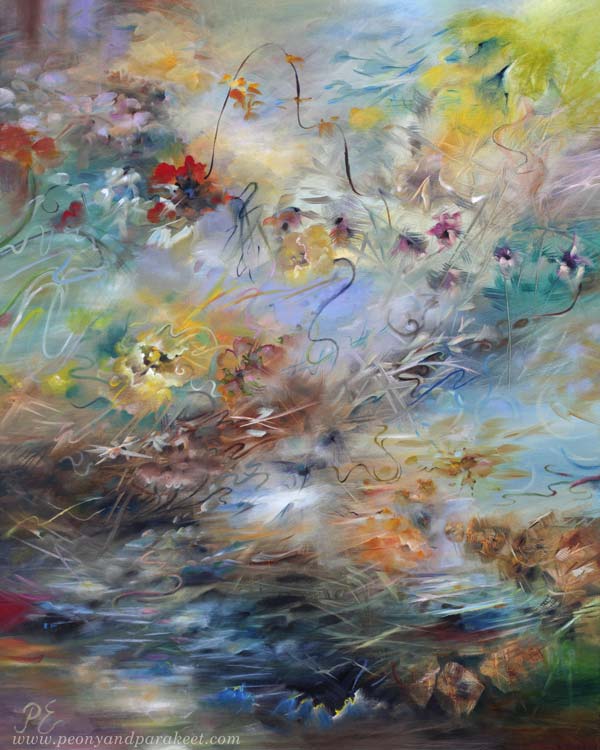
With this new painting, I want to talk about …
Books and Memories
My parents never visited another country, and as a child, I never traveled abroad. My first foreign trip was to England when I was 21 years old.
So when I think about my childhood, the first feeling that comes to mind is boredom. “Äiti, mitä mie tekisin – Mother, what could I do next?” I often asked. But my mother’s suggestions were never inspiring, and if my friends weren’t around, I usually chose to walk to the local library so that I could see the world.
My body was local, but my mind was international. Maybe it’s because our family had the book Tuhannen ja yhden yön satuja – One Thousand and One Nights, and I found it fascinatingly exotic at a very early age.
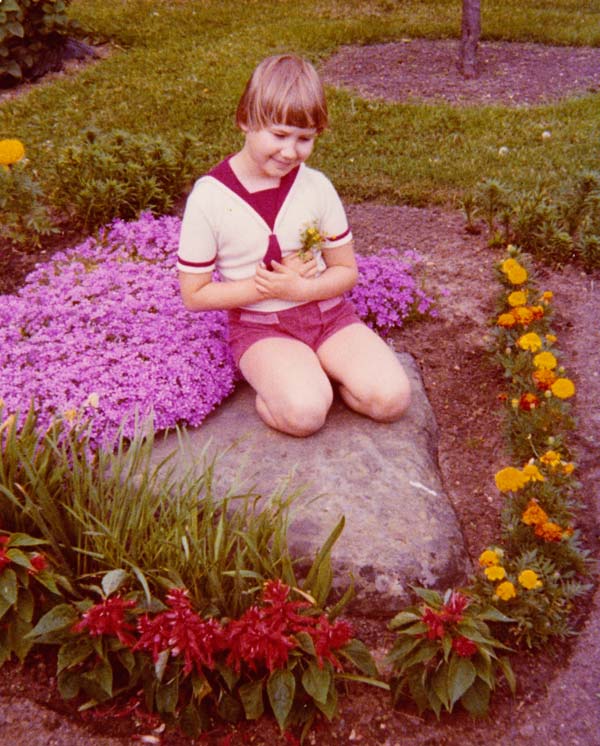
So the local library became my globe. As soon as I opened the door, I glanced at England, to the bookshelf where Jane Austen‘s novels were in a row. Then I went to Africa and Asia by browsing big encyclopedias of animals, searching for big cats. I traveled to Egypt when admiring the treasures of the pyramids. I spent hours in France and Italy, contemplating whether I liked impressionism or expressionism more. Pictures of folk dresses took me to the east, across the border. I traveled west over the sea to meet my friends Uudenkuun Emilia – Emily of the New Moon, Laura Ingalls, or Vihervaaran Anna – Anne of Green Gables. And I also spent quite a lot of time in a fictional American town through Spoonriver Anthology by Edgar Lee Masters.
When my fingers danced on the spines of the books, my mind contemplated where to go next. And always, I was able to find a place more pleasant than the small town in Eastern Finland.
Painting Freely, Inspired by Memories
This freedom of mind still inspires me. In fact, this blog is one channel to reach you who lives far away. Despite the distance, you may have read the same books, yet our memories are unique. The common stories and pictures get mixed with personal experiences and views.
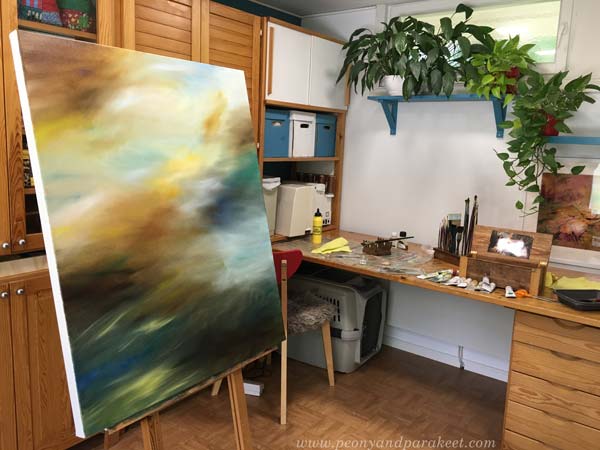
No matter how current we want to be, memories always play some role in our art too. When painting freely, it’s not as literal as illustrating a story but more about the atmosphere and associations that a traveling brush can evoke.
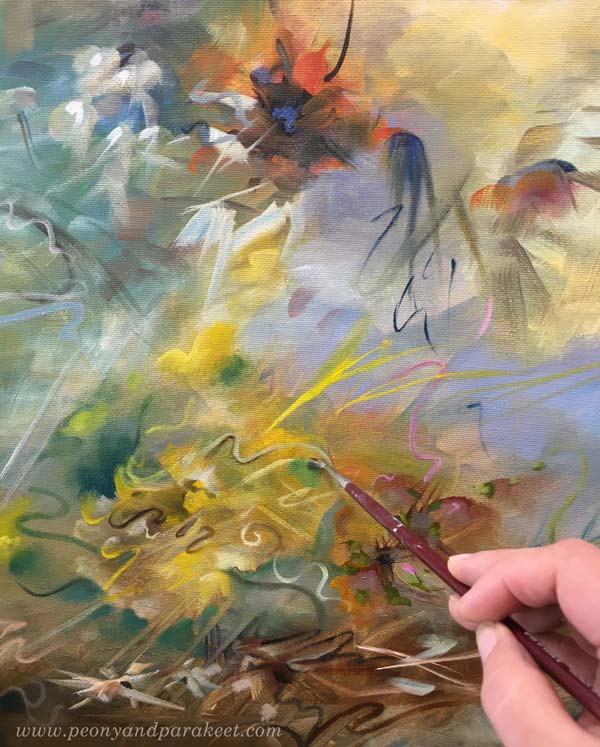
Like a child, we can get enthusiastic about very little – about a spot or a simple idea and then expand our thoughts, shapes, and colors.
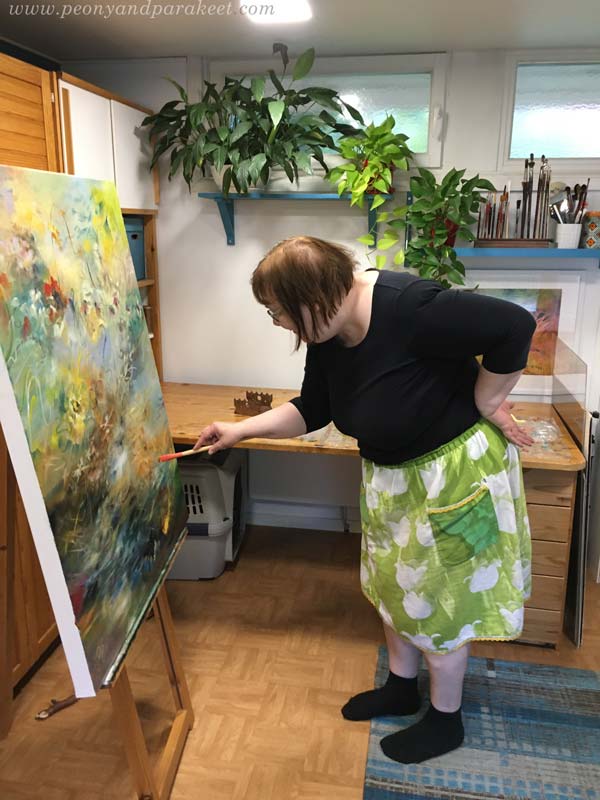
I believe that the more we paint, the more we remember who we naturally are.
My Artist’s Journey
My artist’s journey has been full of practice. A lot of it has been that I have developed a class of my recent revelations and then moved forward to find more. So, it’s been a very straightforward route that way, and I am oddly relieved that it has brought me where I am now, being able to use a brush as my pen and paint stories that go beyond words.
Right now, it doesn’t feel right to develop a new class about painting, especially when I already have the master class Floral Freedom.
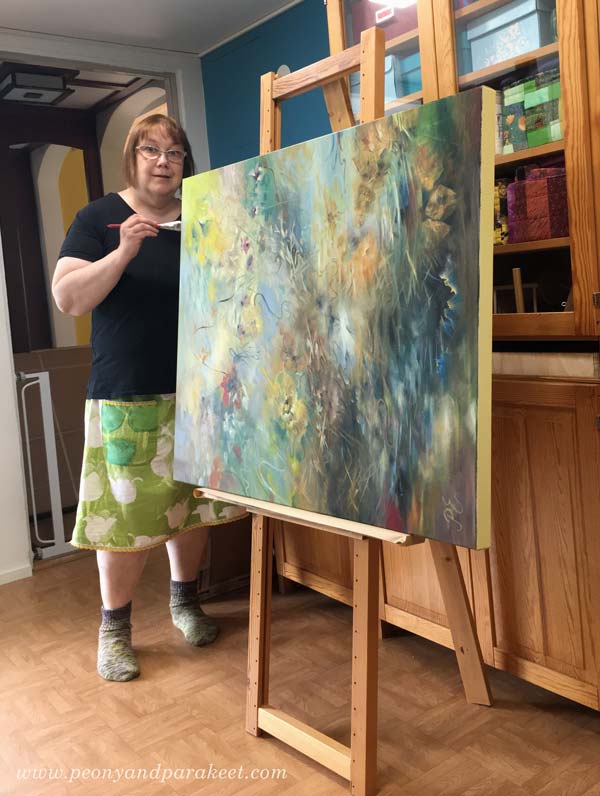
However, with the current series of paintings, I have got new ideas for drawing. A big part of my painting skills and imagination have come from drawing practices, and I love the quickness and playfulness that pens and pencils enable. So stay tuned!
Tiger’s Eye – Memories into Painting
I painted this piece, Tiikerinsilmä – Tiger’s Eye, like it would be a good book, taking me to unexpected places. Just like a child sees the world in a library, as an artist, I try to stretch my memories and imagination so that I don’t get stuck in the mundane.
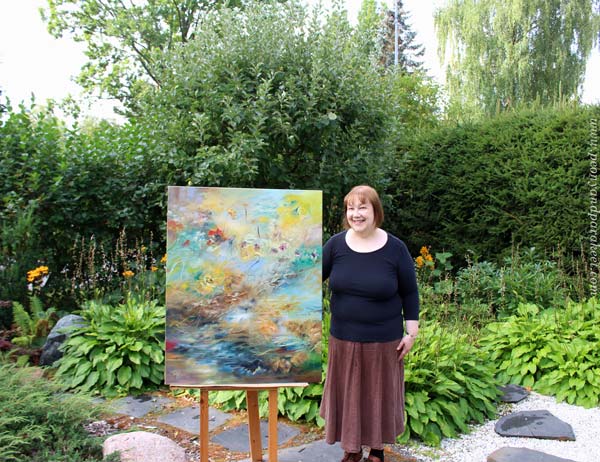
What kind of memories and hopes came to your mind when reading this post? Did you, too, read One Thousand and One Nights, for example?
Discovering a Character by Drawing
This week is about illustrating characters and discovering those that feel personal.
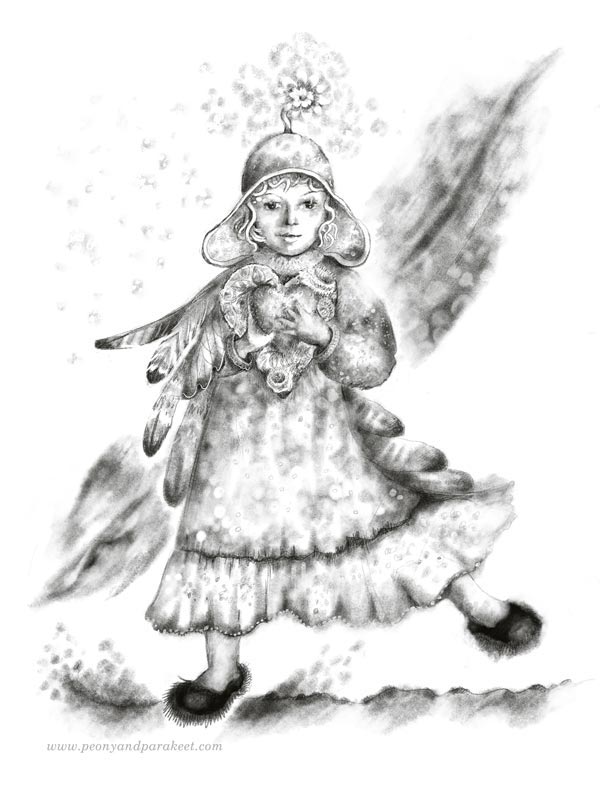
Have you ever wanted to draw a face or a figure that would really touch your heart? I don’t only mean something that looks pretty on paper but someone that begins to speak to you when your eyes meet.
Starting from an Animal Figure
In the class Magical Inkdom, I mention the word “kissanukke” when we are drawing cats. Kissanukke is “cat doll” in English, but somehow I think it’s much funnier in Finnish. Say: kissanukke! The word is just hilarious.
Last week, I wondered why I think about that word so often. Maybe it’s a hint I should draw cats again. So, I picked a big smooth watercolor paper and a pencil to sketch a huge cat. I wanted to go big because I wanted the cat’s face to be large enough for working on facial features. I adjusted them for a long time with a pencil, and then with colored pencils. I wanted this kissanukke to be more than a doll – a living thing that speaks to me.
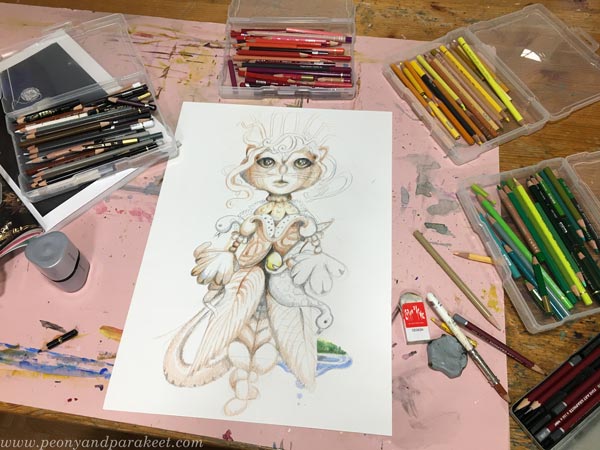
I love to use thick and smooth watercolor paper with colored pencils even when I don’t use water for the drawing.
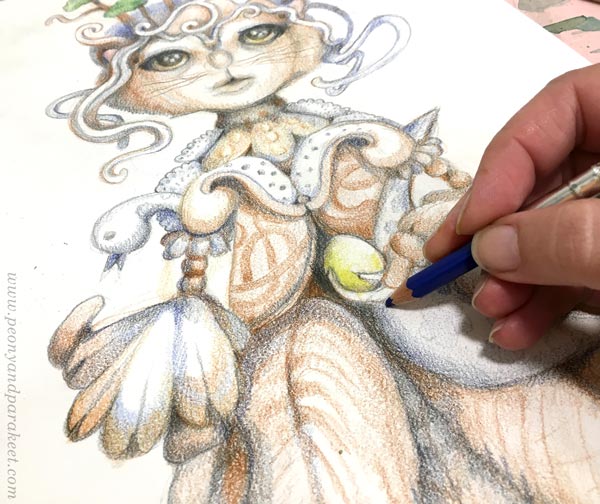
When the paper is big, it’s easy to dive deep into details and let them make the drawing more whimsical than the original sketch.
What’s Behind the Animal?
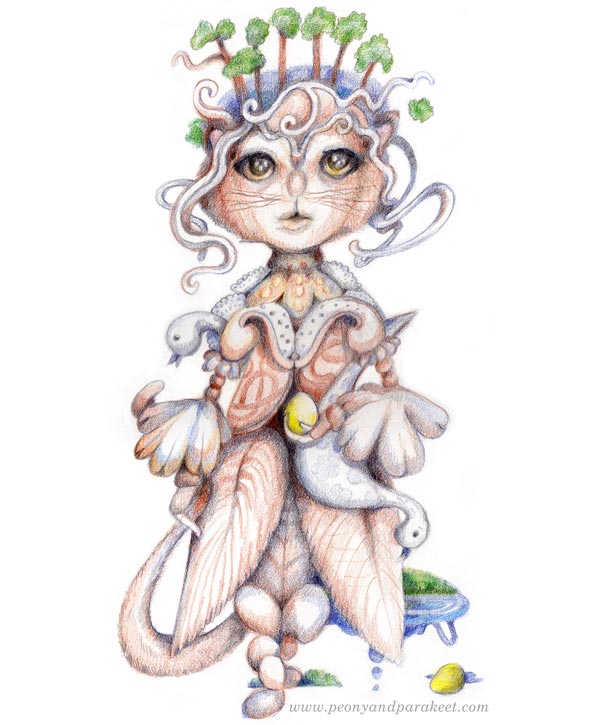
When Kissanukke was born, I asked her: “Who are you?” She said: “I am a hunter, and I can bring you anything you want!” I smiled at her: “What a magical cat you are, with the golden egg and all!” “I had two,” she said, “but the other one got missing when I tried to catch the geese. And I am no cat but a lion!”
Of course, she is a lion – how did I not see that before! I used to be a big fan of Joy Adamson and her lion Elsa as a child. No wonder my inner child has kept asking for cats!
Discovering Through a Different Pose
So, I thought, let’s draw another leijonanukke – lion doll – for the child. This time, I changed the pose so that the character would only need to glance sideways and wished that a shyer creature would appear.
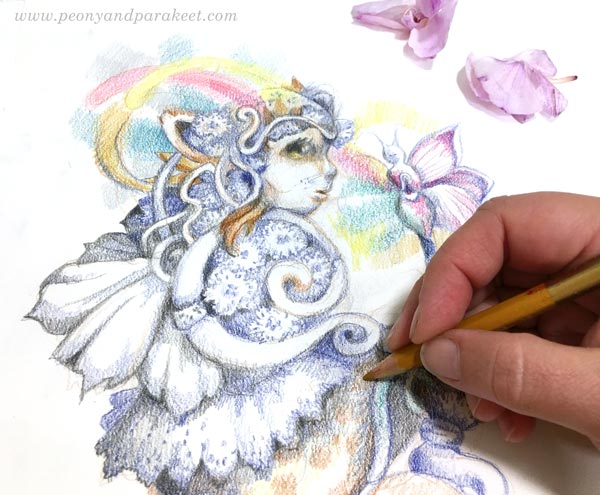
“Are you a hunter too?” I asked when discovering the new character. “No, I am an orchid whisperer! Shhh!”
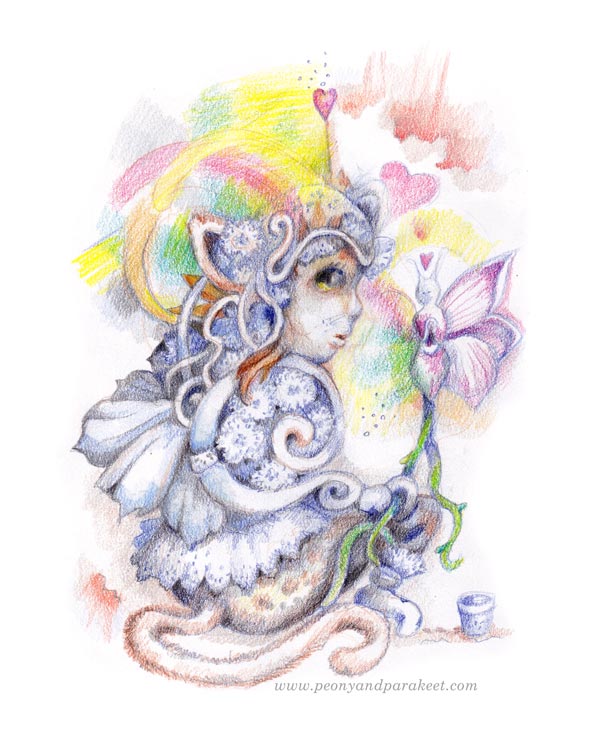
One of my orchids just stopped blooming, and I am eagerly waiting another to bloom. So, there’s a need for her too!
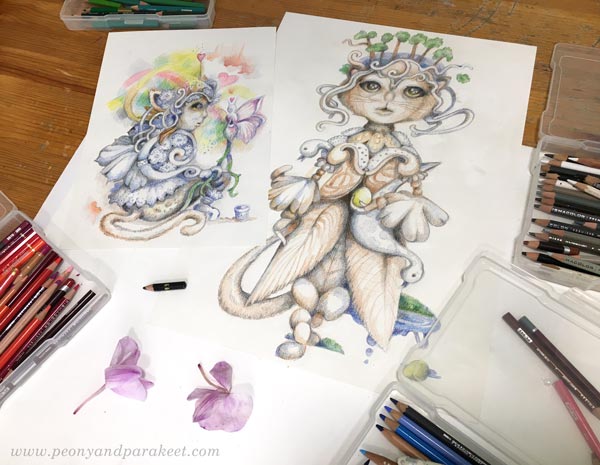
Whisperer is smaller than Hunter. The small size also makes her look less finished in the pics. If you need to provide a hand drawing in a digital form, always draw larger than the asked size. The result looks neater that way.
Discovering a Human Character
This week, I went to the studio and gathered all the courage I got. “Hunter,” I said, “could you bring me a human that really touches my heart.”
And that’s how this little country girl came out – a true nature child!
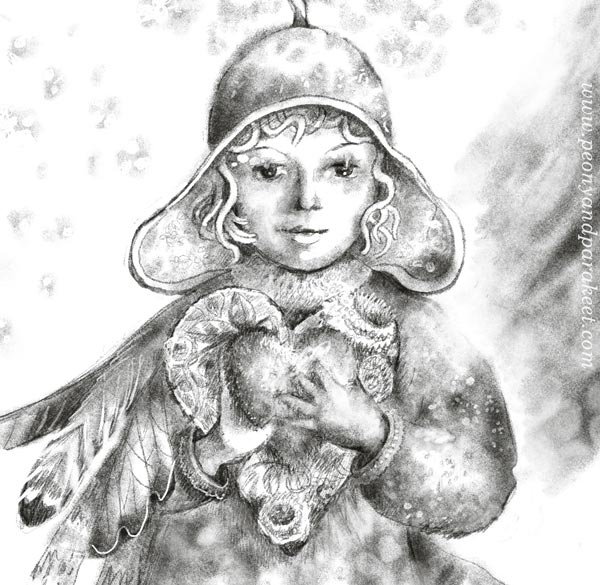
I didn’t use any references when drawing the girl and the cats. A reference can help us draw what’s expected but not what comes out naturally. References are great practice, and during the years, I have been practicing with them too. For example, in the class Innovative Portraits, we draw faces and use references creatively. But when discovering a character that feels like a soul mate, references become disturbing. Then it’s all about the connection with your inner self, traveling back in time for inspiration and forward in imagination.
Digital Pencil Work
I drew the girl on my iPad with Apple Pencil and the program called Procreate. I got these fancy tools as a birthday gift from my husband in February but have been waiting for the right moment to get to know them.
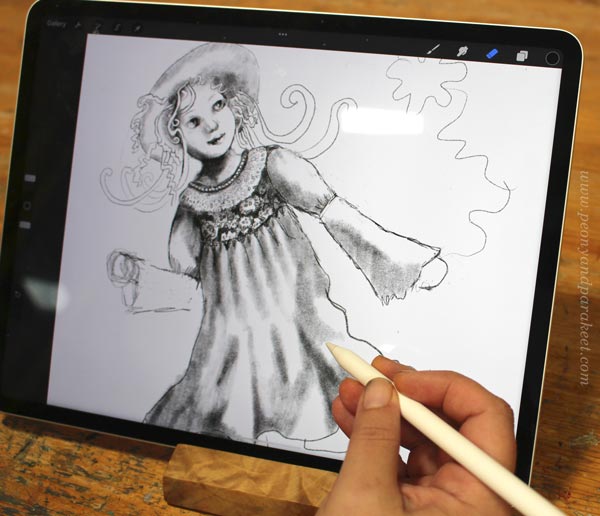
So far, I have mostly been using a simple digital brush called “Peppermint” that imitates a graphite pencil.
I will blog more about Procreate later, so it would be interesting to hear if you have used it. Also, if you have any questions, please let me know! However, if you are not into digital tools, don’t worry, I will keep on drawing with real pencils too!
Adventurous Art is Like an Action Movie
This week, I show you my newest painting and talk about the adventurous side of art.
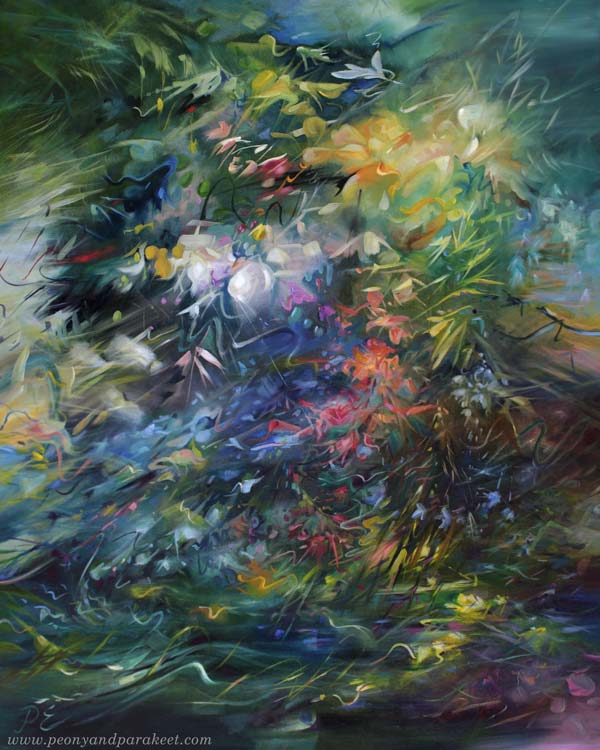
I am not a big fan of action movies. I love their beginnings when the sun shines, and everything is fine but leave the sofa when something terrible happens. Then things get out of control, cars get faster than they should be, people lose their relaxed look, and the life that appeared so organized first falls apart. Some fly up towards the darkness while others fall down. Nothing is like it should be. Everything requires movement and action in that disturbed world.
However, when I paint, I always end up in an action movie. So for me, a painting can only start by facing fears. It’s like carefully opening the curtain and trying to adjust the mind to tolerate the rough surroundings first, then find the beauty and spirit in them.
Facing the Fears – Starting a Painting
For years I searched for my artistic voice from things I loved. But ironically, I found my tone in the things that feel appalling. So, like a young man who sits down and picks the next action movie from Netflix, I go to my studio, fill the palette and hear the opening notes.
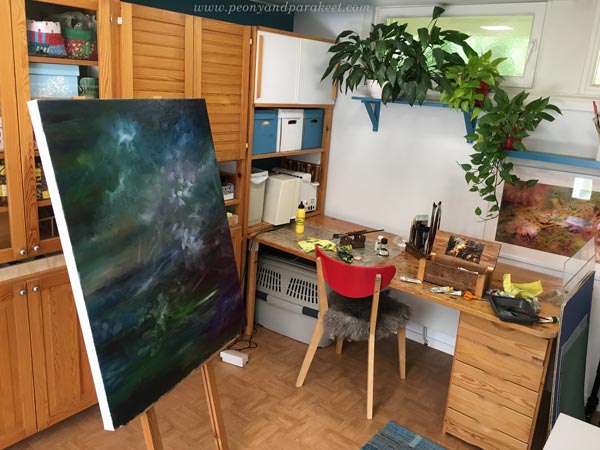
Unlike the man, I have never wanted to be an action hero, and still, I sail against the storm with only a few brushes as my companion. Before the first high point of the movie, the man thinks he should do something different, clean the dishes, or read a good book. And similarly, I question if this profession of mine is sensible at all. After all, it’s only the paint that I maneuver when the others keep the world going.
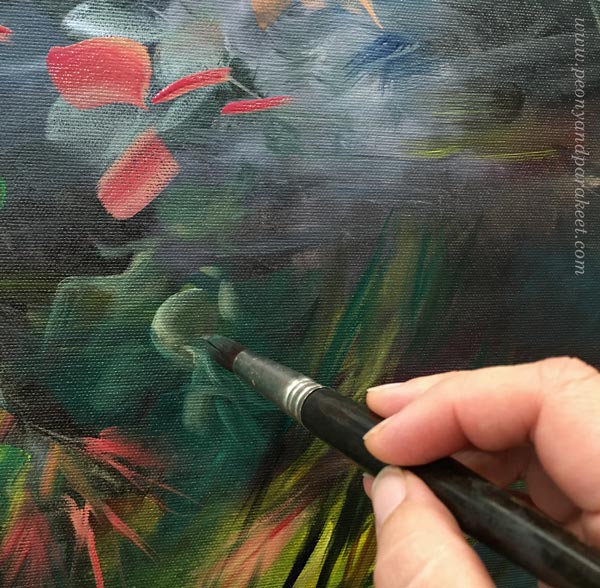
But then, like the man, I get immersed in the adventure. He is no longer a young bloke without the skills of an action hero, and similarly, I am no longer a middle-aged woman. There’s this dangerous jungle, and we are on a mission to clear the mess and make justice.
Telling the Story Under the Surface
Like in an action movie, the violent and cold setting hides another layer – vulnerability. The story behind an action hero is always heart-breaking. He has lost or left a loved one or protects someone he values.
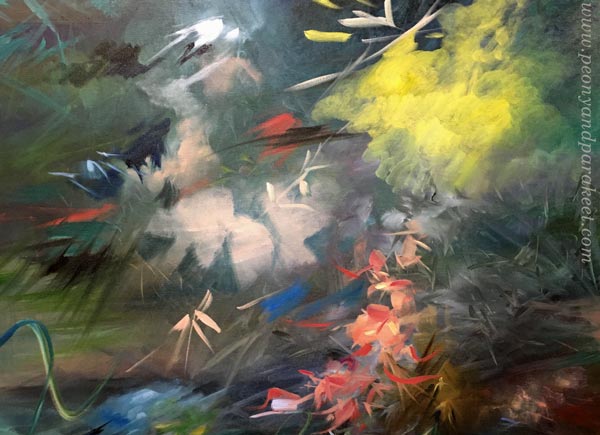
At best, the painting is not only full of action but brings up what’s behind the sharp strokes.
Dealing with Distractions
Just when the movie reaches the climax, something mundane happens.
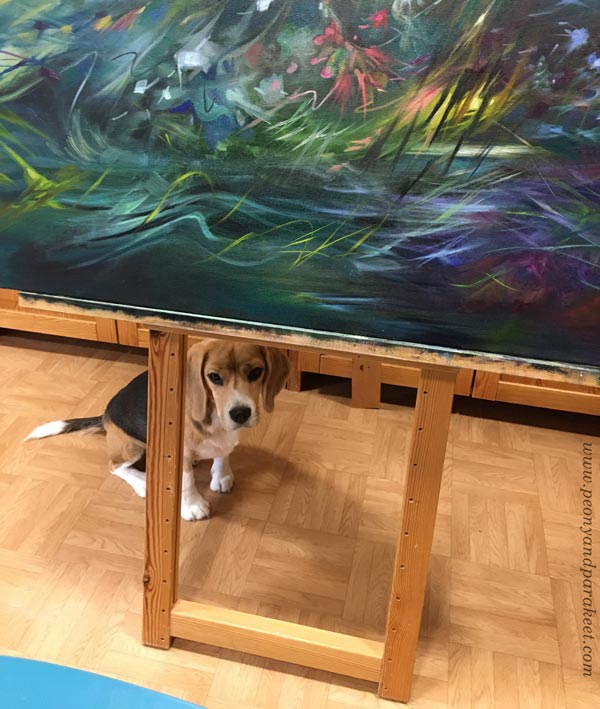
The young man’s phone rings, the washing machine peeps, or the dog wants to go out. “Just when everything began to unfold!” I shout with him.
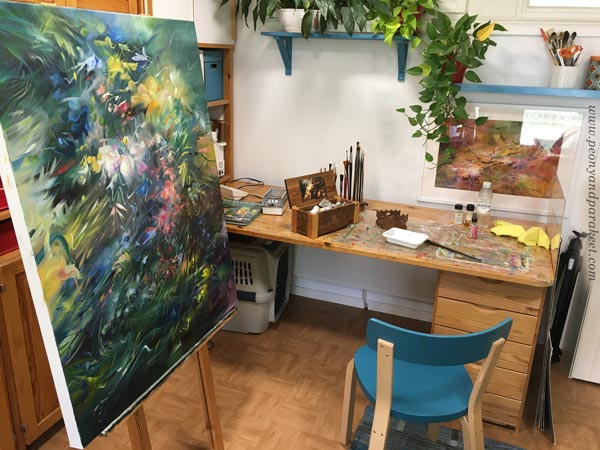
But sooner or later, we return to the movie, enjoy the freedom, and finally reach the happy ending. When the adventure is over, our minds are a bit empty, but that is what action movies do. They take you to another place and reset your mind.
Creating Adventurous Art is About Producing Too
Being a painter is still a little different. Instead of only passively watching, you are also actively creating. While enjoying the freedom, you also produce it. You design the environment, act on all the roles, and direct the plot. It takes time to learn all that.
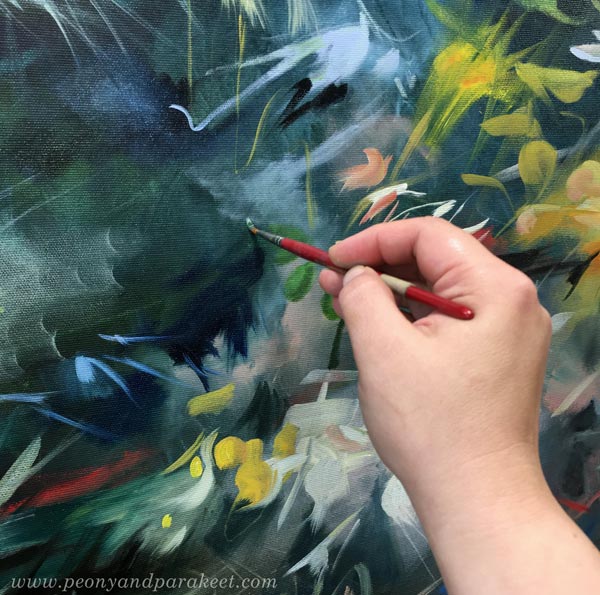
However, I feel that the best adventures are revealed by painting.
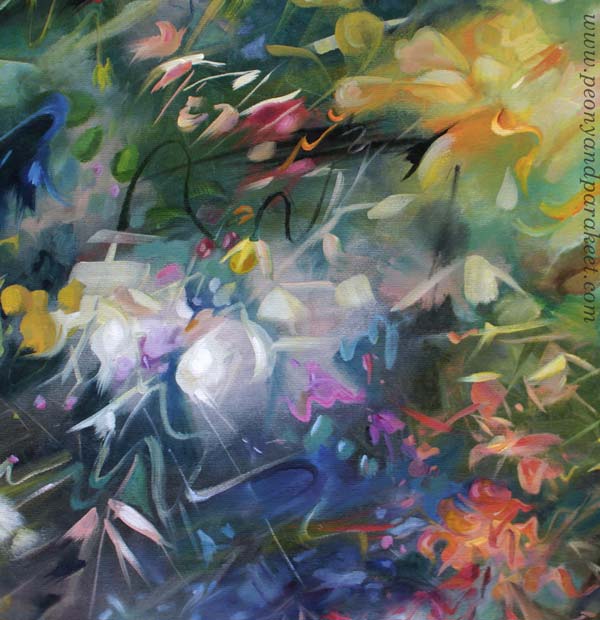
When flowers can then be the actors, not just silent models, a flower painting is far from boring.

What do you think? What does adventurous art mean to you?