
Artist’s Wishes and How Art Answers to Them
This week, I share a new painting and talk about artist’s wishes and goal-setting, but also about relaxation and self-listening.
Restless Heart
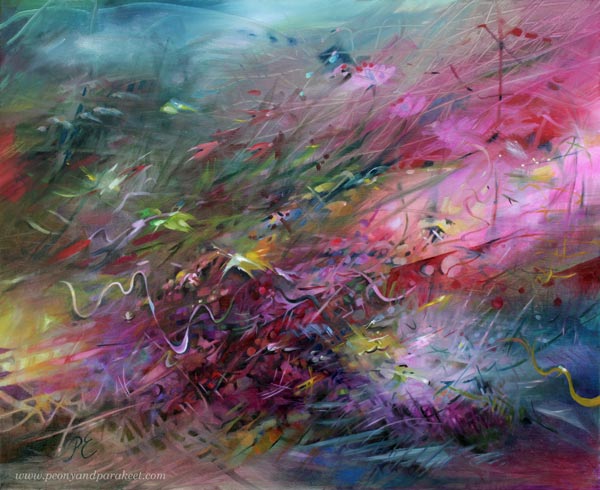
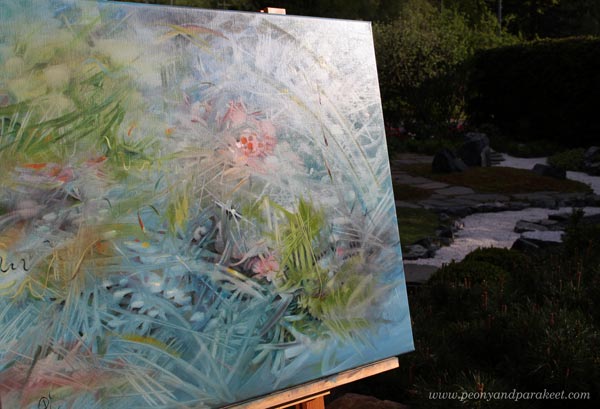
During the past few weeks, spring has changed to summer in Finland. More colors have appeared in the garden, and there’s a color burst on canvas too. “For the readers of my blog,” I thought. “They love pinks, reds, and turquoises!”
Painting a Series and Learning to Breathe
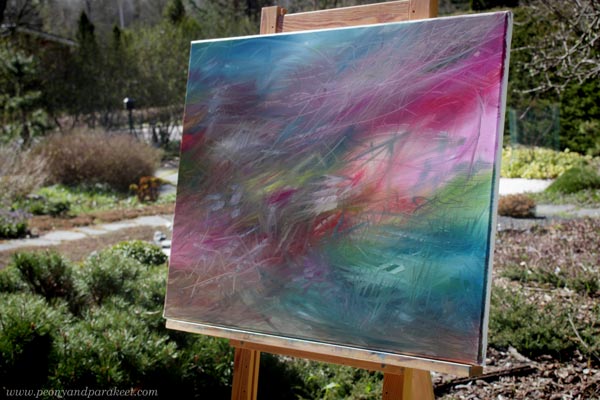
This spring, I have had an ambitious goal of painting a series of 9 canvases in oil, and I am coming to an end. There will be only one more after this piece.
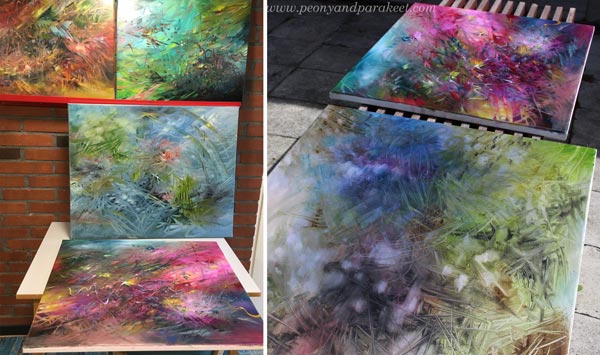
When I started the series, I entered a crossroads, and it was hard to see into the future. But after spending a lot of time in the studio and taking long walks, I have learned to breathe in a new way. Instead of exhaling only, I have learned to inhale too.
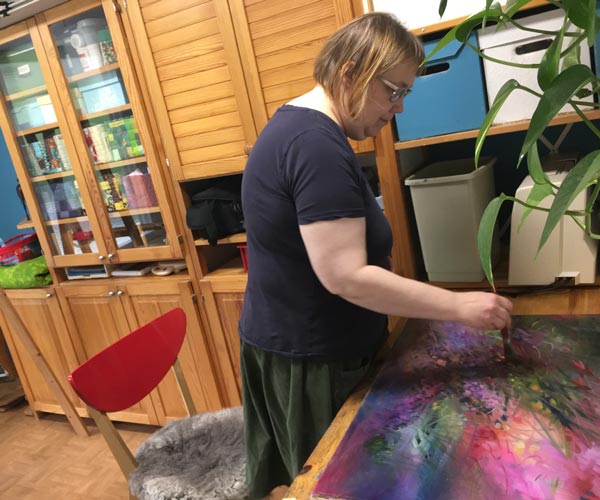
My focus has been more on receiving, not so much on producing. This change of direction has given me new motivation for life.
A Beast Called Creativity – Or Is It a Pet?
For years, I was afraid of dying before I learn to paint. I have no children, and I wanted to create an artwork that would continue its life after I am gone. But now, I realize that my dream of leaving a legacy was improperly put. It defined the success that depended on other people. But creativity is a wild beast that doesn’t understand money, prestige, or hierarchy. It’s like my dog Stella. She loves me no matter what my title is. And she always tries her best to do what I want from her.
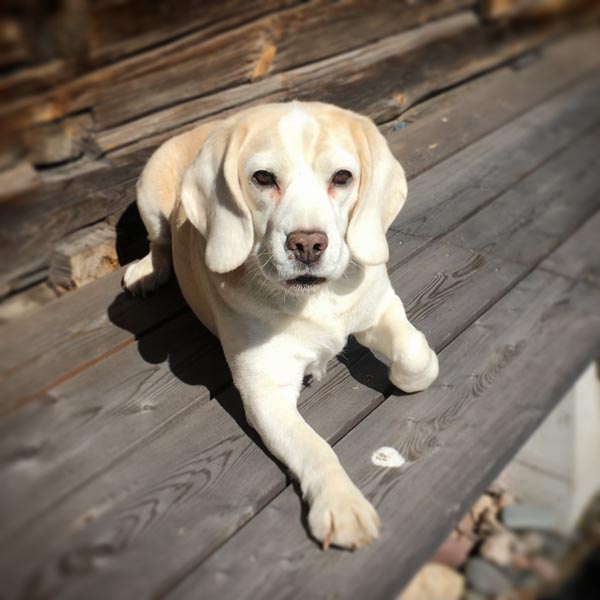
I don’t think that the incapability to define my goal is unusual. Isn’t it so that often when we want to pursue art, we point to someone else’s work and say: “That’s how I want to paint, that’s who I want to be.”
Paul Cezanne and the Art of Wishing
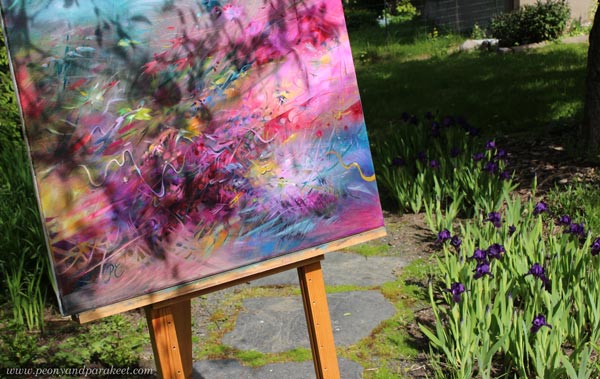
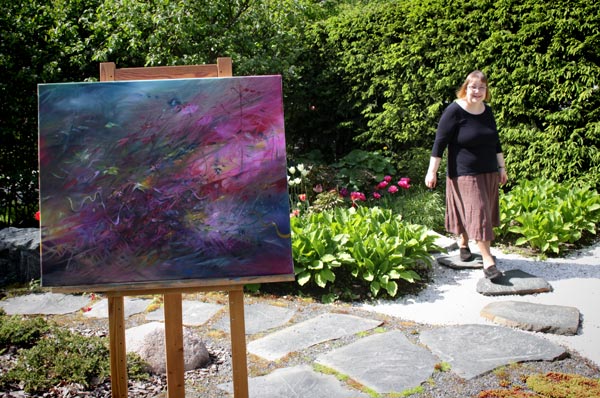
On these warm and sunny days, I have been pondering why I paint, how I paint, and why it suddenly feels so good. “Take the painting outside, Paivi,” I heard a whisper. “Is this about Cezanne?” I asked.
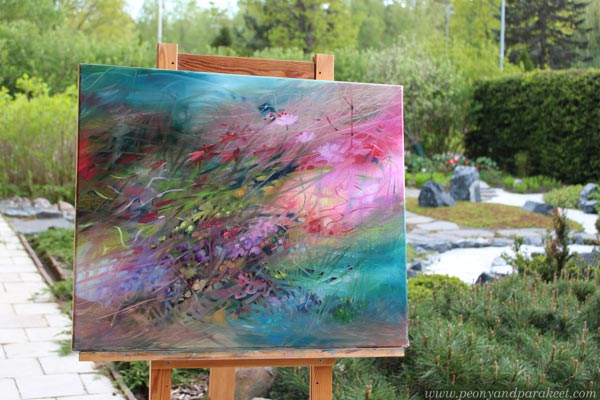
Paul Cezanne (1839-1906), a french impressionist, has said: “When I judge art, I take my painting and put it next to a God-made object like a tree or flower. If it clashes, it is not art.” I have found this definition distressing and demanding but also practical. I have used it many times to check if the painting is finished or not.
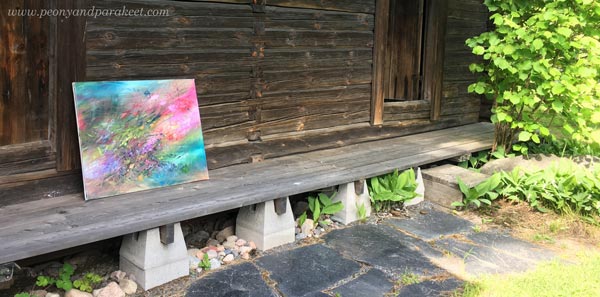
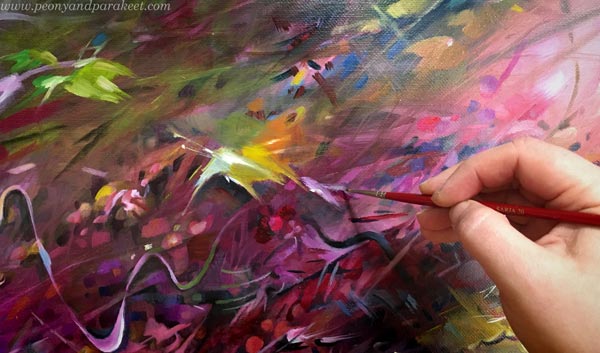
Cezanne or not, I followed my inner voice and took the painting out several times. First, I had stress about insects and other flying objects. But then I heard my inner voice answering the question – why my paintings are full of movement and why I always want to add some uncontrolled restlessness.
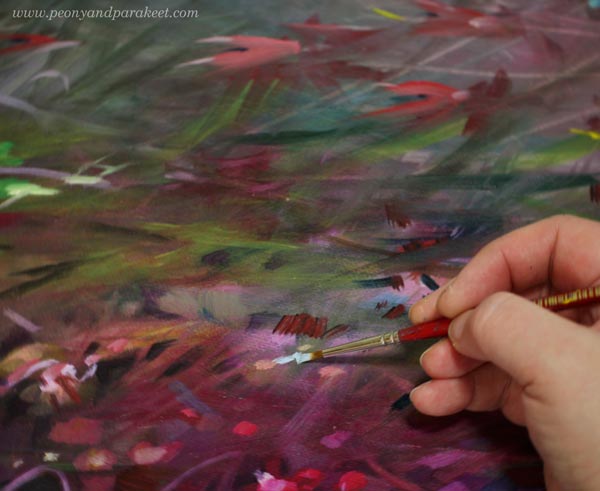
The answer is: The liveliness is the level of immortality that my creativity can produce.
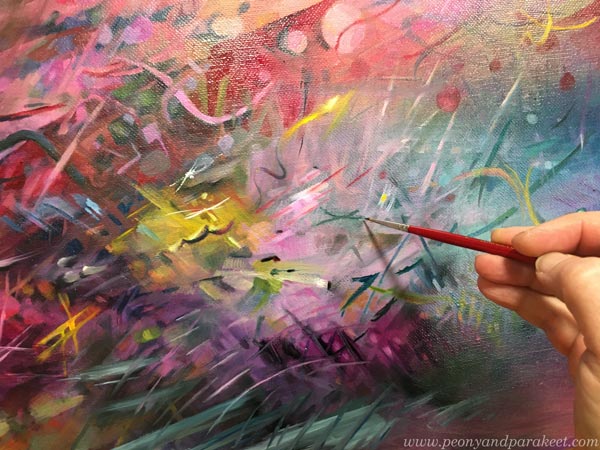
My images express the eternal life that I have yearned for!
Artist’s Wishes – A New Door
Now I see a new door. I can ask anything, and my creativity will do it for me. The only reservation is that the answer may be unexpected.
You, too, have this door. And you, too, have a restless heart that tries to understand your wishes.
Artist’s Wishes – What Do You Think?
What do you think? How does your art match with your wishes? I am always looking forward to reading your comments!
Monet in the Box – Creativity and Shame
This week, I show my latest finished painting and talk about Monet and the hall of fame – no! – the box of shame!
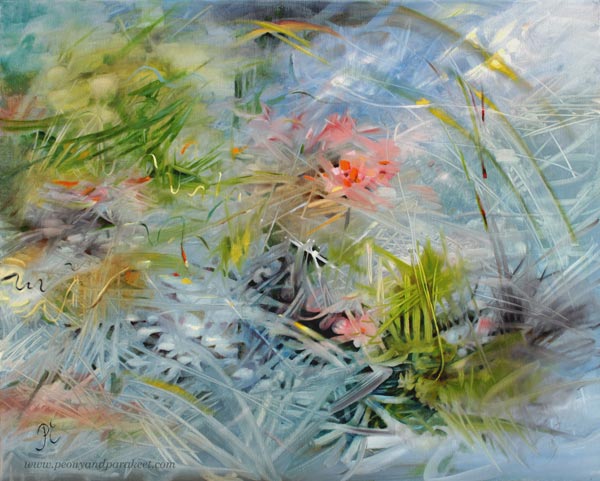
Last week, I participated in an online event organized by the Finnish Illustration Association. One of the speakers was Eeva Kolu, who talked about maintaining balance in life, not letting work take over all of it. She referred to a book that she had written which is unfortunately available only in Finnish. It’s called “Korkeintaan vähän väsynyt” (free translation: A Little Tired At Most)
I have been listening to the book on daily walks, and even if I am not finished yet, I already like the inner dialog that it raises. It makes me stop to ponder, sometimes agree, other times disagree. It’s not only pleasant, and yet, it’s definitely worth reading. One of the things Eeva Kolu brings up is shame. She says that shame defines the size of the box where we live. The box can become so small there’s not much room for life.
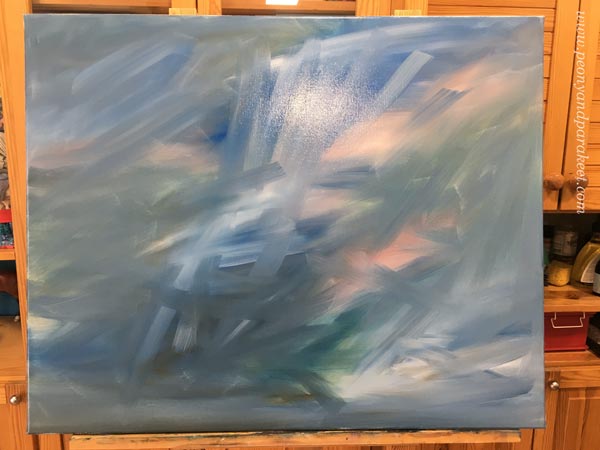
Eeva Kolu made me think about all the things I am shame of. Surprisingly, one of them is central to my art.
My Relationship With Old Art
When I was in my twenties and thirties, all I wanted to see was contemporary abstract art. In museums, I rushed through the old paintings because representational and traditional art was for mediocre people, and I didn’t want to be one of them. I felt shame about my uneducated family and the lack of abstract thinking in the surroundings where I came from. I had a new life with higher education, and my love for mathematics was well aligned with geometric shapes and lines.
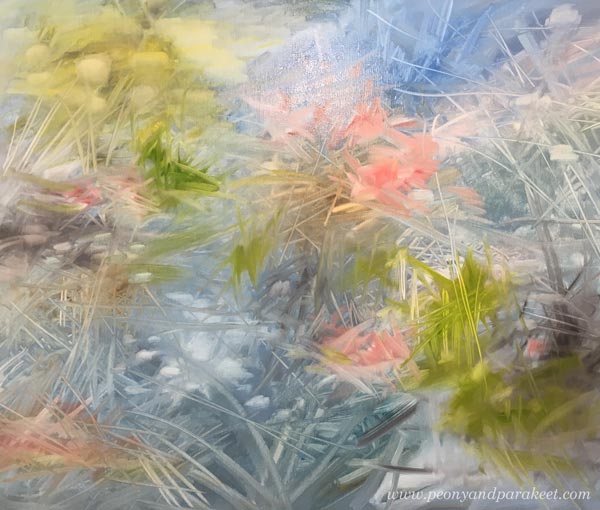
But age has made me understand more about my background and art as well. I have begun to love old art, and still, it’s something that causes me shame as well.
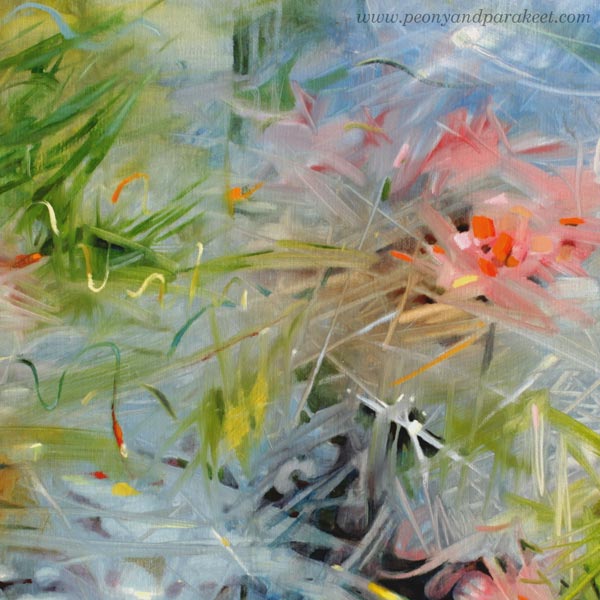
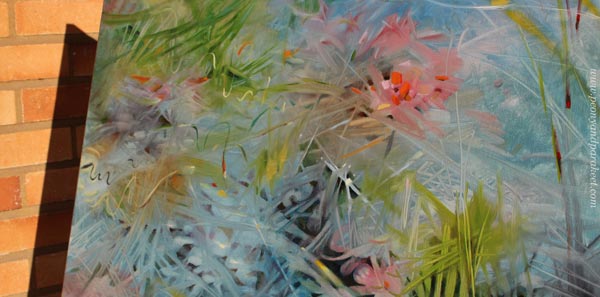
“Waterlilies,” my husband said when he saw this painting.
It made my box shrink. My intention was not to do any Monet. I just painted the dreamy blue that needed to come out, not make any imitation of anything.
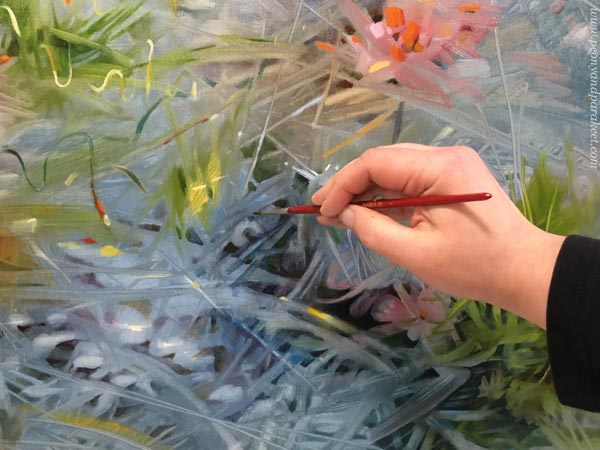
I Kind of Hate Monet’s Waterlilies
I have seen them in National Gallery in London. They are captivating. People love them.
But instead of making what people easily love, I would like to be an artist who sees to the future. Who builds paintings that are like complex machines. I should be a Leonardo of this age, imagining something technical that engineers will skillfully implement someday.
But my art has a mind of its own. No, a mind of mine. Or would I dare to say: a mind of my shame. I am stuck to the past, so I paint the past. I reach the worlds that feel excitingly unknown first but turn out familiar once the painting is finished. I end up recreating instead of inventing. That’s my shame.
In my classes and in this blog, I talk about old art now and then. But compared to the amount I think about stiff renaissance portraits, romantic baroque sceneries, frilly victorian dresses, cubistic still-lives, and all the masterpieces from the 15th to 20th century, it’s very little.
“My Readers Want Their Art to Be Current”
That’s what I say to myself often. The readers – you – don’t like old art so I try not to write about it. And still, the expected goal to be current seems ridiculous sometimes. There’s a bridge between current and old, and it’s very difficult to be current without knowing what’s not.
That bridge – or should I call it a long historical timeline – is the place where my creativity naturally lies. My shame is also my utmost love. When I paint, I don’t think about Rubens, Monet, Picasso, or Kandinsky. When you love something deeply, with the skills, it comes out naturally.
“Everyone discusses my art and pretends to understand, as if it were necessary to understand, when it is simply necessary to love.”
Claude Monet
Monet’s attitude seems very unintellectual. And yet, if you think about what you create and have created, can you relate? That sometimes it’s necessary to omit the feeling of intellectual understanding, bypass the shame, and simply love – so, widen the box instead of trying to get out of it?
Thumbs up or down for talking about art history and old masters? Share your thoughts in the comments!
P.S. Claude Monet is “a guest teacher” in the class Floral Freedom!
Pros and Cons of Becoming an Artist
This week, I share my newest painting, and thoughts about a life change after becoming an artist – even if I don’t quite know where I will be heading next myself.
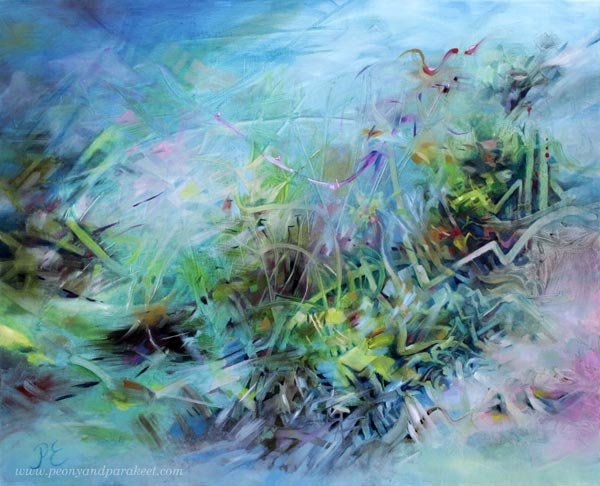
All my life I have wanted to be an artist. But first, I went to study software engineering because it was a much more sensible thing to do at a young age. And I loved computers. How can a girl love machines so much?
There’s this girl in me who looks in the future and gets excited about technology. And then there’s another girl who looks back to history and wants to paint like Rubens or Kandinsky.
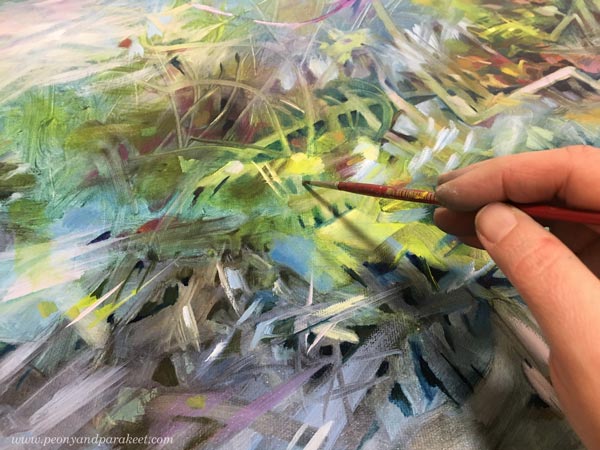
Pursuing the Dream of Becoming an Artist
After I got my degree in 1996, I repeated to myself “Paivi, you are a master of science – “diplomi-insinööri” for a couple of years. It felt so unbelievable!
But I had this other dream that I wanted to pursue, and it felt like my life would be too short for that. So many years were given to technology. However, in 2014, about seven years ago, I decided to give it a go.
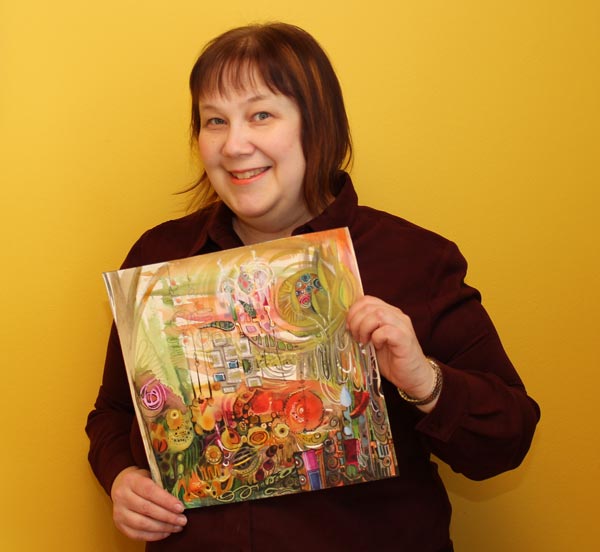
Every day since then I have banged my head against the wall between the outer and inner world. I have learned to draw freely, get intuitive with watercolors, illustrate animals and magical fantasies, and paint flowers and abstracts.
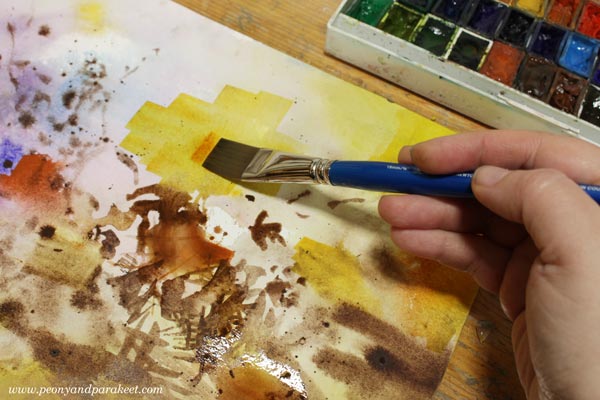
I thought that I would be learning and teaching for the rest of my life, never coming home, but fully enjoying the journey.
Breaking Through in Becoming an Artist
However, this year, I found myself breaking through, seeing a new horizon. I had to really push myself to give finishing touches to my newest class Floral Freedom, and after reading Wassily Kandinsky’s book “Point and Line to Plane” the final small pieces fell in their places. It was like a big equation in an engineer’s mind became solved, and I found myself whispering: “Paivi, you are an artist.”
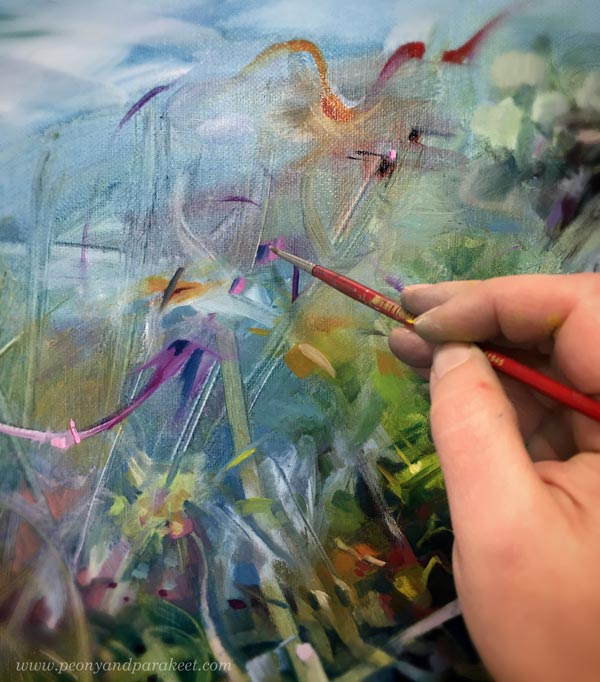
And similarly, as after graduating in 1996, the achievement felt unbelievable. But this time, its tone was different. It was not a validation received from others but from myself and thus, felt more holistic and life-changing. Yes, I may have been an artist for others for some time already, but finally, I have become an artist in the eyes of myself. It has made me want to put recent paintings side by side and continue the series boldly and unapologetically.
There’s also unexpected sadness in this happiness. The imaginary world that I have been building for the last years has fully opened, but with that, something has closed too. The old routines are gone. I no longer question what I should create in terms of subject or style. All I have to do is to fill a palette and start painting.
I am still unaware of what’s coming next. How to sustain myself. How to live after solving a puzzle that has been in my head for 53 years.
Blackbird in a New Territory
Every morning when I open the door, I see blackbirds in our front garden. They seem modest and hard-working. They rarely rest, and when they sing, it seems to be for a purpose. These colorless birds don’t ever surprise or make my head spin.
But yesterday, I noticed that a blackbird had left the garden and entered my inner world. And it was so delightful, like a sign of hope in all the unawareness and misery that I have had recently. Isn’t it amazing that someone so insignificant as a blackbird can reach a soul, even secretly? That someone so plain and muddy can shine so brightly when it lands in another territory!
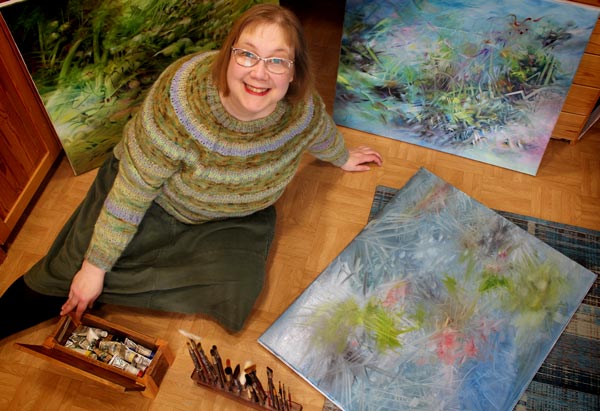
I hope you’ll stick with me, take my classes,
and hop in where ever you are in your artist’s journey.
I promise to stay around and help you as a teacher and a coach
at least for the rest of this year.
Building and Breaking – Revealing Artistic Potential
This week, I talk about the hidden potential behind artworks and how we can reveal that by not only building but also breaking.
Modern Maximalist
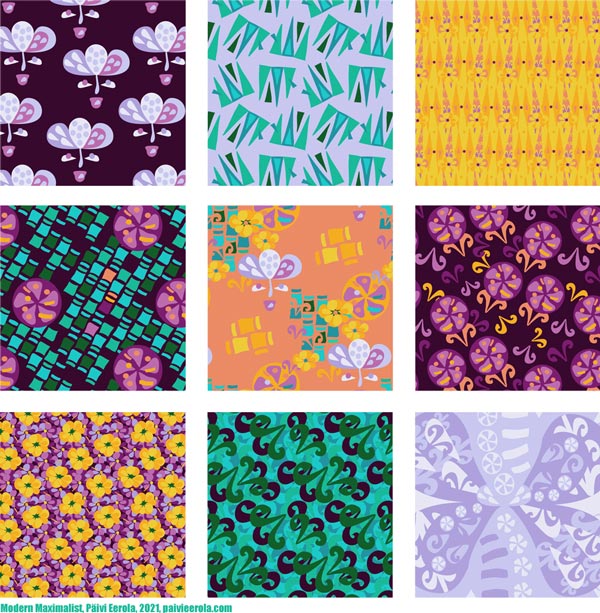
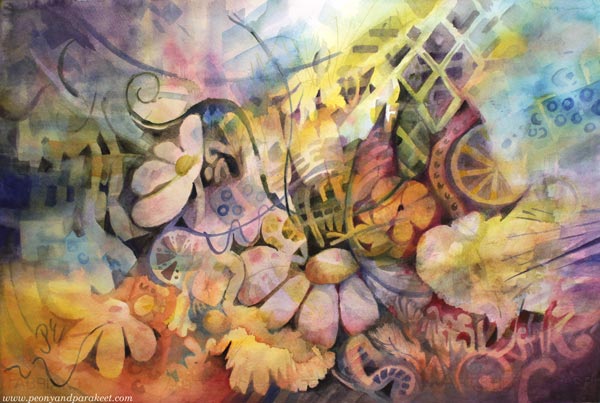
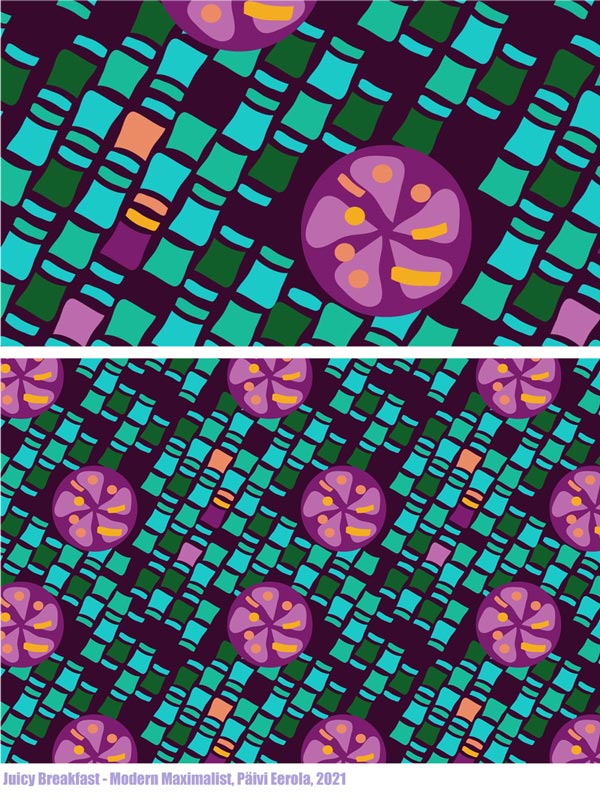
I have just designed a collection of surface patterns called Modern Maximalist. It’s drawn digitally in Adobe Illustrator and more modern than my work usually is. However, I love modern, especially the 1960s and 1970s styles. I was born at the end of the 1960s, live in a house built in the same era, and my love for retro has been too hidden in my art. But still, I didn’t want to design the collection based only on the images of others, but to build a bridge from my art to design. So, most of the motifs were based on this watercolor painting that I made a couple of weeks ago!
More Artistic Potential by Building and Breaking
Often when we create art, we build. We communicate the big picture and compose bits and pieces so that they work together. We get happy accidents (and sometimes some not-so-happy ones) and aim to make an image where the overall atmosphere takes over the details.
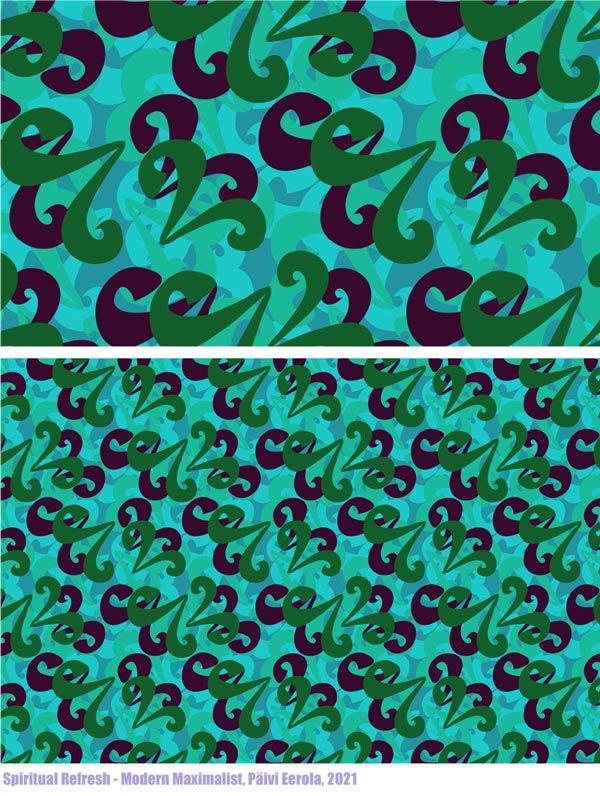
But to reveal more, we also need to break. Then the romantic flower that was painted to represent a dreamer, becomes a more stylish and symbolic figure.
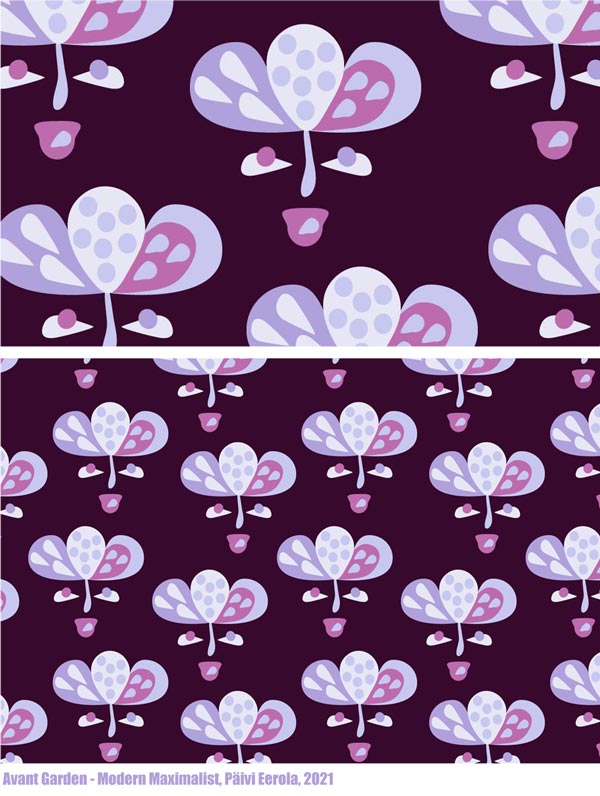
Yellow flowers and all the yellow washes can be more geometric when they are away from the big picture.

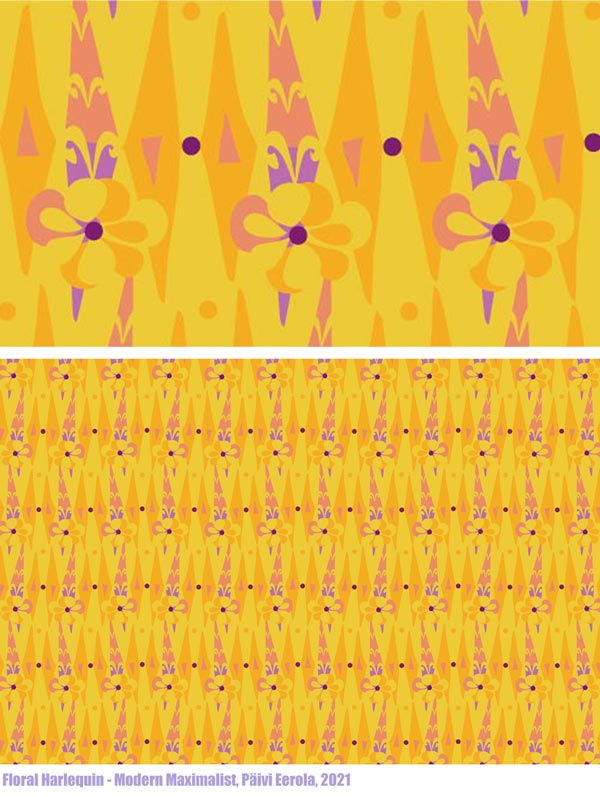
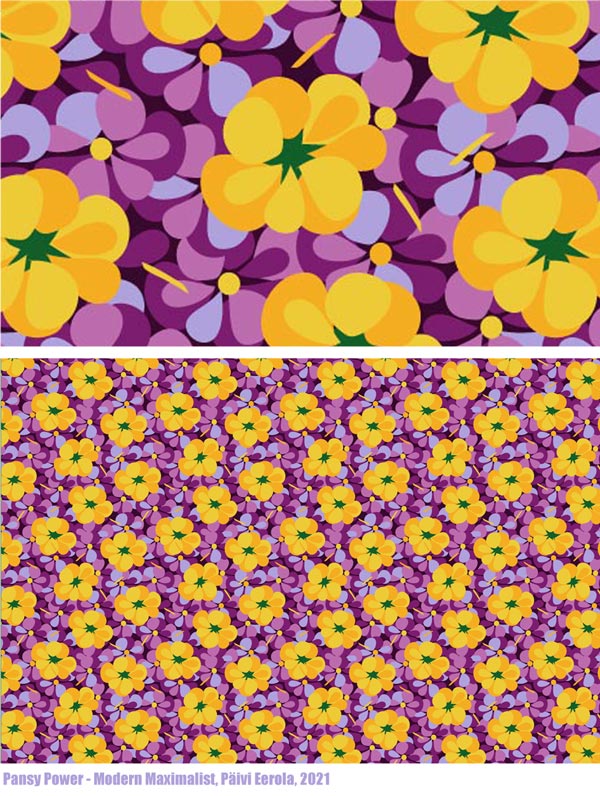
The juicyness of the fruits and other decorative details can be reorganized.
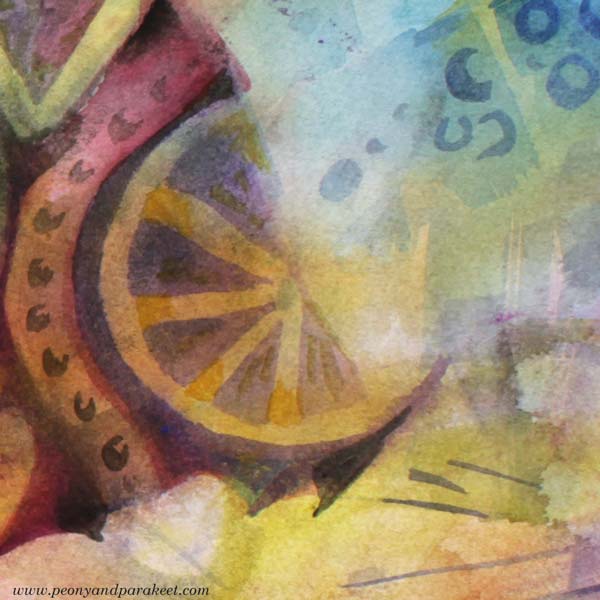
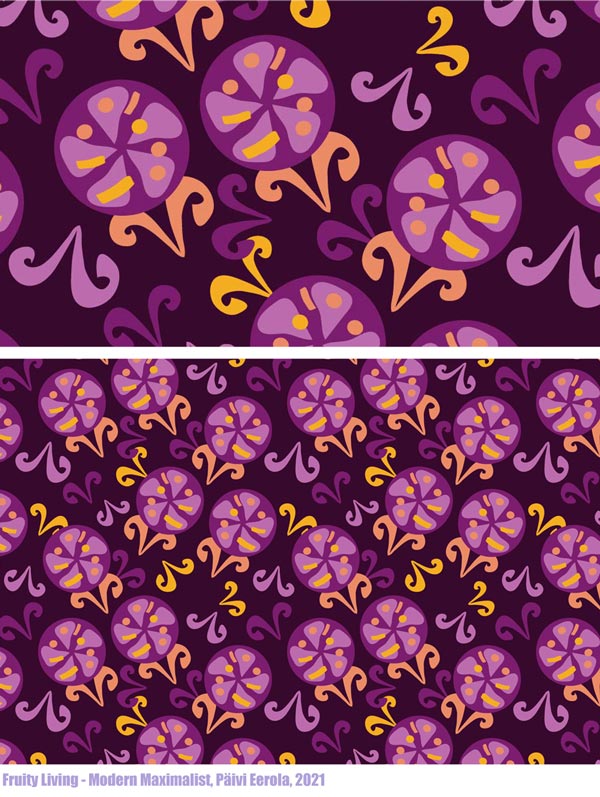
Picking Ideas from Other Images
We can also add more fuel, and break and pick from other images. This design called “List Maxima” uses motifs from the painting, but also the idea of a list that came from playing with the name of the collection, and fashion pictures that showed puffy and full dresses of the maximalist style.
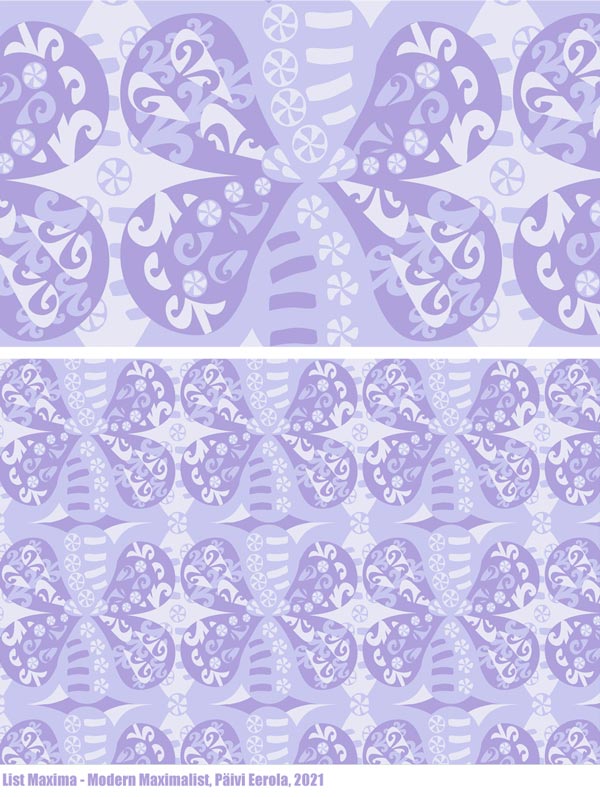
By breaking and picking, we also develop our ability to curate – to see which inspiration suits what we have already done. It’s an essential part of a style-development and and growing artistic vision.
I saw a pleated skirt on Prince Charles’s wife Camilla Parker-Bowles, not a maximalist style at all, but wonderfully modern so I broke and picked the image and got creative from that.
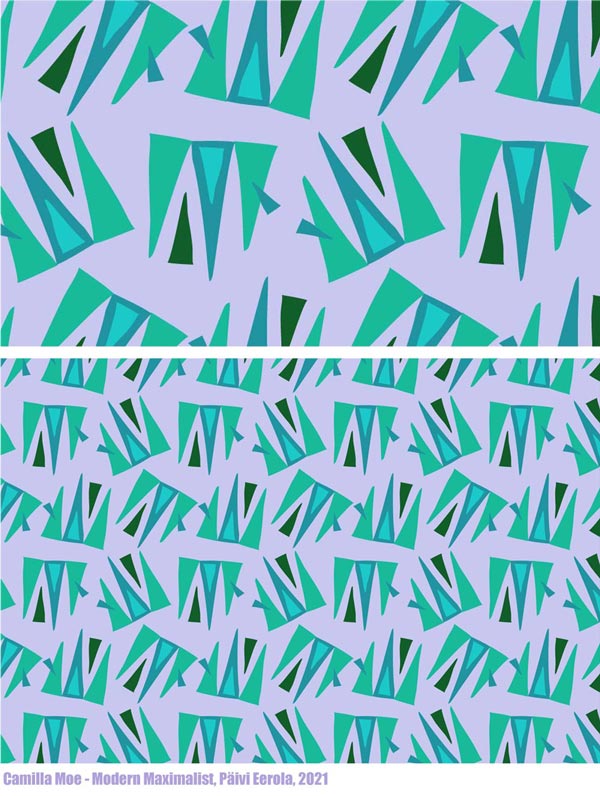
Artists often say to me: “I need to focus!” But by focusing on narrowing, we non-creatively force ourselves to do one thing. By breaking and picking, we can curate all kinds of inspiration and be creative so that it grows our artistic vision.
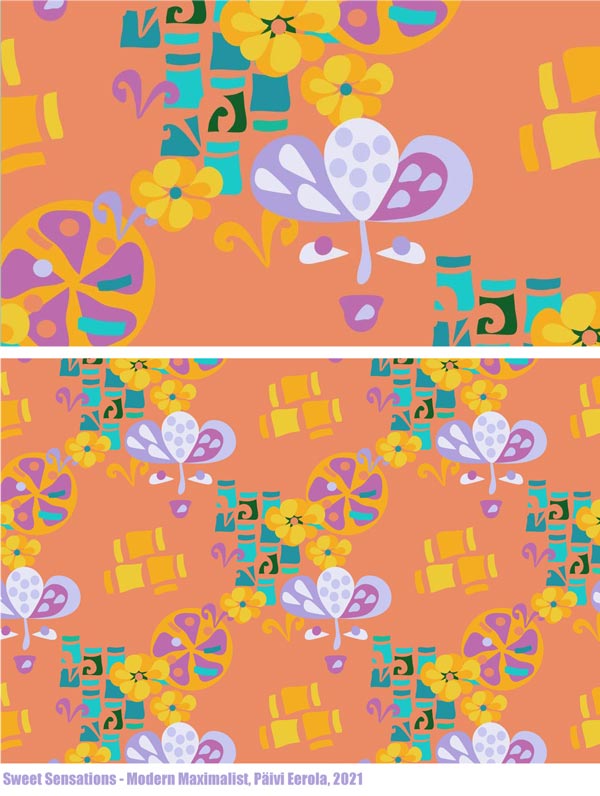
Revealing the Artistic Potential
No matter where you are in your artistic journey, your art benefits from the idea of building and breaking. Build to go deeper into the experience and break to reveal more ideas and potential! In practice, building often means painting, and breaking is often connected to drawing – even if, of course, you can use any techniques that suit you.
What was first a watercolor painting, could now be a quilt!
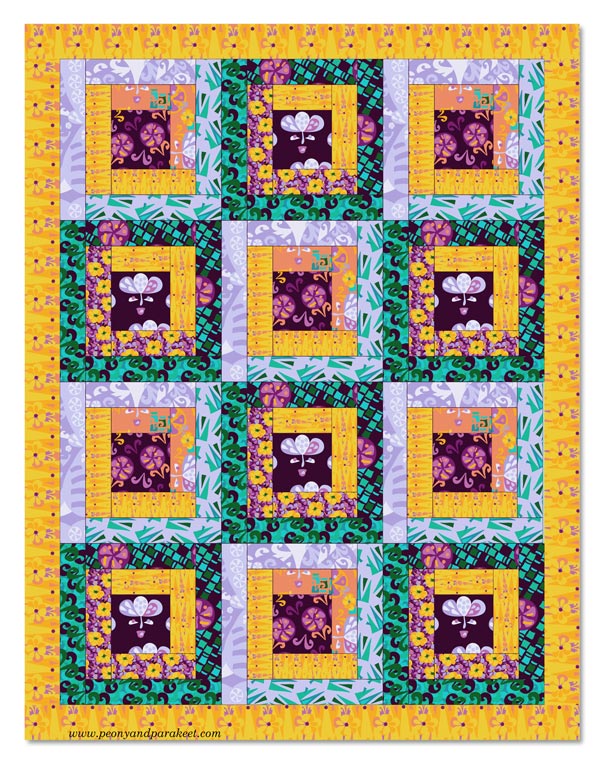
Building and breaking can alternate endlessly when we combine new ideas and results with old ones.
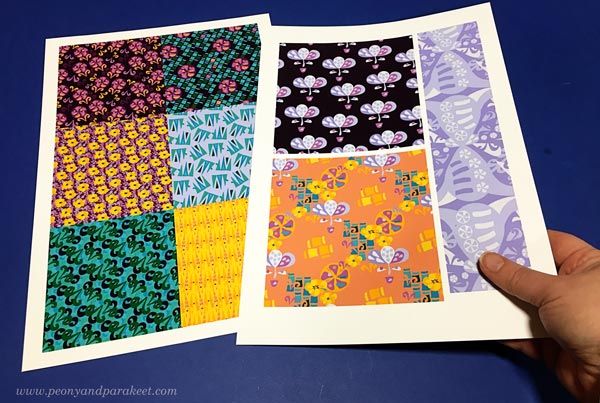
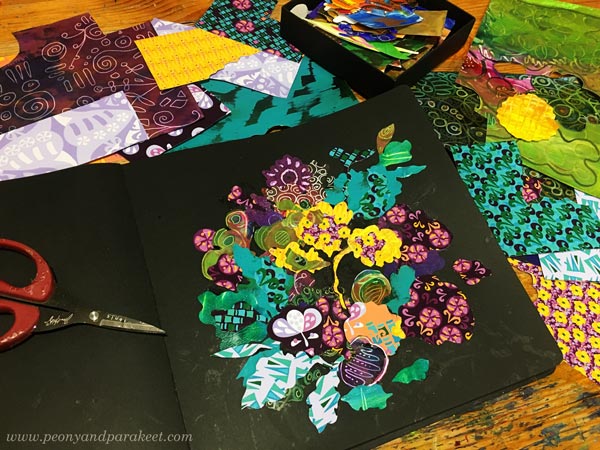
Here I am breaking and picking to create something new into my art journal.
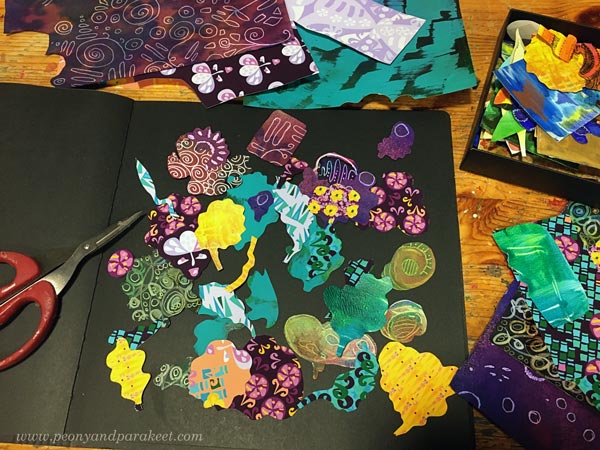
Here’s what I built by cutting and glueing new prints and old hand-decorated papers.
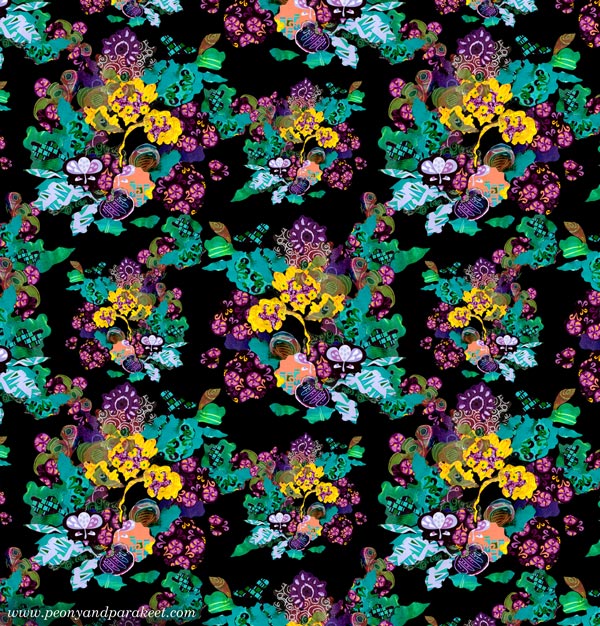
And I couldn’t resist checking if this could work as a repeat too!
I hope you found this post about building and breaking inspiring!
Need help for finding your artistic potential and building artistic vision? Sign up for my coaching program called Artistic Vision!