
Now and Then – Development of Style
I started a grant project in October. The project lasts a year and covers half of my working time. I am making a digital artwork that can be experienced with virtual glasses. This will definitely give a boost for my artistic development, including the style as well.
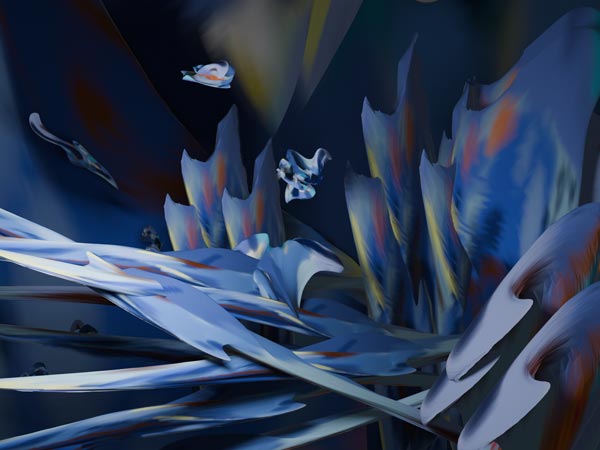
I used a fun sculpting app called Nomad and a 3D modeling software called Blender.
This image is based on replicating one shape only.
One of the recent practical changes is that I have given up using a Mac computer and bought a new Windows gaming laptop, which I call Turandot. I am now writing this blog post with her. She must have imagined that she would be owned by a young man, but no – she has a woman in her fifties. Turandot must have sounded like a great name to her, but after googling it, she might have been upset: Puccini’s opera! Well, she just has to adjust and learn my style.
Style Development – Looking Back
The new big project has made me think back and explain it all to Turandot. Ten years ago, I wanted to learn to paint so well that I would be satisfied with my paintings: “I could then die happy!” I thought that as an artist I had to abandon what I have been until then and build a new vision and a new world of my own.
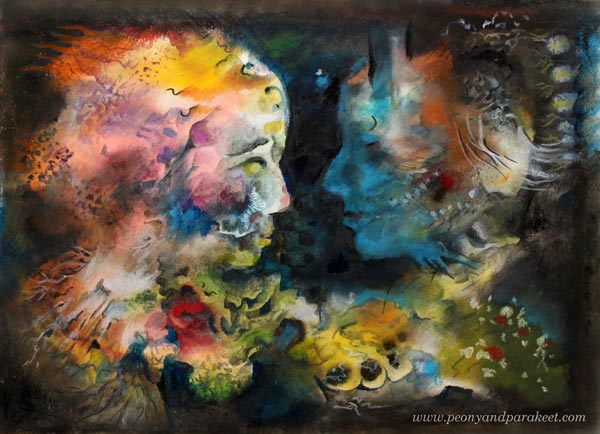
When my paintings started to reach the level I had hoped for, I felt first grateful and then empty. I couldn’t see forward anymore.
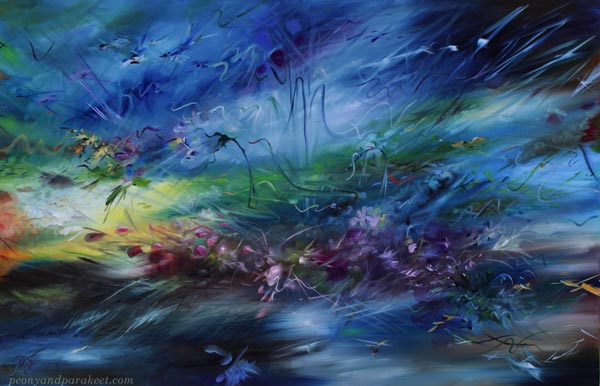
See the gallery of my oil paintings!
Now, however, I’m on the brink of something new again and the crises of the past seem strange: how was I so hopeless? Why didn’t I realize that everything meaningful that I’ve done in my life will tie into my art over time?
Always a Beginner
My artist friend said that I have developed quickly as an artist. However, it doesn’t always feel that way. I always have self-criticism and always notice things to improve. That’s why it feels frustrating now when I’m starting over again and building a three-dimensional digital expression. At the same time, I remind myself that the beginning of today is much further than the beginning 10 years ago – there is a lot that I already know and what I can already see, not only style-wise but in a more general level as well.
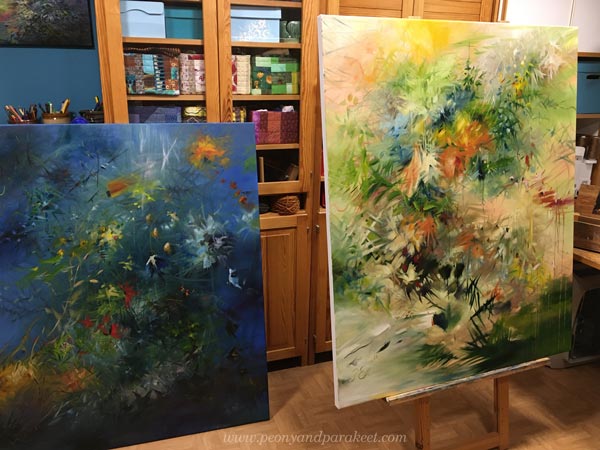
The balance between encouraging yourself and criticizing yourself is essential when making art. You have to be able to observe your pictures as if they were created by someone else and at the same time, you have to see forward – what all this could be and where it could lead when I will learn more skill and imagination.
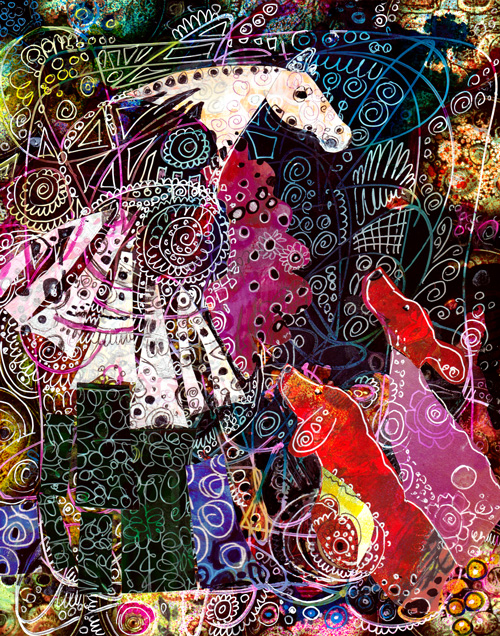
Fortunately, I haven’t listened to those who say that everything you do must be in the same style and form a unified experience. When you’re a beginner, forcing a certain style only leads to getting stuck at a level where you really don’t want to stay. When you’ve done enough, your own style pushes out naturally.
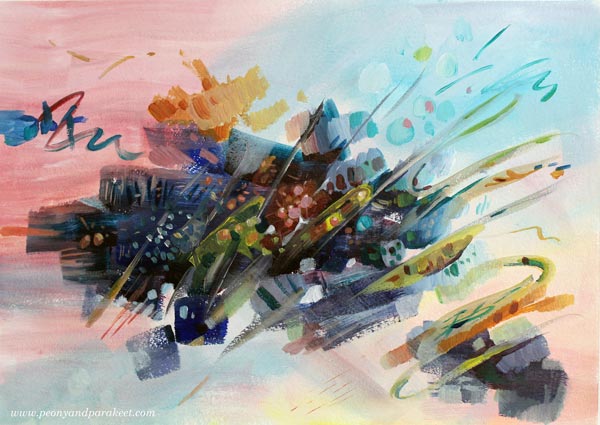
Yarn, Thread, Line, and a Telescope!
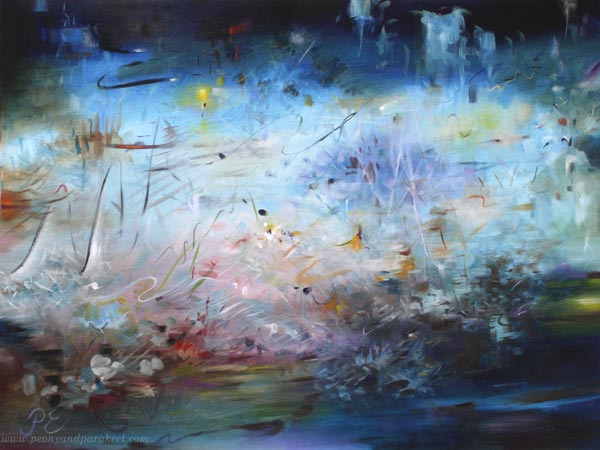
10 years ago, my line was clumsy and closed, while now it’s elegant and curious, like a telescope that lets me see beyond what I’m currently aware of.
I’ve always liked knitting and embroidery. Thread and line have a lot in common. That’s where my style started.
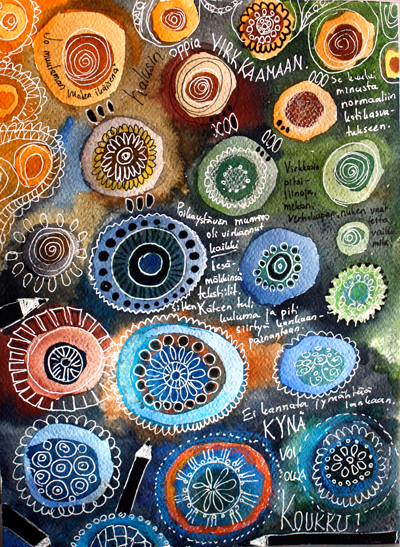
Collageland teaches this style!
Now my task is to continue developing my style and step into the world of digital art. However, I will still be drawing and painting next year, so there is no need to worry that this blog will change too much!
Restarting a Painting
This week, we talk about restarting an old painting or restarting creating so that we have a new confidence and freedom.
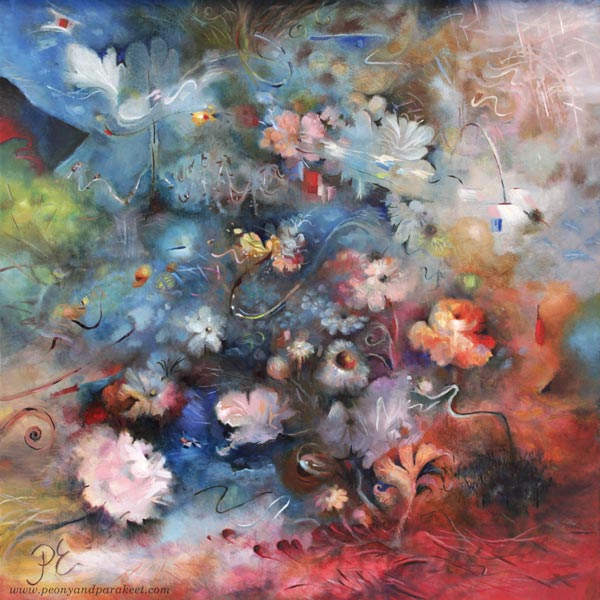
This piece called “For Liberty” was been painted on the top of an old work. It was a bit challenging to photograph because it’s painted on wooden paint board – a very smooth surface that reflects light. But before I go into more detail, I want to tell a story from my childhood that has had a big impact on me. If you have taken my classes, you might recognize my passion for acting!
“Open Your Arms”
I have been an enthusiastic actor as a teenager. Once I was the lead in a school play directed by the teacher. He was a very good director. “Spread your arms,” he told me when we were practicing a scene. For a teen, spreading the arms was a huge gesture. I still remember how my hands reluctantly opened and released from the grip. But wide open, I suddenly had a sweet sense of confidence: I owned this arena and I was going to get an audience too. Everything will be fine and even better than before!
My friend and I had been chosen to the school play because we had a private play club that we had put together. I wrote the script for the plays and we performed them to our class. It was great that our native language teacher allowed the performances. The teacher Varpu Lehtolainen and the teacher who directed the play, Taavi Lehtolainen, were married. Their creativity was inspiring. Their daughter is Leena Lehtolainen, who later became a famous author in Finland – no wonder!
Confidence for a Restart
When a person makes another person free, the feeling that he ignites is not based on successful performances in the past. The new self-confidence comes from seeing what will be possible in the future. You can go back and start over as many times as you want. Everything will be fine.
In 2020, I made an oil painting called “Wreath Maker.” However, I failed in varnishing and did not put it on display or for sale. The painting is painted on a board instead of a canvas, and it is quite challenging as a surface.
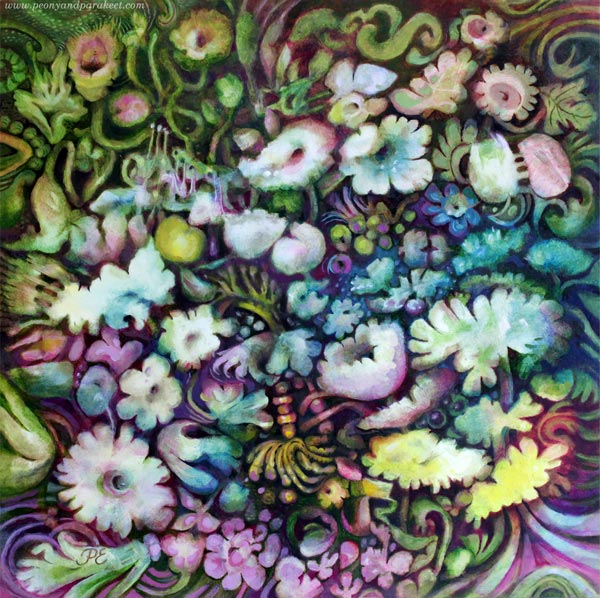
When the local artists’ association asked for works with the theme “Red, White, Blue”, I came up with the idea of sanding off the varnish and doing a new painting on top, somewhat based on the old one.
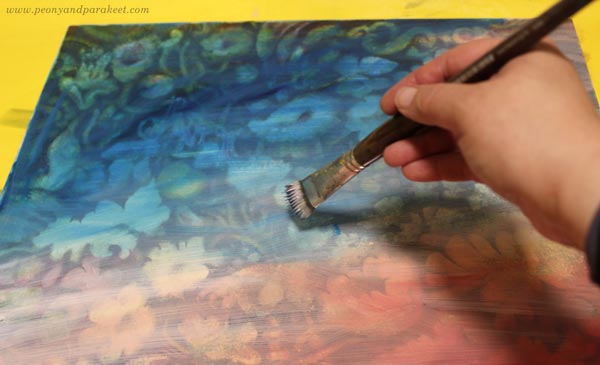
As soon as I started painting, there was this “spread your hands” feeling. I wanted to free the painting from its constraints and give the flowers their own roles.
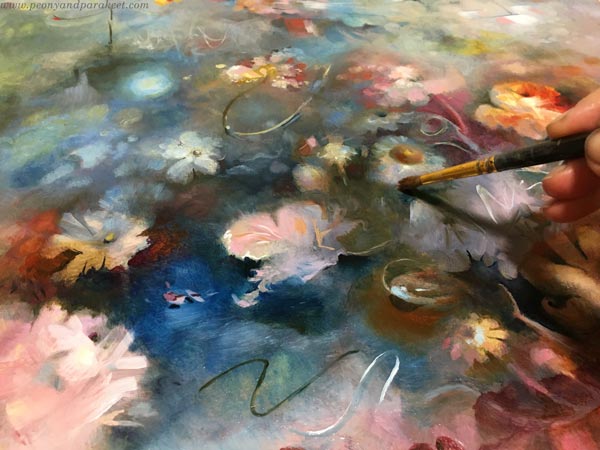
Rubens’ paintings of battle scenes from the 17th century came to mind, and I wanted to make a grand theme too – where people wake up to defend their own values and the flags are flying high.
Restarting to Release the Visual Voice
I have painted this in parts and between the sessions, I have been building a new course, where freedom is also a central subject. I wish I could be a teacher like Taavi Lehtolainen: “Spread your hands, control your space!”
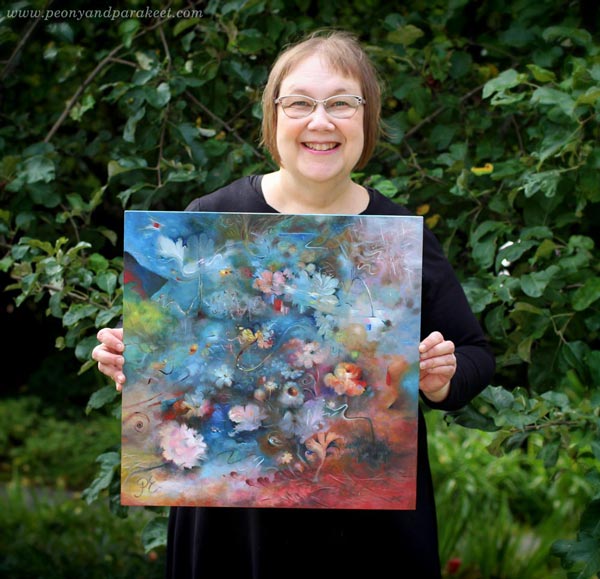
Art always does well when the flowers are allowed to grow freely and each in its own way.
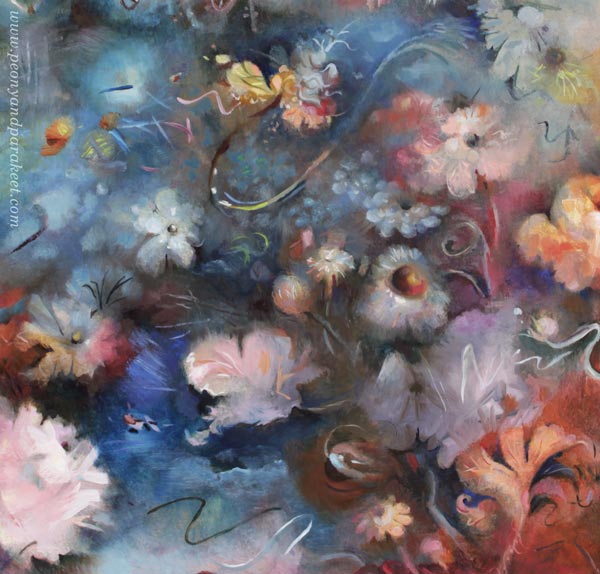
A painting is released when it finds its meaning. I feel that’s what happened to this piece. The previous version was okay, but the message is now clearer, the painting is more airy, and the flowers are now more diverse and expressive.
When you want to fine-tune your visual voice, maybe this kind of freedom is what your art is lacking?
What do you think?
From Artist’s Focus to Artist’s Between
This week, I challenge you to question what the word “focus” means to you as an artist.
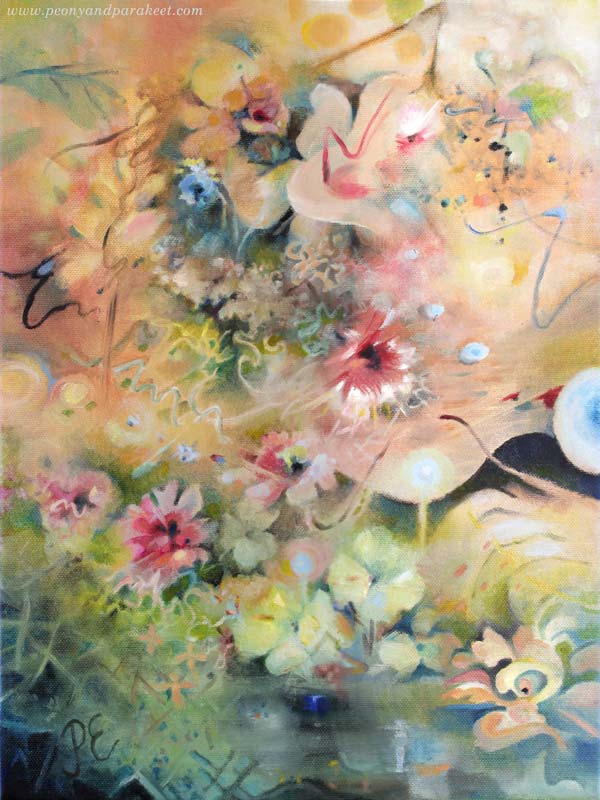
I thought a lot about the artist’s focus when painting this piece. This was one of the last paintings to be finished for my exhibition.
Artist’s Focus
Have you ever said this:
“I want to find my focus in art.”
Although I want to direct my energy wisely as an artist, something in that statement has always bothered me.
For me, the essence of art is not narrowing, but expanding – not isolating but inviting. The artist expresses not only herself but humanity in general. And as humans, we are rarely completely serene or focused. We seldom belong to only one group, one era, or one world. We are often one foot in one field, one foot in another.
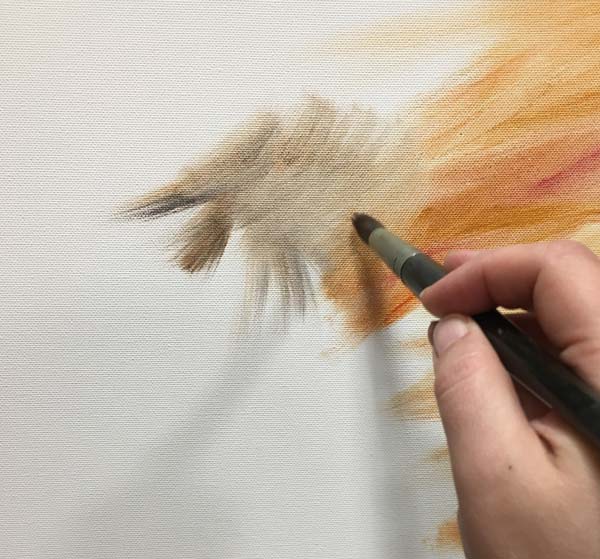
When we create, could the inspiring word be more like “between” than “focus?”
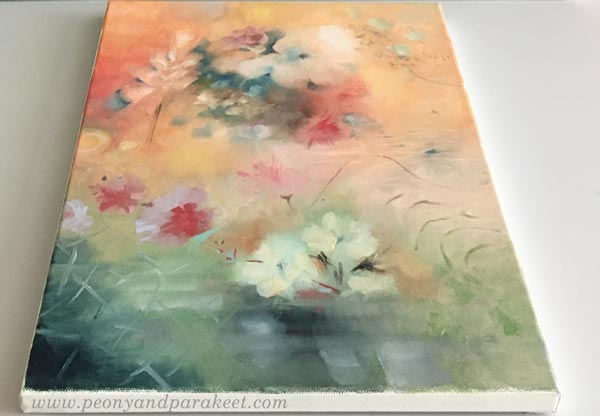
Focus is nice and pretty, but is it art?
Inspiration from Albert Edelfelt
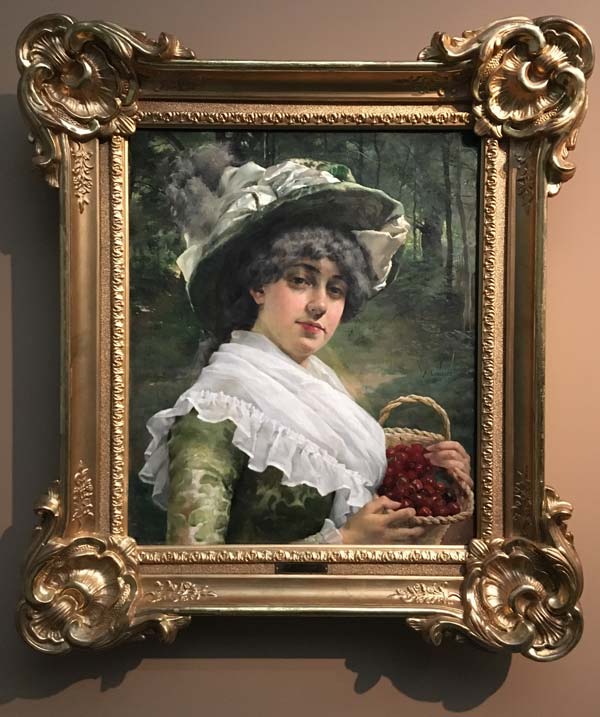
In this series of paintings, my inspiration was the Finnish master painter Albert Edelfelt (1854-1905). For the painting of this post, I took ideas for the color scheme from this pastel work by Edelfelt. This piece is currently displayed at the Albert Edelfelt Exhibition in the Ateneum Art Museum in Helsinki.
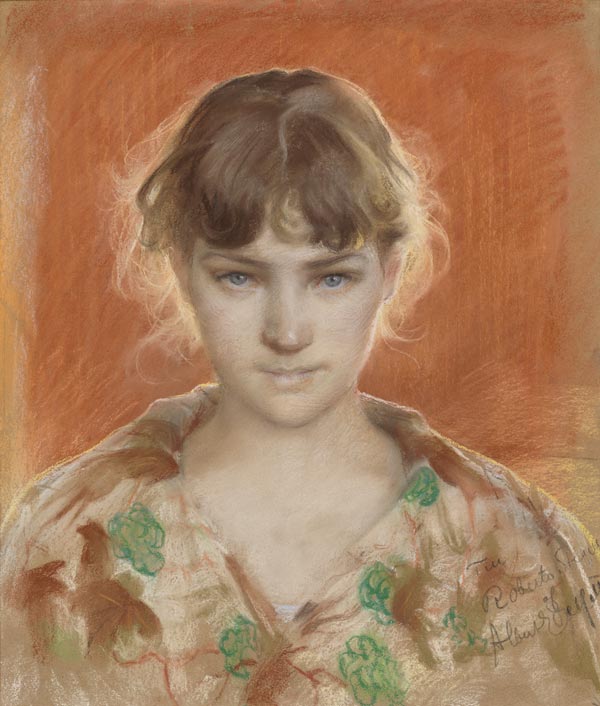
While studying the colors, I thought about the end of the 19th century and the intelligent look of the woman. Wasn’t this also “between” rather than “focus?” Between a man and a woman, if you think about the relationship between the model and Albert. Between being a model and having her own thoughts, if you study a woman’s gaze. Between representation and abstraction, if you observe lines and shapes.
Abstract art began shortly after Edelfelt’s death. He probably already felt its presence, felt that he was between two worlds.
From Artist’s Focus to Artist’s Between
I decided to throw myself fully into being between two worlds in this painting.
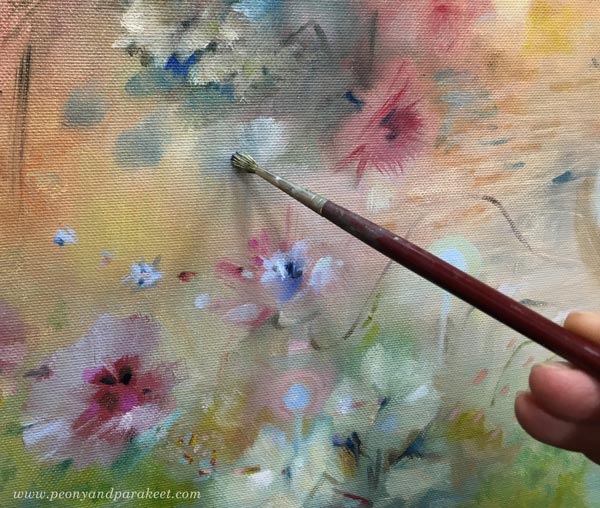
“Between” is an uncomfortable state of being, so this painting couldn’t contain only easy and beautiful. “Between” is a bit like walking in nature and then bumping into apartment buildings. Or when you’re admiring clear water in a pond and your eyes fall on the filters. Focus can then only exist if you close your eyes. Not very eye-opening, eh?

This painting has two different styles and although it is small in size, I feel that it reveals the secret between what I do and what I think.
I noticed at the opening of the exhibition that I don’t like to talk about this work, because I find it somehow intrusive. Often when the paintings are created, they are nice characters, a bit shy and sensitive, but fun company. This one is straightforward and doesn’t hide its contradiction.
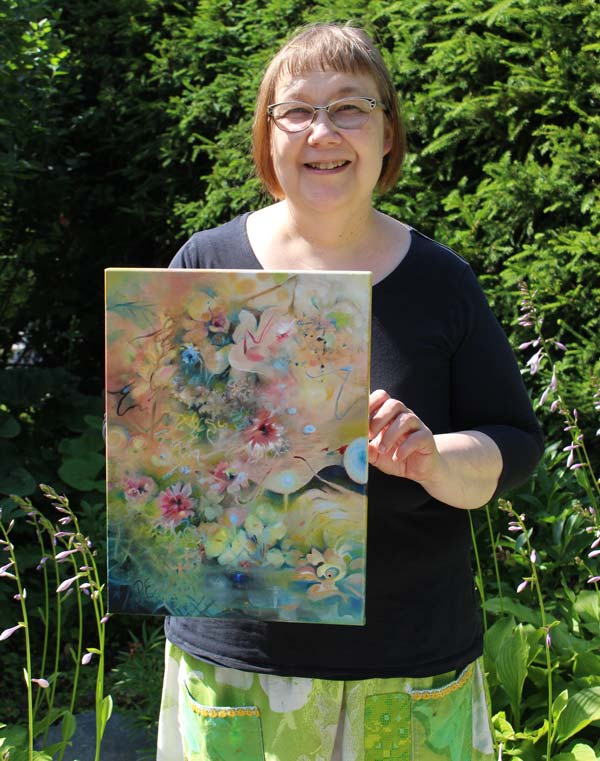
However, there is a lot of power in the contradictions and lack of focus. I want to continue to challenge myself to draw artistic inspiration from it.
Do you also feel that you are between two worlds?
In art-making, could you replace the yearning for “focus” with the embracing of “between?”
Imagining Flower’s Spirit
When you want to draw or paint flowers that look unique and alive, imagine their spirit and discover what they would love to wear.
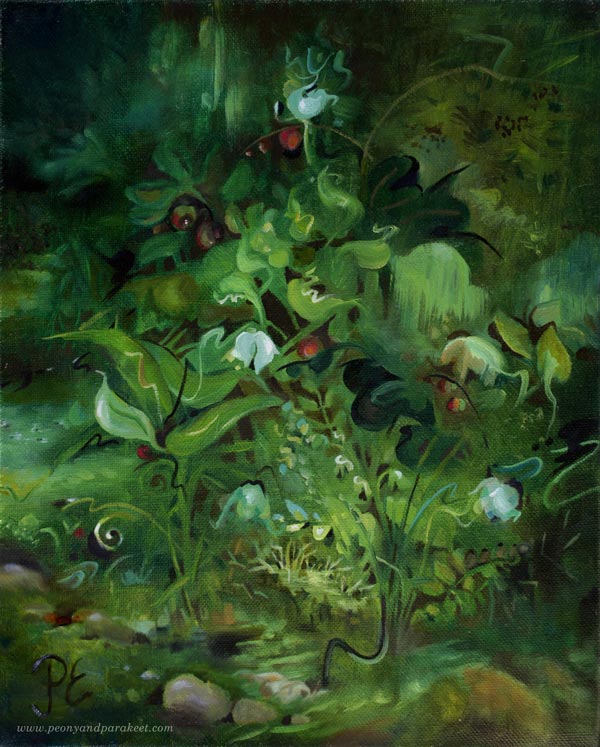
Art is not only about techniques and replicating what we see. When you create, you have permission to imagine and be convinced that you know something more than anyone else. You are the best scientist in your imaginary world! In your world, you can mix different fields, like botanical illustration with fashion design. That’s what I did in this painting called Kielomieli.
Kielomieli – The Mind of Lily of The Valley
We have lily the valleys growing in our yard and even though I don’t pay much attention to them, I feel like I know them. That plant spreads in the shade and may seem modest, but its mind is always alert and it observes the world sharply.
This little flower also knows how to influence people. Even before I was born, in 1967, Yleisradio, the Finnish national broadcasting company, organized a vote for Finland’s national flower and the overwhelming winner was kielo – the lily of the valley. It makes Finns kneel and admire its fine shapes. Unlike other flowers, the color is secondary to the lily of the valley, until it produces berries. With berries, it underlines that it is not just a white, innocent little flower. Everyone knows their toxicity.
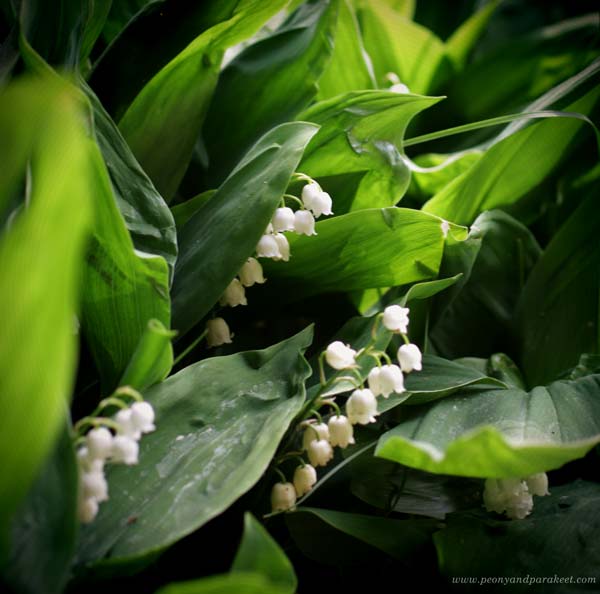
The lily of the valley’s mind is a group mind where everyone dances to the same rhythm. It still doesn’t mean that a single plant would not also be an individual. She just doesn’t share her own thoughts publicly.
Many people love lily of the valleys, but this plant is not a rose that craves attention. Even if it lies low on the border of the earth, its mind is more sublime than that of other flowers. It sees far and high, and nothing can discourage it.
Choosing the Style to Go with the Spirit
When you think about the flower that you want to draw or paint, ask her about her style and aesthetics. For example, is it bohemian, classic, gothic, or country? If the flower would be a human, how would she like to dress?
Clothes can express the spirit.
In flowers, the details of petals and leaves are also very similar to the folds and seams of clothing. I often find it helpful to think about dresses, hats, and jewelry when painting plants.
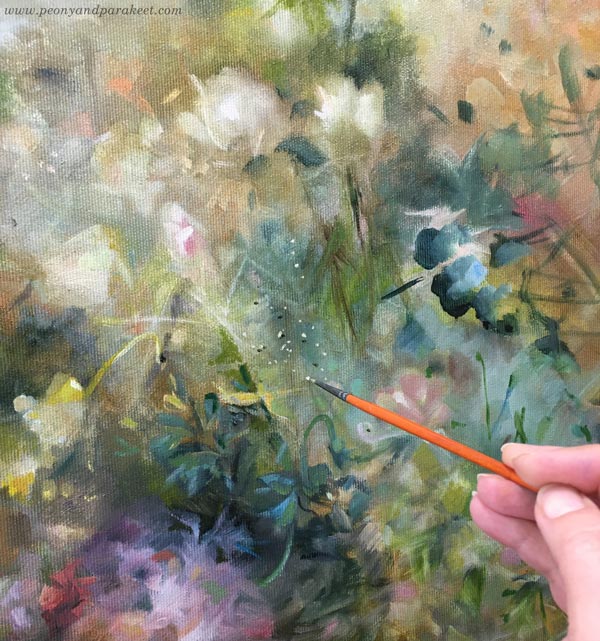
I imagined the lily of the valleys to be formal and stiff. They wouldn’t wear a bathrobe in a photo but choose a classic-lined dress or a jacket. So I chose to paint them in a decorative style. First, I practiced painting roses in that way – see this blog post for more instructions!
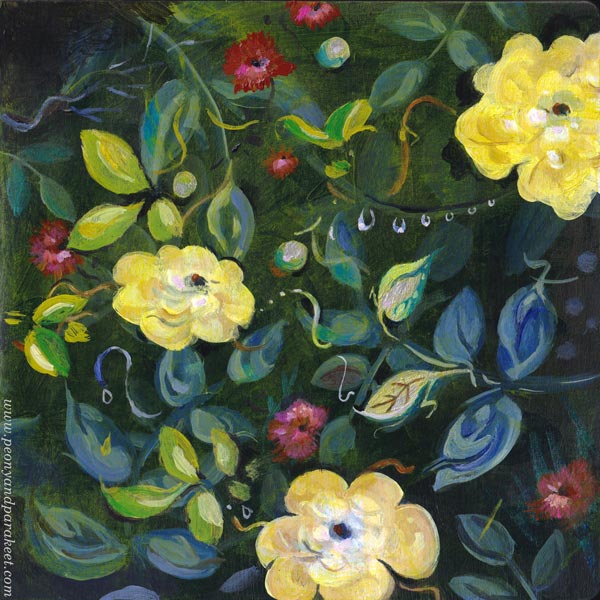
I have noticed that making a study speeds up my painting process even if the final painting would be different.
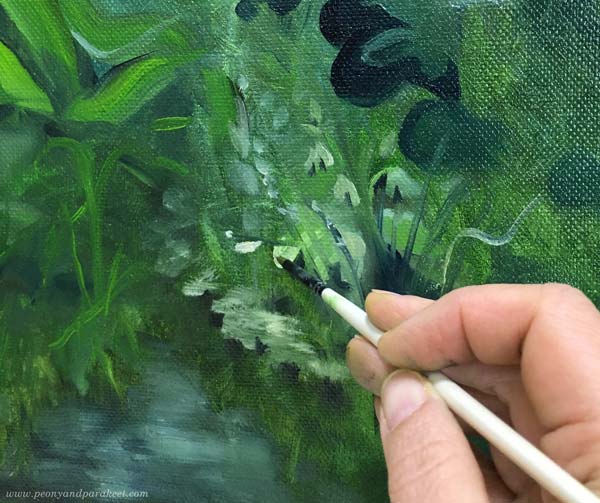
Once I had “loaded” that decorative style to my hand, I painted Kielomieli – the lily of the valley’s spirit.
Flower’s Spirit – Flower’s Portrait!
When visualizing the flower’s spirit, think about yourself as a portrait painter.
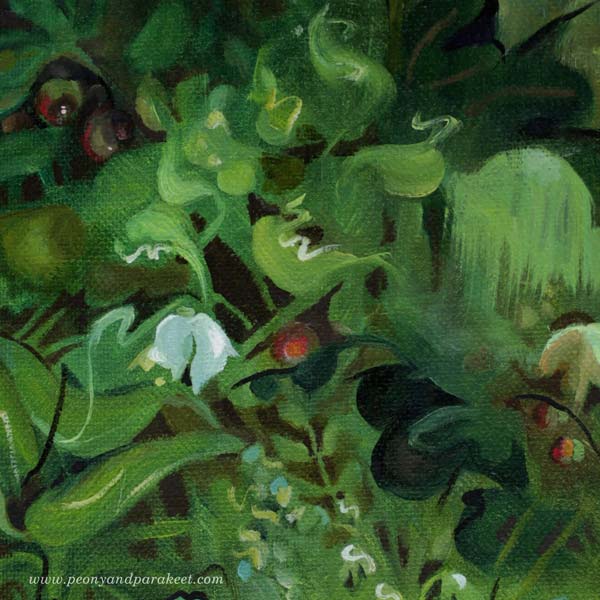
You don’t need a face to express a flower’s spirit. When the color choices, shapes, and lines are aligned, they all paint a picture of a character.
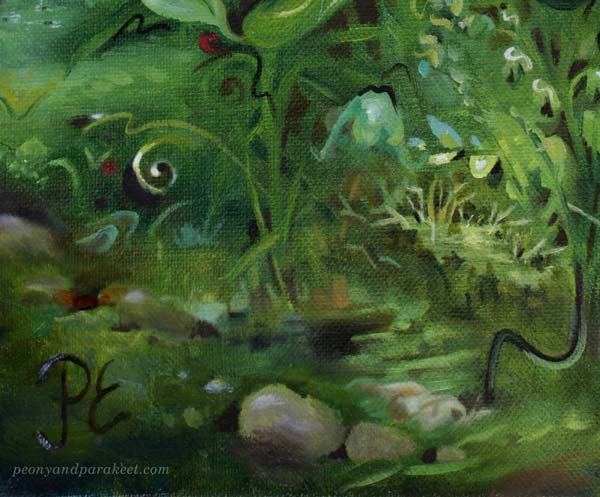
I hope this blog post gave you new ideas to break the glass between reality and imagination!
