
Flower Painting Comes to Life – Watch the Video!
This week you get to paint with me in my little studio. We follow the birth of this flower painting from blank canvas to an exhibition.
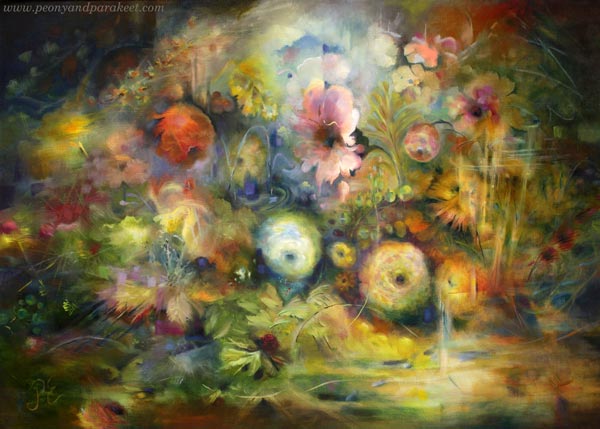
In the video, you see me painting and chatting, and also get to visit my current exhibition at the gallery Gumbostrand Konst & Form. The exhibition is from Feb 12 to March 9, 2025 in Sipoo, Finland.
From Blank Canvas to Exhibition Piece – Watch the Video!
While I paint the flower painting, I talk about making art, becoming an artist, and what it’s like to paint freely and not use any reference photos. This is a longer video than usually because I have collected the material for it many months.
In the video, I talk not only about painting but drawing too. I love to play by drawing, and that play affects my paintings. Never underestimate the effect of play, and always keep playing and drawing, no matter how high you want to reach!
Hearts and Stories – Sign Up Now!
Let’s draw for your inner child and make the most out of simple shapes!
Hearts and Stories will begin on March 17, 2025. >> Sign Up Now!
Joyful Flowers with Watercolor Pencils – Watch the Video!
This week, I have a free video where I create these joyful flowers with watercolor pencils. These are inspired by fabric prints and are more motif-like than many of my colored pencil pieces. I love this kind of playing with style.

This is a small piece, just 8 x 8 inches. It’s colored freely with watercolor pencils on thick drawing paper.
Joyful Flowers – Watch the Video!
In the video, I talk about finding inspiration for art-making and tell stories about things that have affected my style. I just read abstract painter Darby Bannard‘s quote:
“Inspiration doesn’t follow style, it creates it.”
It made me want to share my thoughts about inspiration and style. I also wanted to create something colorful and cheerful that is not realistic, but more design-oriented. These joyful flowers were fun to make. After drawing the joyful flowers, I made something small to add to my boxes of joy. You can see that little flowery thing in the video too. Watch the video!
This video is a little longer than I usually post, but I personally like to watch long videos, and maybe you do too?
Joyful Coloring
My newest course Joyful Coloring teaches a color-oriented approach to watercolor pencils.
Start with blank paper and create freely with joy and sunshine! >> Buy here!
Getting More into Drawing and Coloring
This week, I share a method that is helpful when you want to get more into drawing and find your style. It is called “topic-spirit-story-abstract.” With this method, art can open to you step by step!
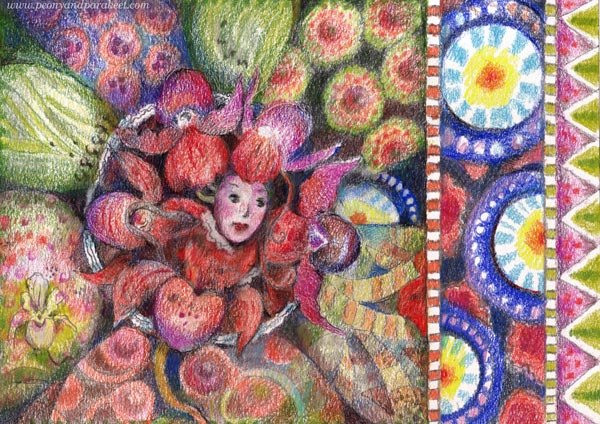
For me, everyday life experiences, illustrations, creative writing, and abstract art are all connected. If I take something away, the chain breaks and my expression stiffens. Most of my creative work follows this “topic-spirit-story-abstract” method. I don’t always have to draw a spirit, but recently I’ve spent time in such abstract dimensions when creating computer art that I have wanted to play with the spirits with colored pencils.
Start with Template!
When you want to practice the method, start by making a template! Divide the paper so that you have a part for the spirit and another part for more abstract coloring. You can just draw a line or be more creative and make a circle for the most figurative part, and several other divisions for more abstract ideas.
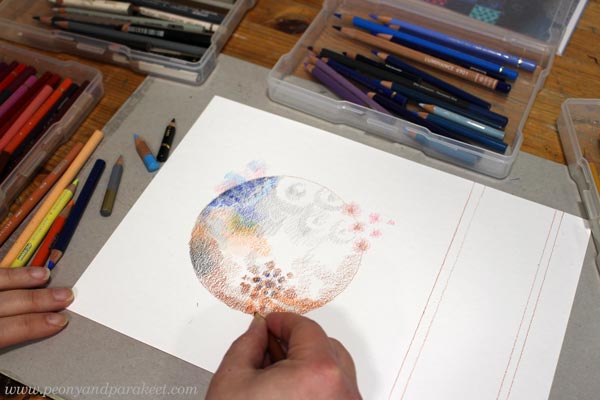
Do some intuitive coloring with a light touch as a warmup before proceeding.
Method: Topic-Spirit-Story-Abstract
After the warmup, find a simple topic that you want to explore.
Think about your recent experiences and find something small and concrete there.
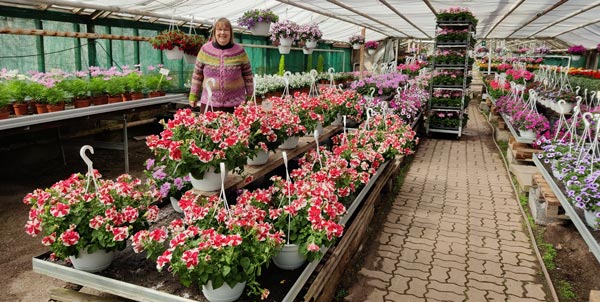
In the example, my topic was a recent visit to a garden center. My husband bought me a beautiful venus slipper orchid there.
Second, imagine a spirit that symbolizes the topic.
Use your imagination – anything contains a spirit!
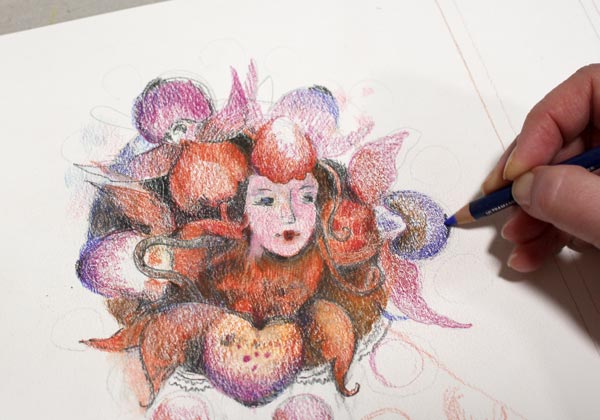
In the example, I was thinking about the venus slipper and how mysterious and exotic it looks for a Finn.
Third, let the spirit tell a larger story.
What other associations come to your mind when you think about the spirit? Think about literature, music, food, movies, places – what comes to your mind that enlarges the original topic. What is the world that the spirit can open?

In the example, I started thinking about the Queen of Hearts in Alice in Wonderland and Asian culture: sushi and rice bowls. I also had just browsed Kaffe Fassett‘s quilting books and thought about the richness that can be achieved with colors and simple shapes. I slowly enlarged the mixed yet curated world that I was able to reach through the spirit.
Fourth, explore more the abstract side of the discoveries through the story.
Play with the basic shapes and make decorative borders, ribbons, and patterns.

I find it easier to draw abstract motifs, ornaments, and patterns after finding the spirit than if I start from a blank paper.
Optional: Write the Story!
After making the image, I like to put stories to words. This helps me to get even more into drawing and makes my work as an artist more meaningful.
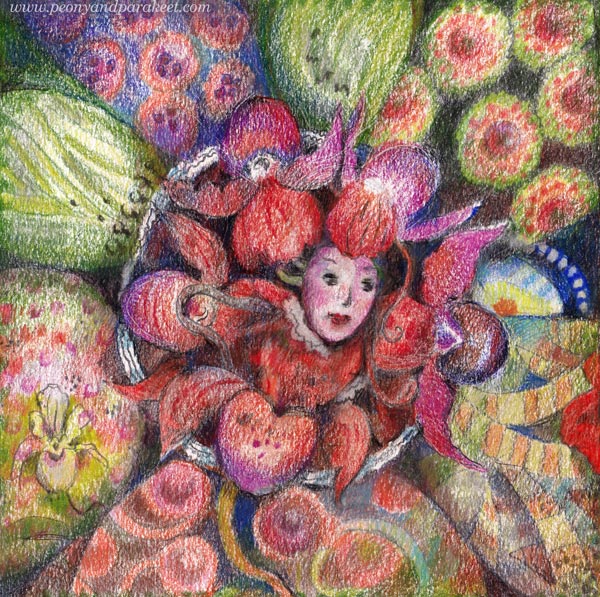
Art is like a venus slipper. It’s like a plant in the back corner of a garden center. Those who only look at traditional roses won’t even notice it. But whoever dares to bend over the shy plant and curiously fit her mind to the shoe, becomes a master in a game where basic shapes break everything and then build a new whole. This way, the beauty of art is limitless, and not only on the surface.
Here’s another example that I made last week. Here, the center is reserved for the quote from the story, and the spirit and the motifs are in the frame.
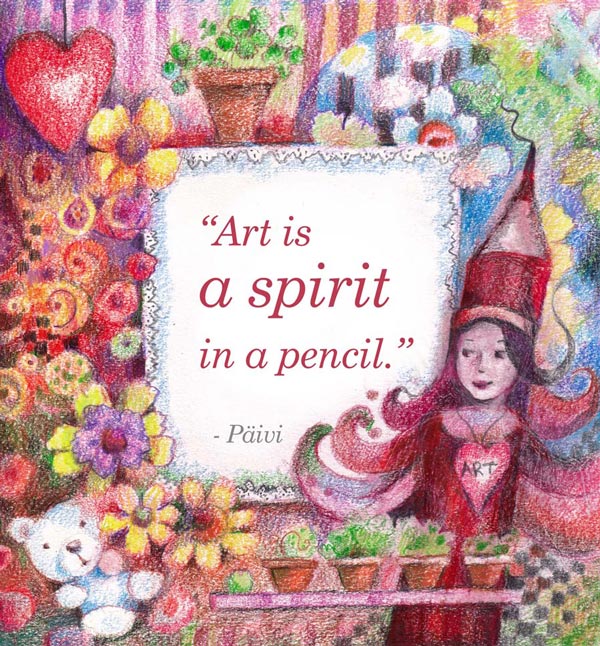
Art is a spirit in a pencil. A single pencil is nothing. It doesn’t cost much, takes up very little space, and you don’t even notice it if it’s at the bottom of your bag. But still, a pencil can connect us to art. When I was a child, I played with pencils while my big sister was coloring. Every pencil had a personality and while I was watching my sister draw, my herbs grow, and my teddy bear rest, I had no idea that those little moments would dictate my future. Art back then was only a spirit in a pencil. When art is a spirit in a pencil, we say yes to a journey that takes us closer to who we are. We say yes to expression that has no limits. This freedom is why I want to support creating.
Getting More Into Drawing Frames and Borders
Decorative art is a bridge between illustration and abstract expression.
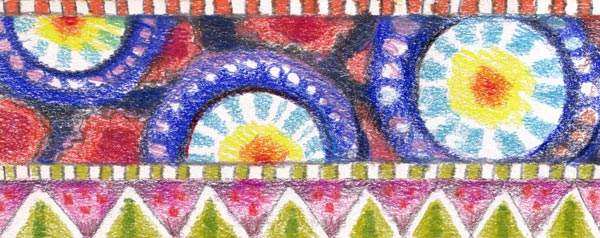
Reality consists of both organic and geometric shapes. The question is: how can you bring both of these worlds into your art and use them in a creative way?

I hope you find all this inspiring and helpful to get more into drawing and coloring.
Enrich Your Art – Play with Shapes!
This week it’s time to get inspired by shapes and start playing with them!
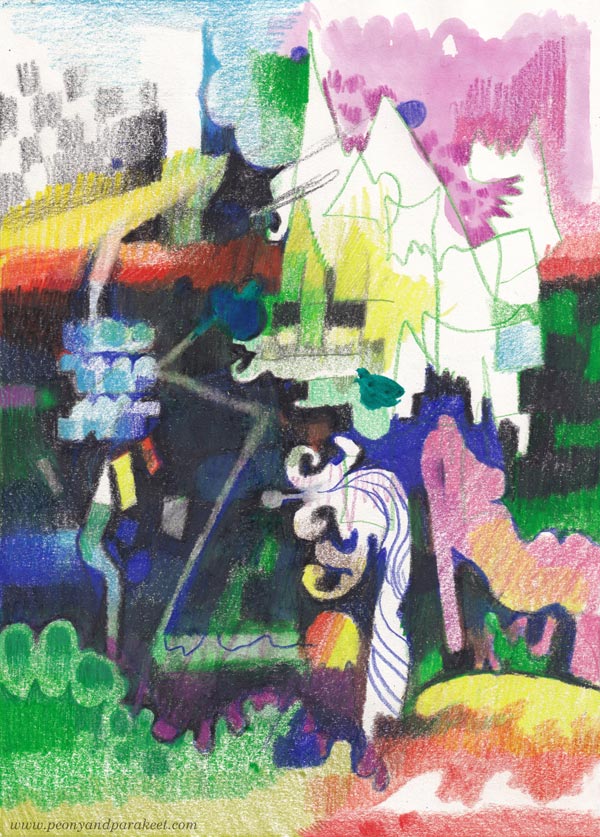
My dear reader, I guess you follow my blog because you love colors. And yes, isn’t it wonderful to choose, for example, a colored pencil from among several different colors: “Should I pick pink or red, hmm?“
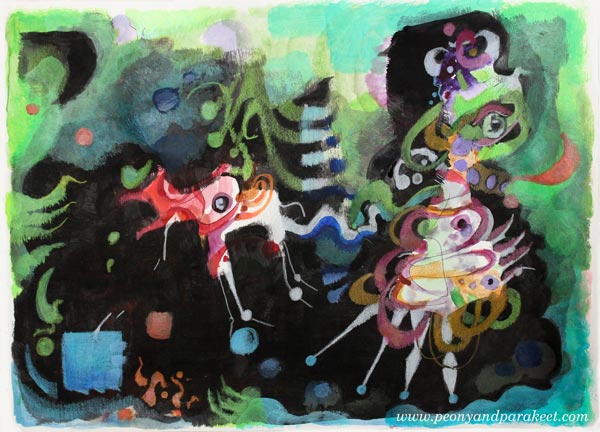
I have a degree in industrial design and maybe that has influenced me to think like this:
A color is a child. A form is a mother.
Colors take spurts freely on the paper while forms set limits. But you can play with form too!
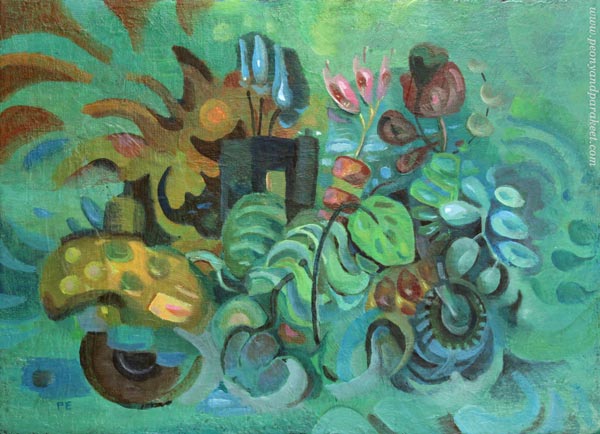
See more about making this in this blog post!
There is no need to turn the mother into an old woman who only sees the reality.
The soul of any shape is abstract and yet, even a simple shape has an expression. It’s fun to draw random shapes and then carefully alter them.
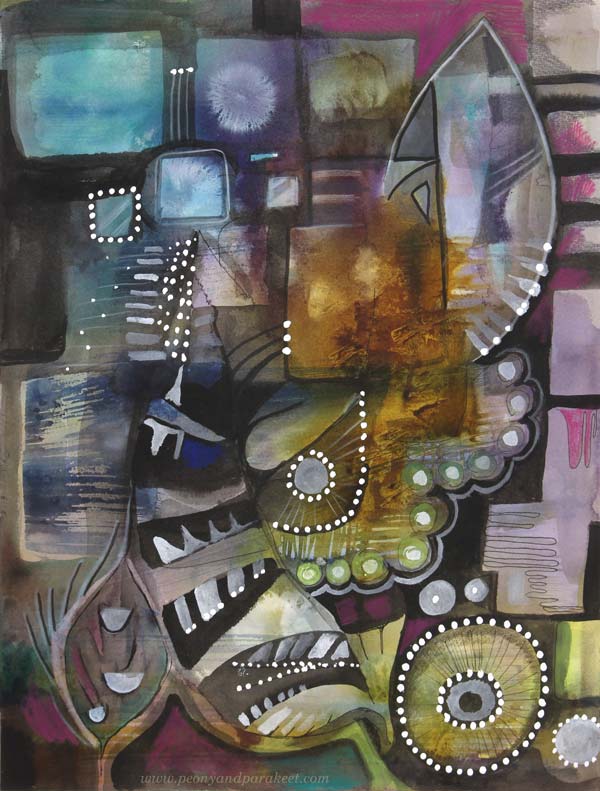
See more about making this in this blog post!
Shapes form a design language that you can constantly enrich. Don’t just draw isolated geometric shapes, but combine them to get more interesting ones!
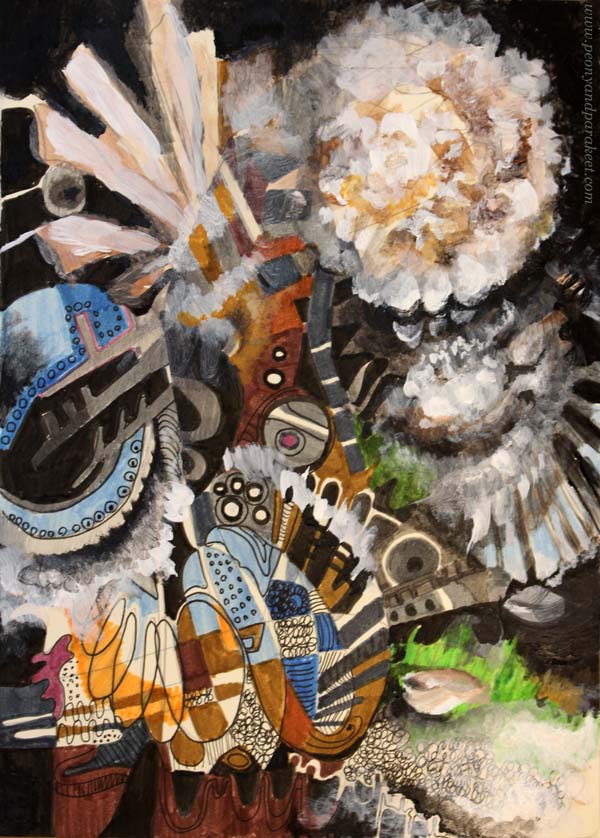
More about making this in this blog post!
When you have a shape on paper, give your full attention to it.
Art Play with Shapes
Talk to the shape! Interview it!
Don’t ask what she represents, but what kind of world she would like to create around herself.
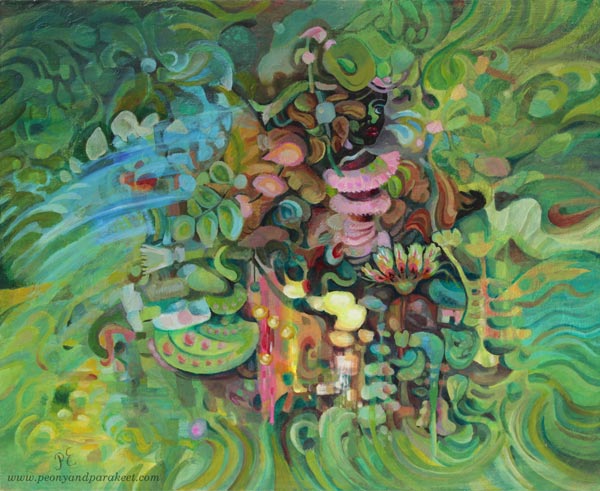
See more about making this in this blog post!
Ask where she belongs, and what kind of shapes she would like to meet.
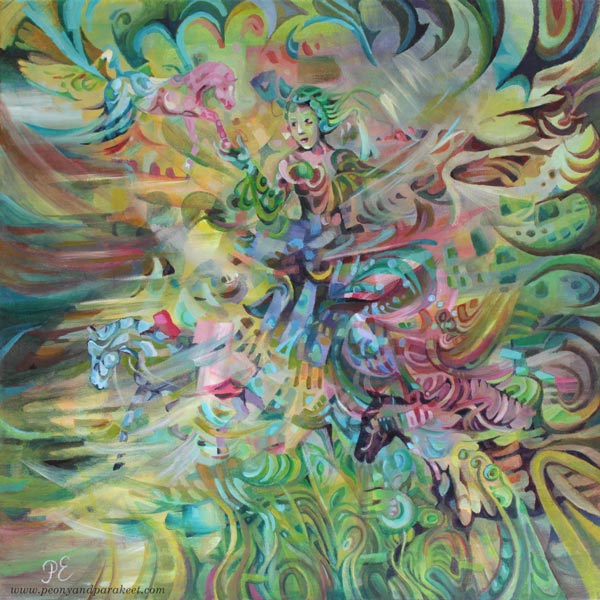
See more about making this in this blog post!
Shapes can take you to imaginative places where realistic and abstract meet. Once you have been traveling for some time, you will notice that the delicacy of art is in the form, and the color – the child – is there only as a spice.
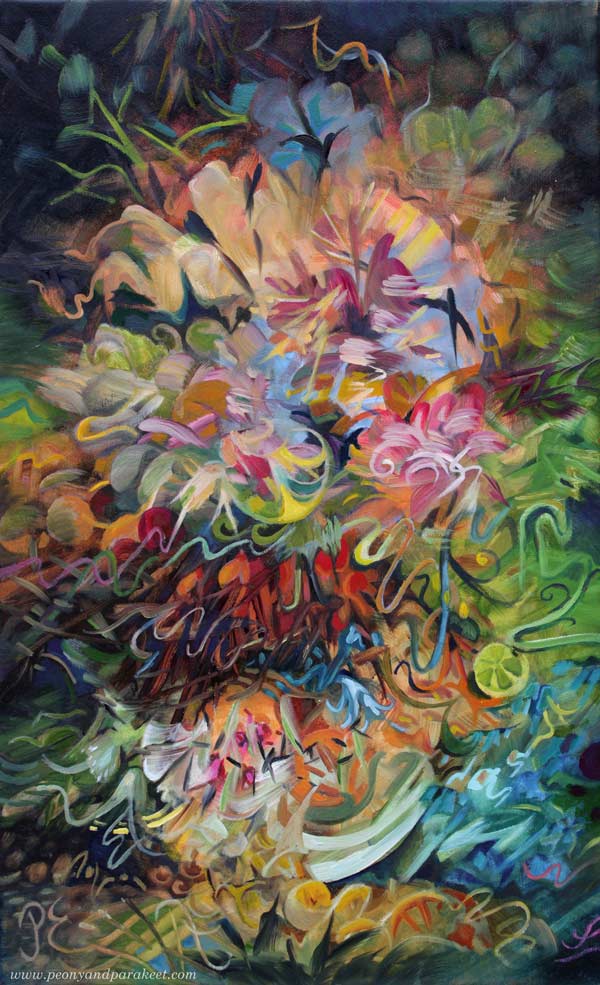
See more about making this in this blog post! – See more pics on the Finnish Art Store Taiko!
Art play with shapes – What are your thoughts? Tell us in the comments!