
Creative Struggles in the Middle of Possibilities

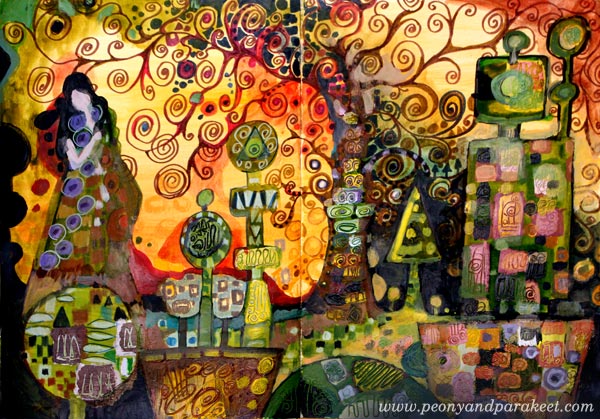
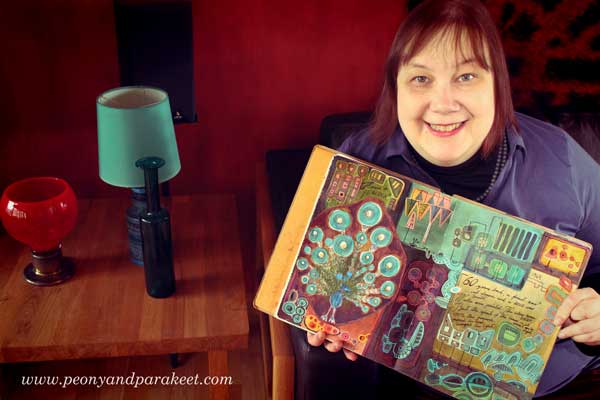
Here’s an art journaling spread that I made for Imagine Monthly Fall. It’s a part of November’s mini-course called Patterned Topiary. For the mini-course, I chose three main themes for the inspiration:
1) Gustav Klimt, the famous artist, and especially his Golden Phase pieces
2) playing with patterns and repeats
3) topiary art, the art of cutting trees and shrubs into shapes. As Gustav Klimt has brilliant portraits, I also included a woman there.
Predictions and Creative Struggles
Some time after creating the mini-course, I started the renaissance painting technique class under Emmi Mustonen. Now when I look at my work (which is still in progress), I see the same woman appearing there. It’s like art could predict the future!

The two projects are very different and still – it’s easy to see that the person who created the first image, the art journaling spread, is the same who’s painting the copy of the portrait. I think this is a brilliant example of why we shouldn’t put ourselves in one corner, but be always willing to learn new perspectives. I could have said that I love freedom and won’t go to the class that is “just copying.” Or the vice versa: that I value old masters so much that I won’t combine them with mixed media techniques or with less-valued art forms like cutting trees. I might have avoided some creative struggles, but I would also have missed the possibilities.
My second project for November’s mini-course is also like a prediction.
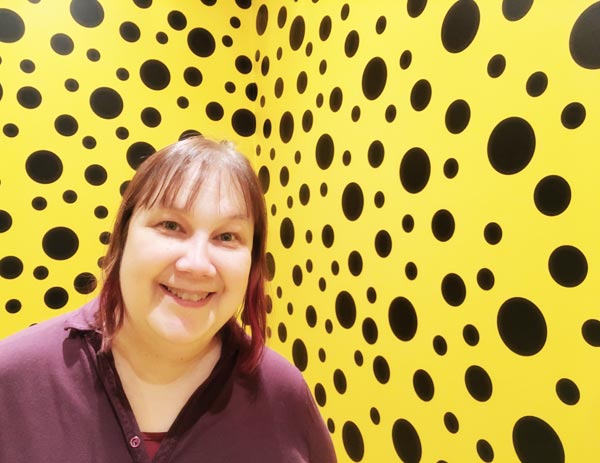
Namely, last Saturday, I went to see Yayoi Kusama‘s exhibition at Helsinki Art Museum. Another celebration of dots and patterns!
Diversity of Themes and Techniques
I have now released 4 of 5 mini-courses for my art journaling master-class Imagine Monthly Fall 2016. There’s a lot of diversity in the projects: painting, drawing, making collages and combining the techniques to create mixed media art. You can still sign up and get all the published mini-courses immediately. There’s also a great community that you don’t want to miss! Seeing many versions of monthly themes is part of the enjoyment! I also lead a discussion related to the theme every month.

Struggles in the Middle of Possibilities
When creating and teaching the mini-courses, I have experienced that art is full of possibilities but still, we fight with the fixations all the time. To me, the word “artist” has so much emotional overload that it feels difficult calling myself one.
But I got a wake-up call recently when someone said to me: “You’re already an artist and you should just embrace that. Doing otherwise is denying who you are.”
Selling My Art in Public!
After pondering that, I decided that I have to stop selling secretly based on occasional requests. I should make my art more accessible. So I set up a shop at Saatchi Art, which is a commercial site for artists. The great thing about Saatchi Art is that you can now also order fine art prints from my pieces, not only buy originals. Some of the paintings are sold already, but you can buy them as prints.

Tell me, which struggles do you have with your creating right now? Are they due to a certain technique, certain conditions or a certain mindset?
Start Drawing from Stick Figures!
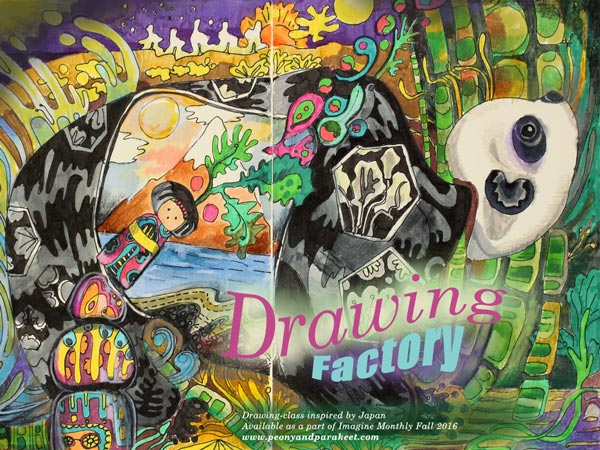
If you browse my blog posts this fall, you would think that I have been painting only. But no, I have drawn too! I’m really happy about my recent mini-course that is available as a part of Imagine Monthly! It’s called Drawing Factory as it’s about drawing efficiently no matter what your current drawing skills are. Plus it’s inspired by Japan, the land of high-production factories and fascinating culture.
Drawing ATC Cards
I got the idea for the mini-course in summer when I got the urge to draw a series of ATC cards.
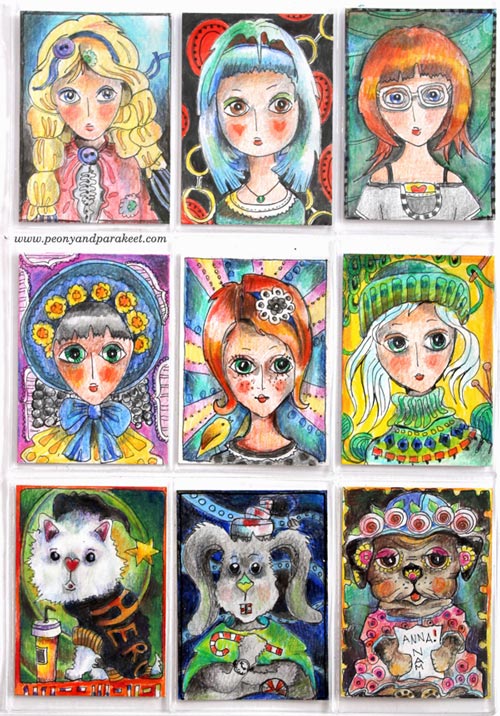
I had so much fun drawing these! While drawing, I thought about how much people use stamping instead of drawing in ATC cards. I felt liberated without them, drawing freely. How could I make hand-drawing more attractive and enjoyable?
Drawing with the Help of Stick Figures
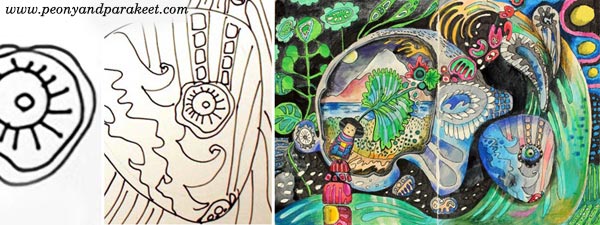
Along drawing this big bunny art journal spread, I developed a series of tips and tricks about how you can create imaginative line drawings without tedious sketching.
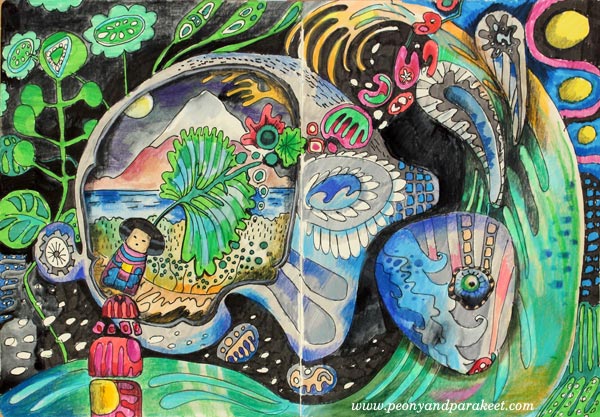
My method is based on stiff lines as people often say: ” I can only draw a stick figure!” But sticks can be an answer, not a problem!
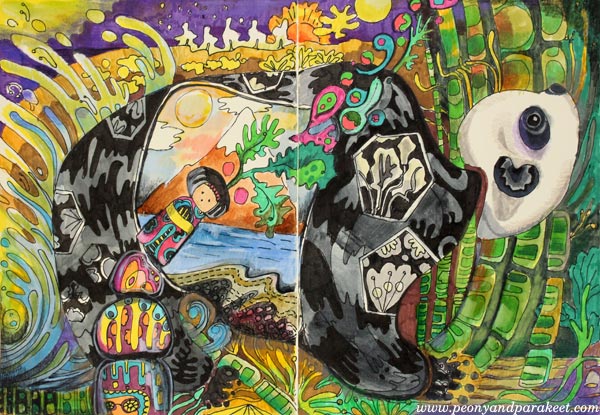
The panda is the project that I am creating in the class video. The video also includes a drawing lesson where I show how to build drawings, or should I say rich illustrations, based on simple lines.
Buy Drawing Factory!
Drawing Factory is now available as an individual self-study class: Buy Now!
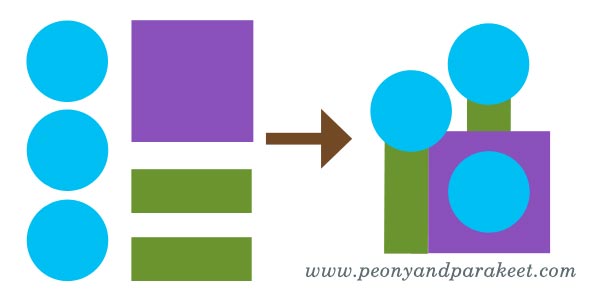
What to Create from Simple Shapes? 6 ideas
When I catch myself building a visual image in my mind, I say to myself that my hands have to process the idea first. The idea can be a decorative design or a new painting or anything visual. When my mind is vigorously trying to create images that I would be happy with, my hands don’t understand my mind at all. My mind is a fool and my hands are ruthless.
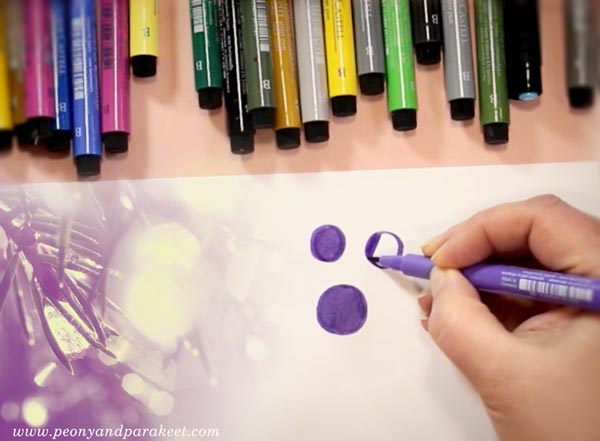
In my mind, I can easily miss the elements that are needed for building the beautiful image. If I imagine a scene, the details that make the scene look so wonderful, are not all there. My mind only has a glimpse. The connection from the mind to the hands feels easier if it’s the other way around. The hand draws a couple of circles and the mind gets creative with them. This way building the bridge from my mind to my hands seems to work much better. Big pictures, personal stories, attractive designs are not born in my mind first. They are born in a conversation that is led by my hand drawing with pen on paper.
But hands don’t decide when to get started, the mind does. This is why I will give you few ideas to start the conversation between your hands and your mind. Like this, this and this post, this blog post is illustrated by my students. The art journal pages that you see here have been made at Modern Mid-Century art journaling class.
1) Build ornaments by grouping simple shapes.
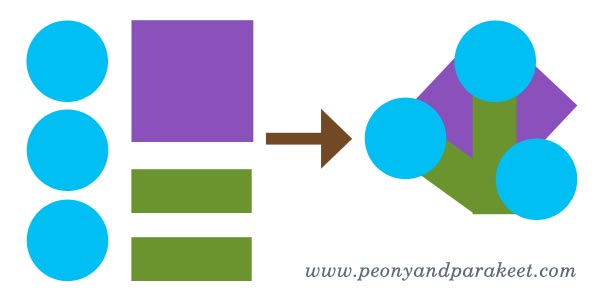
Nel Wisse has created colorul clusters and then grouped them to bigger ornaments.

2) Create a surface pattern and cut a shape from it.
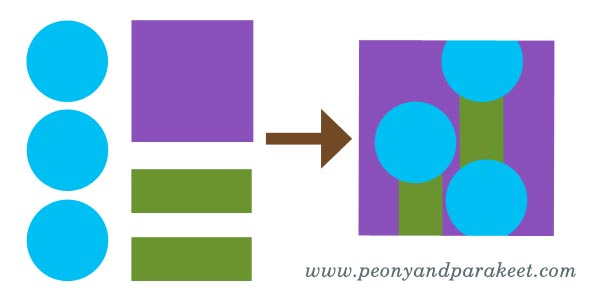
For example, see Darci Hayden’s cat and the stairs! Shapes that include patterns look always fascinating. (More patterned paper ideas)

3) Play with Sizes and Layers
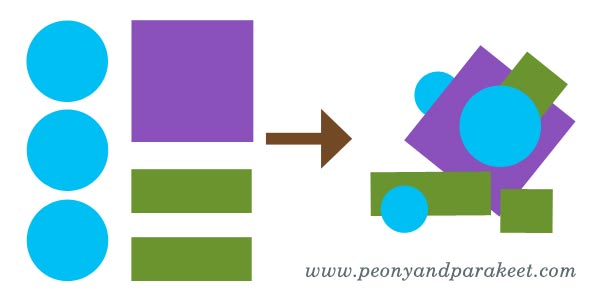
Cut some elements smaller and add dimension to your page by playing with layers.
Sue Jorgensen has a good variety of both large and small elements.
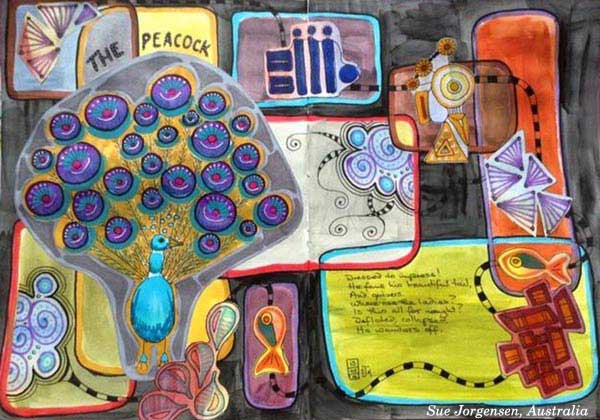
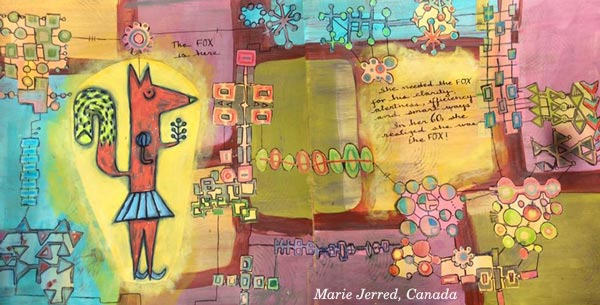
4) Build a map, a house or a room plan
A clear hierarchy between the elements pleases also your left brain.
Marie Jerred’s fox is in the middle of an adventure!
Stephanie Carney’s Flamingo is just entering a house of dreams.

5) Express Micro or Macro World
Both micro and macro biology deal with basic shapes. Explore either molecules or satellites!
Susan Prothero’s micro world is captivating.

Elise Tobler‘s space is full of life!
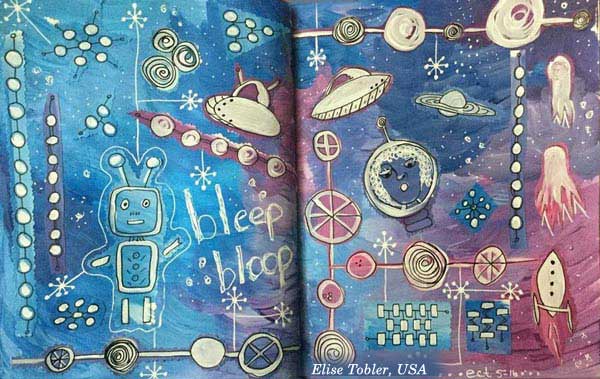
6) Find a connection to a story
Explain what you associate with the shapes and then move on to a more illustrational approach. Elaine Wirthlin’s spread is an awesome example!

Buy the class: Modern Mid-Century!
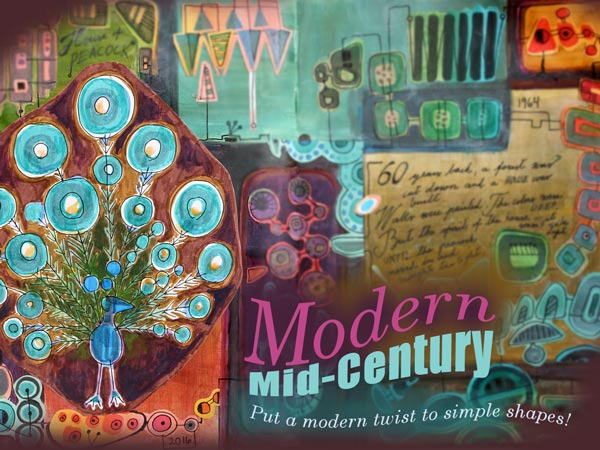
Designers in 1950s and 1960s (like Annikki Hovisaari from Finland and Lisa Larsson from Sweden) truly knew how to play with simple shapes. Modern Mid-Century is a self-study art journaling class where I am inviting you to my living room and showing inspiring examples from the middle of the 20th century. Then I will help you to design your own unique motifs and build a collage that is both decorative and expressive.
Modern Mid-Century
Start playing with simple shapes! >> Buy Now!
8 Style Tips from the Students of Peony and Parakeet
This spring, I have seen gorgeous pieces of art made from the mini-course Flowing Greenery. Like in the previous blog post, I want to share some of them with you.
Various Styles with Style Tips
This time I show pieces that are very different in style. I also include style tips and analysis. This kind of comparison can be positive and beneficial. By creating similar work and then comparing it with other artists’ pieces can make you understand more about your own signature style.
1) Warm and Dominant
The first piece is by Terttu Laitinen. Her way to use visually heavy elements feels like a weighted, warm blanket that you want to snuggle into! This piece makes you stop and calm down and still feel inspired! It’s so loaded with energy that the fruits could drop down at any moment.

2) Detailed and Holistic
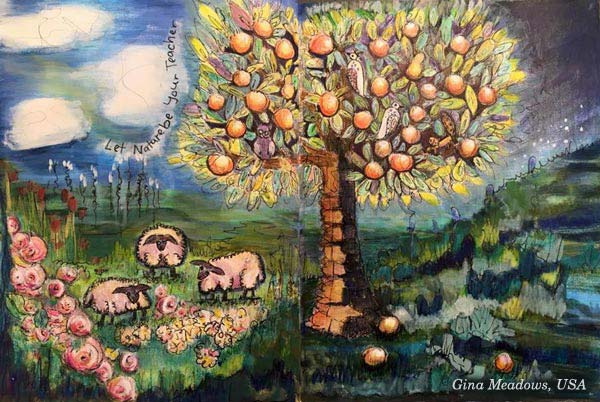
Gina Meadows takes a step away and makes you think about your life as a whole. It feels like every element in her work has a designated mission, connected to the cycle of living. Her strokes are clearly defined, but living and expanding as she uses very few straight lines.
3) Playful and Social
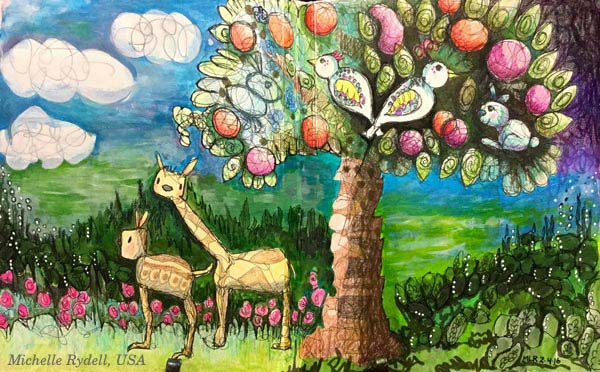
Michelle Rydell combines round strokes with angular ones very playfully. It looks like every little leaf and cloud has a personality of its’ own. She is also a master of combining imagination with visual clarity. A clear focus looks always appealing.
4) Intimate and Symbolic
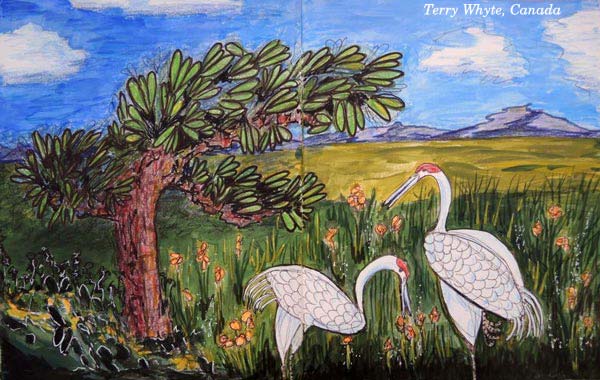
Terry Whyte‘s work is more intimate. It’s like the tree protects the like-minded couple. A lot of care and thought has been put into shapes of each element to make them look both aesthetic and meaningful.
5) Primitive and Mysterious
Ulla M. Holm combined William Morris with Henri Rousseau. Her own unique style goes perfectly with Henri Rousseau’s naive masterpieces. This is an insight that’s worth pondering: how could you combine your favorite artists so that they enrich your own unique style?

6) Decorative and Sophisticated
Patricia Bush has an eye for details. But she also knows how to make them differ in size and color so that the result doesn’t overwhelm you. You might stare the gorgeous pegasus first, but take a look at the trunk of the tree too. It’s wonderfully ornamental and has a very wooden feel. Sophistication in every detail, including the castle and the moon, is her magic!

7) Relaxed and Emotional
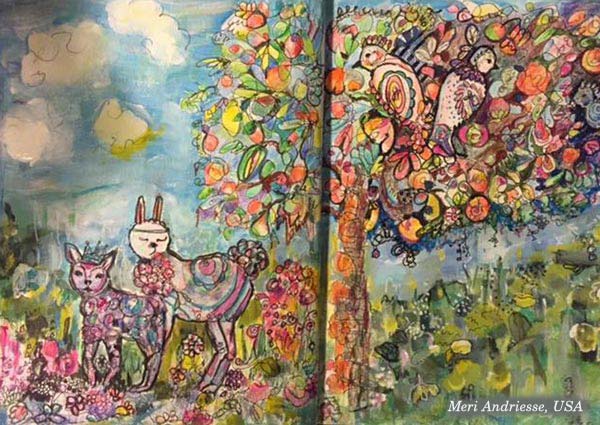
Meri Andriesse’s style goes to other direction. Her relaxed piece is more than all the careless elements together. Her strength is to create an atmosphere that any creative aspires to have. It’s loose and sunny, just perfect to get inspired and go creating!
8) Connecting and Thoughtful
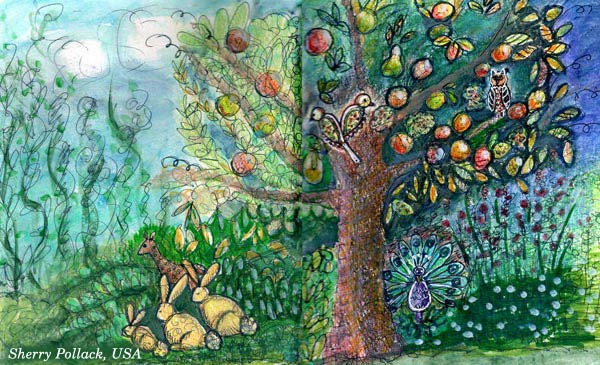
Sherry Pollack has whimsical style with lively lines but it’s also extremely thoughtful. It’s like every little creature has its’ own thoughts even if the creatures share the same experience. This makes it so easy to imagine being among them. It feels like I could listen to the same sounds, observe the same things and join the conversation that is more spiritual than outspoken.
Flowing Greenery
When using the same mixed media techniques, how would your scene look like? This mini-course, Flowing Greenery, was published at “Imagine Monthly Spring 2016” art journaling class. It’s now available individually as a self-study class – Buy here!
You can also buy all the 6 monthly classes as a bundle. I will also release the classes individually one by one later this summer, and show more ideas on how to apply them.
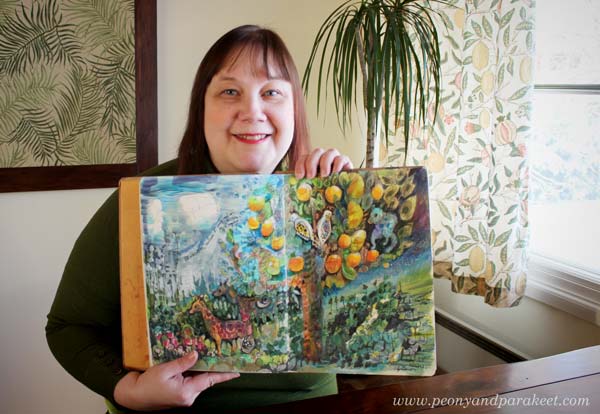
Create your own fruit trees and whimsical animals, right now!