
Artistic Growth – From “Huh” to “Wow”
This week, we’ll talk about changing artistic direction and how the first reaction doesn’t always matter as much as the second one.
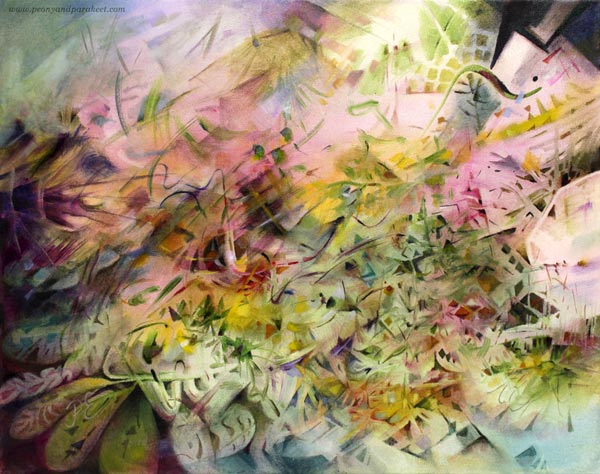
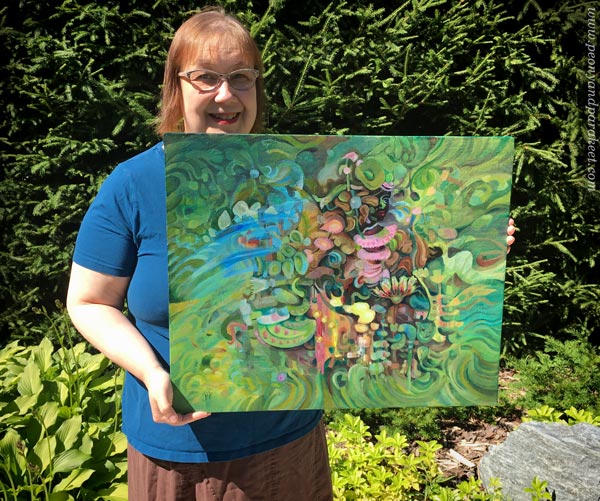
My seed idea for this painting was slightly different from usual, and I wanted to see how it would grow on canvas. It took many sessions and lots of struggles with finishing. “There’s still something wrong with this painting, Paivi,” I said to myself after correcting a couple of shapes that my husband pointed out. Last night, I had a dream that I walked an ugly dog on a thin leash. The breed was an odd choice, but the dog was still mine.
“Huh” and “Wow” – First and Second Reactions
Isn’t it so that we want to change, but as soon as we begin to see the results, we are likely to bounce back? It’s so easy to say: “No, this is not for me, I’ll try something else. I’ll try a different style, a new technique, another art class, or find other artists to follow and admire.” And this is not only a bad thing. In the long run, bouncing back is about integrating the new stuff into our natural self. But in the short run, it can prevent the growth we want and need.
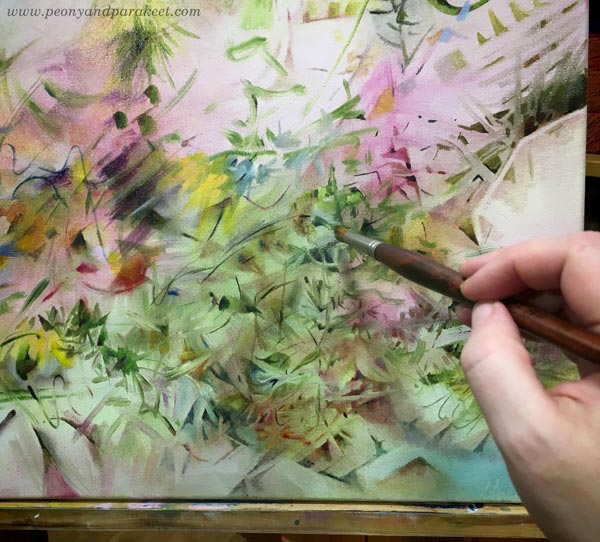
I have been reading James Victore‘s Feck Perfuction as an audiobook. It’s a book about creativity and easy listening about things that are really tough in practice. It’s more like a two-hour inspirational speech than a down-to-earth guide, but it feels current with this painting. In the book, James Victore refers to an American pop artist Edward Ruscha. He has said: “Good art should elicit a response of ‘Huh? Wow!’ as opposed to ‘Wow! Huh?'”
This week, my favorite video podcast, One Fantastic Week, talked about “Instagram art” – pictures that the Instagram algorithm likes. It’s colorful, easy to consume and comprehend, but its exposure doesn’t ensure the artistic quality.
Artistic Growth and New Truths
When a painting is not for a class or a specific exhibition, I try not to think about the audience too much. I trust that you will pick what you like, and forgive me those you don’t.
But with this painting, I realized that I have played in the “Wow! Huh?” category, and this one tries to be more “Huh? Wow!” And that change makes me uncomfortable. It’s like I have been written a revealing story but in a code language, being afraid that anyone who stops to look will see to the core of me. And at the same time, worrying about that anyone who doesn’t, only sees a mess.
An Outside View to the Inside World
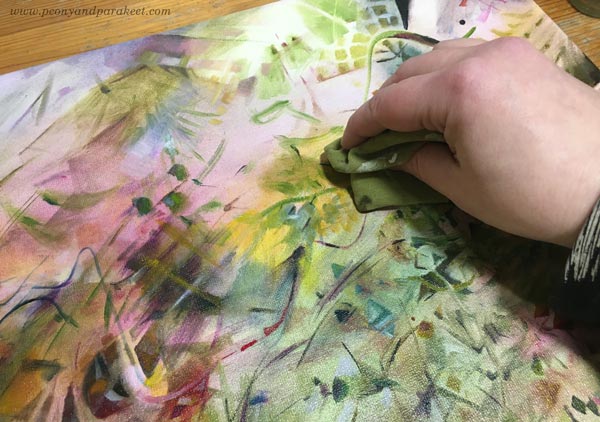
Teaching art has helped me to grow as an artist a lot. For example, when I get to see a student sharing a wonderful painting saying: “I don’t know about this one,” my gut reaction is then: “What!? This is beautiful!” But what’s “huh” for them is “wow” for me because I see the painting in a context that’s still new to them. They haven’t got used to seeing themselves like that. They are in the middle of a change, and it’s tempting to get back to the same old thing.
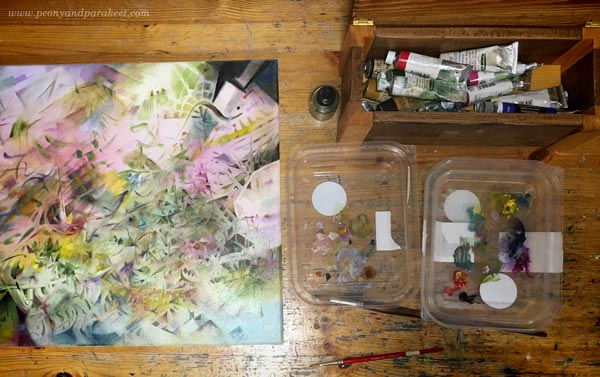
I recycle plastic lids and use them as palettes.
But when we do something regularly, it’s natural to miss the change. Floating on the surface isn’t enough anymore, and we get curious what’s deeper – “behind the glass” as we say in Floral Freedom, referring to Wassily Kandinsky‘s teachings. Then we need to learn, stretch, and redefine. Accept new truths.
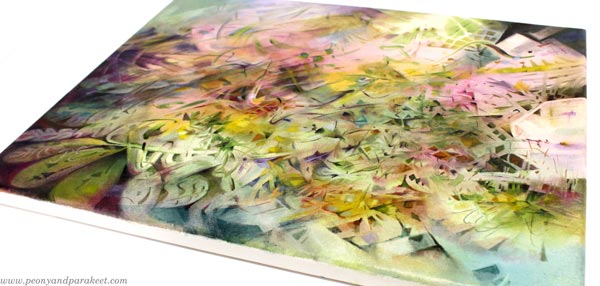
When looking at the mirror, I see more wrinkles than before. What was “huh” some years ago would be “wow” now. But with this wisdom, I hope long life for this painting. That the “huh” that it causes now will be “wow” someday. Maybe after I have fully accepted that my artistic growth is towards more and more abstract art.
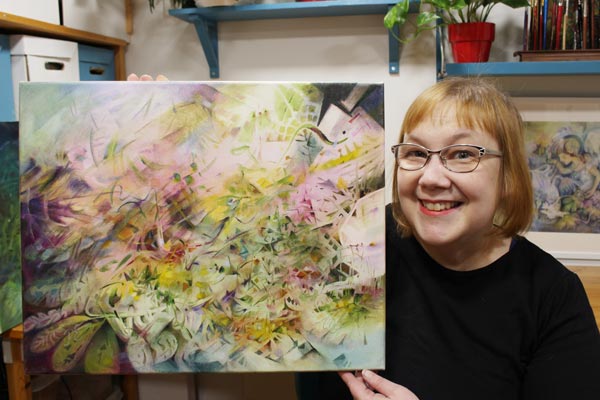
It’s also good to accept that some paintings are just “huh-huh” and a few manage to be “wow-wow,” and what’s “huh” for some is “wow” for another. What do you think?
Artistic Spirit between Abstract and Realistic
This week’s theme is the artistic spirit. I share a new painting, glimpses of my painting fever, and inspire you to explore the zone between abstract and realistic art.
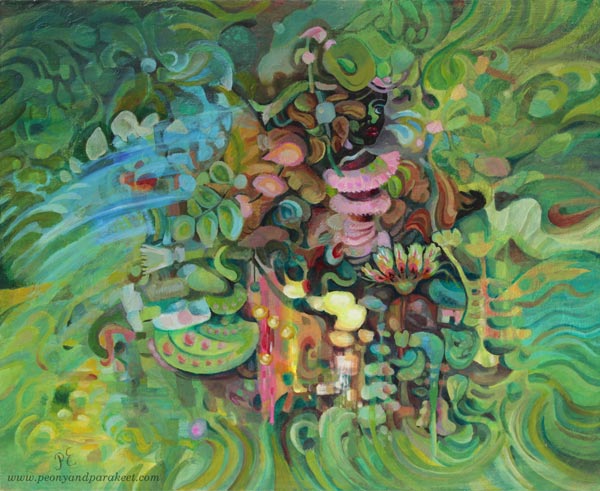
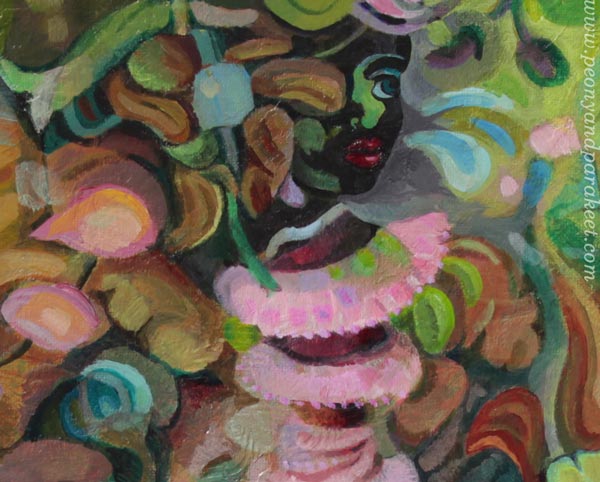
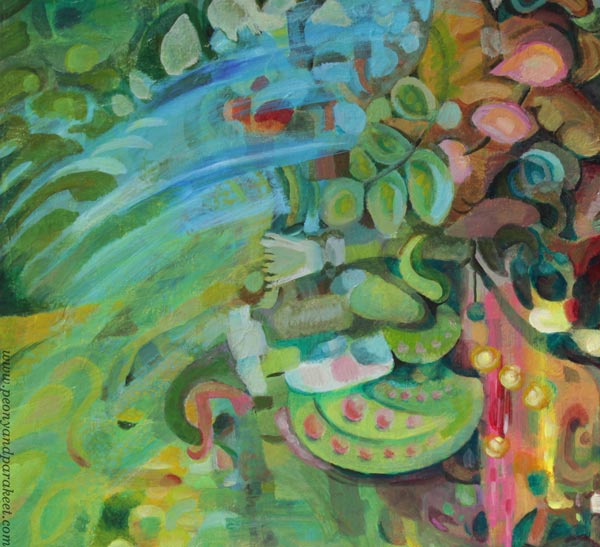
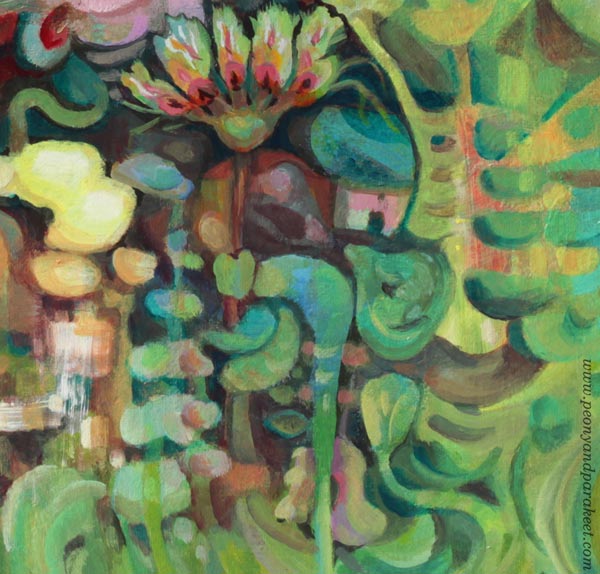
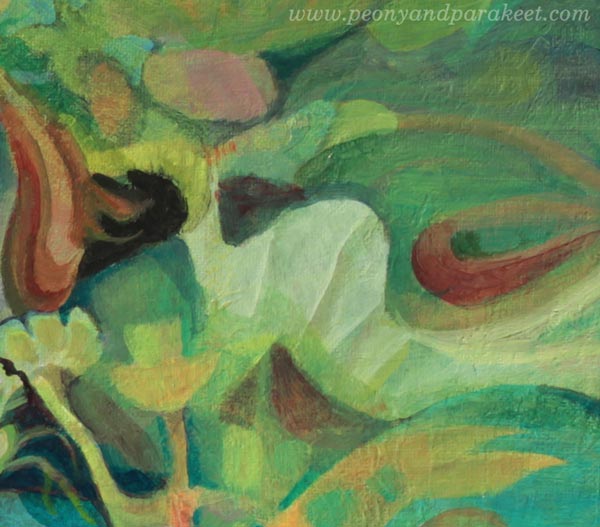
Here’s an acrylic painting that I just finished yesterday. It’s called “Paradise” and it’s quite big: 61 x 50 cm, about 24 x 19,5 inches.
Painting at Late Evenings and Wee Hours
I like to paint in the late evenings when the world quiets down. Now when it’s summer, Finland floods in light, and nights are short. When the blackbirds begin to sign at 3 am, I know it’s time to wash the brushes.
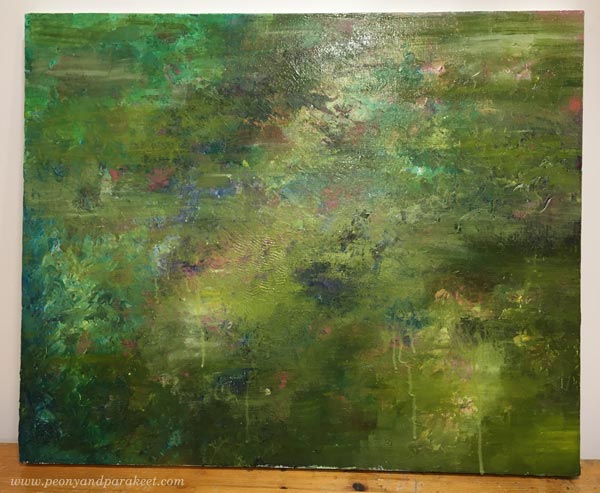
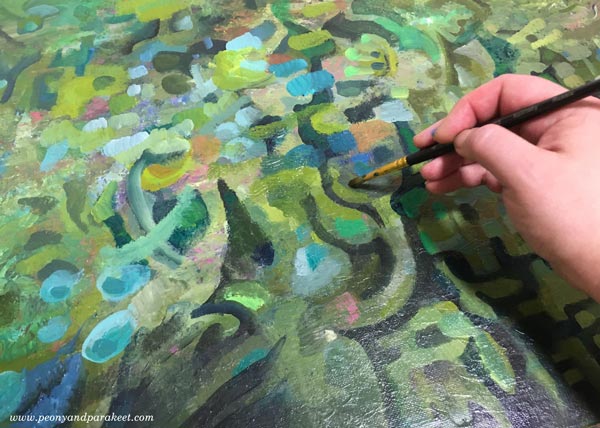
After a long night, I rush to the studio in the morning: “What have you done! You’ll never be able to finish it!”
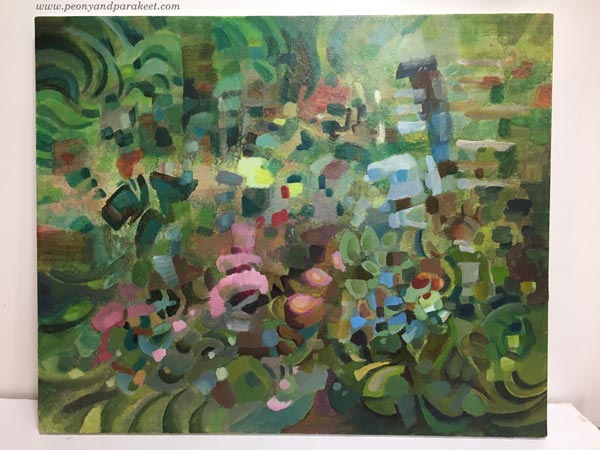
But with this painting, I decided to accept whatever comes up. And with that, I have a little story to tell. I shared it on Peony and Parakeet’s Facebook page recently, but if you missed the post, here it is, with one of the paintings from the teenage years.
My Story about Artistic Spirit
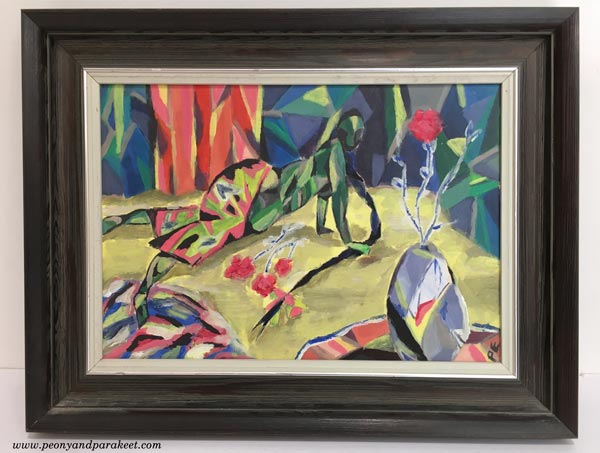
As a teenager, I browsed big art books at the local library. I started hanging around with Matisse and Picasso and they said: “Hey Paivi, take this obsession from us, and make the most of it.” First, their inspiration was like a fever: mustpaint…mustpaint… mustpaint. Then, after too many matissepicassos, it became a burden and I went to study engineering.
During the past five years as a full-time artist, I have been hanging around with other guys – like Da Vinci, Caravaggio, and Rubens. Even if I first thought so, they are not much different. After too many rubenscaravaggios, the empty feeling takes over again.
But recently, I went to my studio secretly, picked the brushes, squeezed the paints, and in silence, I met a spirit. It was not me or any of my masters, but the spirit that arrives when we are ready to let go of the ego.
To paint like me, I need to let go of me. I am pretty sure Matisse and Picasso already told this, I was just so impressed by their names that I didn’t listen.
Abstract, Realistic, or Stylish?
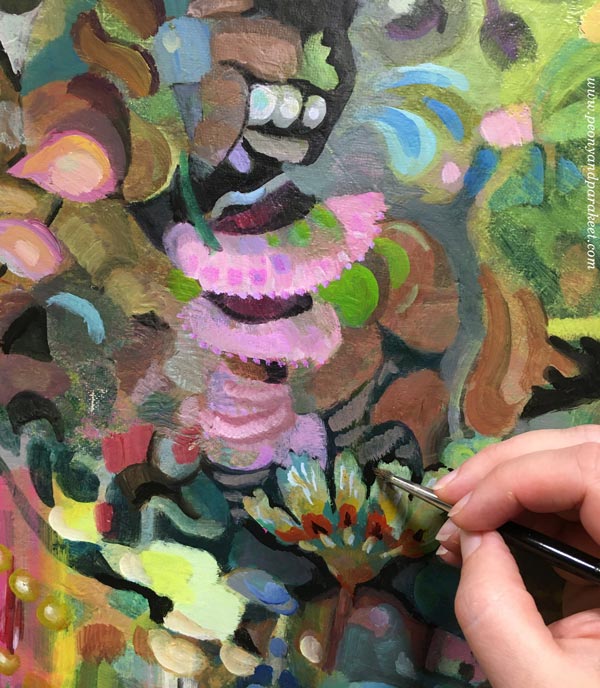
Every time I make a class, I don’t only teach but also learn new things. The newest class Decodashery boosted my confidence to paint decorative motifs right from my imagination. Between “abstract” and “realistic,” there’s a zone that’s “stylish.” Then you simplify what’s real, and complicate what’s not. By simplifying, you dig the artistic spirit out of tangible things, and by complicating geometric shapes, you make the spiritual things more tangible.
I really like this painting, and hope that you enjoy these close-up pics too.
Wishing you many happy moments with painting and drawing!
Why I Paint White Flowers – How Your Artistic Voice is Influenced by Others
There’s a lot of talk about finding your artistic voice, but very little about how other people affect it. So this week, I share a story about my mother and her influence on my art.
Painting the Same Thing Again and Again
A couple of days ago, I was on a morning walk near my home in Southern Finland. The air was fresh as well as the view, dominated by the blue sky and white clouds. My beagles’ busy noses and a glimmering brook followed a sown field that had already started to green. Both birds and earphones fed entertaining listening. But all I could think of was my painting. Was it finished? Should I add more color to the flowers? What else did I need to adjust to make most of the tens of hours? I was alone with my dogs, but the inner critic kept me company: what kind of artist doesn’t even know the meaning of her images?
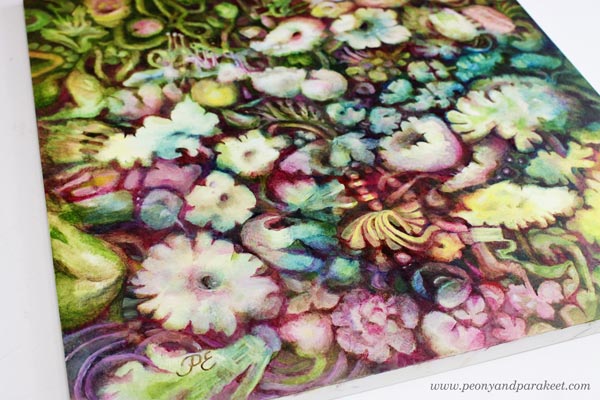
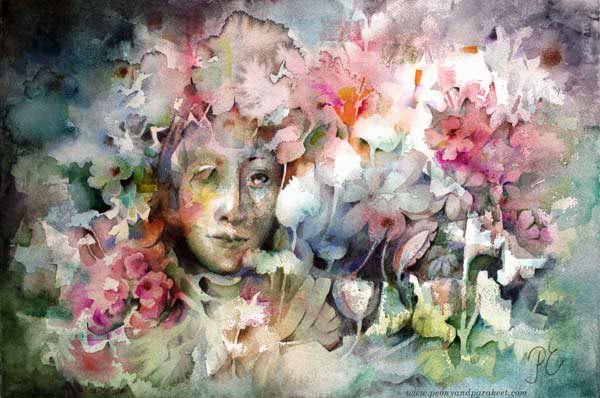
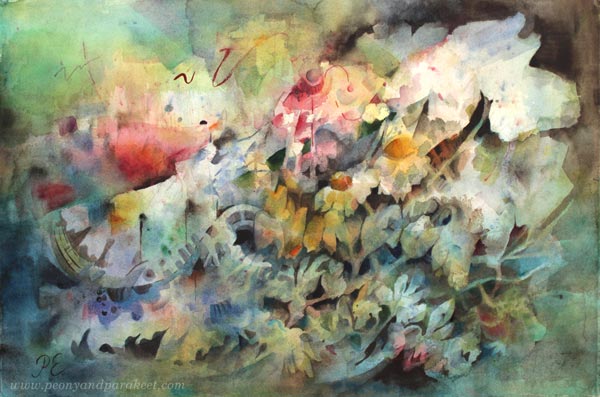
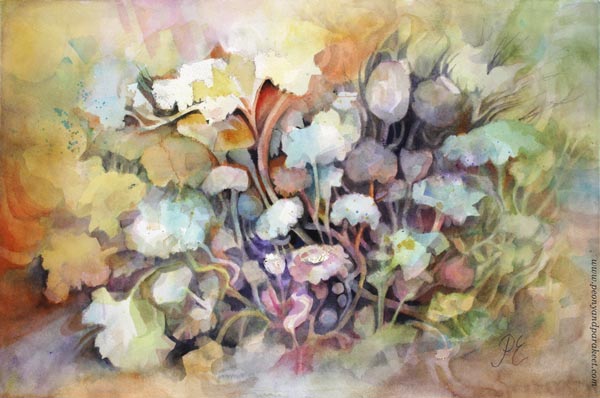
Yes, I am no artist at all. I paint white flowers, the easiest anyone can imagine, and the worst that my mother knew. “No white flowers,” she repeated to my father when her wedding anniversary came close, and he was about to buy a bouquet. “White flowers mean death.” And now, long after she has passed away, all I want to paint is white flowers.
Commenters are Your Art Coaches
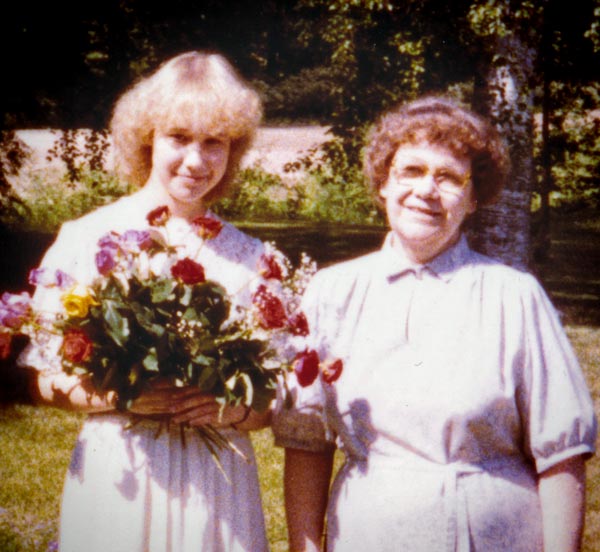
Rebelling had no place in my upbringing during the 1970s and 1980s. As a teenager, I tried to respond to my mother’s corrections and criticism with an ignorant smile. Not for long. She didn’t hesitate to tell that it wasn’t a proper reaction. She was both a direct and shy person. Her presence was almost invisible in public gatherings, but at home, in her empire, she was the master of rights and wrongs. So when I showed drawings to her, she either approved or disapproved. She didn’t talk to me as directly as to my father – what to do or what not – but her words and facial expressions told everything.
My mother was like a strict gymnastic coach with high expectations, but she lacked one essential skill – the ability to show how the tricks could be done. She was as honest to herself as to anyone in this matter and put her energy for finding time, supplies, and art education for me. Time to create was the easiest part. My mother was a housewife. She had left her job at a young age right after she got married. She didn’t want her daughters to have the same destiny, so she did her best to keep me out of the kitchen and constantly reminded me how children would prohibit me from doing what I love.
We lived in a small town near the Russian border, and our family wasn’t wealthy. The only income came from my father’s pension. In the evenings, my mother wrote all the expenses on a small black book. But purchasing pens and paper was mandatory. To her, it was the lowest level of civilization, more important than books. Our town had one bookshop that sold some supplies, but after we got more knowledge from local art groups and competitions, it became evident that I needed a better and broader selection. So every month, when my parents drove to a bigger town, I was often with them, selecting paper, paint boards, crayons, and acrylic paints from a real art supply store.
A Praised Piece Sticks into Your Mind
When I was some years over ten, in one spring morning, I decided to try out a new set of crayons. It was just a warm-up, a quick landscape without using any reference. “Look, mother, what do you think,” I said like so many times before. She looked at the image, tightened her lips, but unlike her, she didn’t say much. Later, when I opened a narrow kitchen closet to pick an iron, I stopped. The landscape was taped inside the wooden door. “I like to look at it,” she said after seeing my puzzled face.
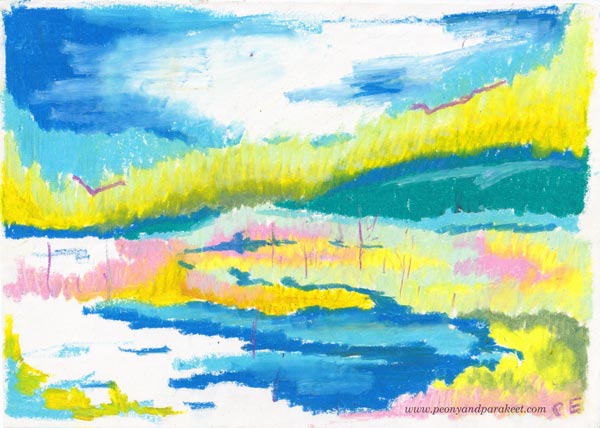
I was devastated. That little landscape didn’t deserve the place. So many times I had poured my heart out on paper and soon found out that it wasn’t to her liking. And now – I didn’t even color all the paper!
Finding the Why Behind Your Artistic Voice – Connecting the Appraisals and Repetitions
Fortunately, my mother was not the only one commenting on my art. My two big sisters had different opinions, and my teachers and friends as well. One piece didn’t satisfy them all, but there were always kind words from someone. It encouraged me to keep painting and drawing, as everyone, especially my mother, expected.
After my mother’s death, one stormy weekend, I traveled to the childhood home to pick things that I wanted to keep before we would sell it. The house was cold, but I knew it was the last time when I would see it like it used to be. Everything was clean and tidy. Performing tasks effectively with high quality had always fascinated my mother. “If I could choose what my profession was, it would be a researcher of work – if such a profession existed.”
When I got up the stairs to an attic, the sight would surprise anyone but me. The attic had always been nearly empty. In one corner, under a sloped sealing, my father had built a small closet for safe storage. I opened its little door, and there they were, neatly in a big cardboard box – my paintings and drawings. Not all, but a collection that my mother had curated over the years, the little crayon drawing included.
So a few days ago, when I was walking by the field and looking up in the sky, my mother came to me in the form of the freshly colored landscape. I now knew that my urge to paint white flowers hadn’t been an act against my mother, but a yearn for her acceptance that blank white blobs had once given to me. Now my question is: can I let go of them, or do I want to keep her in my art forever.
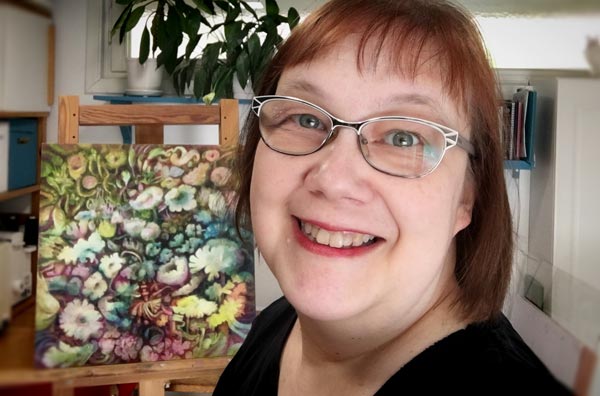
Who has influenced your art? Can you recognize how?
P.S. I also teach drawing and painting flowers in the class Floral Fantasies.
Painting Through Difficult Times – 4 Easy Tips!
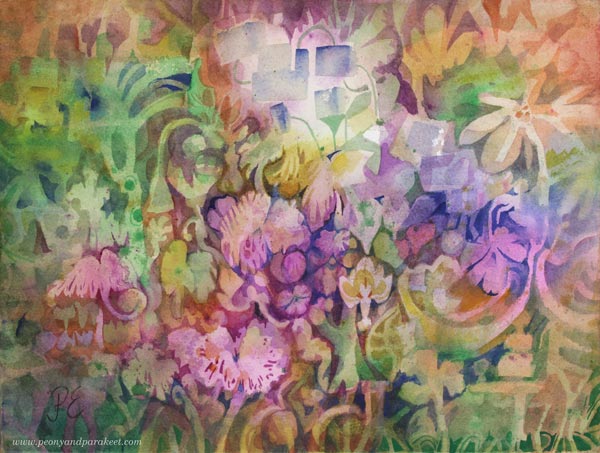
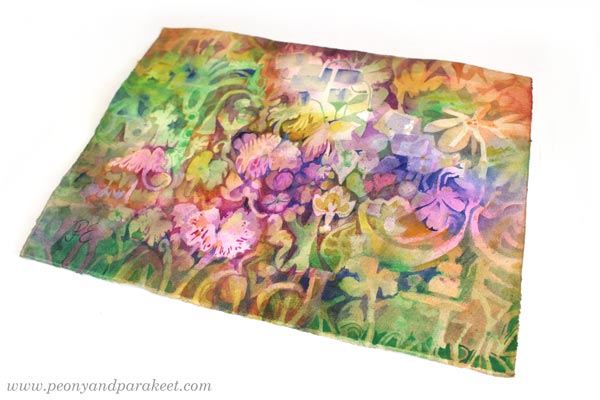
This painting, called “Baroquai” is about painting through difficult times by discovering a secret place at home. A couple of weeks ago, I watched the movie Knives Out. It had a wonderful big house with secret doors, ladders, and all. I would like our house to have similar kinds of secret spaces, it would be so uplifting to change the scenes without leaving home!
In a way, art offers us those secret spaces. When I start a new watercolor painting with random splashes, it’s like seeking the hidden door.
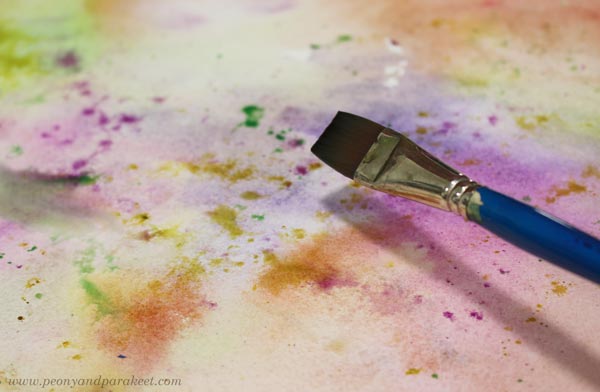
“What to Paint?” – “Wallpaper!”
Social distancing during the pandemic has made me reduce the requirements for my art. I try to paint what brings me the most joy and keep the ambition level low. If I ask myself “What to paint?”, I just answer “Wallpaper” every single time. It’s the easiest thing that I can think of painting, and the more I paint it, the more hidden doors seem to appear.
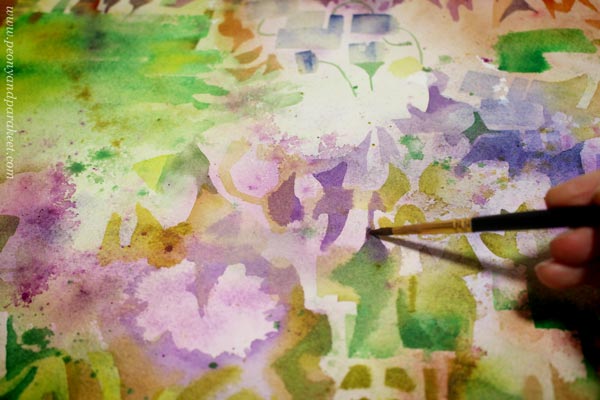
The thought of a wall of ornaments that come to bloom is both calming and inspiring. When I examine and alter the shapes with the brush, hidden spaces begin to reveal.
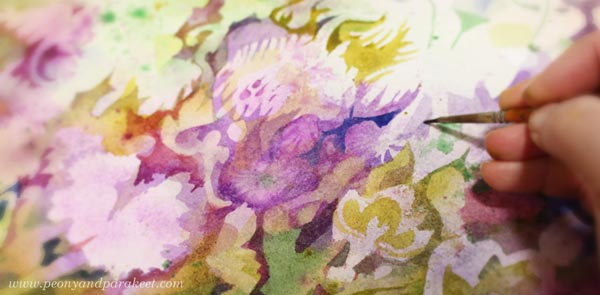
The space that I am sitting seems smaller, and the other space – that’s in my mind – gets larger.
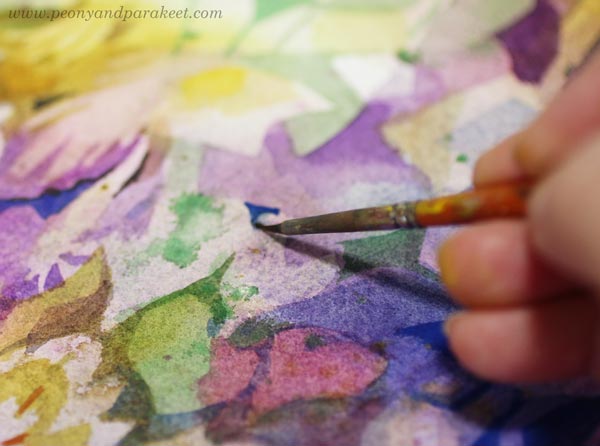
How Does Your Art Sound?
It’s also inspiring to think about what sounds the painting evokes. For this one, it’s baroque cembalo music, Jamiroquai, and softly singing choir of colorful budgies.
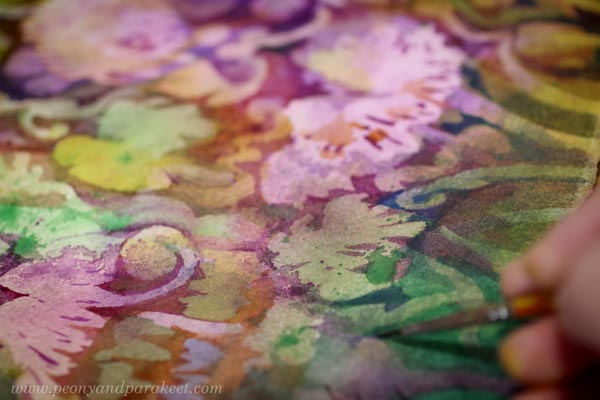
Mixing and Matching – The Reality Check
Painting wallpaper is also about creating something that complements and refreshes the reality.
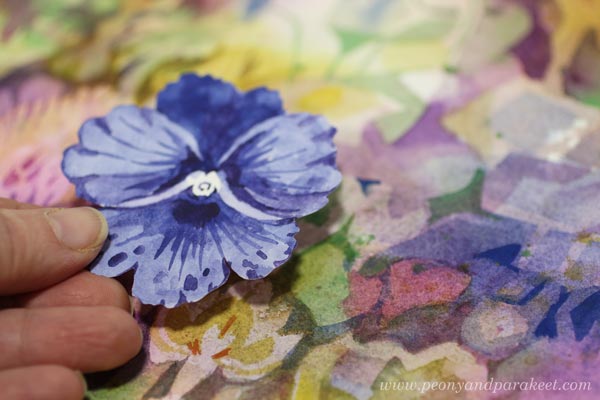
I used a pansy – painted and cut for my box of joy – to test my “wallpaper.” The fit looked so perfect that I painted some pansies there too!
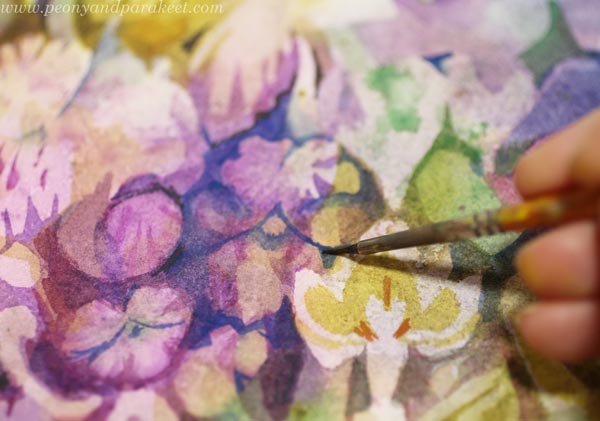
Here’s a close look at my finished “Baroquai.”
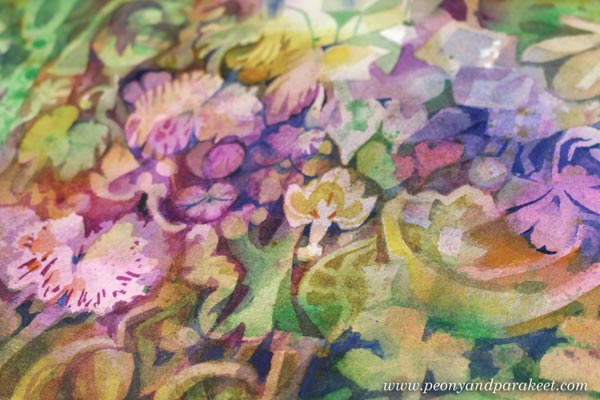
Artful Impact on the Wall
Always remember to celebrate the result! Add the signature once you are finished …

… and place the painting on the wall! The space that art creates extends the limited physical space.
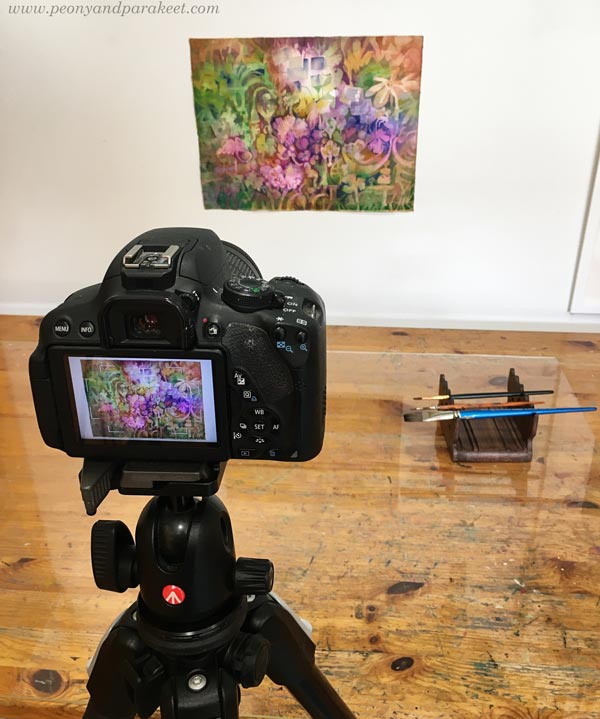
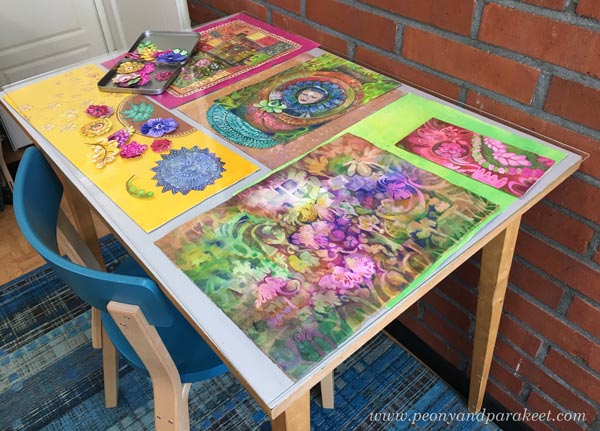
I also like to photograph my paintings when they are on the wall. In my studio, I have art on the table too. There’s a plastic cover that protects the pieces.
4 Easy Tips For Painting Through Difficult Times
- Find a simple answer like “Wallpaper” or “Flowers” to be ready for the inner critic’s question: “What are you creating?”
- See your art as soundscapes rather than landscapes.
- Mix and match things you create, no matter how small they are. Think about decorating a secret room with a collection of stuff rather than going out in the open with a single masterpiece.
- Find joy in the interaction between the surrounding space and your art. Art makes the space, and also, the space can boost art.
Let’s give art the possibility to gently lift our spirits!
Inspiring projects for flower lovers: Buy my class Floral Fantasies!