
Restarting a Painting
This week, we talk about restarting an old painting or restarting creating so that we have a new confidence and freedom.
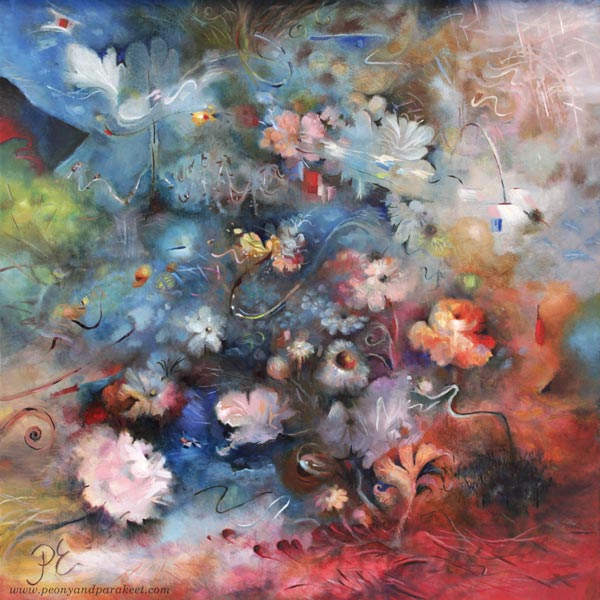
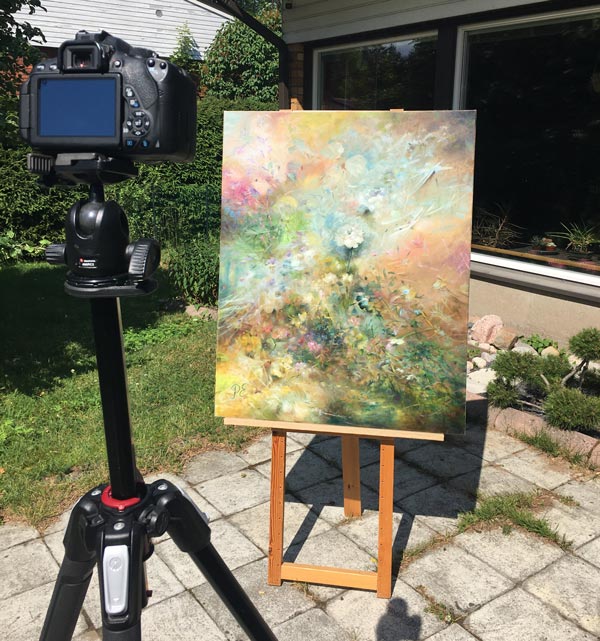
This piece called “For Liberty” was been painted on the top of an old work. It was a bit challenging to photograph because it’s painted on wooden paint board – a very smooth surface that reflects light. But before I go into more detail, I want to tell a story from my childhood that has had a big impact on me. If you have taken my classes, you might recognize my passion for acting!
“Open Your Arms”
I have been an enthusiastic actor as a teenager. Once I was the lead in a school play directed by the teacher. He was a very good director. “Spread your arms,” he told me when we were practicing a scene. For a teen, spreading the arms was a huge gesture. I still remember how my hands reluctantly opened and released from the grip. But wide open, I suddenly had a sweet sense of confidence: I owned this arena and I was going to get an audience too. Everything will be fine and even better than before!
My friend and I had been chosen to the school play because we had a private play club that we had put together. I wrote the script for the plays and we performed them to our class. It was great that our native language teacher allowed the performances. The teacher Varpu Lehtolainen and the teacher who directed the play, Taavi Lehtolainen, were married. Their creativity was inspiring. Their daughter is Leena Lehtolainen, who later became a famous author in Finland – no wonder!
Confidence for a Restart
When a person makes another person free, the feeling that he ignites is not based on successful performances in the past. The new self-confidence comes from seeing what will be possible in the future. You can go back and start over as many times as you want. Everything will be fine.
In 2020, I made an oil painting called “Wreath Maker.” However, I failed in varnishing and did not put it on display or for sale. The painting is painted on a board instead of a canvas, and it is quite challenging as a surface.
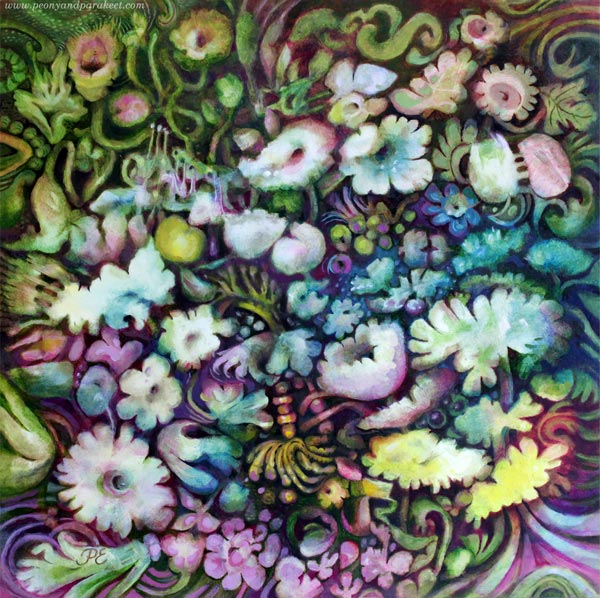
When the local artists’ association asked for works with the theme “Red, White, Blue”, I came up with the idea of sanding off the varnish and doing a new painting on top, somewhat based on the old one.
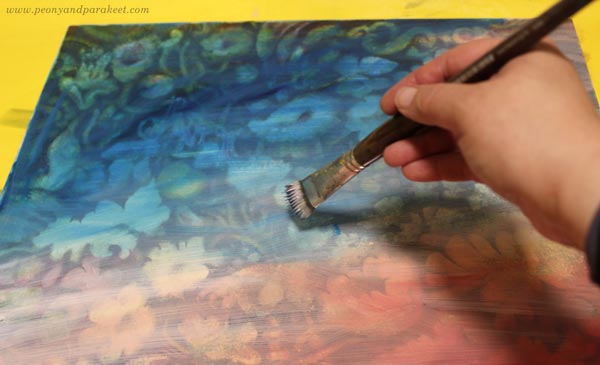
As soon as I started painting, there was this “spread your hands” feeling. I wanted to free the painting from its constraints and give the flowers their own roles.
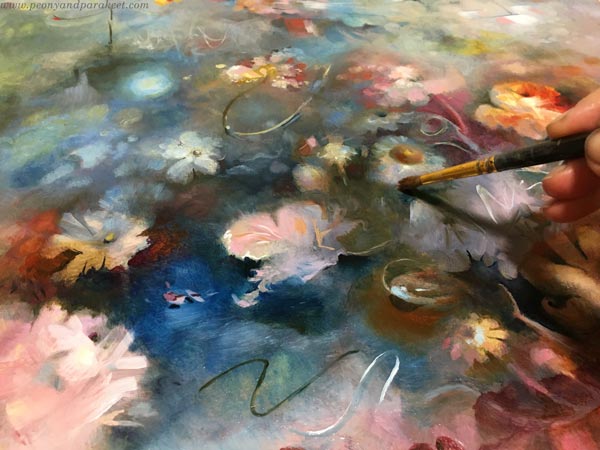
Rubens’ paintings of battle scenes from the 17th century came to mind, and I wanted to make a grand theme too – where people wake up to defend their own values and the flags are flying high.
Restarting to Release the Visual Voice
I have painted this in parts and between the sessions, I have been building a new course, where freedom is also a central subject. I wish I could be a teacher like Taavi Lehtolainen: “Spread your hands, control your space!”
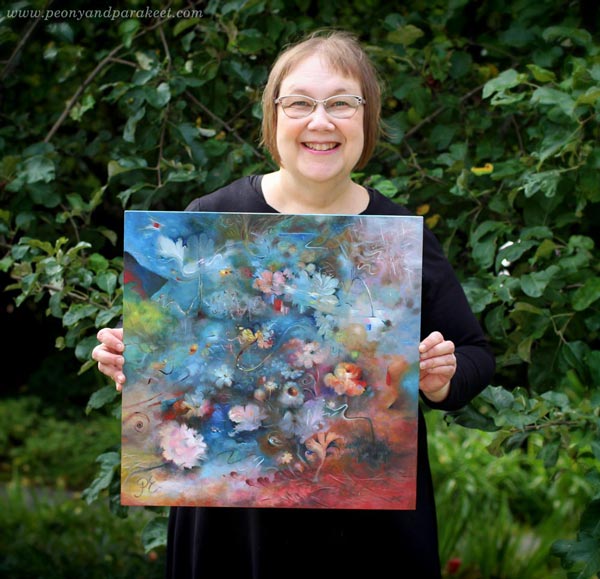
Art always does well when the flowers are allowed to grow freely and each in its own way.
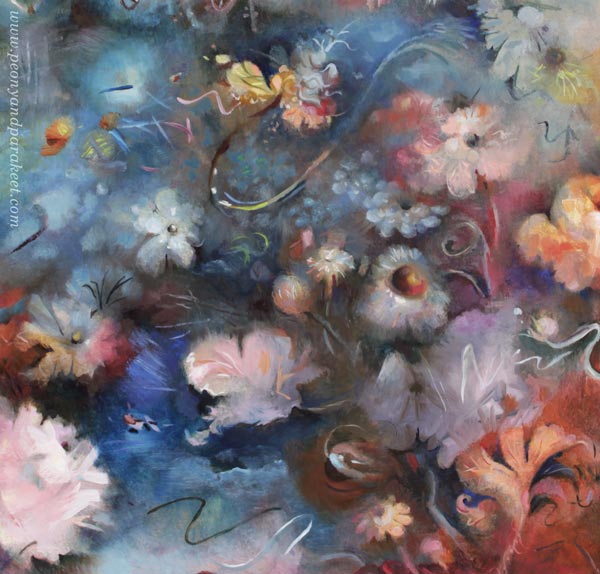
A painting is released when it finds its meaning. I feel that’s what happened to this piece. The previous version was okay, but the message is now clearer, the painting is more airy, and the flowers are now more diverse and expressive.
When you want to fine-tune your visual voice, maybe this kind of freedom is what your art is lacking?
What do you think?
From Artist’s Focus to Artist’s Between
This week, I challenge you to question what the word “focus” means to you as an artist.
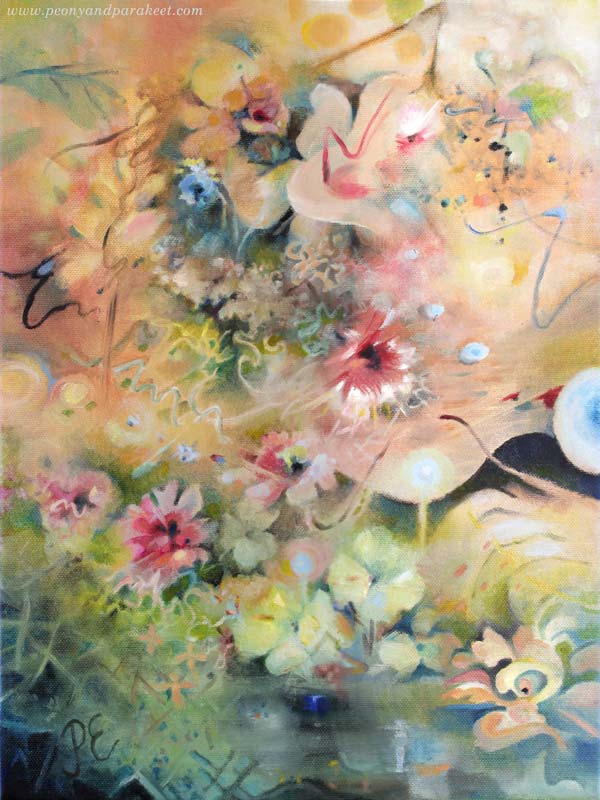
I thought a lot about the artist’s focus when painting this piece. This was one of the last paintings to be finished for my exhibition.
Artist’s Focus
Have you ever said this:
“I want to find my focus in art.”
Although I want to direct my energy wisely as an artist, something in that statement has always bothered me.
For me, the essence of art is not narrowing, but expanding – not isolating but inviting. The artist expresses not only herself but humanity in general. And as humans, we are rarely completely serene or focused. We seldom belong to only one group, one era, or one world. We are often one foot in one field, one foot in another.
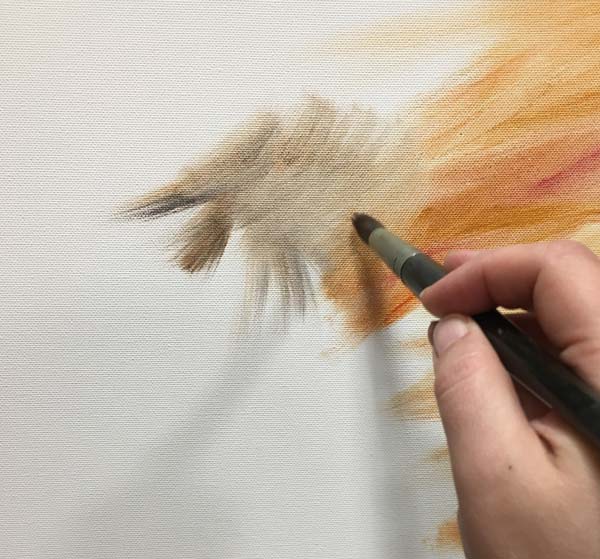
When we create, could the inspiring word be more like “between” than “focus?”
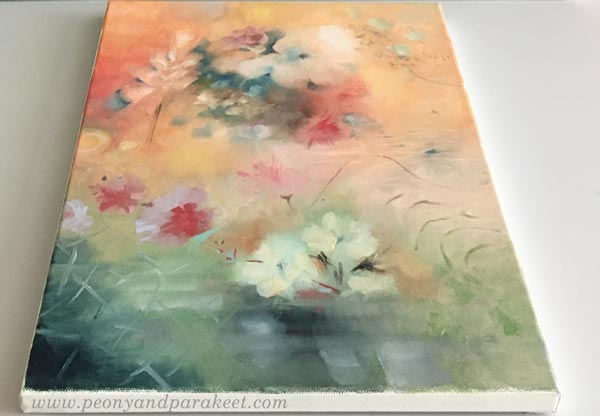
Focus is nice and pretty, but is it art?
Inspiration from Albert Edelfelt
In this series of paintings, my inspiration was the Finnish master painter Albert Edelfelt (1854-1905). For the painting of this post, I took ideas for the color scheme from this pastel work by Edelfelt. This piece is currently displayed at the Albert Edelfelt Exhibition in the Ateneum Art Museum in Helsinki.
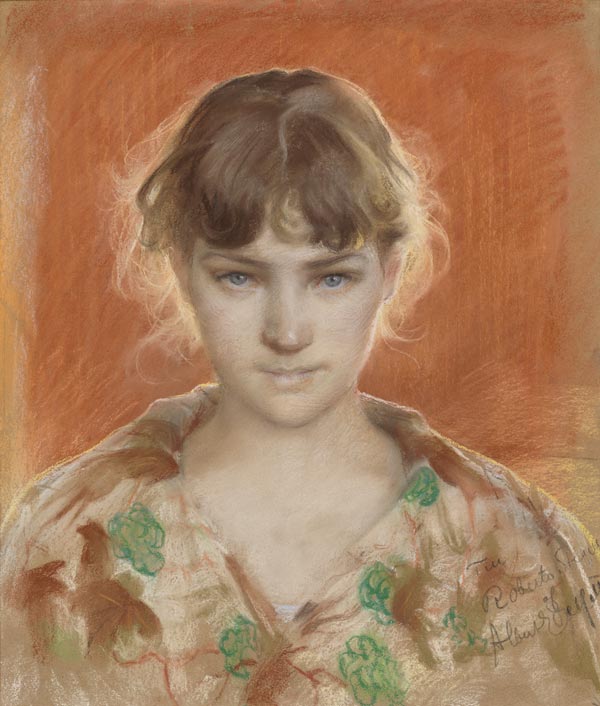
While studying the colors, I thought about the end of the 19th century and the intelligent look of the woman. Wasn’t this also “between” rather than “focus?” Between a man and a woman, if you think about the relationship between the model and Albert. Between being a model and having her own thoughts, if you study a woman’s gaze. Between representation and abstraction, if you observe lines and shapes.
Abstract art began shortly after Edelfelt’s death. He probably already felt its presence, felt that he was between two worlds.
From Artist’s Focus to Artist’s Between
I decided to throw myself fully into being between two worlds in this painting.
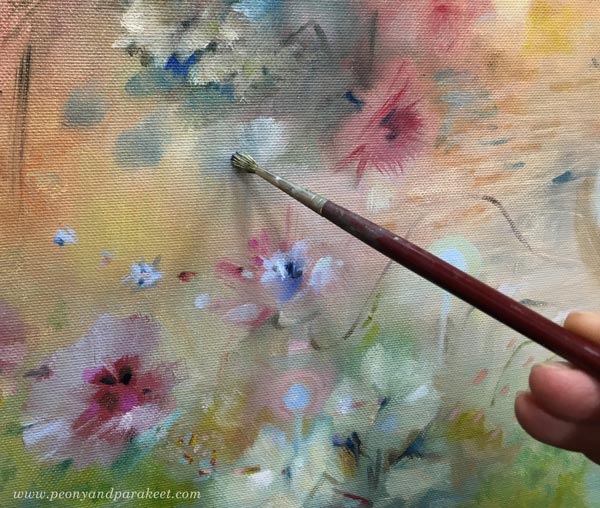
“Between” is an uncomfortable state of being, so this painting couldn’t contain only easy and beautiful. “Between” is a bit like walking in nature and then bumping into apartment buildings. Or when you’re admiring clear water in a pond and your eyes fall on the filters. Focus can then only exist if you close your eyes. Not very eye-opening, eh?

This painting has two different styles and although it is small in size, I feel that it reveals the secret between what I do and what I think.
I noticed at the opening of the exhibition that I don’t like to talk about this work, because I find it somehow intrusive. Often when the paintings are created, they are nice characters, a bit shy and sensitive, but fun company. This one is straightforward and doesn’t hide its contradiction.
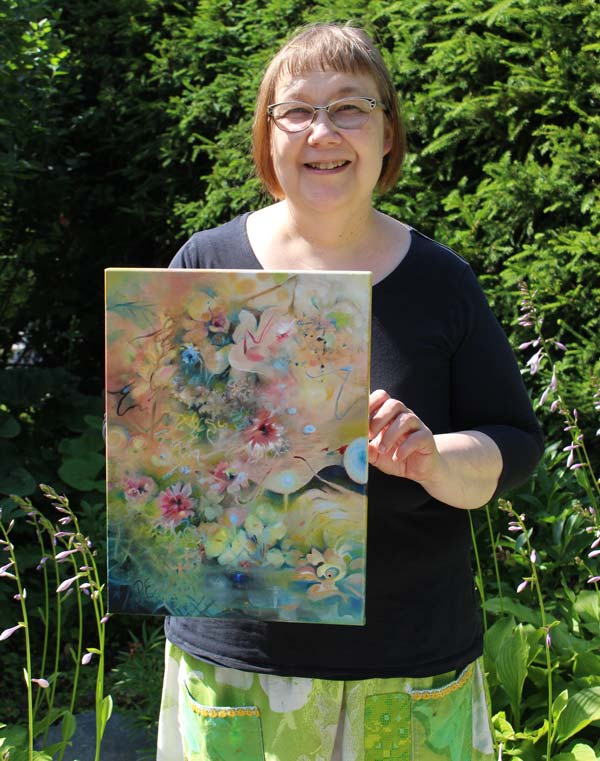
However, there is a lot of power in the contradictions and lack of focus. I want to continue to challenge myself to draw artistic inspiration from it.
Do you also feel that you are between two worlds?
In art-making, could you replace the yearning for “focus” with the embracing of “between?”
Art Exhibition in Villa Albert
This week, I have photos from the group exhibition I am currently participating. It’s called Taiteilijat Edelfeltin tunnelmissa – artists in the mood of Edelfelt. And here are four of us from left to right: photographer Niclas Warius, painters Kristina Elo and me, and another photographer Maarit Lehto. The sculptor Kaj Lindgård is also in the exhibition, but missing in the photo.
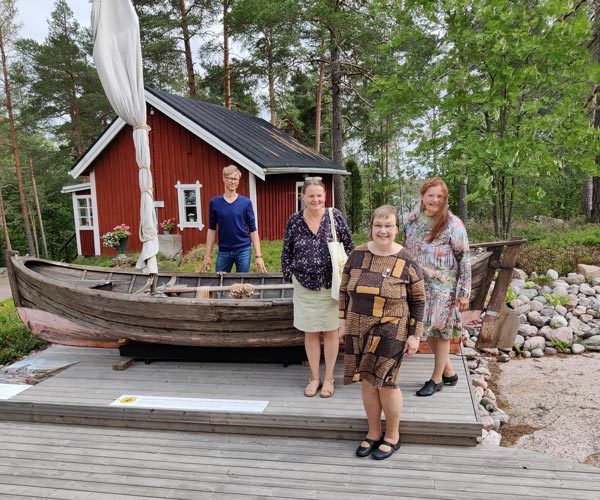
The red wooden cottage in the background is a summer studio of the famous Finnish painter Albert Edelfelt (1854-1905). It is in the possession of a private foundation Albert Edelfeltin säätiö that cherishes the memory of Edelfelt. Even if it’s just a small cottage, the location in Southern Finland is beautiful – near the sea and very near Porvoo, which is a small town popular with tourists.
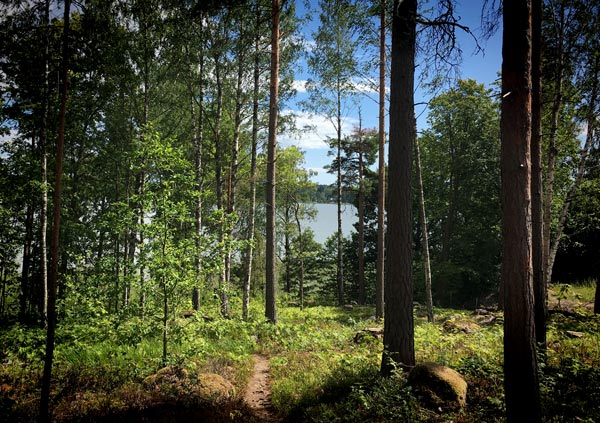
Albert Edelfelt painted here in summer and then went to France for winters.
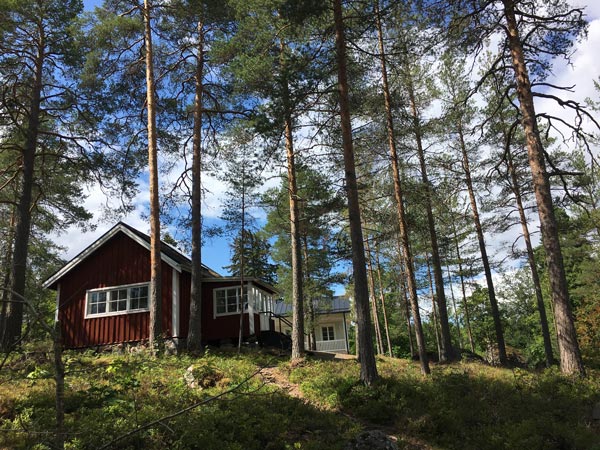
When you look at the studio from the sea, you can see the gallery Villa Albert behind it. The foundation built it in 2019.
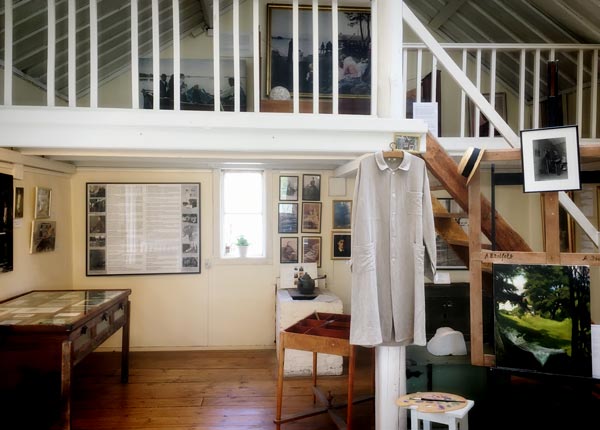
The gallery is a nice space with a small shop as well. All visitors who come to see Edelfelt’s studio, come first to the gallery to buy the tickets.
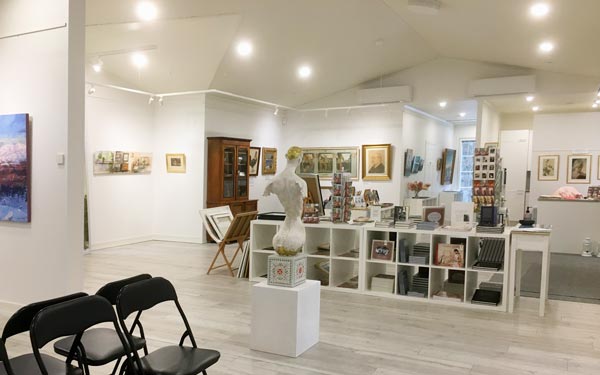
The head person of the gallery Hanna Kaarina Syrjäläinen is very skilled at hanging the exhibitions. I was so satisfied with how my paintings were displayed. Here an editor of a local magazine interviews me before the opening.
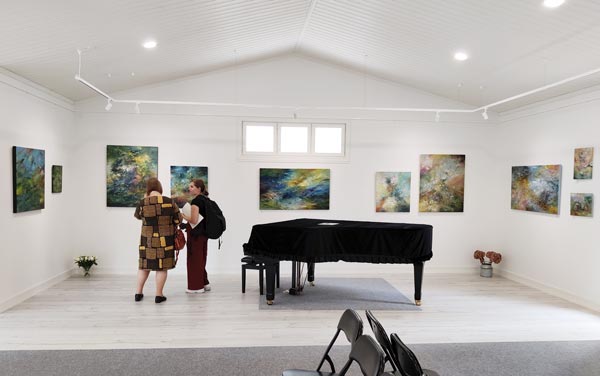
The foundation organizes concerts and other cultural events in the gallery. I think my paintings look great behind the grand piano!
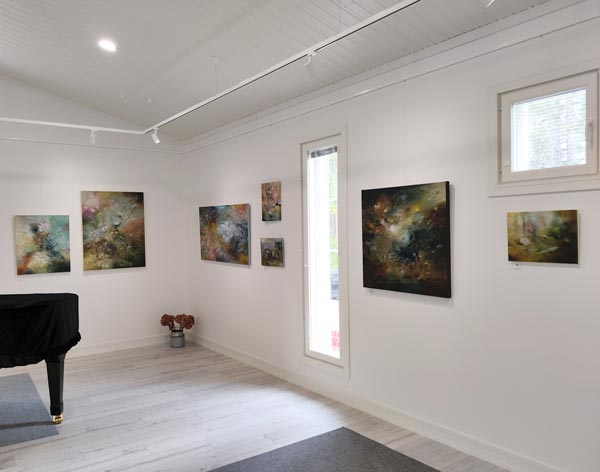
I had 12 paintings in this space and four minis in a separate showcase.
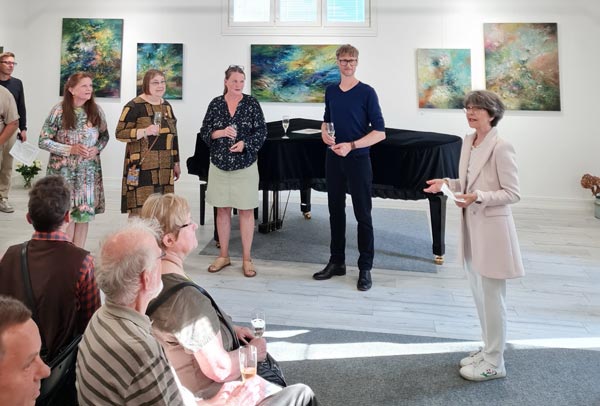
The gallery was full in the opening. The gallerist made a lovely speech about the exhibition.
Unfortunately, I don’t have photos of the other artists’ pieces, but do visit these websites to see their work:
It is an honor to be in the company of these artists!
I had a good time in the opening meeting new people who like this kind of art that has a connection to art history.
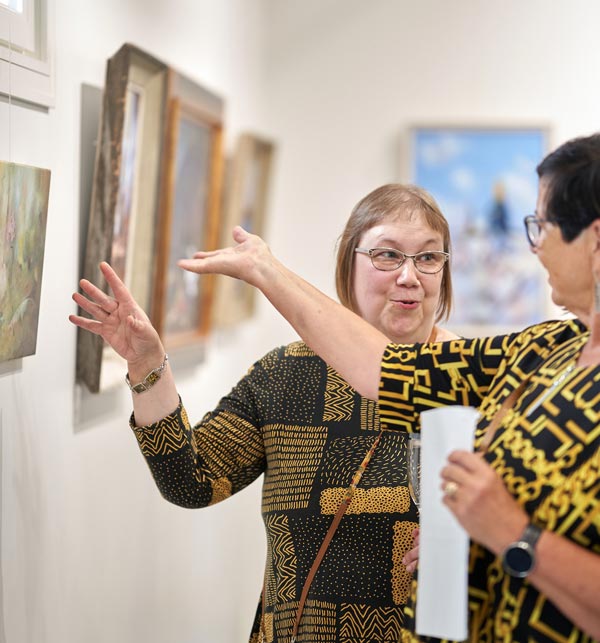
After working on the paintings alone for a long time, it’s so nice to hear what others see in them and tell about the creation process that started early this year.
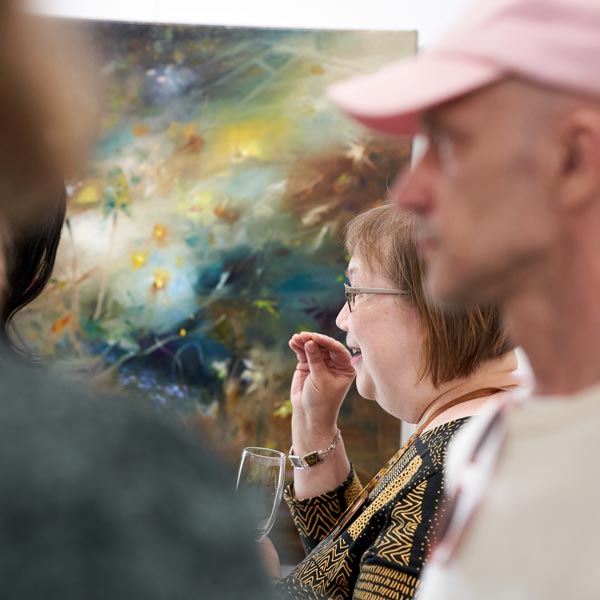
My paintings were mostly from this year, but there were some from the last year. I think it is a cohesive collection and as a whole, maybe best what I have presented so far.
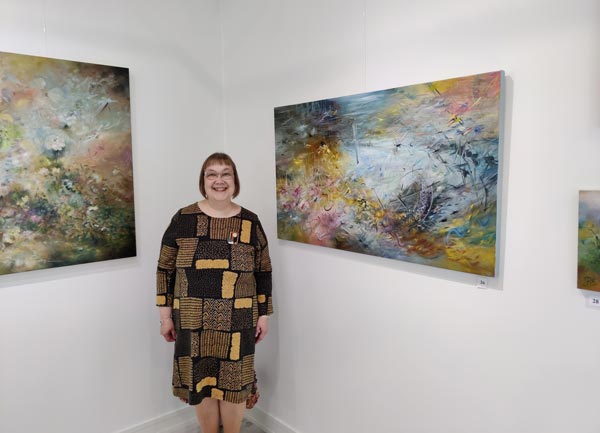
The exhibition continues until October 1st, so if you are in Finland this fall, do visit the Albert Edelfelt Studio Museum Villa Albert!
P.S. See the previous posts to see the paintings more closely. I still have a couple of pieces to show you, and now I feel the urge to draw, so more art to come in the next weeks as well!
Honest Talk About Being Artist
When people talk about an artist, they think of someone who paints ecstatically for days on end.
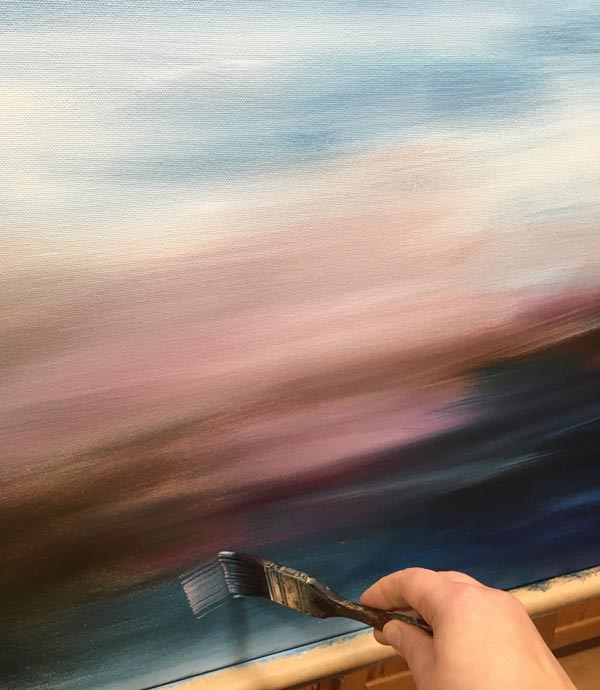
“Get a real job,” say some. “Get a job that is work and not just art.”
Work + Art = Artist
But really, art is work and besides that, it is also art. The difficulty of this work is that it has to be developed like any work, i.e. as routines and processes, but it still has to be art as well.
It has to be art that expresses living and experiencing in such a way that breaks boundaries and habits.
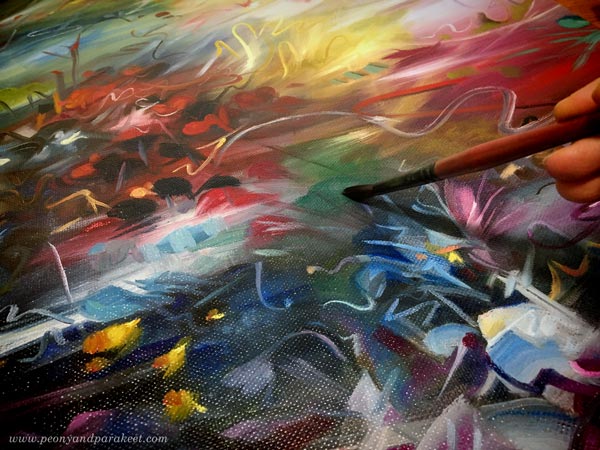
It has to be art that appreciates play as much as work.
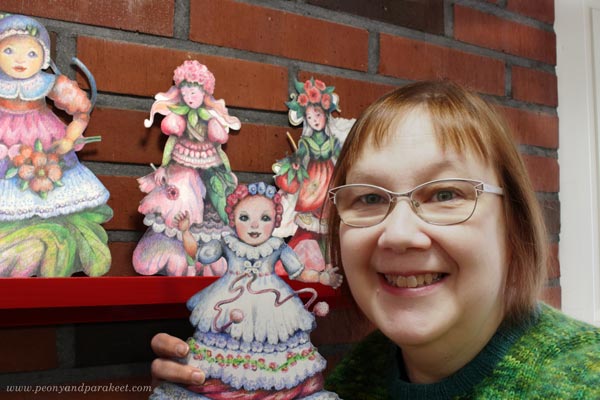
And it has to be art that takes all of you but receives criticism without being crushed.
Being a Working Artist
I have painted a big series all spring. At the same time, I have written emails, social media messages, blog posts, and exhibition descriptions. I have edited the videos recorded in the fall for the course Doll World. I have applied for a new grant for the new paintings and luckily got it. I have participated in an artist training program that lasted the whole spring. I have varnished, packed, and taken paintings to exhibitions. I have handled financial matters. Fortunately, my husband helps me with the transport of paintings and accounting.
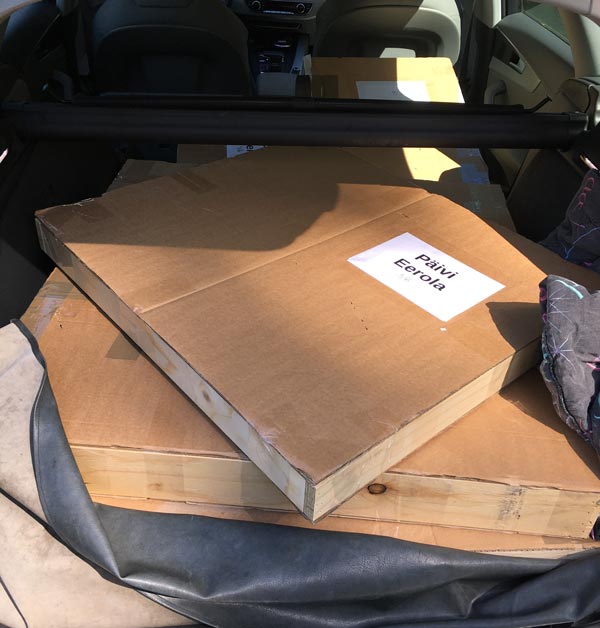
These are just a part of all the tasks other than painting or getting ideas for paintings.
Now in July, I have been a bit tired. It’s been a lot of work and on top of that, there’s this art part.
Dreams, Goals, and Reality
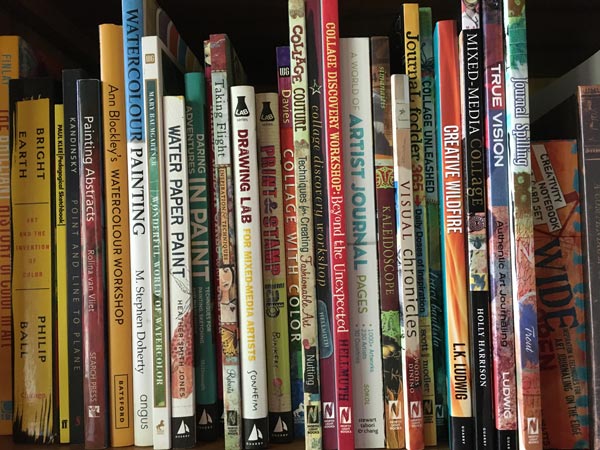
Many of my art books were purchased when I dreamed of becoming an artist. These books describe art as a fun game and show a colorful life. I look at those books with completely different eyes than before. Being an artist is much more than that, at least if you want to move forward.
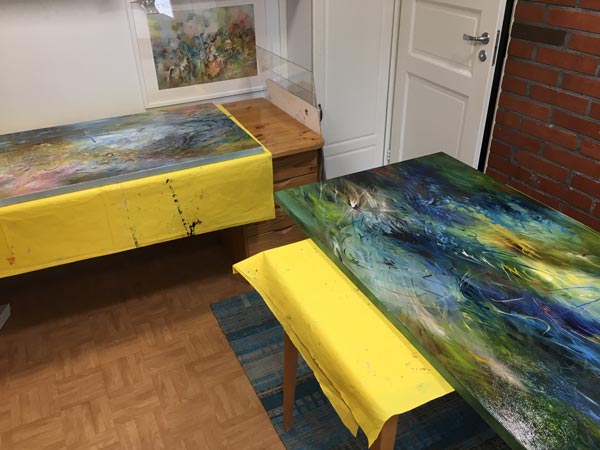
My goal has been to make art that I love and that others love so much that a few pieces outlive me. When I set the goal, I didn’t think about what would happen after that. I achieved the goal a couple of years ago. I am pretty satisfied with many paintings and I know people who also genuinely like the pieces they have purchased from me.
It’s surprising that after that, something new and desirable has regularly come up, just like in any job.
Being an artist is pretty much like any job.
Magic of Imagination
I would like to always write about being an artist authentically like this, and on the other hand, I don’t want to bring it all to the table all the time.
I feel that it’s natural and important for humans to express themselves creatively. I want to inspire everybody for it in this blog and in my courses.
And especially, I want to inspire everyone to imagine, because it’s the imagination that breaks boundaries and habits. It’s the imagination that uses the skills to make art.
In that respect, being an artist is really not just any job. And that’s why I love this job even when I am a little tired.
What do you think?