
Using Leftover Paint – Messy Backgrounds and Beyond
This week, I show one of my art journals in the video and share ideas for what to create from messy backgrounds.
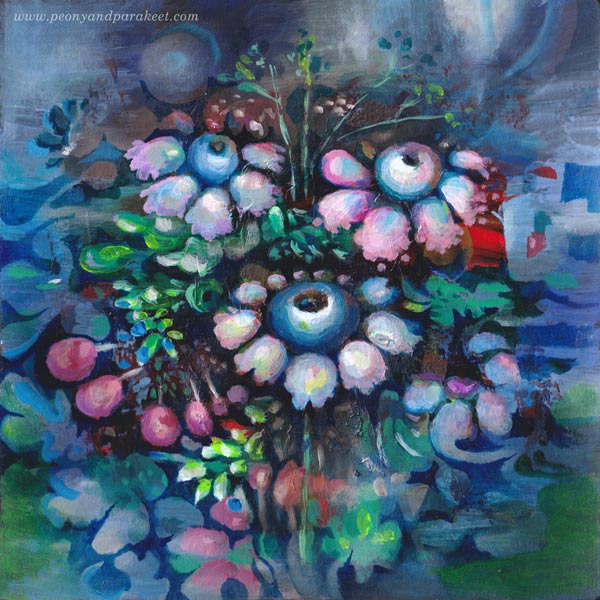
After a painting session, there’s usually some leftover paint on a palette. I try to squeeze the tubes carefully, and sometimes I put the paint in a box with a lid, but most often, I grab an art journal and wipe off the extra paint from the brushes and palette. If I am tired, I just spread the paint carelessly. If I still have energy, I add details to a page that already has some color. When I don’t like something in the next session, I paint new strokes over it.
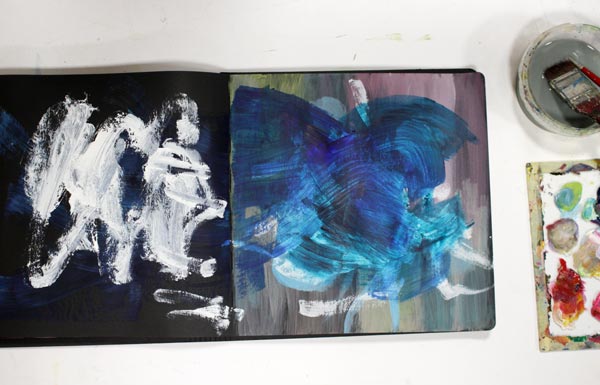
Many Rounds – Some Quicker than Others
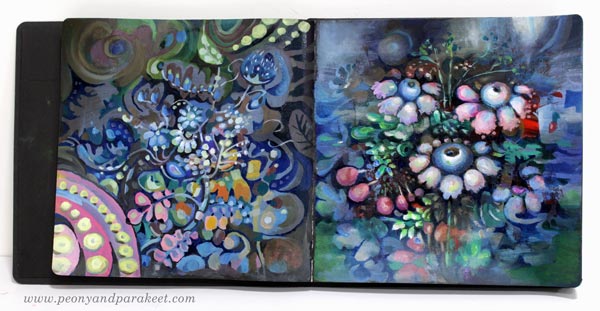
I rarely make a page at one go. This spread has oil paints, and it took ages to finish it. But it didn’t matter, because I was practicing for the class Decodashery, and I needed time to dig into the heart of decorative painting style.
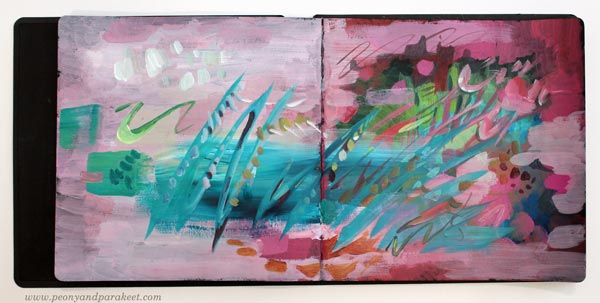
However, the one below is more abstract, and it was really quick!
Messy Backgrounds and Beyond – Watch the Video!
In the video, I show messy pages and not so messy pages of my current art journal and how I finished the spread above. Watch the video!
Even if bigger paintings are my main work, art journal pages are an important part of my creative process. It’s like yin and yang! I need the mess-making to find joy in working with details.
Art Inspired by Music
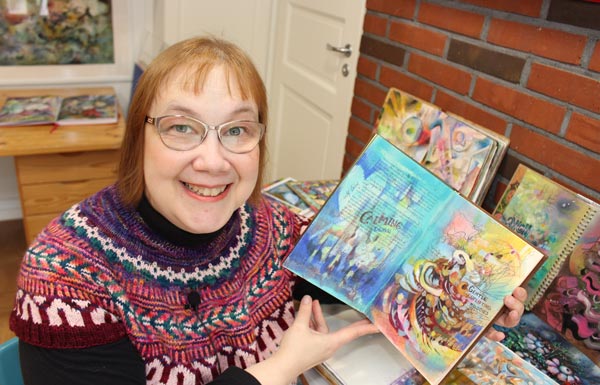
In the video, I mentioned the idea of visualizing a musical landscape and a melody. Music is the theme in my mini-course for Gratitude Junk Journal 2020 as well. This online workshop has 12 instructors, and it begins on Nov 1st, 2020. Register in October to get 20% off. Enter JOY2020 at checkout. >> Buy Here!
Making of a Miniature Painting
This week, I have a new miniature painting and share tips for making small-sized paintings in general.
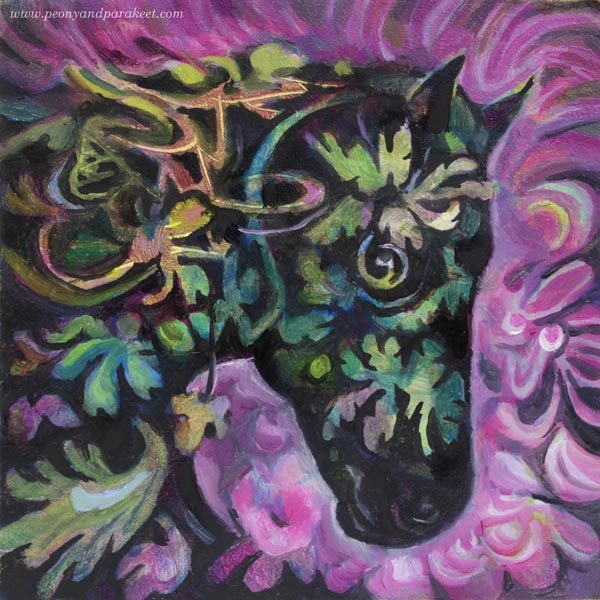
Let me introduce Ebony, my newest miniature painting! It’s only 10 cm x 10 cm (4 inches x 4 inches). The size shows better in the photo below.
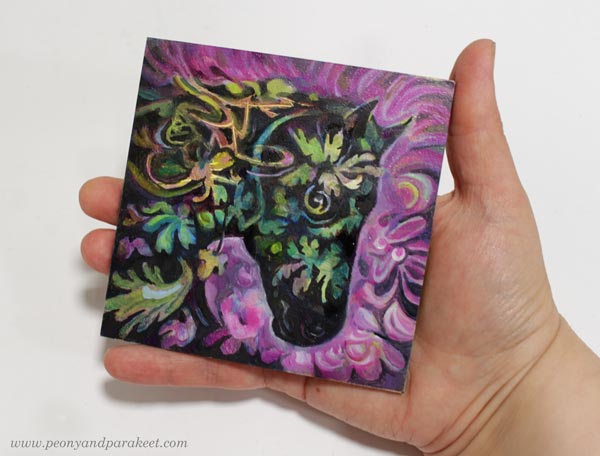
This is an oil painting, and it took over a month from start to finish, but just because I let each layer dry properly. There’s about a week drying time between each layer. If you use acrylic paints or watercolors, the process is much quicker!
The Beginning – Making Not So Beautiful Mess
As usual, I didn’t have any particular idea for the painting when I started. Here’s how the painting looked after a couple of layers.
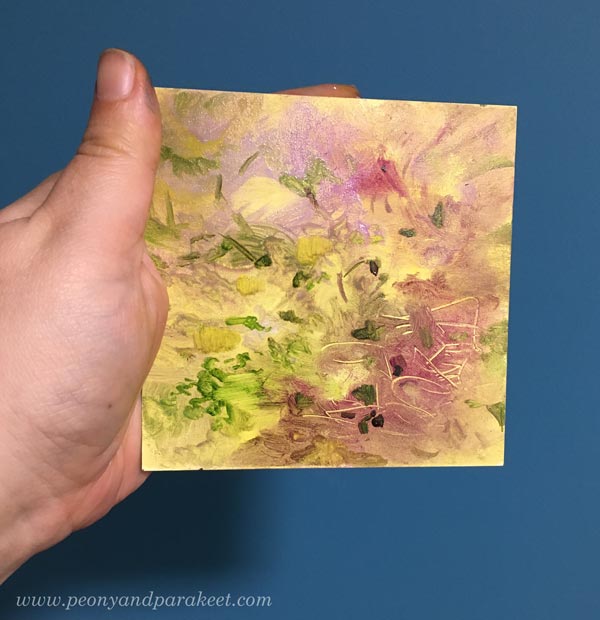
My surface here is Ampersand Gessoboard Panel. It’s very smooth and thus suitable for small details. I had bought a pack of four over a year ago. I finished the first one last year, see this blog post!
When making an abstract mess, I don’t usually settle for pretty little messes, but make the mess more layered. When the mess is as ugly as I can bare, it begins to talk to me. It came to my mind, that the random strokes could be mane, and there could be a horse coming up.
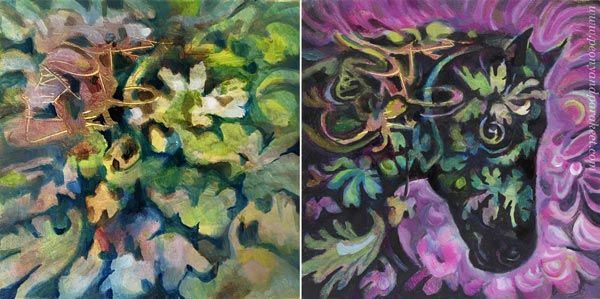
Using Negative Painting to Dig Out the Spirit
I like to use negative painting a lot. So here, I painted the background first so that it defined the head of the horse. When painting the surroundings, you slowly get closer to the actual spirit. It’s like taming a wild animal!
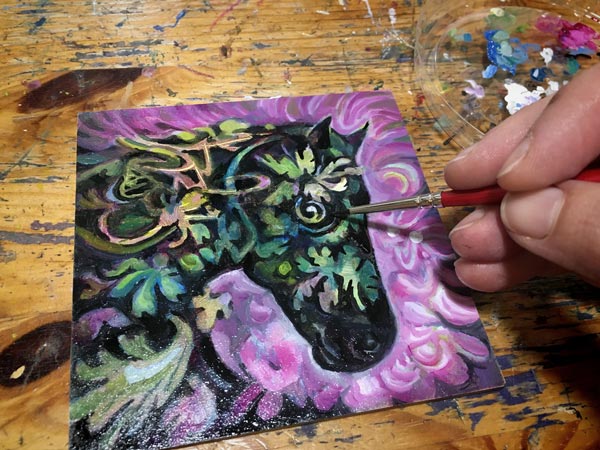
Ebony is now a gentle soul, and she reminds me of Black Beauty, the television series in the 1970s. I watched every episode and it inspired me to play with plastic horses.
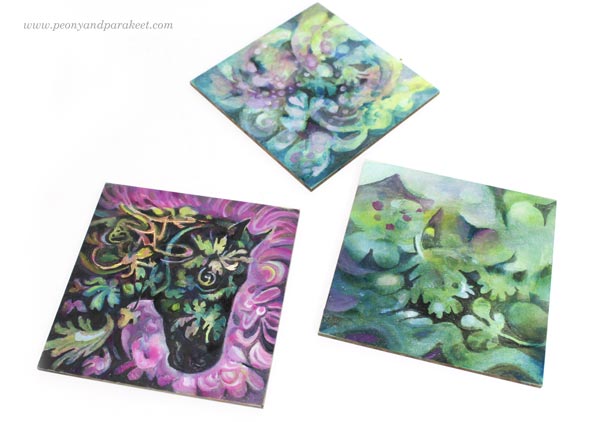
I still have two more panels to finish. I think I will dig out horses or other animals from their messes so that I get a small series of miniature paintings.
My Four Tips for Painting in Miniature
- Start boldly and enjoy all kinds of mark-making and color play. If you are painting on paper, you can start with a bigger piece, and then cut it into smaller ones.
- Make a few big shapes that contain smaller ones. In my painting, the horse is one big shape, the background another. Let smaller shapes break the borders of the bigger shapes so that the image doesn’t look stiff.
- The negative painting technique where you paint the surroundings of the shape enables you to paint delicate shapes easily. Magical Forest is the class to take for mastering this technique!
- We hold miniature pieces quite close when looking at them, so the quality of brushwork matters. Use thin paint, small brushes and even magnifiers if needed. Taking photos and zooming them helps to see the details too. Decodashery is the class to take for making the best out of every stroke!
Drawing Small
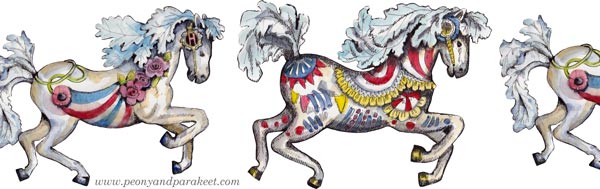
Of course, your miniature artwork doesn’t have to be a painting, but a drawing! For me, drawing has been in a significant role in becoming a better painter. It can be just free drawing like in Inspirational Drawing, or more intentional practice like in Animal Inkdom and Magical Inkdom. I use both approaches in painting too.
I hope you enjoyed this week’s project. Do you like painting or drawing in small size?
New Oil Painting and Pretty Art Journaling
This week, I have finished an oil painting and started an art journal that I want to make as pretty as possible. I also talk about my aspire to paint horses and ask how deep you have to know the subject to own it in your art. This post has lots of pics!
Wreath Maker – Painting with Oils Like They Would be Watercolors
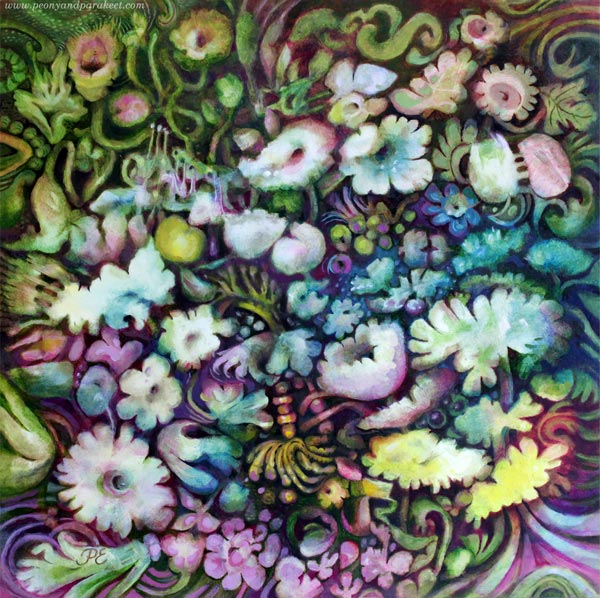
I started this painting in January, and I am so glad that it’s finally finished. Even if this is an oil painting, I used the approach that’s best for watercolors – I started with pale pastels and worked towards darker tones. I really like painting like this, and the result pleases my eye. The pictures below show the process and I have also blogged about this painting in May 2020.
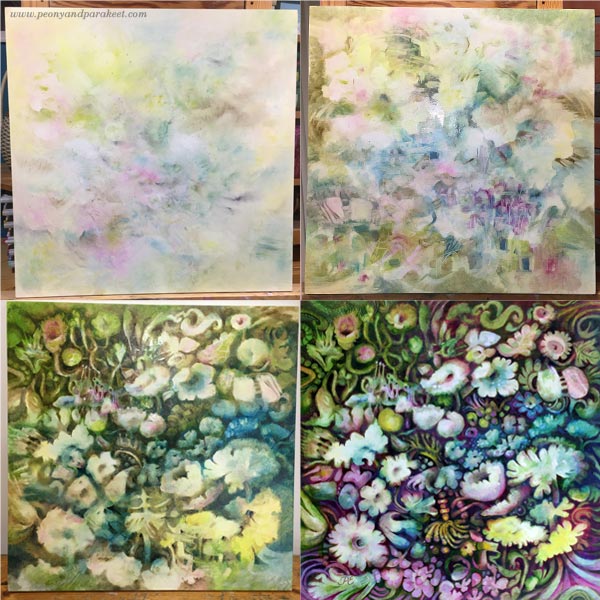
The Series of Three Floral Paintings
The painting is called “Seppeleentekijä – Wreath Maker”. It’s the last one for the series of three paintings. The two first ones are watercolor pieces called “Jäänmurtaja – Ice Breaker” and “Soihdunkantaja – Torch Bearer.” I made the paintings so that they could be seen as a triptych where the flowers of the two watercolor paintings lean towards the centerpiece. Click the image below to see the series as a bigger picture!

The Shelf of Art Journals – Re-Organizing the Studio
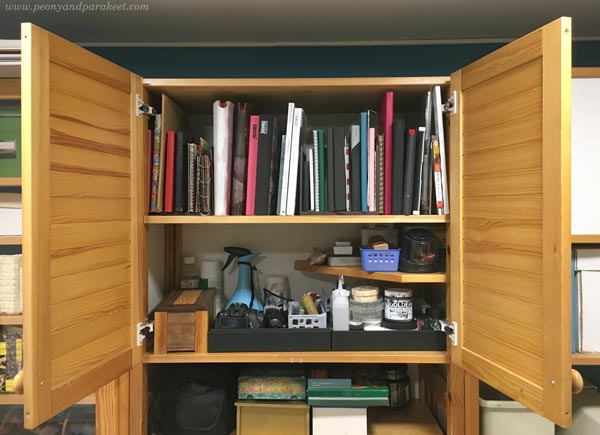
Making the three paintings was quite an accomplishment, and finishing the last piece made me feel empty. What to do next? Well, I don’t know about you, but if I need recreation, cleaning and organizing is the thing! While going through the stuff on the shelves of my little studio, I gathered the sketchbooks and art journals in one place.
Smash Books – Do You Still Remember Them?
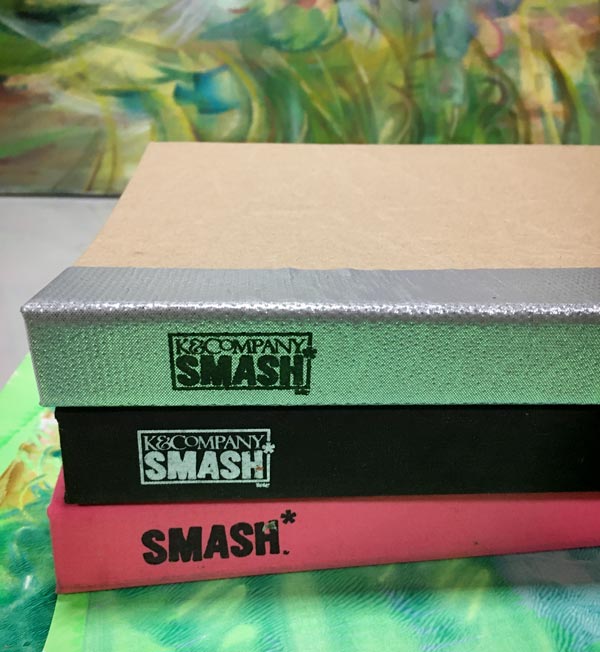
I found one almost empty old Smash Book – do you remember the time when everybody had them? See the flip-through videos of my two Smash Books here:
>> Pink Smash Book Flip-Through
>> Black Smash Book Flip-Through
The third Smash Book has a silver back and with that, I remembered how back then, all the art journals were more or less messy. In 2012, I daringly wrote a blog post that asked: “Can’t there be pretty art journaling?”
So it hit me, that the extra Smash Book could continue the tradition of the two past ones and be a pretty art journal. It could also be my tool for encouraging myself to paint what I really want, and not fall into the trap of trying to paint what seems more appropriate. Namely, I would like to paint things like … (gasping a bit)… ahem … HORSES! I tried to make a long list, but all I could think of was HORSES.
Horses – Can only an Expert Paint Them?
You see, I am no expert in horses, I have ridden on a horse only once, as a child, and I have never been living close to a stable. But I had toy horses, and I have always admired their beauty. I have tried to get rid of this disease by drawing zebras for the class Animal Inkdom, and horses for its independent sequel Magical Inkdom, but it hasn’t gone away.
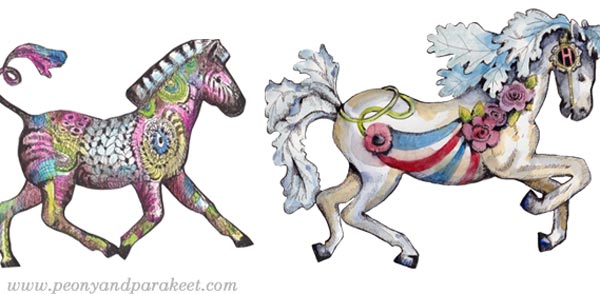
Can you paint something you are no expert in? Many years ago, I heard an interview with an artist who said that everything clicked when he started painting cows. He had been living with them most of his life, and he knew exactly how they are. You have to know what you paint, he claimed, as far as I can remember. It makes sense. I love plants and have always been growing some. I feel I know the soul of flowers and in the oil painting that I just finished, I wanted the flowers to reveal their soul, to be chatty and curious, just like they are if you silently observe them very, very closely.
But isn’t it possible to use the expertise for other things too – to transfer the soul of a flower to a horse, and thus, regain the mastery? To use the flowery language from Decodashery to express a moving thing?
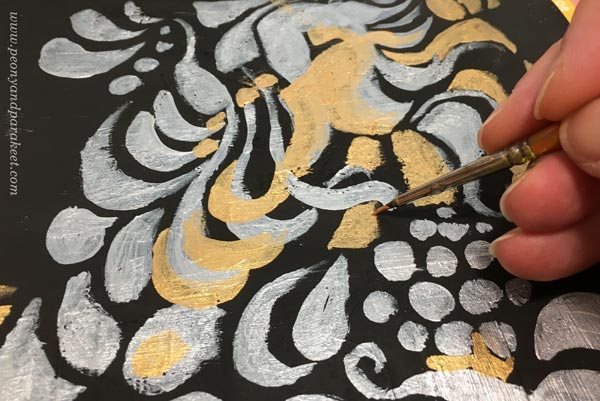
It doesn’t have to be anything grand at first, just a small art journal page.
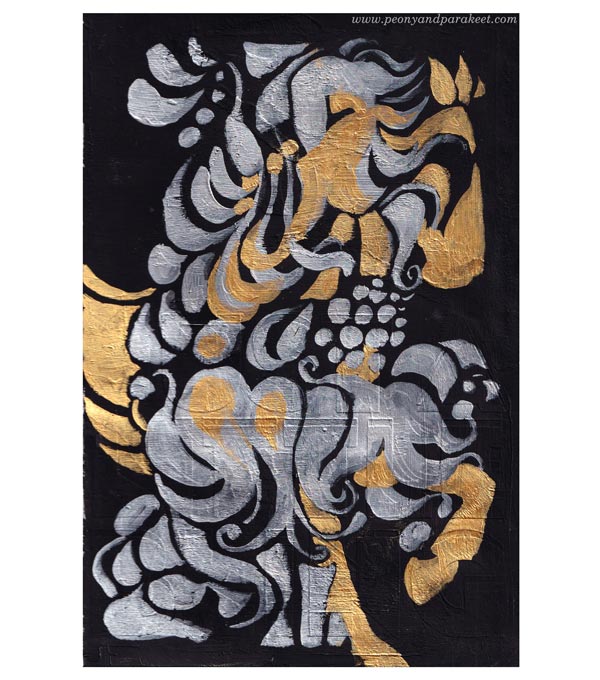
Pretty Art Journaling Can Be Reverse Creative Exploring
If I can paint a horse in the language of flowers, couldn’t it also be possible to revert the process? Could I make an art journal page from the painting, a sketch after a result?

I want to allow this free flow from one theme and one media to another happen again with this journal.
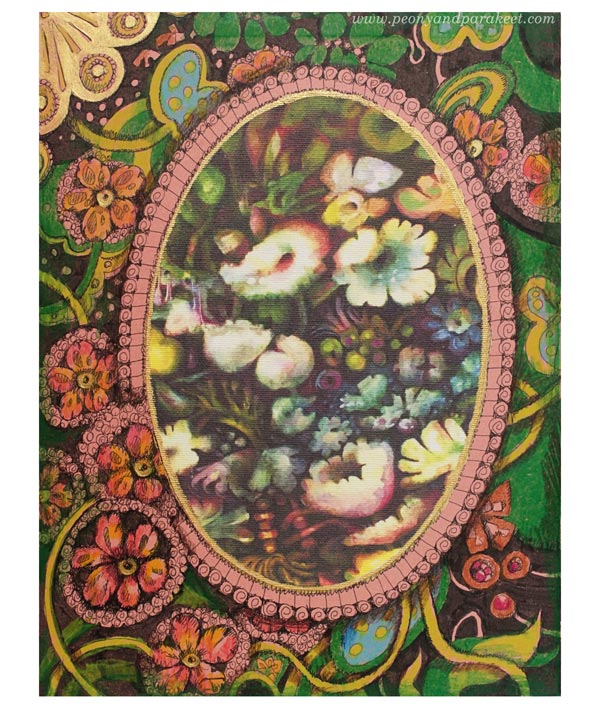
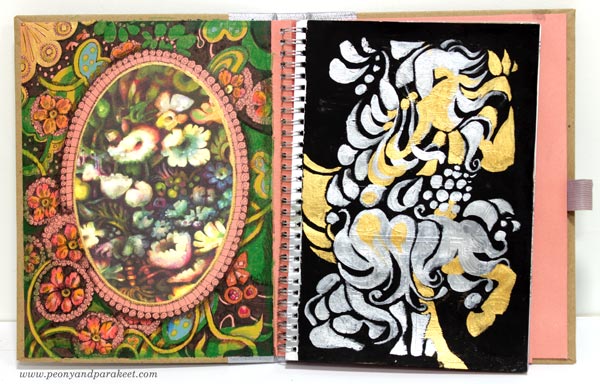
The image of the painting was printed on a sticky canvas bought ages ago. Then I drew and colored the floral frame, and added some gold and silver paint too. Here’s the first spread of the “new” Smash Book – the new beginning of pretty art journaling!
Handmade Picture Shelf Finishes the Display
A part of reorganizing was to get a picture shelf on the wall. My skillful husband made it, and I absolutely love it.
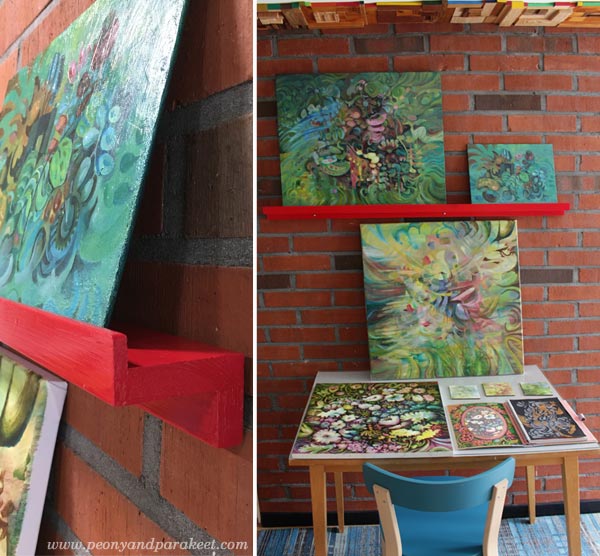
Finished paintings, paintings in progress, and art journal spreads can now be displayed together.
Tell me, what inspires you at the moment?
What do you put in your list of what to paint or draw?
Classes which inspired this post:
Animal Inkdom – Draw and decorate wild animals! – Buy here!
Magical Inkdom – Draw the magic of mysteries and fairytales! – Buy here!
Decodashery – Paint beautiful florals and more! – Buy here!
Flowers masterclass: Floral Fantasies – Buy here!
Imaginary People – How to Paint Their Soul?
This week, the theme is painting imaginary people and how to find their soul. There’s plenty of examples in this blog post!
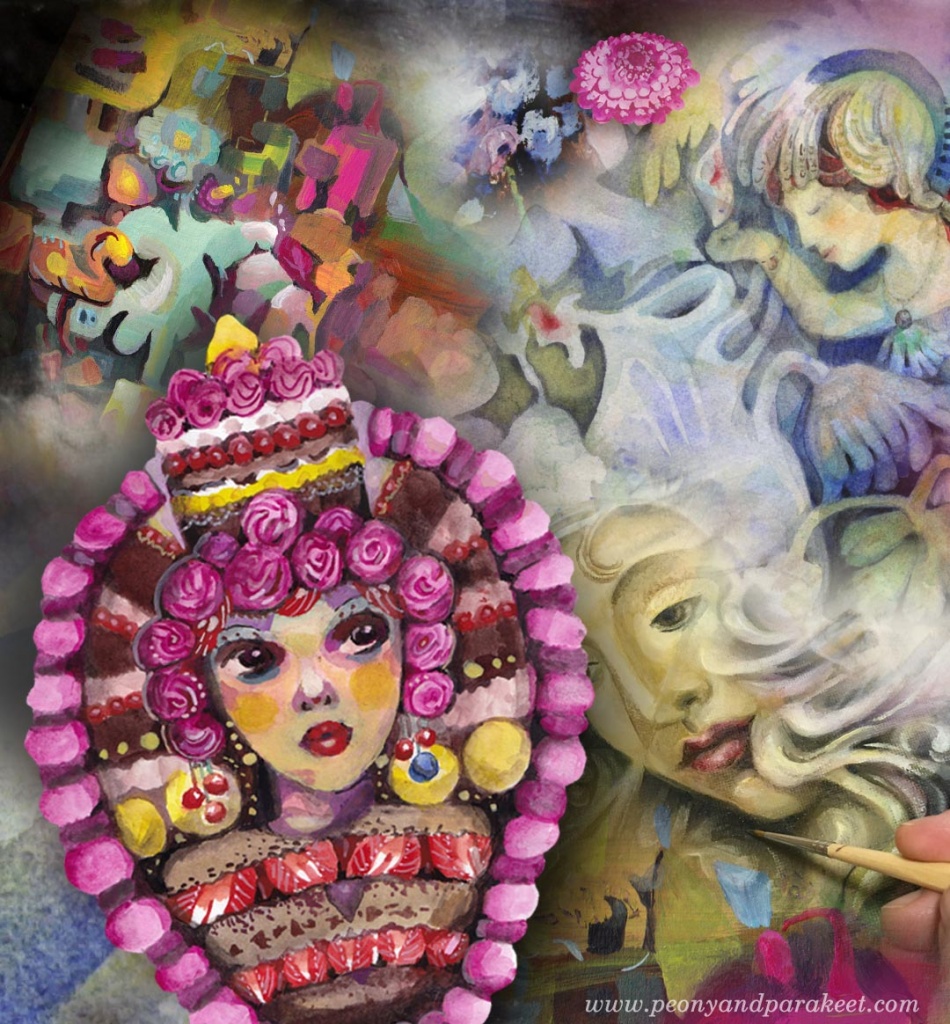
One of the wonders of painting and drawing is that we can give birth to an imaginary person – that we can create someone who breathes, talks, and has a life of her own. However, many times the doll that I have on paper hasn’t come alive. Or she has taken just a few breaths, and after the creative spark has gone, she just stares with empty eyes. So no wonder that I have had a love-hate relationship for painting imaginary people. I want to experience the miracle, but it can also be too much of a struggle.
References – Working with a Soul that Breathes Already
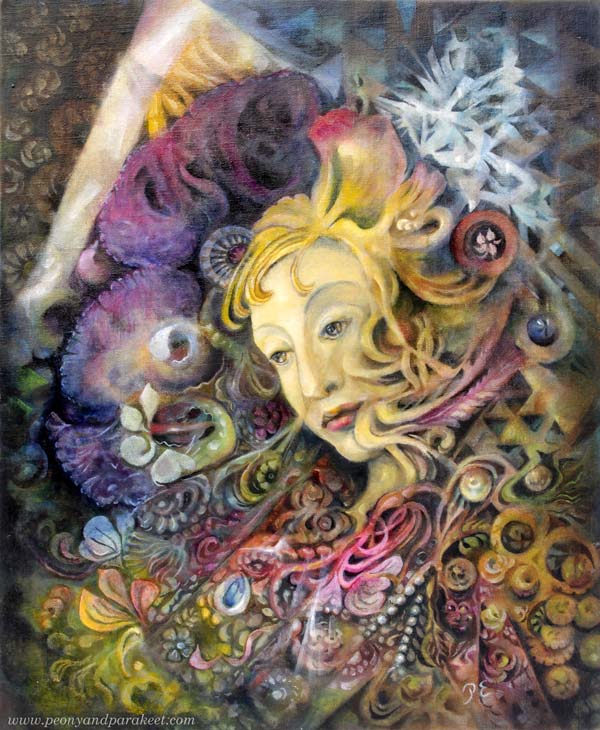
Using a reference may be the least innovative solution but if you find an image that really speaks to you, it can be a good one. Tiny changes in facial features lead to a whole new person so if you don’t follow the reference in the smallest detail, yours is like distant relative to the original – familiar features but still unique. For this oil painting called “Heaven and Earth“, I used a detail of Sandro Botticelli’s painting “Madonna of the Magnificat” (1483) as a reference.
Here’s a close-up of the faces. I changed the angle of the face, opened the eyes more, and made the mouth look more determined.
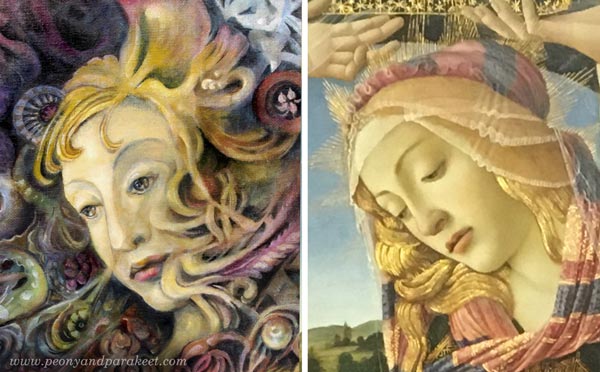
Sounds easy, but I often struggle with finding the soul when using references. With this painting, I tried to slowly work towards an individual personality, but creating a connection took a lot of time. Botticelli painted his soul, and it’s not the same as mine.
Here the work was in the early stage so that you can see how she has changed.
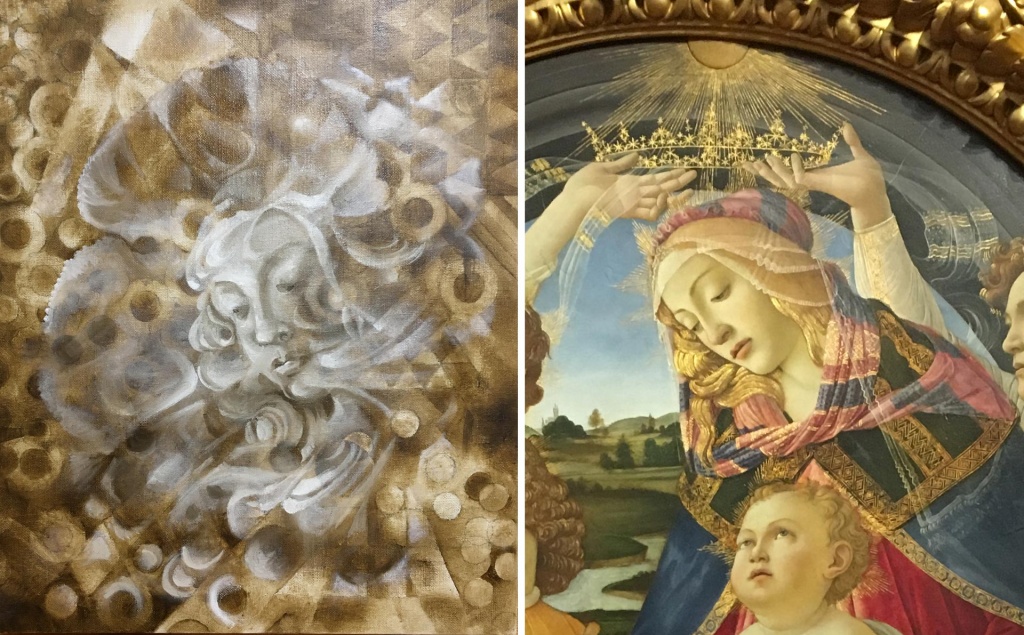
From the struggles of this painting and many others, I have learned this:
Working on the face alone never brings up the soul.
With the Madonna, as soon as I figured out the purpose and the style of the surroundings, I was able to finish the face.
The Soul Spreads Over the Painting
Even if a person is usually the focal point of the painting, the soul is not focused but spread.
The soul is in the setting, in the things, in the atmosphere. Even Botticelli’s Madonna can look just like a bored person without the crown, the light, the child, the book, etc.
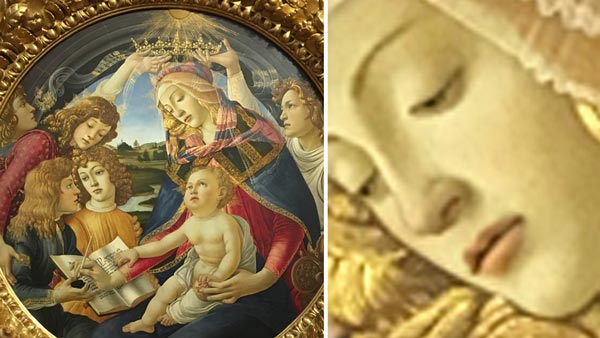
So no matter if you paint intuitively without pre-defined ideas, sketches, or references, or more intentionally with a clear idea of how you want your imaginary people to look like, seek for the soul in everything you paint.
Flowers have soul.

Pots have soul.

Hair and hats have soul.

Inanimate and organic things also give the soul to the imaginary people.
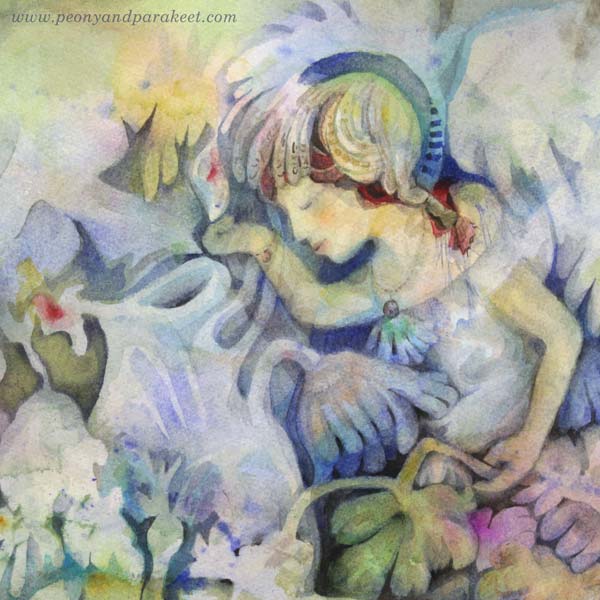
In this watercolor painting called “Mirimer“, the fairy is the focal point, but her soul is spread all over the paper.
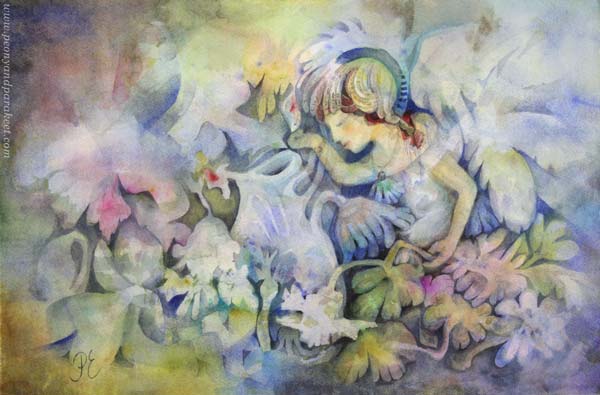
Imaginary People Exist in Shapes and Colors As Well
The painting doesn’t even need to have a face. Your imaginary people can be abstract, like in this small acrylic painting that I recently painted on a sketchbook.
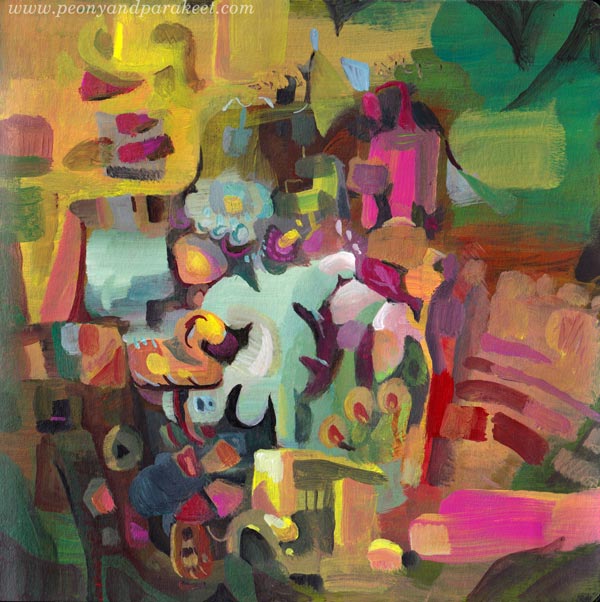
Shapes and colors have soul.
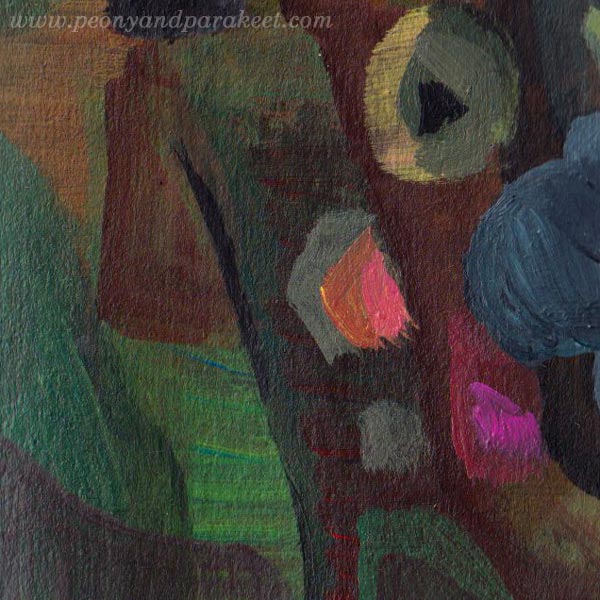
Imaginary People – First or Last?
The idea for this post came from the question that I received a couple of days ago:
“I like your little people peeking out from within your art. I would like to learn more about that. Do you draw them first and paint around them or paint and then save a spot for them?”
I have many approaches.
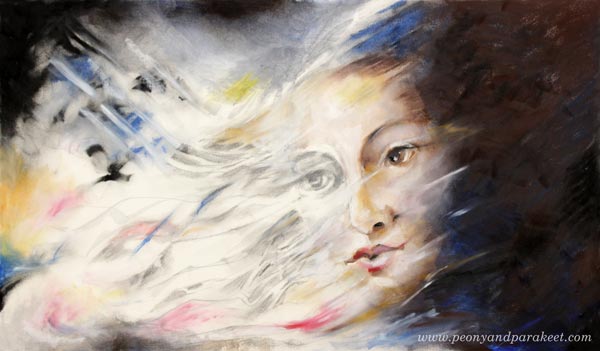
In Innovative Portraits, we use references and make a sketch. The soul begins with the plan.
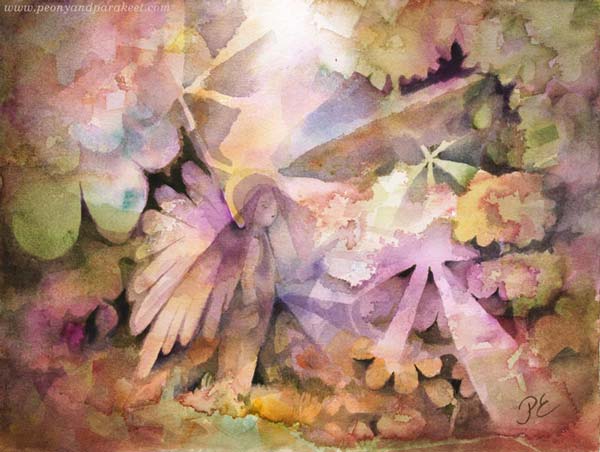
In Magical Forest, we lure fairies to appear intuitively from the watercolor background. The soul begins with the feeling.
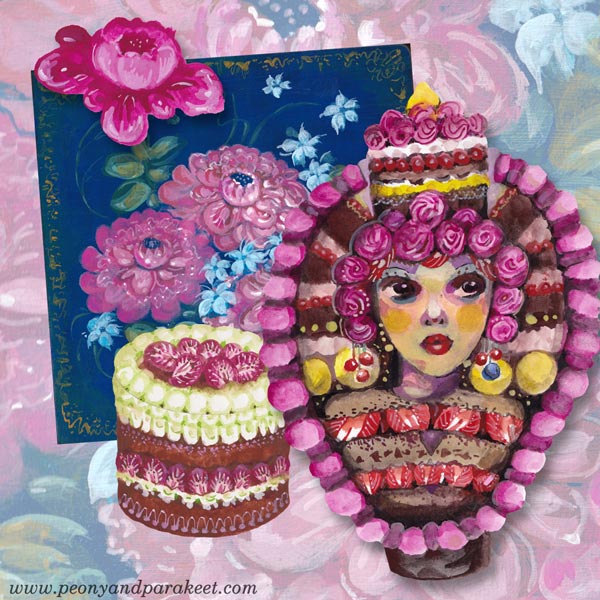
In the new class, Decodashery, we start by building a visual world and then make the dollies to fit with it. So the soul is first just a small flower, then it expands to floral paintings, cakes, lace, and finally, the imaginary people are born. By gradually setting the style and the spirit is the best intentional way to add soul to your work.
Decodashery will begin on June 29, 2020. >> Sign up now!