
From Artist’s Focus to Artist’s Between
This week, I challenge you to question what the word “focus” means to you as an artist.
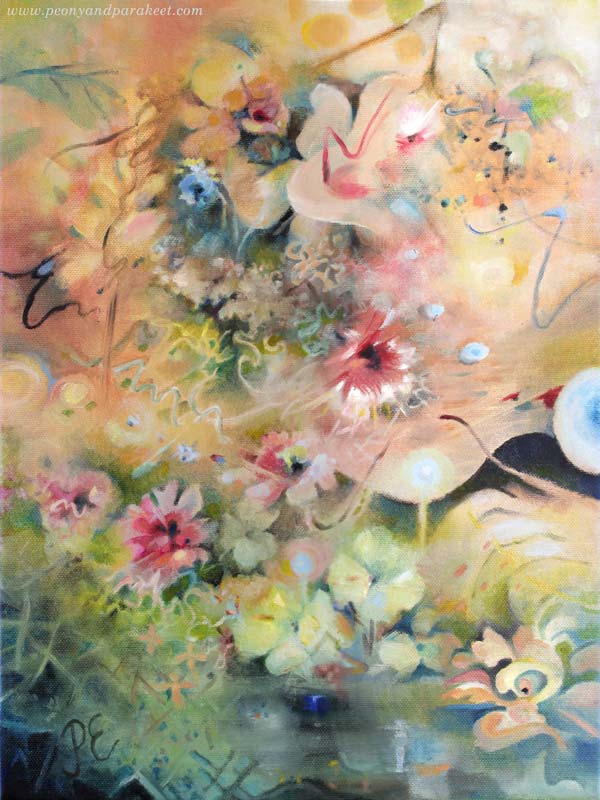
I thought a lot about the artist’s focus when painting this piece. This was one of the last paintings to be finished for my exhibition.
Artist’s Focus
Have you ever said this:
“I want to find my focus in art.”
Although I want to direct my energy wisely as an artist, something in that statement has always bothered me.
For me, the essence of art is not narrowing, but expanding – not isolating but inviting. The artist expresses not only herself but humanity in general. And as humans, we are rarely completely serene or focused. We seldom belong to only one group, one era, or one world. We are often one foot in one field, one foot in another.
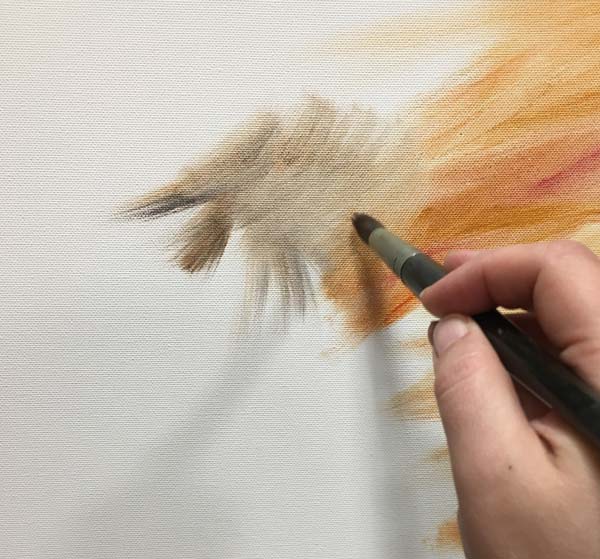
When we create, could the inspiring word be more like “between” than “focus?”
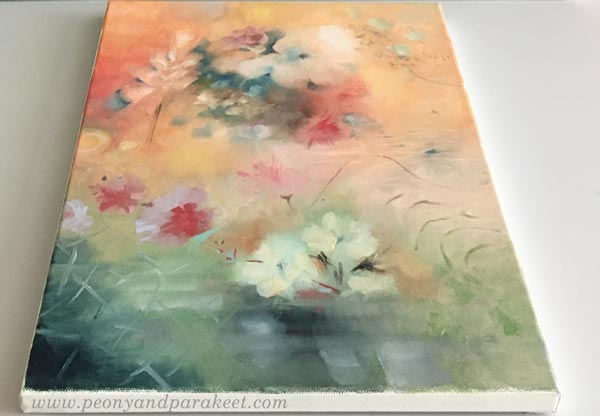
Focus is nice and pretty, but is it art?
Inspiration from Albert Edelfelt
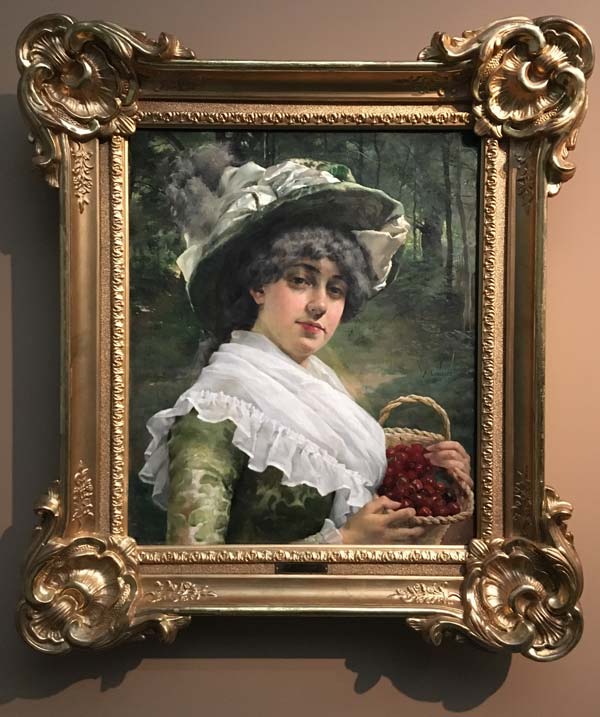
In this series of paintings, my inspiration was the Finnish master painter Albert Edelfelt (1854-1905). For the painting of this post, I took ideas for the color scheme from this pastel work by Edelfelt. This piece is currently displayed at the Albert Edelfelt Exhibition in the Ateneum Art Museum in Helsinki.
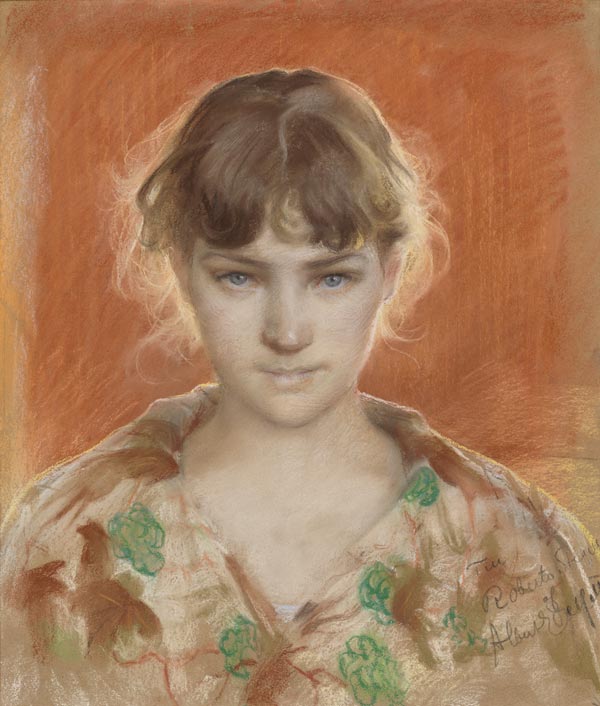
While studying the colors, I thought about the end of the 19th century and the intelligent look of the woman. Wasn’t this also “between” rather than “focus?” Between a man and a woman, if you think about the relationship between the model and Albert. Between being a model and having her own thoughts, if you study a woman’s gaze. Between representation and abstraction, if you observe lines and shapes.
Abstract art began shortly after Edelfelt’s death. He probably already felt its presence, felt that he was between two worlds.
From Artist’s Focus to Artist’s Between
I decided to throw myself fully into being between two worlds in this painting.
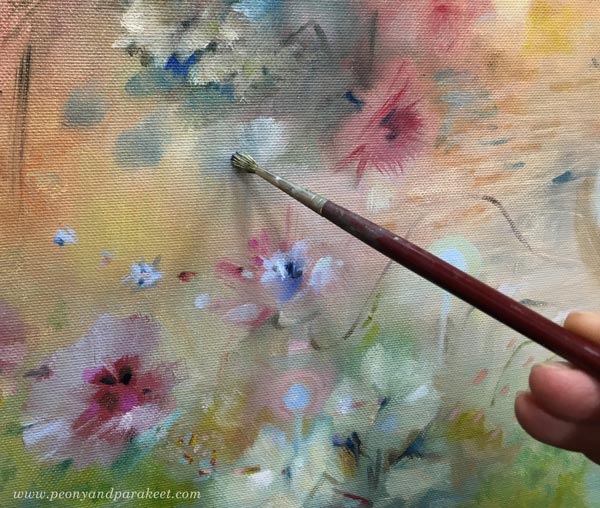
“Between” is an uncomfortable state of being, so this painting couldn’t contain only easy and beautiful. “Between” is a bit like walking in nature and then bumping into apartment buildings. Or when you’re admiring clear water in a pond and your eyes fall on the filters. Focus can then only exist if you close your eyes. Not very eye-opening, eh?

This painting has two different styles and although it is small in size, I feel that it reveals the secret between what I do and what I think.
I noticed at the opening of the exhibition that I don’t like to talk about this work, because I find it somehow intrusive. Often when the paintings are created, they are nice characters, a bit shy and sensitive, but fun company. This one is straightforward and doesn’t hide its contradiction.
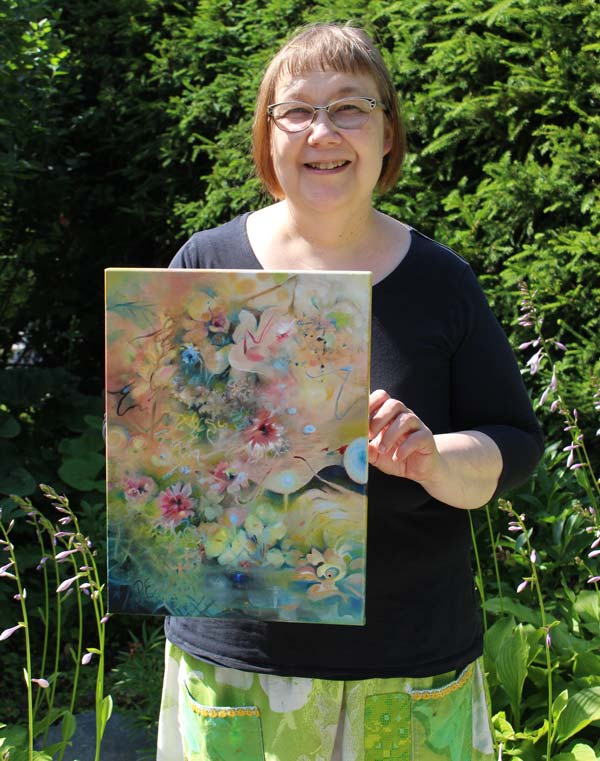
However, there is a lot of power in the contradictions and lack of focus. I want to continue to challenge myself to draw artistic inspiration from it.
Do you also feel that you are between two worlds?
In art-making, could you replace the yearning for “focus” with the embracing of “between?”
Finding Emotional Connection Through Imagination
Imagination and emotional connection go hand in hand in art-making. If you don’t feel a connection with what you are creating, bring in more imagination and treat different areas of your work as characters – even if you won’t be including any humans. Let’s look at this example!
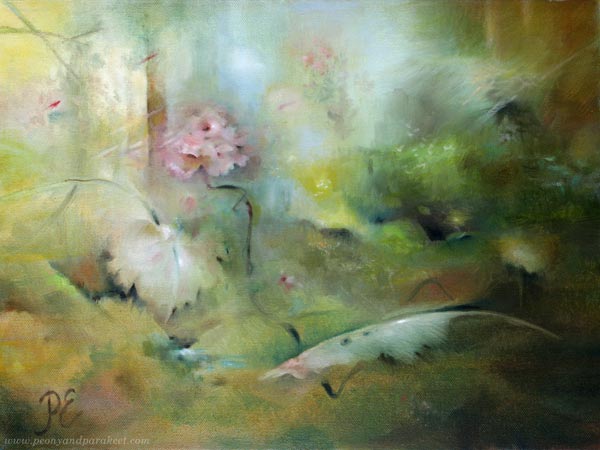
This small painting is part of a series I made for the Albert Edelfelt Foundation exhibition. It will take place in August-September.
Inspired by Albert Edelfelt
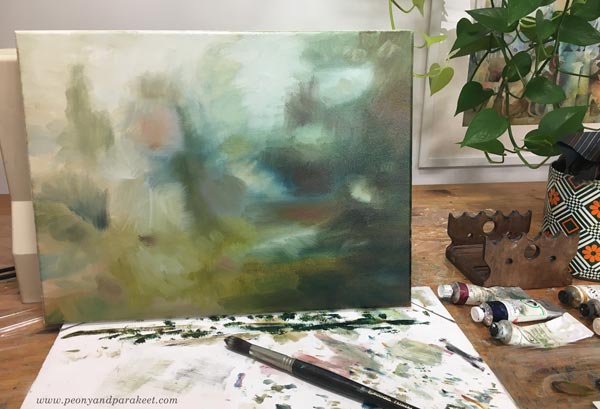
For the colors and composition, I was inspired by Albert Edelfelt’s artwork “Koivujen alla – Under the Birches”. It is not this painting that I photographed in the Albert Edelfelt exhibition at the Ateneum Art Museum, but another similar work that I made a mirror image of.
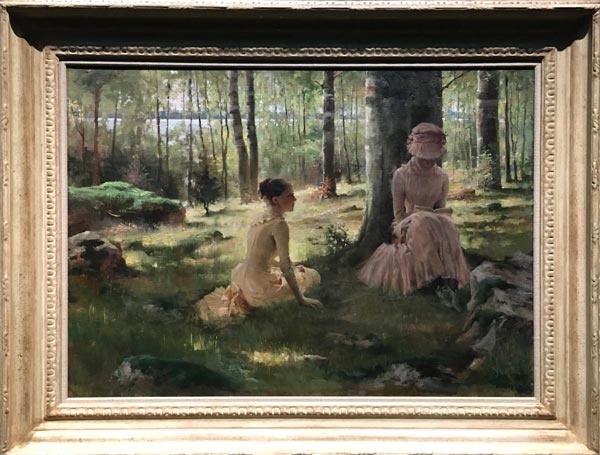
However, I was more inspired by another “Koivujen alla.” See the picture here!
My version of “Koivujen alla” didn’t have any people. Instead, I used my imagination to depict human characters in the form of a plant and an object.
Combine Inspiration and Observation!
A good way to get the imagination going is to combine two different things. For example, if you saw an artwork that inspired you to create, also gather unrelated observations from your surroundings. This way, you need your imagination to bring them into the same image.
In this project, I remembered a pine seedling that I had seen in a nearby rocky forest. The name of the area is Pöllökallio (owl rock) and we often go there with our dogs. This little pine tree was like a bonsai! It was so sweet that I took a photo of it.
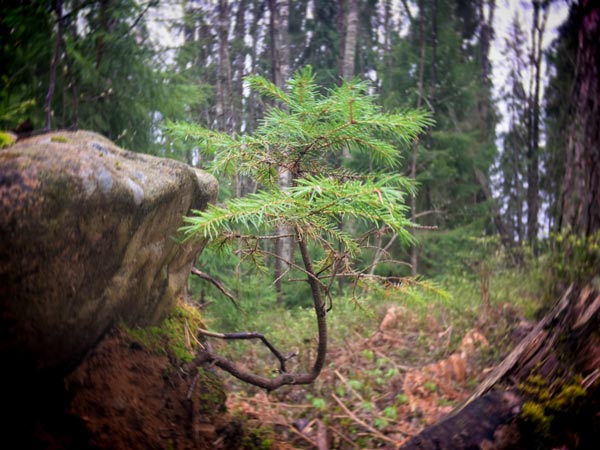
When the pink color of Edelfelt’s painting met a crooked stem of the pine, a tree-like rose was born!
Emotional Connection by Asking: Who is This?
The rose became the most challenging part because I wanted it to resemble the woman with a hat in Edelfelt’s painting. I thought about the hat when I painted a rose, but it didn’t work at all.
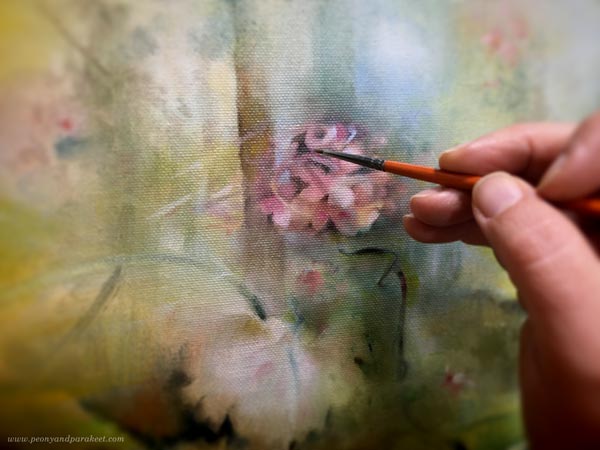
But then I came up with thinking about the character of the woman instead of her hat. That way my imagination met the emotional connection, and I quickly got the impression I wanted.
Build a Story to Boost the Emotional Connection!
One of the most common problems is that our art is full of separate islands. The sun might shine but the effect doesn’t show elsewhere. The person may smile but the eyes are not affected. There may be three ladies but what are their roles? Use your imagination to find connections between these islands and add elements that make the overall story make sense!
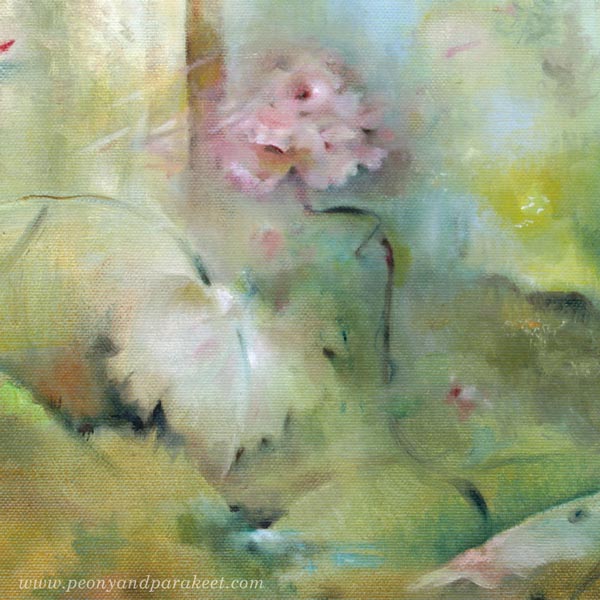
In my painting, there are not two women like in Edelfelt’s painting, but a rose, a leaf, and a feather – three introverts! The rose reaching for the sky has agreed to be the center point. The leaf examines herself through the pond. The feather has been a part of a bigger adventure and is now ready to shift the focus to others.
The small pond is a central element here. It brings the leaf and the feather together.
You can also see the colors of the rose elsewhere in the painting. For example, there are flying thoughts (red lines) that the rose tries to catch, and a bigger punch of roses that is in the background.
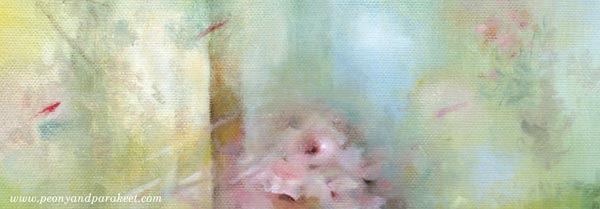
The painting is about three romantic introverts who went on a trip to a rocky forest on a lovely summer day. They are together, but in their own thoughts, just like the women in Albert Edelfelt’s painting.
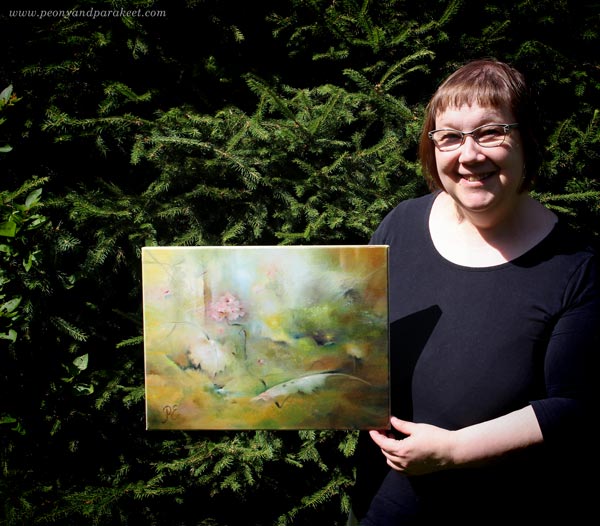
When we paint or draw people, we hope to bring the character to life with their facial features. But we don’t need facial features to find an emotional connection. Once you get the hang of it, you can draw or paint anything, even just different shaped spots on paper.
What do you think?
Imagining Flower’s Spirit
When you want to draw or paint flowers that look unique and alive, imagine their spirit and discover what they would love to wear.
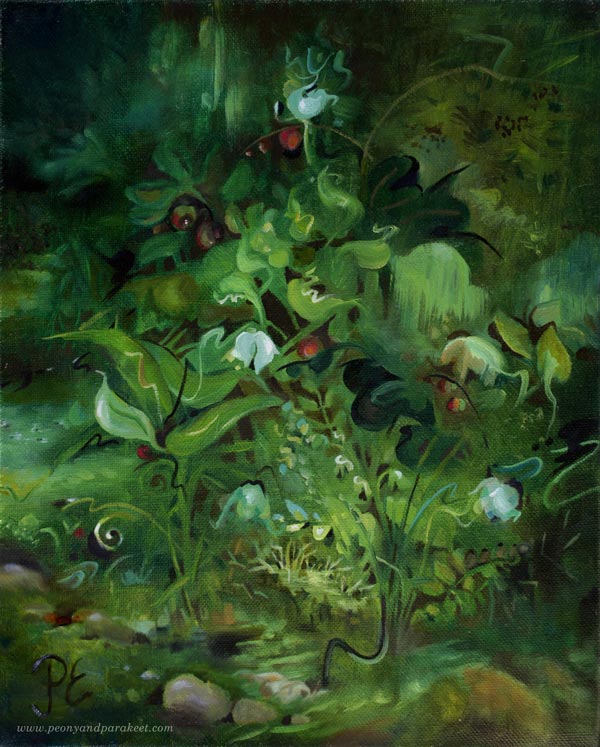
Art is not only about techniques and replicating what we see. When you create, you have permission to imagine and be convinced that you know something more than anyone else. You are the best scientist in your imaginary world! In your world, you can mix different fields, like botanical illustration with fashion design. That’s what I did in this painting called Kielomieli.
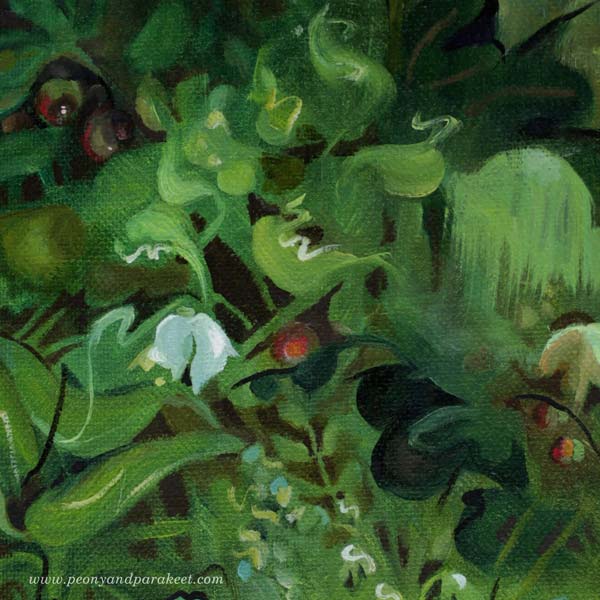
Kielomieli – The Mind of Lily of The Valley
We have lily the valleys growing in our yard and even though I don’t pay much attention to them, I feel like I know them. That plant spreads in the shade and may seem modest, but its mind is always alert and it observes the world sharply.
This little flower also knows how to influence people. Even before I was born, in 1967, Yleisradio, the Finnish national broadcasting company, organized a vote for Finland’s national flower and the overwhelming winner was kielo – the lily of the valley. It makes Finns kneel and admire its fine shapes. Unlike other flowers, the color is secondary to the lily of the valley, until it produces berries. With berries, it underlines that it is not just a white, innocent little flower. Everyone knows their toxicity.
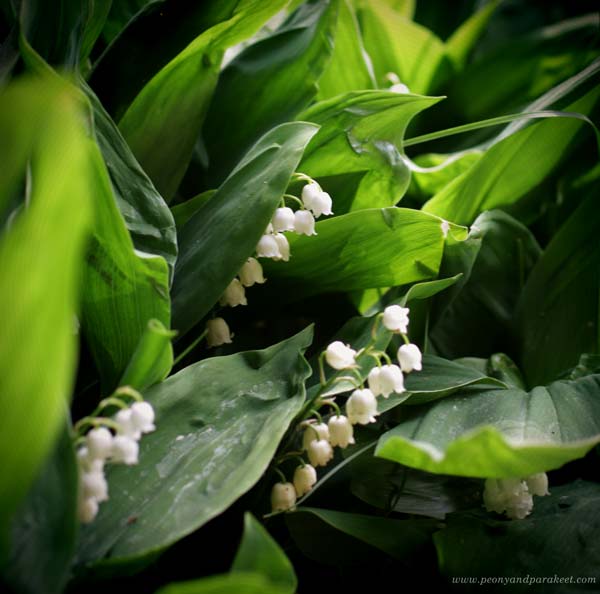
The lily of the valley’s mind is a group mind where everyone dances to the same rhythm. It still doesn’t mean that a single plant would not also be an individual. She just doesn’t share her own thoughts publicly.
Many people love lily of the valleys, but this plant is not a rose that craves attention. Even if it lies low on the border of the earth, its mind is more sublime than that of other flowers. It sees far and high, and nothing can discourage it.
Choosing the Style to Go with the Spirit
When you think about the flower that you want to draw or paint, ask her about her style and aesthetics. For example, is it bohemian, classic, gothic, or country? If the flower would be a human, how would she like to dress?
Clothes can express the spirit.
In flowers, the details of petals and leaves are also very similar to the folds and seams of clothing. I often find it helpful to think about dresses, hats, and jewelry when painting plants.
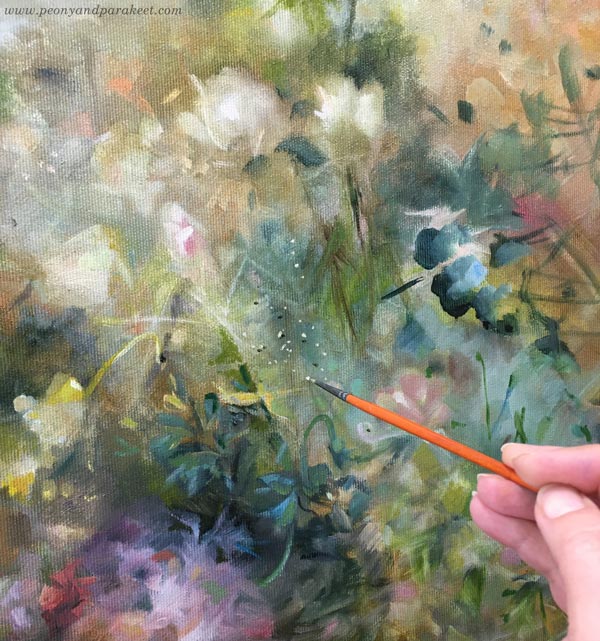
I imagined the lily of the valleys to be formal and stiff. They wouldn’t wear a bathrobe in a photo but choose a classic-lined dress or a jacket. So I chose to paint them in a decorative style. First, I practiced painting roses in that way – see this blog post for more instructions!
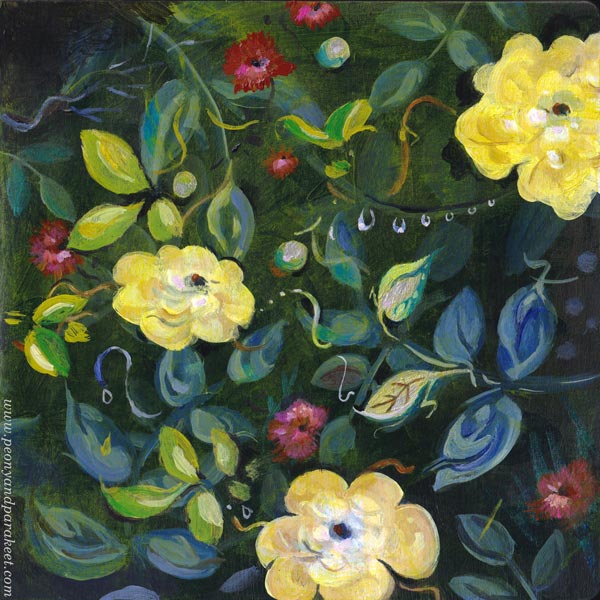
I have noticed that making a study speeds up my painting process even if the final painting would be different.
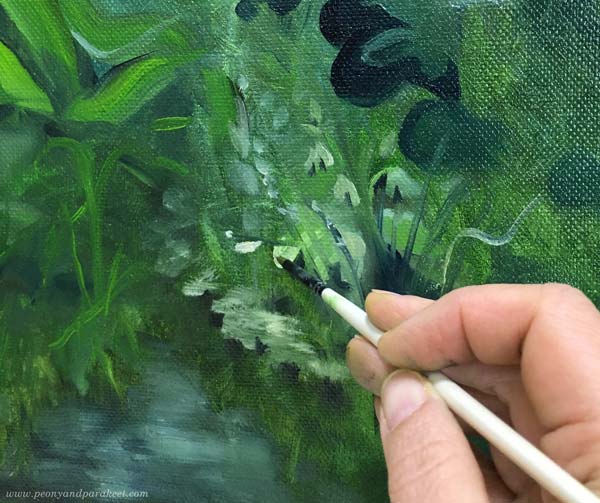
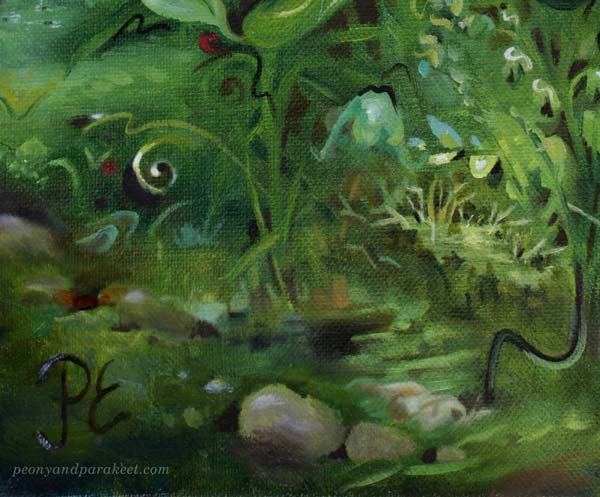
Once I had “loaded” that decorative style to my hand, I painted Kielomieli – the lily of the valley’s spirit.
Flower’s Spirit – Flower’s Portrait!
When visualizing the flower’s spirit, think about yourself as a portrait painter.
You don’t need a face to express a flower’s spirit. When the color choices, shapes, and lines are aligned, they all paint a picture of a character.
I hope this blog post gave you new ideas to break the glass between reality and imagination!

Five Tips for Painting Nature’s Richness
This blog post is for you who want to create less stiff and more abstract art. First, I suggest rephrasing your goal. Say you want to get closer to nature – to paint nature’s richness!
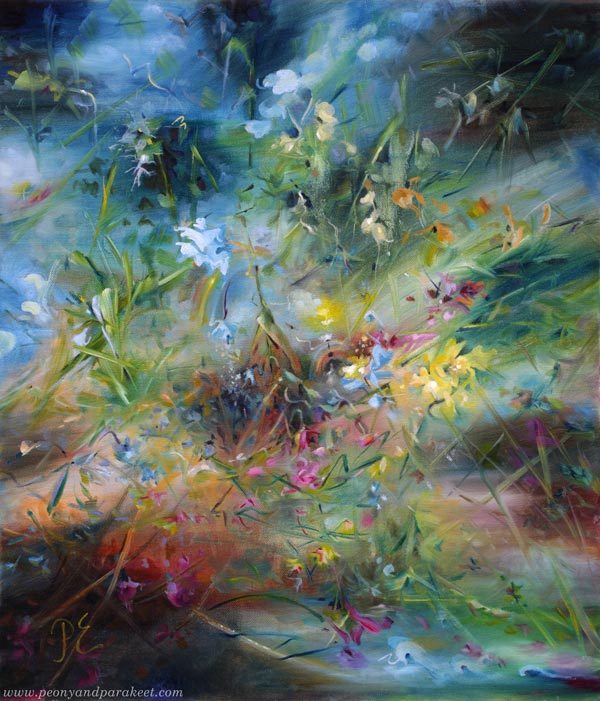
In this painting, flowers fly recklessly in every direction. This kind of disorder is part of nature’s richness. I used to think that it could be achieved by quickly throwing paint here and there, but I am much more successful when I create these beautiful messes in an orderly way.
Experiencing Nature’s Richness
Although I live in a big town, there is a cornfield in our neighborhood. I often walk along the path that goes by it. In August 2020, I was walking with my dog Stella. When I reached the beginning of the trail, I was greeted by a magical sight. The surroundings of the path were full of butterflies!
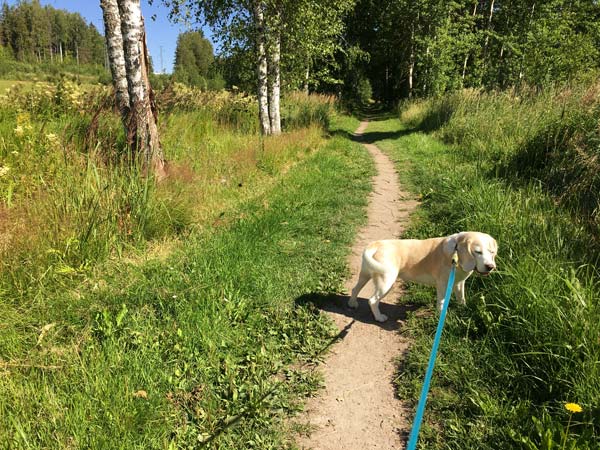
I tried to take photos, but only close-ups were successful. Butterflies are such small and fast insects that they cannot be distinguished from a distance, even if there are many of them.
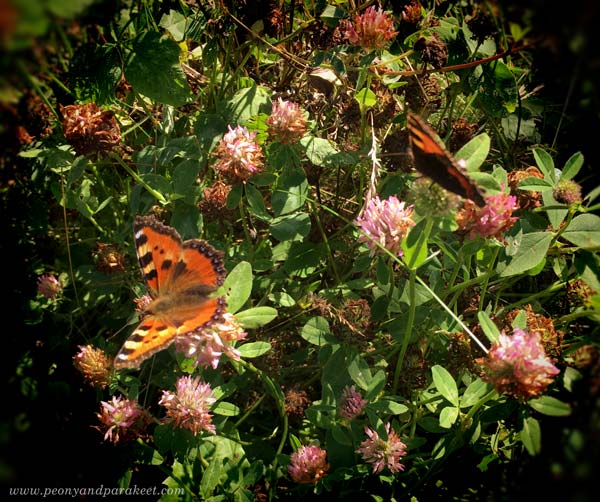
But the experience stuck in my mind. Now, years later, I wanted to capture it but in a bit different setting. I wanted to depict a situation where someone would throw a bouquet of flowers in the air and they would magically start flying in the air like butterflies.
Working in Layers
I started the painting by making a background for it. I painted a grid in the style of Paul Klee. I teach this beginning technique in the course Floral Freedom.
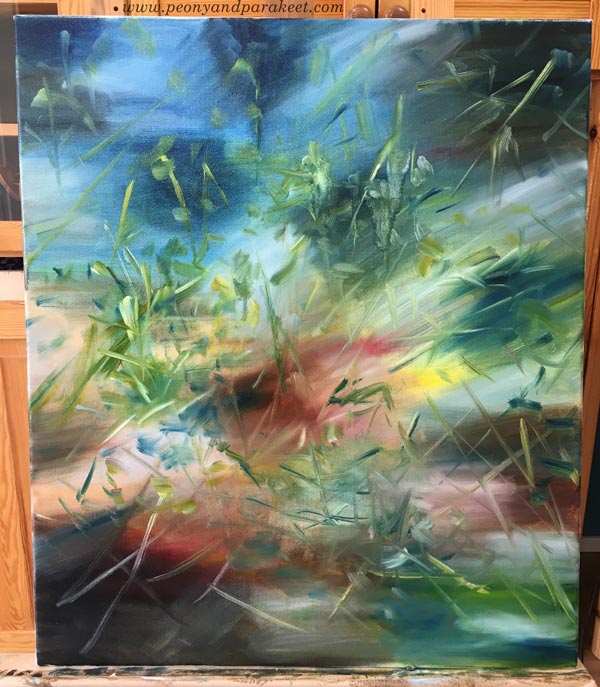
I then started to create nature’s richness on top of the grid with brushstrokes. I added flying flowers several times and dried every layer before starting a new one.
Taking Photos for Inspiration
I often take photos of plants and nature scenery. Even Claude Monet has said: “The richness I achieve comes from nature, the source of my inspiration.” I don’t use the photos as references but for teaching myself nature’s language. I examine an image to see nature’s richness, for example, the shapes that light throws and all the variation there is if you forget what the image represents.
Take a look at this flower bouquet I put together for Midsummer: the flowers consist of several layers and have differences in size and shape.
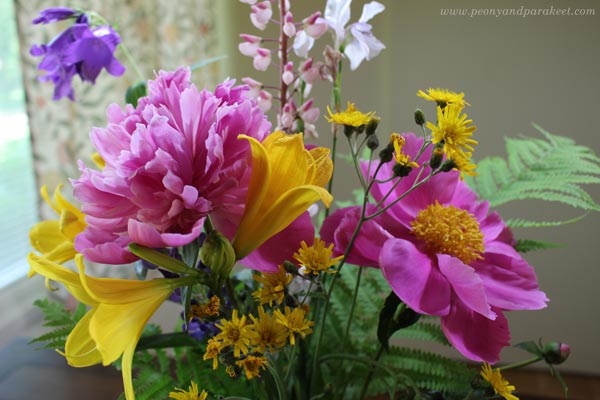
Think about one flower as a collection of strokes that form motifs.
Five Tips for Painting Nature’s Richness
When you add motifs on the background, remember nature’s richness and do otherwise than what you are used to:
- Don’t cover it all over again! Create a sense of depth by covering the previous layer only partly. This way, every layer has fewer motifs than the previous one. Paint the first motifs with muted tones and slowly introduce stronger colors.
- Don’t repeat the same thing! Get natural variation by painting many different repeating motifs. Change the sizes and distances of similar motifs so that they look more irregular. Use many brushes and think about every stroke as a word. How rich is your language?
- Don’t design fabric but tell a story! Make an expressive image, not only a surface pattern. Despite the chaos, make one area stand out. Make this focal point stronger by adjusting some other distinctive motifs so that they clearly point to it. Avoid spreading white spots everywhere. They distract the viewer and make the painting flat.
- Don’t leave your motifs lonely! Bring more unity by connecting motifs together. You can use lines, intersections, and surrounding space. Think about the painting as a collection of mini landscapes.
- Don’t hurry! Give your painting time to grow. Take breaks and keep your painting somewhere where you can observe it. You have probably already tried many times to paint quickly, now choose another way and slowly immerse yourself in the painting.
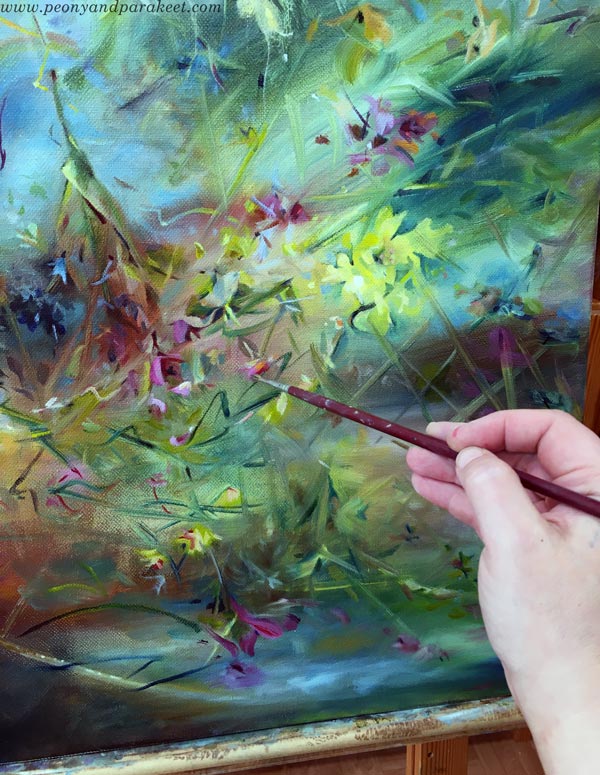
In this orderly way, the painting begins to look more and more finished naturally.
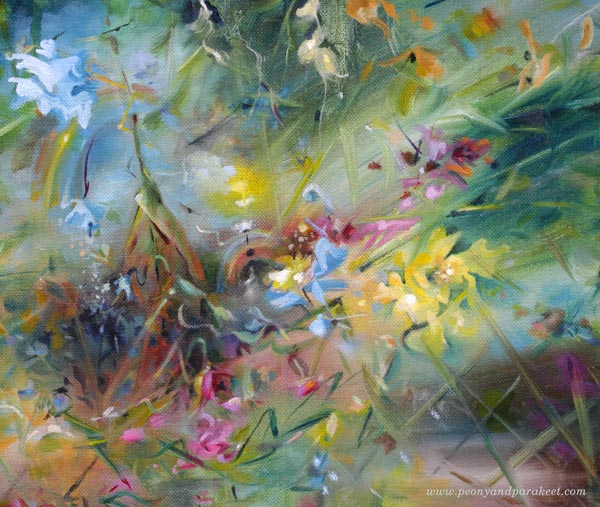
At the last layer, it takes some courage to paint larger and brighter motifs on top of smaller and more muted ones.
Nature’s Richness – Expressing Mortality in Immortal
A part of nature’s richness is to allow some flowers to fall and die, and some rise and fly. Dark colors, sad strokes, and downward lines all give power to the bright and happy ones. You can take your piece outdoors and see if it’s one with the surroundings. My course Floral Freedom is packed with techniques and further ideas.
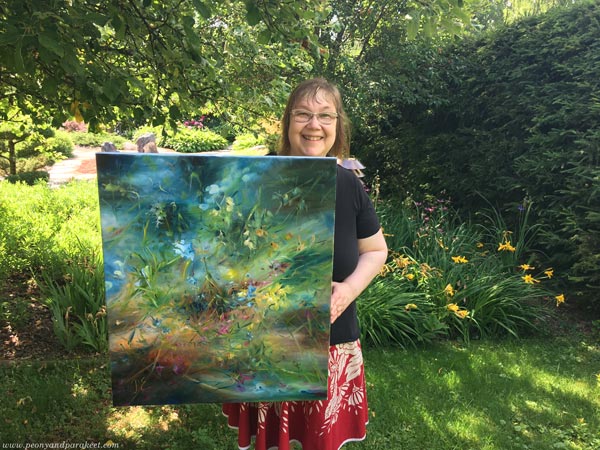
This painting “Immortal Bouquet” tells about the hopeless desire to live forever but also about the fact that life does continue when thinking about nature. An immortal bouquet is an unreal wish for the one who gathers the flowers, but on the other hand, it’s also true: flowers are reborn in nature every year.
What do you think?