
Delicious Colors – Salvage Them!
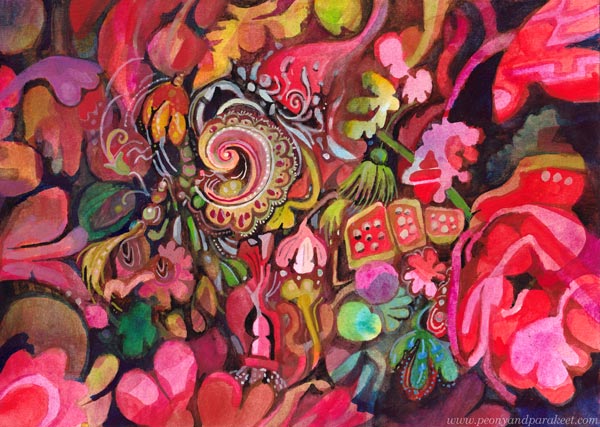
I have never been overly enthusiastic about bright reds, but now seems to be the time. I feel that in this black world, we need to salvage the delicious colors and amplify them with sugary decorations!
Finding Comfort from Delicious Colors
In the evenings, while waiting for the news around the world to be gathered, I paint in my little studio room. The more I think about the sad statistics, the more I want to create the opposite – a careless world with deliciously tasty and juicy colors.
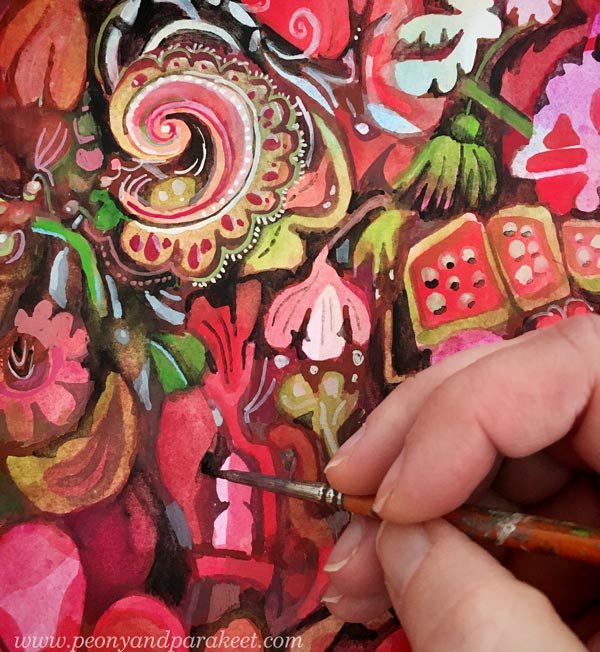
My studio is now like a sweet bakery, and as the main cook, I have lots of motivation to create!
Delicacies from DecoDashery!
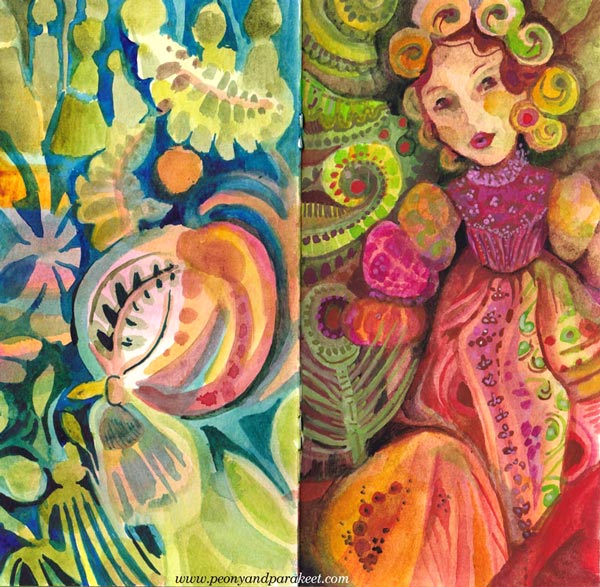
What first was just one little painting, has now grown to resemble a series that expresses an imaginary world. I call this world as DecoDashery, inspired by the old haberdashery from the movie Emma. DecoDashery will also be the next class that I am building, hoping to release it within a couple of months!
You Can Always Start Small!
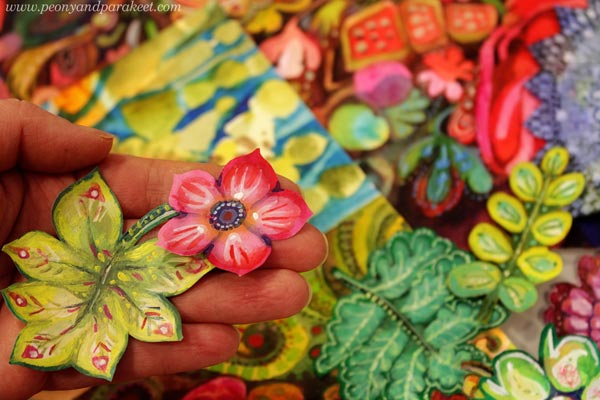
As usual, I haven’t made paintings only, but also collage pieces to my boxes of joy.
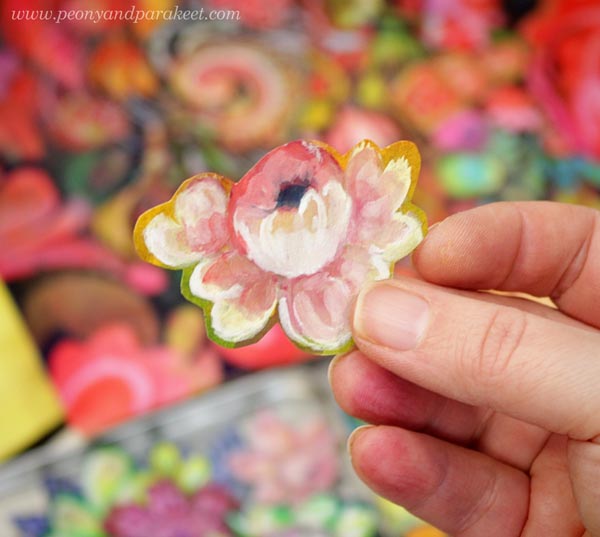
Delicious Meringues, Lace, and Porcelain
Now when my husband is working from home too, we eat together more than ever. Fortunately, he can cook! I have never been into that so much. But my specialties are side dishes and desserts, and it’s been fun to make one good meal in a day and combine our skills.
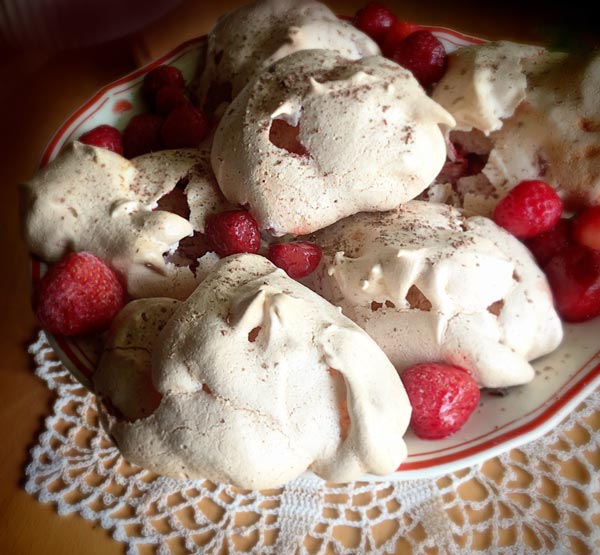
I had never made strawberry meringues, but a recipe from a knitting magazine caught my eye. Strawberries, an old plate, and a hand-crocheted lace doily were all as essential as the meringues themselves.
My current oil painting has progressed well too. Even if there’s a lot of work left, I get a lot of pleasure from working on it. Salvaging all the deliciousness of the random shapes feels so good.
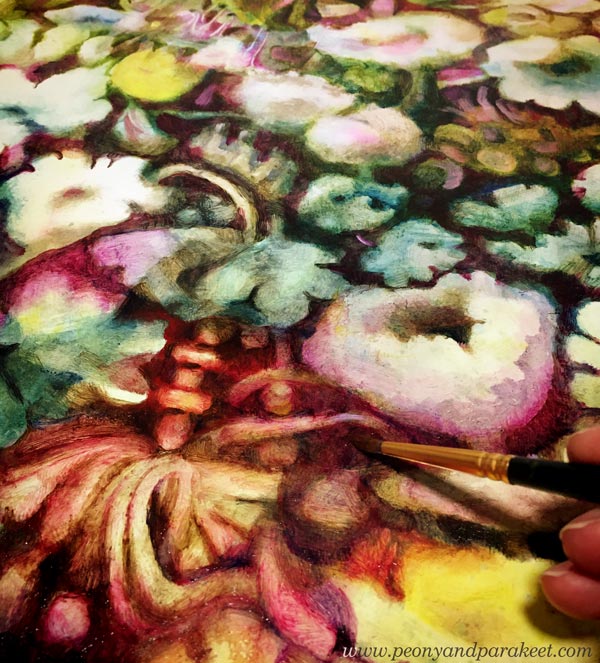
Doesn’t the painting look strangely similar to the meringues, lace, and porcelain? The world of Decodashery is expanding!
Meaningless Has Given Me a New Meaning
It’s kind of funny that when I decided to remove deeper meaning from my work for a while, I feel that my art the overall creative process has become more meaningful than ever.
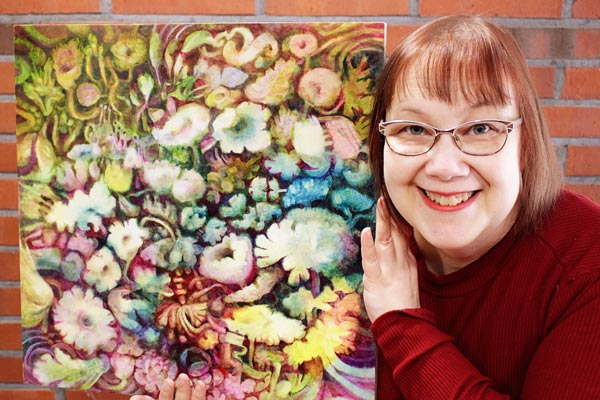
It’s like I have released the beast that I have always quietly carried with me, and once I have seen it eye to eye, it has become my angel in the crisis.
Paint Spiritual Energy – Step by Step!
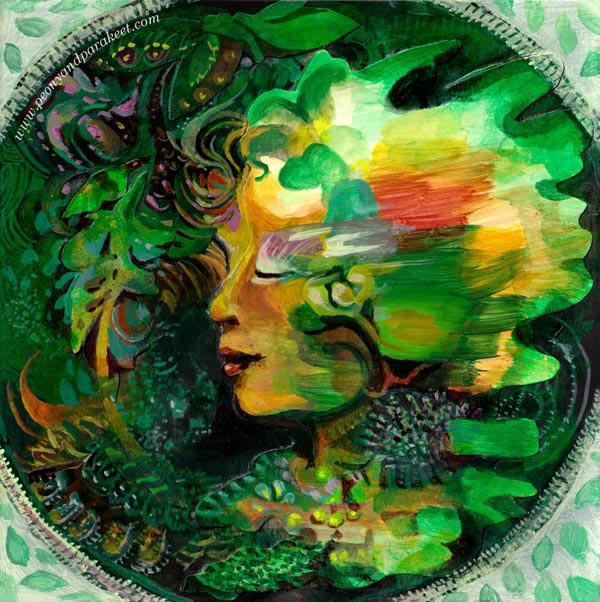
When there is a big crisis in the outer world, it’s important to protect and strengthen the inner world. In this project, we paint spiritual energy with loose strokes, continue it to form a face, and then add a protecting frame around the painting. I find this project soothing and healing. I hope it makes you pick the brushes again too!
A) Where to Paint?
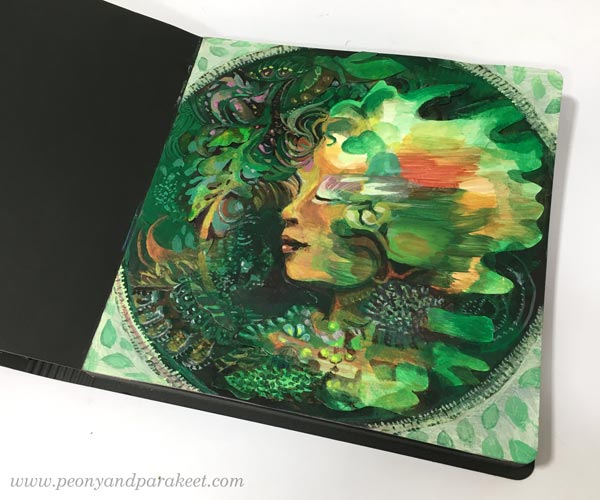
I have made these paintings on my newest art journal which is a black Dylusions Creative Journal. It is my third Dylusions Creative Journal, and I really like this product. It’s durable, the paper is thick, and it can be closed with an elastic band.
My first two Dylusions Creative Journals were large ones, but the newest one is a bit smaller, the page size being 8 by 8 inches.
The links above are Amazon.com affiliate links to product pages.
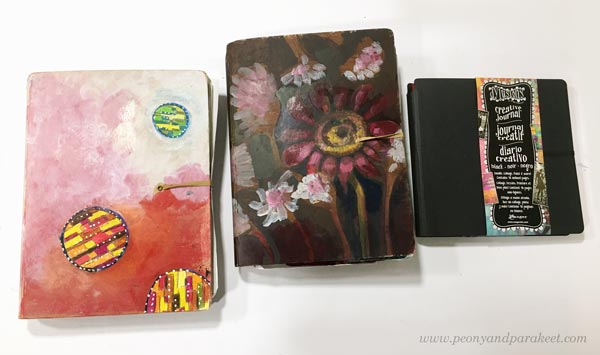
Watch the flip-through videos of the first two art journals! See these journals in practice and to get more inspiration:
Journal 1 Flip-Through
Journal 2 Flip-Through
B) Collage or Painting?
This project can be made as a painting or as a collage where you paint the figure separately from the rest of the image.
When I did this project the first time, I made a collage. I painted the profile on a paper, cut it out, and glued on the art journal page, and then continued painting the background and adjusting the facial features. In the photo below, the white line shows how I cut the face.
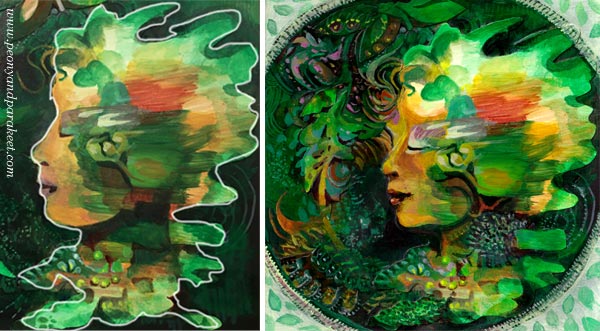
If you choose the collage technique, it’s good if the paper is not too thick. I used Bristol paper, which is fairly sturdy but thinner and easier to attach than thick watercolor papers.
C) Pick the Colors that Bring Energy!
I painted the second version directly on an art journal page.
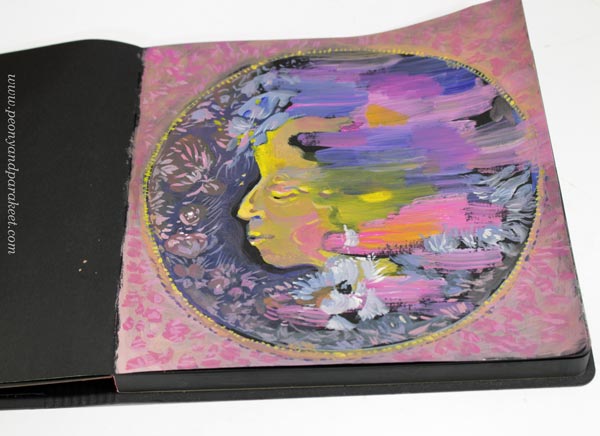
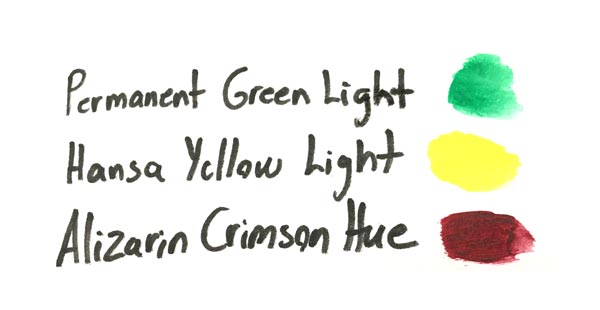
Both versions have a limited color palette. By picking only a few colors, they come alive and express energy more effectively than if you work with all the possible colors. So, choose the colors that energize you – that you feel drawn to at the moment.
I recommend choosing three different tubes of acrylic paint and adding white to the mix as well. If none of your colors is dark, pick black or another dark color so that you get a strong image with good contrasts.
For the first version, my colors were these (+ Titanium White):
For the second version, my colors were these (+ some Mars Black for finishing)
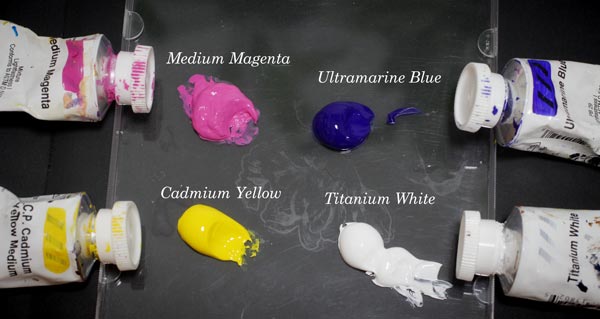
My acrylic paints are Golden Headybody Acrylics.
D) Paint Spiritual Energy!
Let’s create some abstract art! Use selected colors and paint with horizontal strokes. Mix white to get lighter strokes and make muddy mixes to get tones that make the pastels shine. Enjoy the colors and making most of the narrow selection.
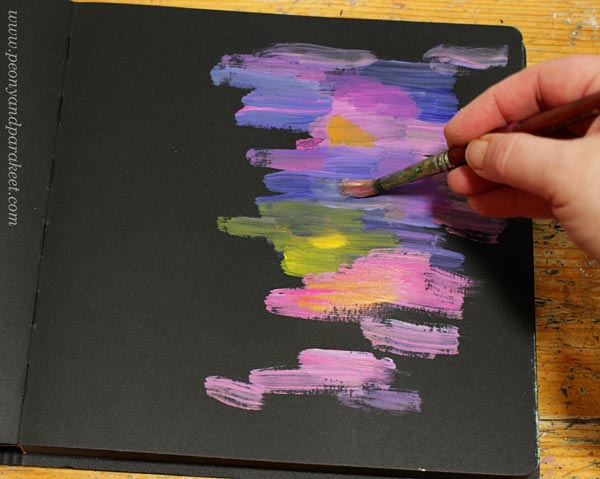
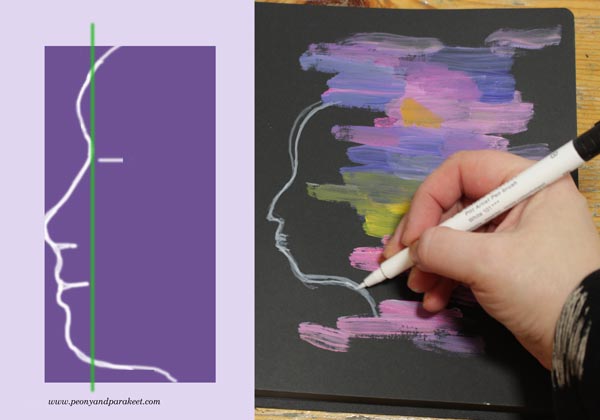
If you paint directly on a page, mentally divide the page in half, and paint on the other side only. This way, you will have enough room for the face.
E) Sketch the Face!
Pick a pencil and sketch a profile. You can adjust it later by painting, so focus on the location of the face more than the actual look. I used a white pen in the photo below so that you can see my sketch clearly.
F) Draw a Frame!
Take a round object, for example, a plate, and draw a protective frame around the person.
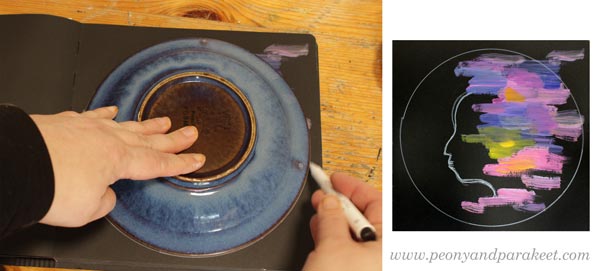
G) Paint the Face!
Paint the skin and facial features. Instead of outlines, paint shapes. Allow yourself to be more unconventional. Don’t paint bright white scleras or red lips but shapes that connect the person with the abstract part of the painting. In this project, the energy that the strokes represent is more important than the person herself.
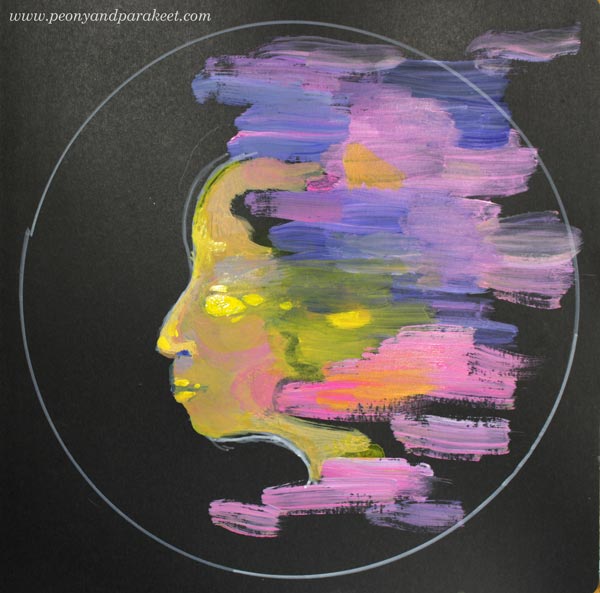
H) Paint the Background!
Surround the person with everything that soothes and heals. At this point, it can be just subtle strokes that will be more defined later, when you finish the painting.
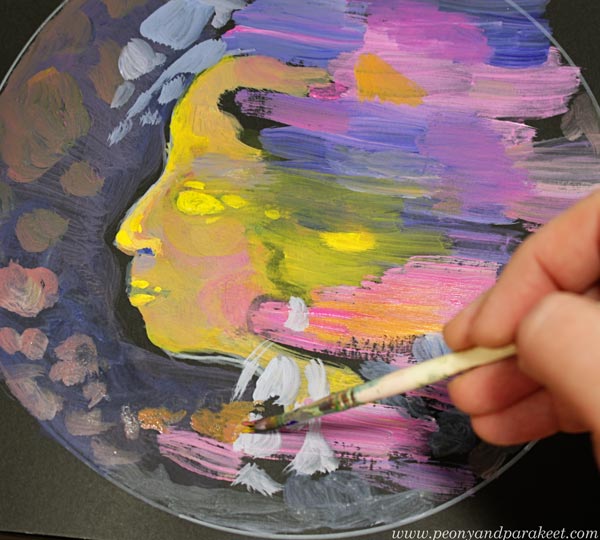
Paint the frame too. Use muted colors so that the frame doesn’t take the energy away from the person.
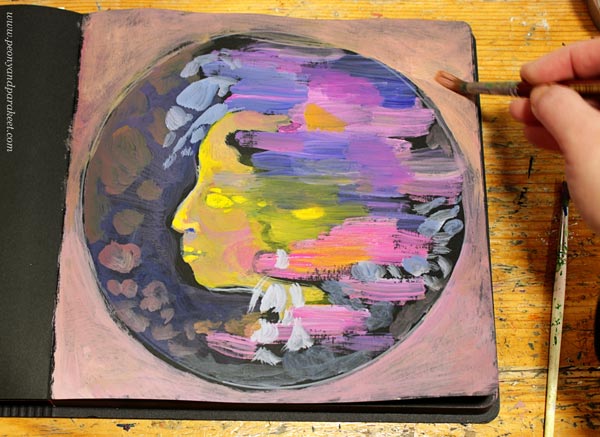
I) Finishing: Give Her All the Beauty She Needs
Paint details with a thin brush so that she will get all the softness and beauty she needs. Again, prevent using intense colors for the details on the background.
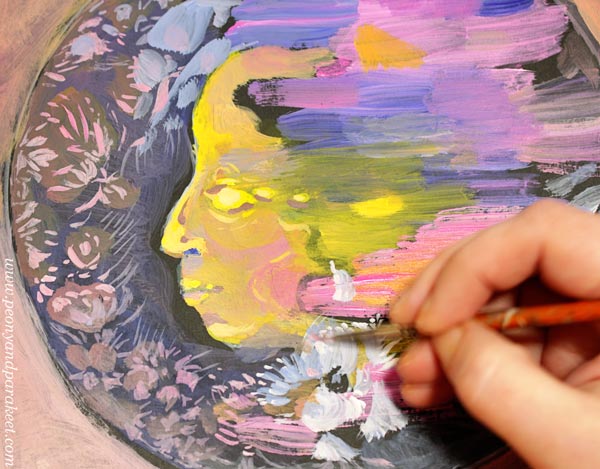
Connect her forehead with the beauty so that she is in the middle of the energetic strokes and more delicate and soft fillings.
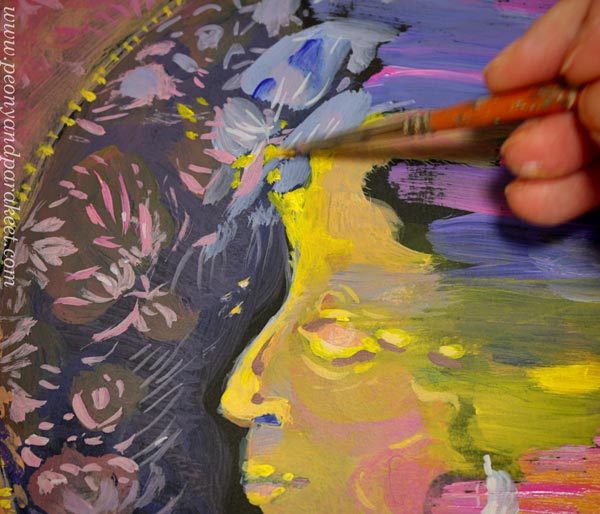
I also added some decorations on the frame.
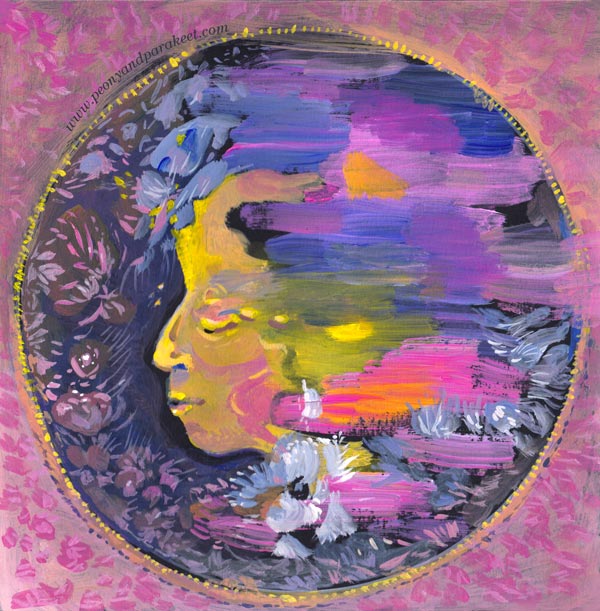
Less Control – More Energy and Expression
Art is freedom! In this project, we started with wild strokes and then built a portrait around them. These kinds of less-controlled uses of supplies are an important part of self-expression.
On Thursday, March 26, 2020, I will be talking about doodling and how to expand it to various supplies and styles in my art community Bloom and Fly. The session will be recorded too. If you have bought my class this year, you are invited! I have sent an email to the members yesterday.
How to join Bloom and Fly for 2020?
>> Buy any of my classes!
Hand-Drawn Collage Samplers
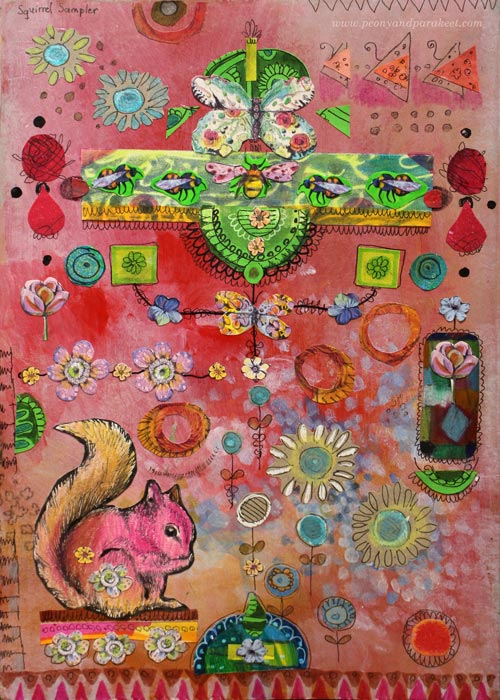
I have been browsing my art archives lately, and it has been surprisingly inspiring. I have lots of art journals and a big box of paintings and drawings from my teenage years. Even if I have experimented with many techniques and themes, it all looks very similar now. Everything fits together and gets my approval. Painting “Icebreaker” gave me a new kind of confidence, and with that confidence, I am now blogging about a playful idea that I got from cross-stitching – hand-drawn collage samplers!
These samplers are composed of hand-drawn paper pieces so that they look like cross-stitch samplers. They have ribbons, many identical ornaments, tiny floating elements, and some symmetry. There’s also stiffness and order so that it looks like the elements are on a grid.
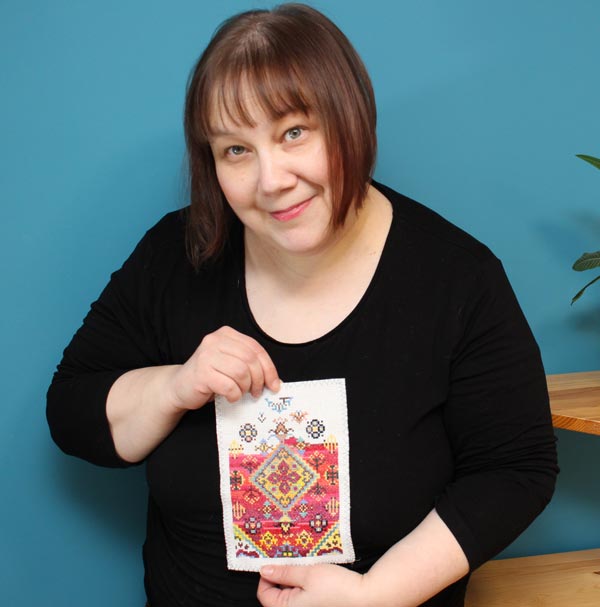
Cross-stitching is one of my hobbies, and even if I try not to think about art when stitching, I just couldn’t resist this idea! Here’s how I applied cross-stitching to collage art.
Print Tiny Scans of Hand-Drawn Collage Pieces!
It’s essential to have tiny decorations to make the collage look ornamental. I solved the problem by making collage sheets of scanned hand-drawn pieces. These collage elements were drawn for the classes Animal Inkdom and Magical Inkdom, and there are some jeweled flowers from the free mini-course for subscribers too.
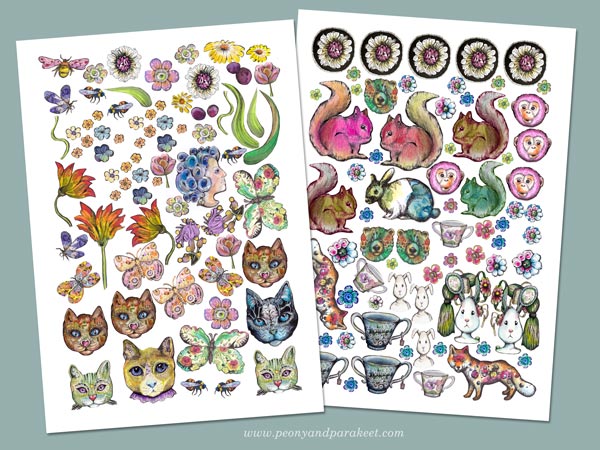
The original size of these pieces is much bigger than in the printed sheets.
Use All Kinds of Hand-Decorated Papers!
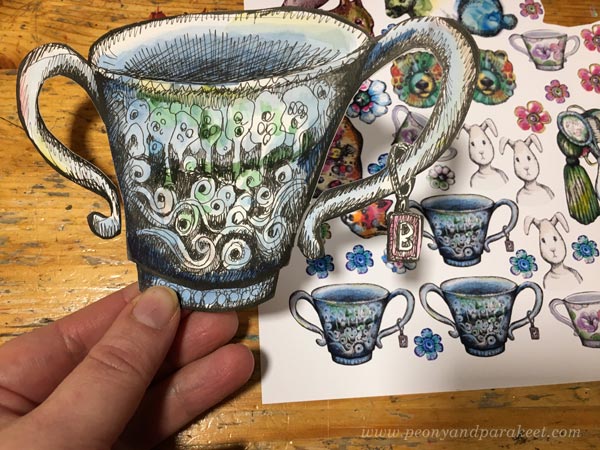
Samplers have a variety of designs, so every little doodle is a potential sampler piece. I have a box of hand-decorated and painted papers (mostly leftovers from Collageland) and two boxes of hand-drawn collage elements. I have also cut some old art created in the 1980s. All these are a good addition to small printed pieces.
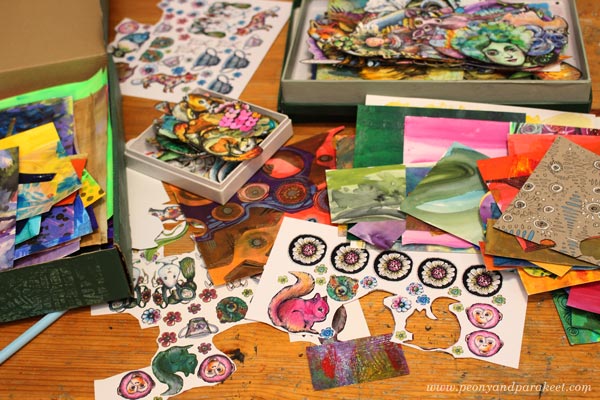
Of course, you can also use store-bought die-cuts, pictures from magazines, etc. but if all the elements are handmade, they will all fit together much better because they are all YOU!
Perfect Project for Hand-Painted Background Pages
If you are an art journaler, I bet your journal has a lot of pages that are more like backgrounds rather than finished pages. You can use them for collage samplers!
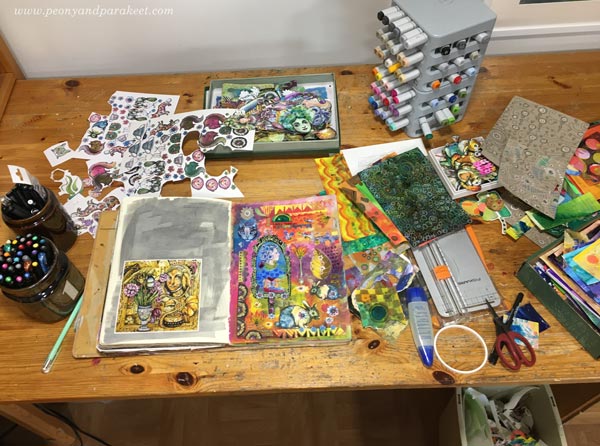
The background of this sampler was busy and bright, but I just added brown over some of the areas and let the colors speak, or should I say shout!
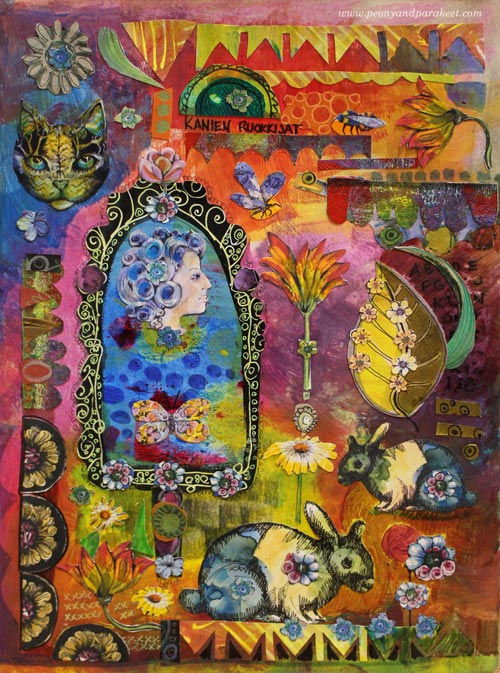
I attached the pieces with paper glue and some larger elements with double-sided tape. I usually use gel medium, but it’s messier, and it’s too difficult to cut all those tiny pieces with sticky fingers.
Self-Expression with Hand-drawn Collage Samplers
Sticking paper pieces can be just a relaxing hobby, like cross-stitching. But samplers can also tell stories!
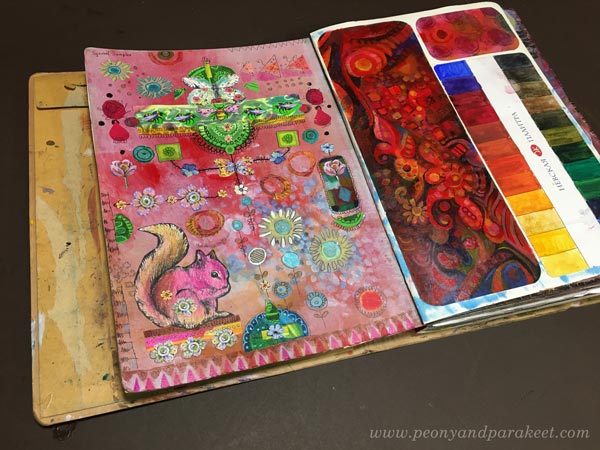
My first page is called Squirrel Sampler, and it has all kinds of little treasures that Paivi the Squirrel has collected.
The second page is called Rabbit Feeders. It refers to women’s status and importance in Virginia Woolf’s novel The Voyage Out. An isolated woman looks at herself from the mirror and questions her importance for the world. I read Voyage Out as a teenager, and this allegory, even if it’s just a few rows in the book, touched me deeply.
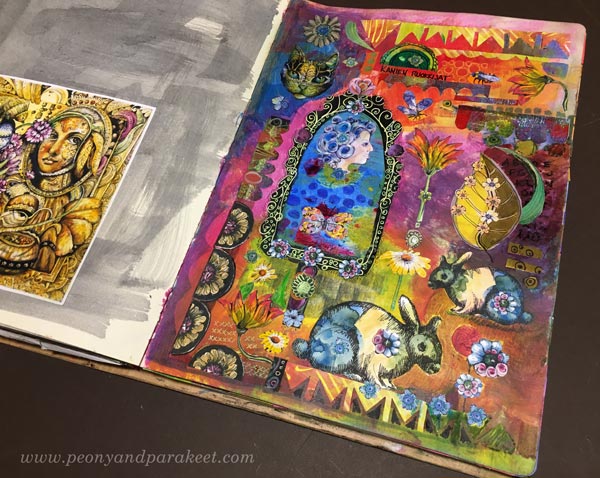
It often happens that creative play evokes feelings and stories that are too big to express in any other way. I hope you’ll enjoy making these samplers!
Start drawing your sampler pieces – Subscribe to my weekly emails and get a free mini-course!
What Artists Keep Doing – Series of Inspiring Quotes #3
This post ends the series of inspiring quotes that I have heard or read recently. In the last week, I wrote about the feeling of not being ready yet, and the week before about being honest about what you want to create. But now to this week’s inspiring quote!

This Week’s Quote
Don’t ever quit anything.
Who: Finnish journalist Kimmo Oksanen
Where: A column in the local newspaper Helsingin Sanomat (in Finnish)
At the age of 16, Kimmo bought a typewriter and a guitar with the money earned from a summer job. He thought he could be a famous singer-songwriter. But he quitted singing and writing songs when he went to university and found out that lyrics are not “real poetry.” He also used to draw, paint and do sports when he was a teenager but ended up quitting all that too. He used to aim for perfection and didn’t realize that mistakes make the master. Now he regrets that he hadn’t just kept doing, and his advice is: “Start a lot and never quit anything.”
Not Quitting Crafting and Writing Made Me an Artist
When I was a teenager, like Kimmo, I also loved to write. I wrote poems and short stories and attended some competitions too. I was also a crafter, always knitting and crocheting. My deepest desire was to become a visual artist, and I painted and drew almost every day.
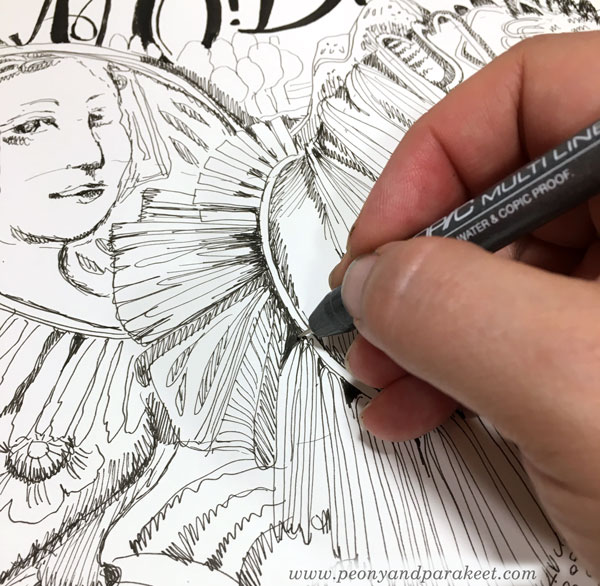
Then I saw a computer for the first time and fell in love. It was the early 1980s, and the computer age was just getting started, but I knew that technology was my thing. I changed my plans to become an English teacher to a software engineer. But despite my interest in computers, I kept on writing, drawing, and crafting. There was a period when I spent less time with creative activities, but in one way or another, I have been a writer and crafter all my life.
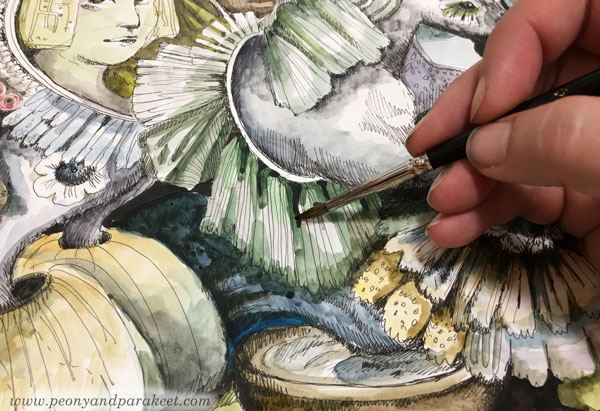
When art began to call me again, I also wanted to start a blog. I was still quite a beginner in art, and my vision was bigger than what I could put on paper, but the encouragement I got from the readers kept me going. But now when I think about it, my old hobbies also had some role in that. I had learned resilience from crafting, self-expression from writing, and the old dream of becoming an English teacher oddly changed to the courage to blog in a foreign language. Without being a writer and a crafter, I wouldn’t be a blogger, and without being a blogger, I wouldn’t have become a working artist.

I Regret Quitting These!
However, there are a couple of things that I loved as a child but quitted doing. I used to write short plays and gathered an acting group from a few of my schoolmates. I also played the violin for a few years. During the past four years as an artist, I have regretted quitting both. When running classes, it’s good to be able to present things in a memorable and fun way. When selecting the music to the class videos, I try to find songs that fit with the topic of the project and keep the attention on the subject. The little that I learned in my childhood years has been useful, and I wish I had continued both acting and playing through all the past years.
Stephen King and Does Talent Dictate What We Should Keep Doing?
In art, the question of talent usually comes up in the discussion sooner or later. I just finished reading Stephen King’s book “On Writing” where he tells how it’s just a waste of time trying to learn something that you don’t have any passion. His son played an instrument, but because he showed no talent to him, Stephen advised him to quit. He had wanted to see some free playing, some evident joy, and some promise of the career as a musician. Because there were none, he thought the son could use his 30-minute practice better than playing.
I find the story and in general, the discussion of talent depressing. It determines both the person and the profession from a very narrow perspective and generates powerlessness. That’s why I have tried to avoid to think whether I am talented enough or not. However, the question of talents always lurks somewhere behind the surface. I got to realize that when suddenly, a few weeks ago, I was told that my grandfather had graduated from a design school. He had been a farmer and died a long time ago. I never met him, but some of his letters have been saved. Based on them, he was an unhappy man who yearned for bigger challenges than what country life could offer. Clearly, he wasn’t meant to be a farmer, but someone who develops new things.
When I heard what my grandfather had studied, a thin string around my heart broke, and the tension relieved. I was no longer the one who had just got an accidental obsession for art and design, but a link in the chain of generations. It became more meaningful than ever to continue the work that my grandfather wasn’t able to do. It also made me partly re-write my story – I had some talent after all! I have also felt embarrassed about how much that meant to me. In the end, the fact that we keep on practicing has much more effect on our skills than any inheritance.
Art is About Not Needing to Quit Anything
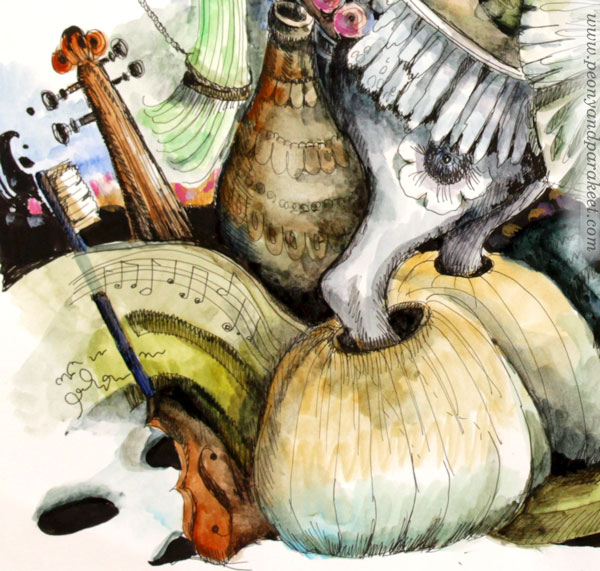
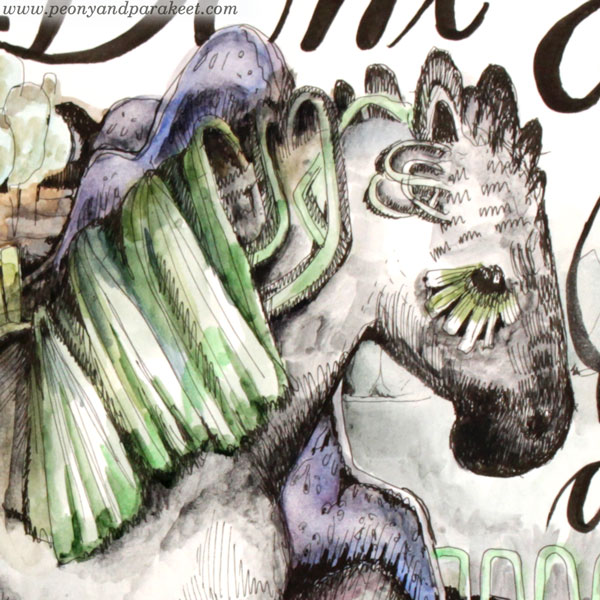
When making the illustration for the blog post, I brought things from the past that I carry with me. Many of them are funny and harmless, like my first dream profession of becoming the queen of England. My parents helped me to plant a bench of Queen Elizabeth roses under the window of my room. When drawing, I don’t have to quit that dream. I don’t have to quit anything.
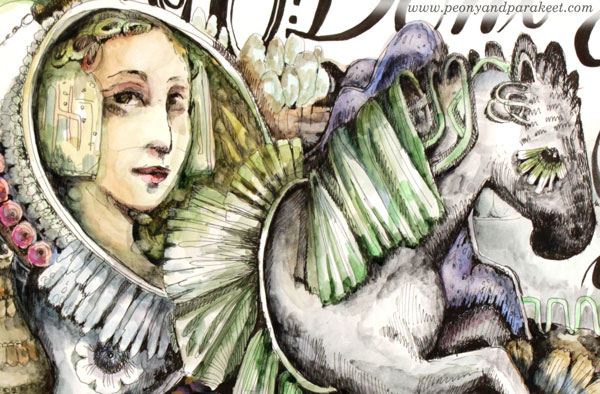
In art, we enter a world where we get to play freely with the things that have made an impact on us. If we hadn’t experienced or practiced anything, our imagination wouldn’t have the tools and the topics we have now. Let’s keep practicing, let’s keep not quitting, and let’s be assured that whether we feel talented or not, we don’t have to give up anything when we keep drawing.
Take the Next Step – Do This!
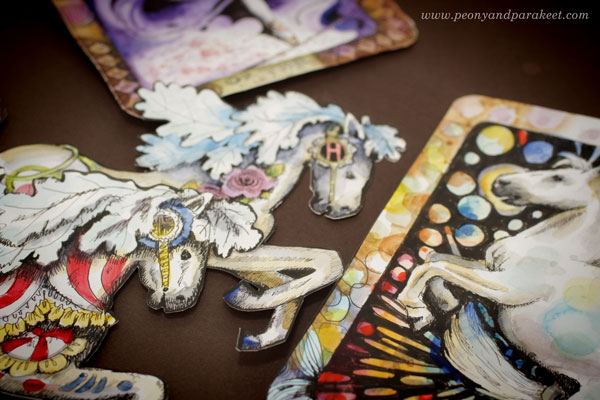
Open a new page in your art journal or sketchbook. Draw and/or glue a collage of things you have grown to love and never stopped doing!
Come to draw fantastic art – Sign up for Magical Inkdom!