
Art and Sacrifice – Must an Artist Drop Other Interests?
This week, I respond to a question about creative focus: when we want to move forward, should we focus on doing one thing and abandon other creative activities, like crafting?
I got the idea for this blog post from an interesting discussion that is running in my community Bloom and Fly.
The discussion started when a member wrote:
“I find that I have an interest in, perhaps, too many creative pursuits. I enjoy sketching, making journals, watercolors, acrylics, crafting, etc. I have observed that artists with a specific focus and dedication seem to be more successful and just plain good at what they do.
Of course, if one focuses on one ability, the hope is a gain in creative skills. Practice for purpose. So, should we know that in order to be very good at something, we must sacrifice other interests? Any thoughts?
I find that I have an interest in, perhaps, too many creative pursuits. I enjoy sketching, making journals, watercolors, acrylics, crafting, etc. I have observed that artists with a specific focus and dedication seem to be more successful and just plain good at what they do. Of course, if one focuses on one ability, the hope is a gain in creative skills. Practice for purpose. So, should we know that in order to be very good at something, we must sacrifice other interests? Any thoughts?“
Here’s my answer!
Sacrificing a Hobby? What’s Your Priority?
When you want to move forward, the essential question about every activity is: “Is this activity for relaxation or for moving forward” so, “Is this hobby or work?”
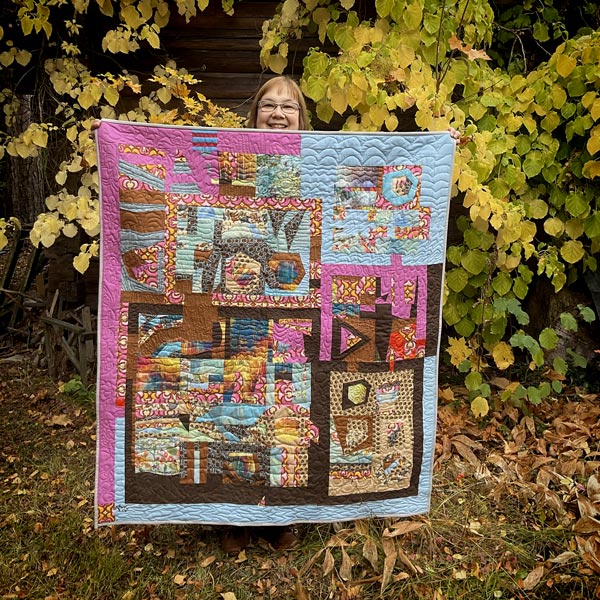
Having many hobbies is a good thing. I am a professional artist, and I love my many hobbies. For example, I quilt, scrapbook, make cards, spin yarn, knit, and cross stitch. I don’t do everything every week, but I do these regularly in my spare time, mainly in the late evenings and weekends. If I learn new things in my hobbies, it’s nice, but it’s not why I do them. I do them for relaxation, to keep the balance in life, and to stay healthy.
My official Instagram account is @peonyandparakeet, and there, I only share art-related stuff.
Separating your hobbies from your work is essential when you want to see your artistry more clearer.
I also have two beagles that need quite a lot of exercise and lots of house plants that need care. Like my other hobbies, they have never been things that I would sacrifice to become a better artist. I would find it very difficult to lead a happy life focused on art-making only.
But when you want to move forward in visual art, you need to redefine creativity and art.
For many people, a simple quilt is a work of art, a sign of creativity. I get that. But when you want to move forward in art, you need to raise the bar and stop treating every activity as if it would require creativity.
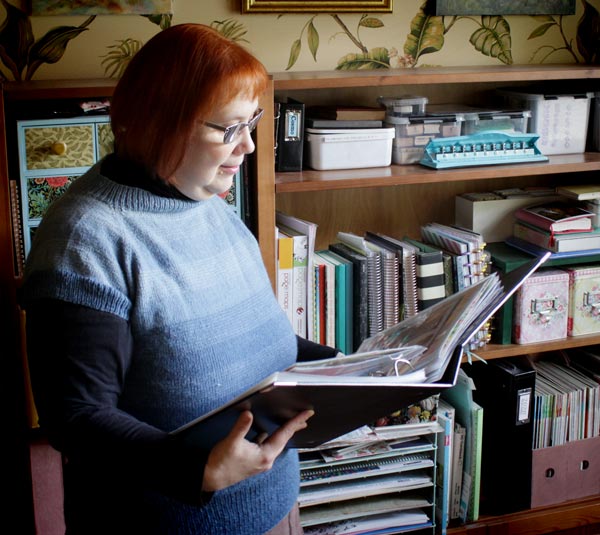
For example, if you don’t want to become a professional scrapbooker, decide that scrapbooking is not a creative activity for you. Yes, you learn self-expression and design from it, but treat it as a side bonus and define the meaning of the hobby differently. For example, I scrapbook because I want to get reminded of the good things that happen in real life – that everything is not about my imagination, but real life matters too. I want to take photos and get an outside view of my life. My paper crafting happens in a different space than art-making and with a different set of tools.
I don’t publish my paper crafting projects alongside my art. Sharing my art is work, and paper crafting is a hobby that’s reserved just for me. When I shop for crafting products, I am a consumer who enjoys buying pretty stuff. When I shop for art supplies, it’s much more serious. I check the pigments and the other quality factors and don’t feel like a shopper at all.
The results of my hobbies are not brilliant, but I reserve my critical eye for my art. If I someday do not enjoy the hobby, I just stop and do something else. That’s ok because it’s not my work.
Where Does Your Best Energy Go?
I save my best energy for creating art. It’s my priority and my work.
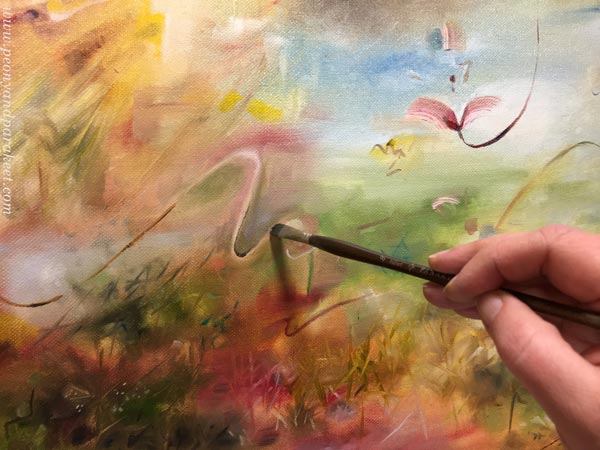
Many days are difficult, but that’s ok. I don’t expect to enjoy every moment. Even if I sometimes fiercely hate what I do, I will continue because, in the long run, it enables things that I want to accomplish in life.
Of course, like in every job, changes are needed if every single day is agony. But in general, I don’t expect things to go easily and effortlessly. I show up every weekday and create productions, not just single projects. Productions are, for example, a series of paintings that I will be exhibiting or a course that I will be launching. I try to think about my work as a series of things, not just single things that I throw to the world. I commit from three months to one year and don’t expect results immediately.
Series is always a big risk. Many classes have not sold as I expected them to, but some have been surprisingly successful. The same has happened with paintings. But the more I think of my work as a continuum or a curated collection, the more potential impact there is.
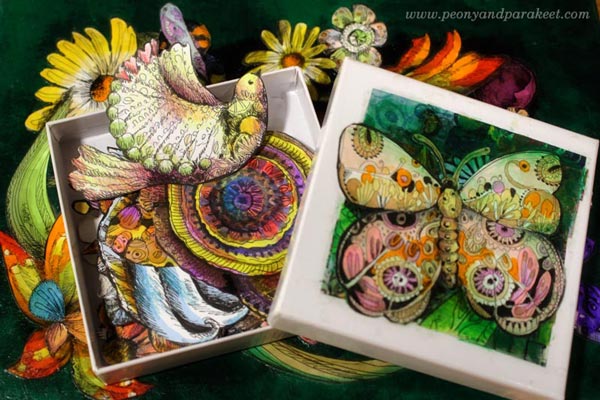
That’s also why I want to encourage you to make art journals, make a series of drawings to fill boxes of joy, and even take classes to commit to several projects.
Sacrificing Techniques: Drawing or Painting, Watercolors or Acrylics?
When you want to move forward in art, the most important question is not about the technique. It’s more important to consider what things you want to offer the world. If you think about this blog, would you really want me to focus on one technique, one theme, or one subject? And still, I have a clear focus that defines my offerings: I want people to get connected with their imagination.
Thus, when I fill my journals, it doesn’t make me feel less artist than if I make big oil paintings. My intention is the same – to inspire you to reach that inner child and use your imagination. Journal pages get published in my blog or classes and encourage you to create and imagine, and when someone buys a painting, it takes his or her mind from the wall to a different world.
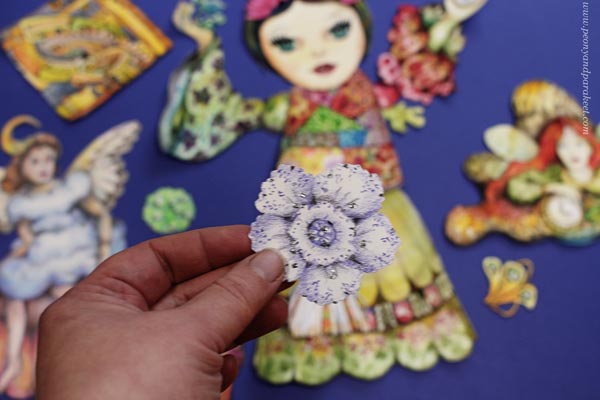
In the work-oriented mindset, you don’t just create for yourself but build a path to serve others. This path can, of course, begin from your own enjoyment, but the longer you want to go, the more it will also involve others.
When you see artists focusing on what they do, remember that they are mindful of how they serve you. Their life can include all kinds of things and activities; they just don’t show that to you. You don’t need to sacrifice your other hobbies; you only need to stop thinking of art as something that you do only for yourself.
This, however, doesn’t mean that you would do art only for the sake of pleasing others. When you are at the beginning of an artist’s journey, you are not conscious of how you can serve people the best way yet. You need to create more art, grow your skills, listen to yourself, and regularly show up to the world. I have found my path by updating this blog, which is now over 10 years old. So I thank you for helping me find my mission as an artist!
“Great, But I Don’t Want Art to Be Work for Me!”
Of course, we can have goals in our hobbies too, and many times the development begins as a hobby. But isn’t it so that when we set goals, they include secret dreams? Being aware of these hidden thoughts and facing how much work it will require is a part of the artist’s journey. And yes, some sacrifice is then needed.
If I think about myself, becoming an artist has required more passion and work than I thought. For example, getting over rejections has been hard but necessary. When everyone said “no,” it was difficult to see the potential “yes” in my work.
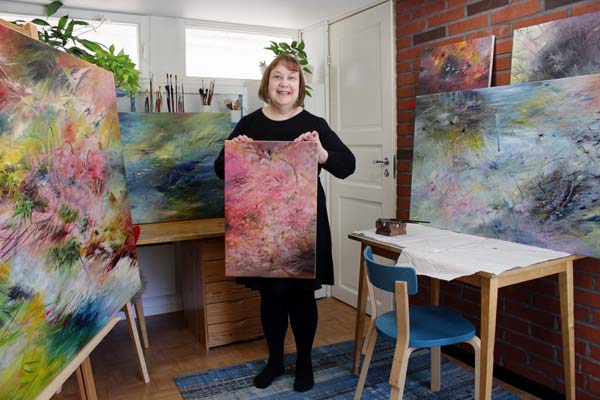
But life is short, and this is what I have ever wanted to accomplish in this life. And now, I even see a new horizon and want to accomplish more. Again, it feels overwhelming, but I know that if I treat it as work – as my priority, I will have a chance. I will write more about that in the near future!
Art and Sacrifice – What Do You Hope to Accomplish?
This is my counter question to the original one. What does being successful in art mean to you?
I also like this question: “How does success appear in your environment?” It’s like a mini question that leads to the big one. For example, imagine how your home looks when you have accomplished what you hope to do. How have you organized the supplies? What’s on your walls? What is the overall style and atmosphere? Even – where do you live then?
Any thoughts? Please leave a comment!
Let’s Get Inspired by Tassels!
This week, we dive deep into the soul of tassels and get the most out of our creativity.
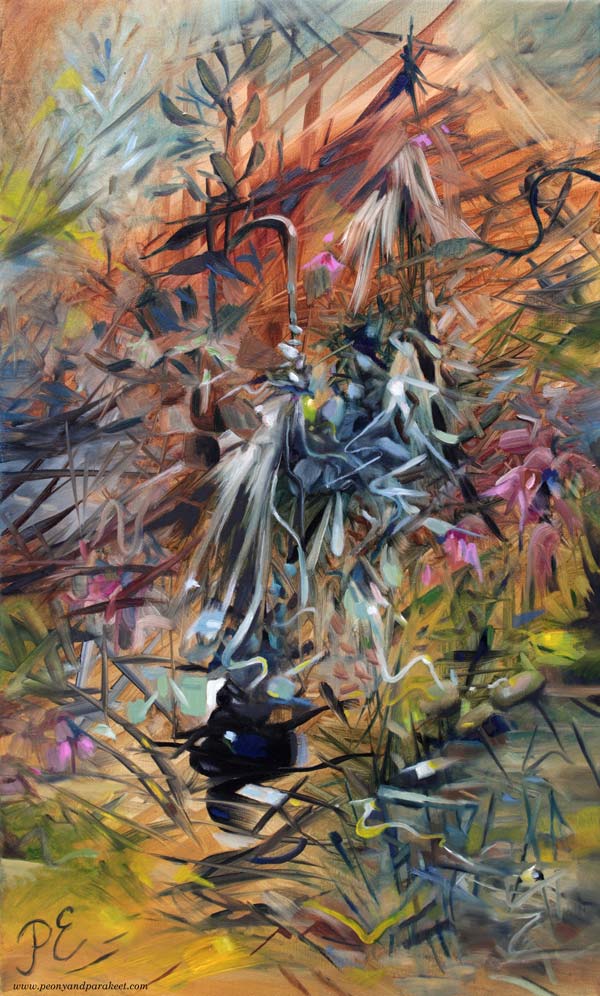
Here’s one of my newest paintings called Church of Saturn. This oil painting is a part of my series Linnunrata – Milky Way, where I explore planets and outer space. (See previous work: Jupiter here, Uranus here, the Moon here, Mercury here, Neptune here, Pluto here, the Earth here, Venus here, and the Sun here!) When I painted it, I thought about the rings of Saturn, the god of agriculture, branches and twigs, an old wooden church from my childhood, wabi-sabi, and the beauty of – tassels!
Tassel Dolls
When I was living in Eastern Karelia in the 1970s, the simplest doll we could make was a tassel doll. I painted it in watercolors so that you can check if it’s something that you had too!
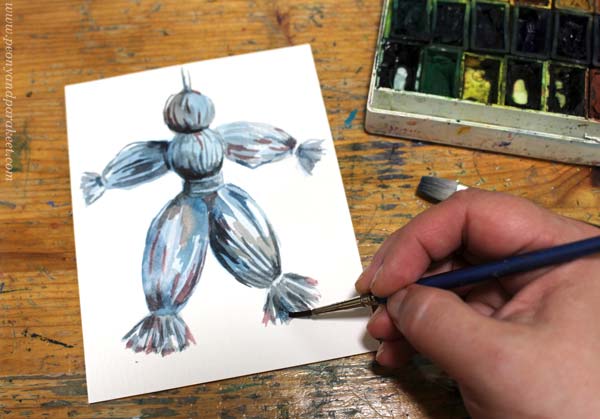
The doll was made of wool yarn and so simple that even a 5-year-old could make it. It’s a good example of a thing that is not valued by our adult self, but that brings up our inner child: “Hey, Miss Tassel, where do you want to go?”
Tassels as Extra Decorations
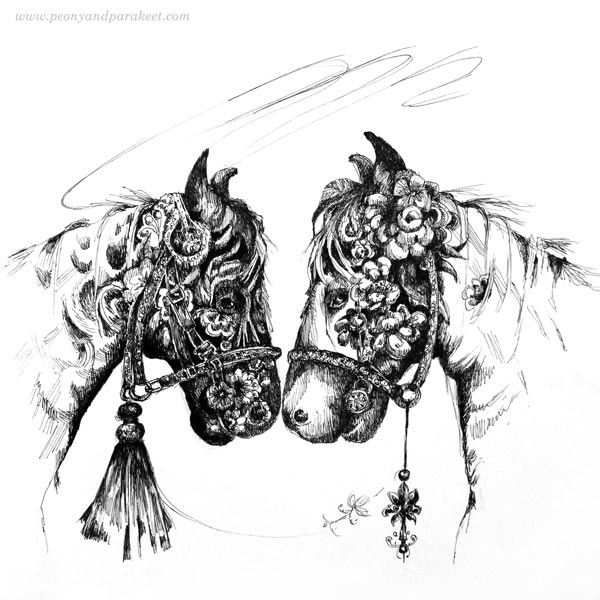
I rediscovered my love for tassels in 2018 when I participated in the Inktober challenge. Back then, I thought of tassels being a fun accessory and I have enjoyed using them as extra decorations in my drawings.
This week, I drew a new tassel for my boxes of joy and had a lot of fun making it.
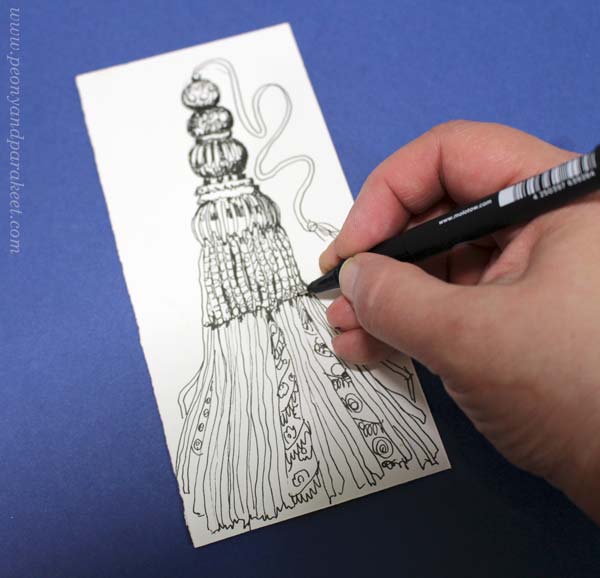
First I drew some circles and lines with a black drawing pen, then added textures and shadows in the style I each in the classes Animal Inkdom and Magical Inkdom.
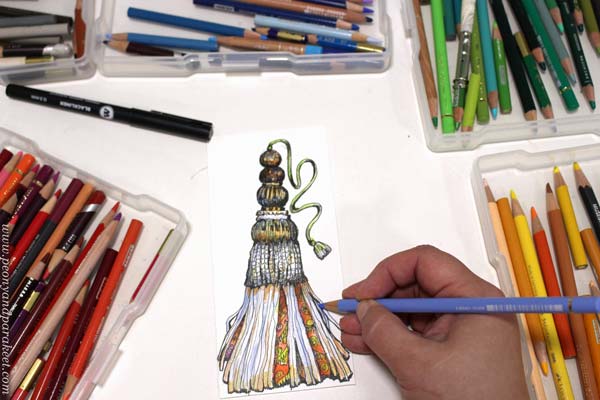
After colored pencils, I picked some other hand-drawn pieces from my boxes and admired the luxurious collection.
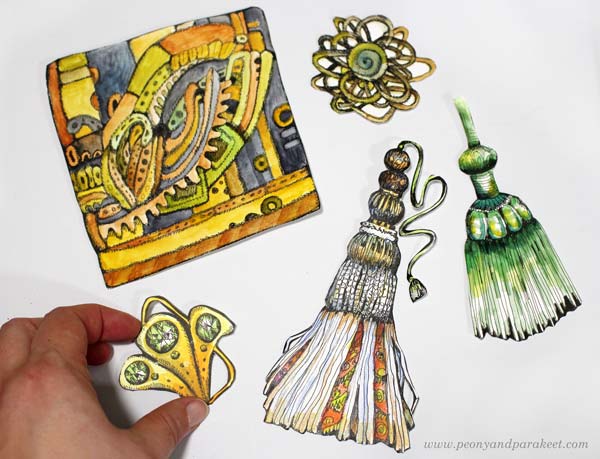
Who needs shopping when you can have your own personal store and draw all the good stuff for it!
Blowing Life to a Tassel
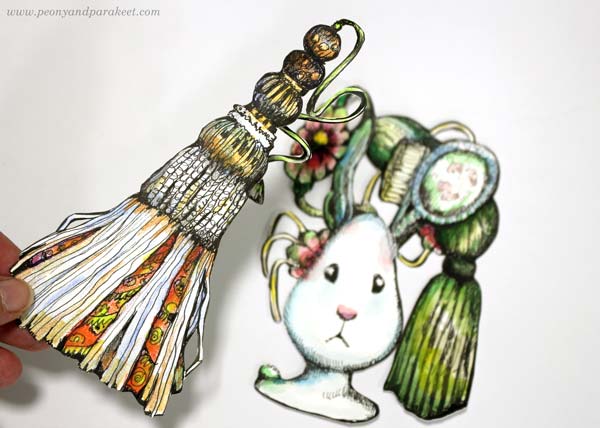
A tassel drawing can be more than a decoration only. You can have more fun by playing with it so that it will get a personality. Imagine a tassel as a person or an animal – a living thing. Here I see two tassel ladies on a stroll!
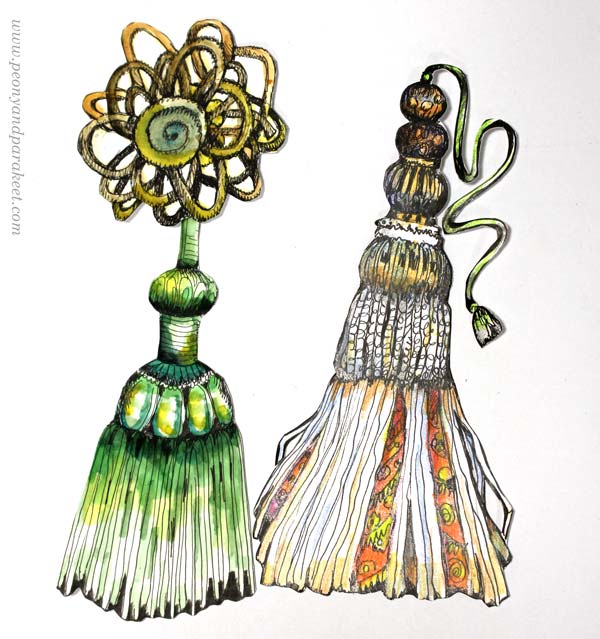
Now, the tassel has a mind of its own. An artist can see any simple object as an element of expression.
In the painting “Church of Saturn,” the tassels have a spirit that makes them an integral part of nature.
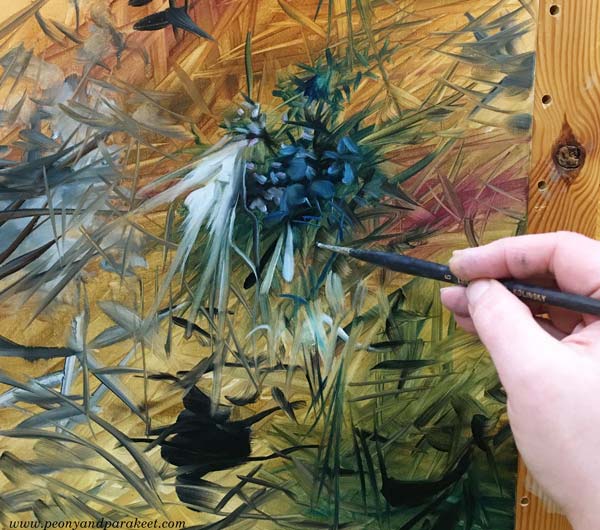
These tassels are organic, and the style is abstract rather than illustrative.
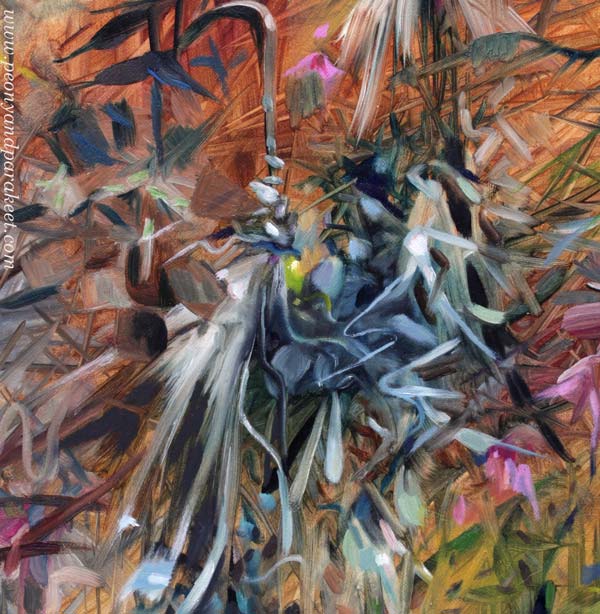
As artists we need to do this – go beyond what’s expected and commonly seen.
Ornamental Figure with Tassels
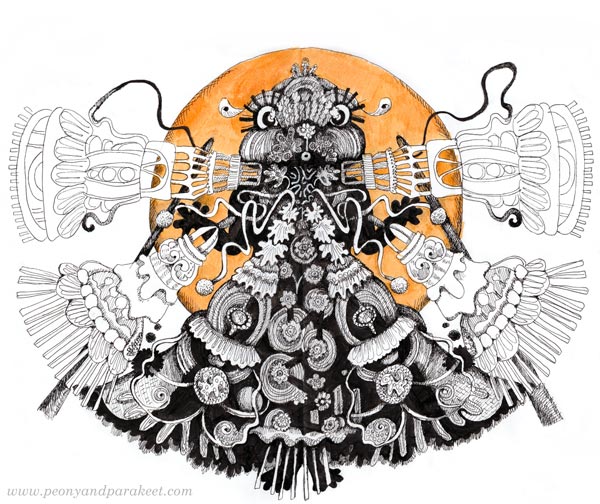
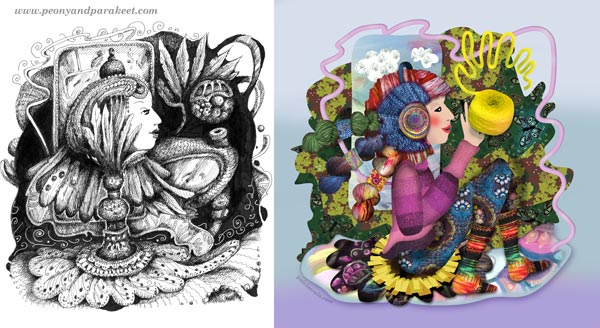
In the class Magical Inkdom, I draw a funny bunny with a tassel on her head and now I got the idea of making an ornamental figure so that the tassels form the body.
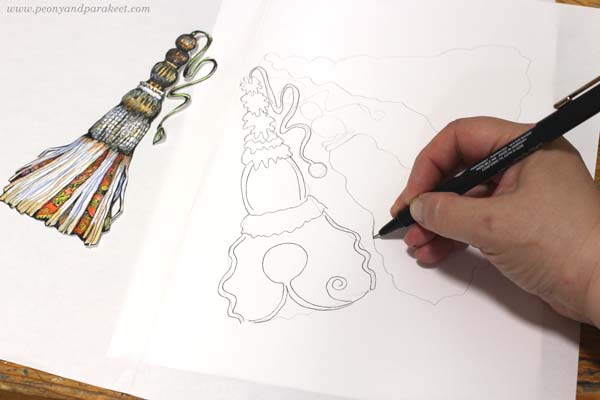
To make a symmetrical ornament, I traced the tassel three times on the right side marker paper. Marker paper is thin so it’s easy to see through it.
Then I taped the paper to the window and traced the three tassels on the left side of the paper. I added additional elements to the center and some facial features too. My tassel doll!
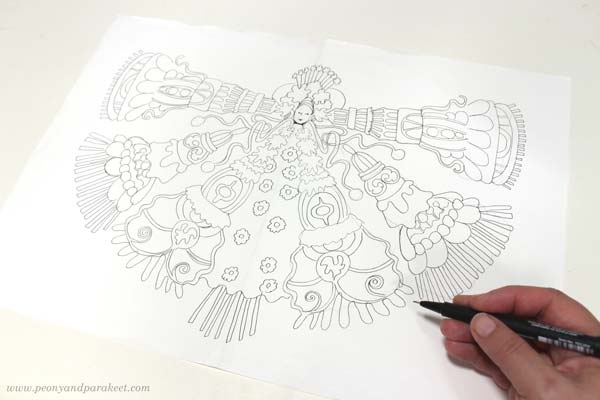
But when I continued the drawing, I got a crazy idea of a knitting hamster. Tens of years ago, I was a hamster breeder, attending shows and everything. I know those little animals well! Knitting is one of my favorite hobbies and the thought of a hamster collecting all the yarn and trying to knit it made me smile.
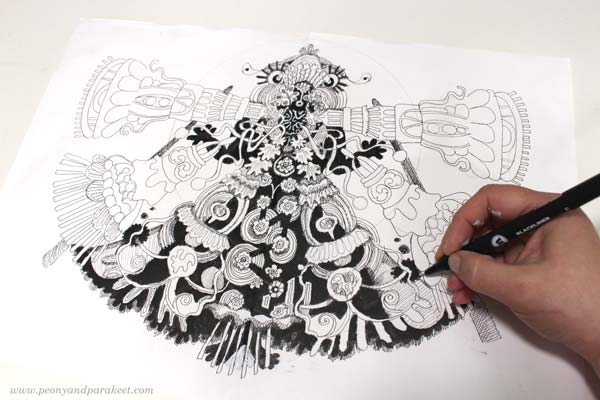
Then the word “Knitwork Orange” came to my mind, and I included the orange as well!
Here’s me, in the middle of the night, knitting away!
Tassel Dolls on Mars
Last spring, I had a small canvas that was first just a mess. I like to start my paintings in this intuitive way and without a plan. I had some leftover paint so nothing was wasted.
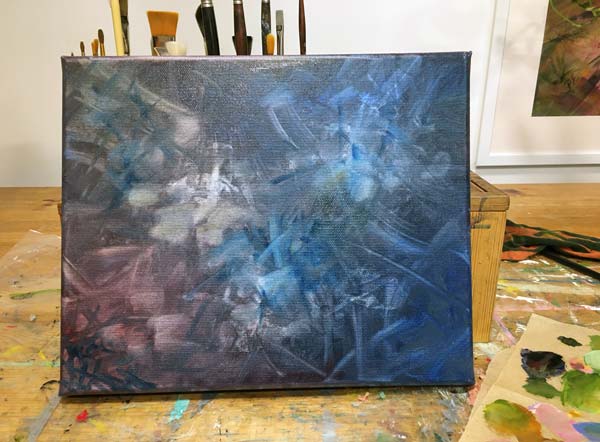
The first ideas are terribly traditional and mine was to make a vase with flowers.
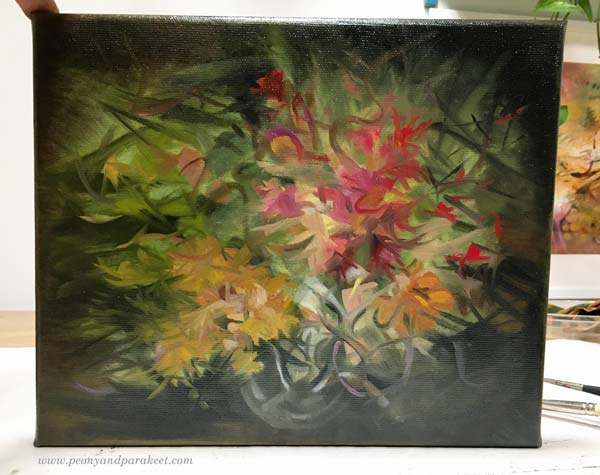
But after this, I was taken to another planet, to Mars! There, tassel dolls met art deco, and I had a lot of fun finishing the painting with all the decorative details.
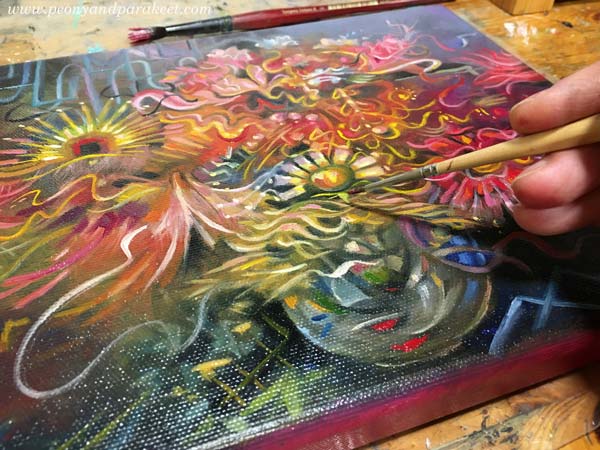
I love the Great Gatsby movie from 2013. It has the best party scenes and good music. I had a lot of fun creating a tassel doll party that took place on another planet.
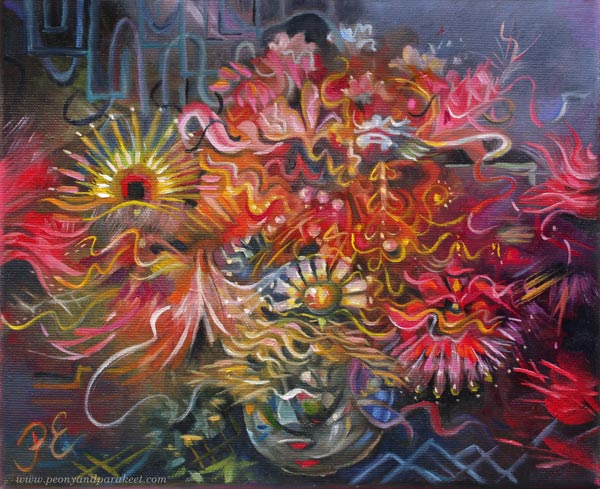
This small piece ends the Milky Way series – 11 oil paintings from March to May. I have taken a break from creating art, but feel like I am recovering now. Thanks to making the tassel drawings for this post! I hope they work for you too!
About Art and Knitting
Knitting Through Childhood
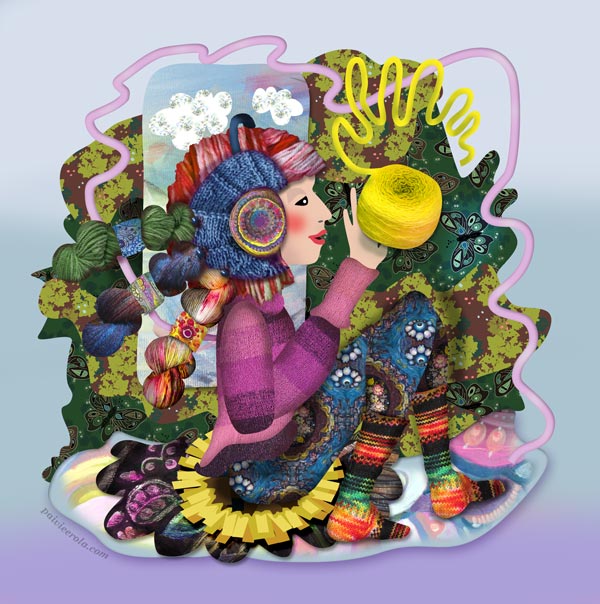
I learned to knit before school when I was about five years old. Before that, my older sisters had taught me to crochet, but it wasn’t enough. “There will be much more stitches, and they get dropped easily,” they said. But I was determined. I sat in the kitchen with a ball of dark green light-weight yarn and thin needles that had duck heads in the other end. I wrapped the yarn around the needles and was sure that I would figure it out by myself. It must have been an endearing sight because my sisters gave up and taught me to knit.
After that, I was unstoppable. My mother taught me to make socks and mittens, and when I went to school, I learned more from there. Our local library had a couple of shelves of knitting books, and I borrowed them regularly. As a teenager, I bought a knitting machine and made a sweater in a couple of days.
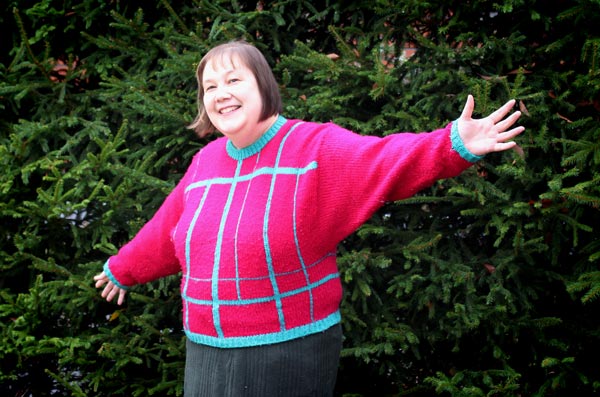
The good thing in the 1980s fashion is that the knits were so big that we never grow out of them!
Late-Night Knitting
Like art, knitting has always been with me. But even if I have had times in my life when I haven’t created art, I have never stopped knitting. No matter what crisis I had, how busy at work I have been, there has always been time and energy for knitting. It’s still like breathing – in, out – knit, purl.
As a child, I had a phase when I dreamed about being a textile artist. But the older I have become, the more I have realized that the connection between knitting and art-making must be looser for me. In the late evenings, when the working day is over, I say good-bye to the artist in me. Then it’s time to stop producing and start consuming. I browse online yarn stores, their Instagram accounts, and Ravelry.com – the ultimate database for knitters – and plan my next projects. I watch knitting podcasts on Youtube and knit obsessively as long as I can stretch the night. I don’t think about art, and I don’t feel like an artist. By following or adapting a pattern that someone else has written makes sure that I don’t have to think but just knit.
But strangely, for each big painting, I need a lot of knitting. It’s my way of processing all the ordinary so that the extraordinary can come up.
Art and Knitting – Work and Hobby
When I started blogging over ten years ago, my blog was about knitting. At that time, I also sold handmade bags called folk bags and wool that I produced in co-operation with my friend and a few farmers. There might still be some of you who have followed me since then. Thank you for sticking around!
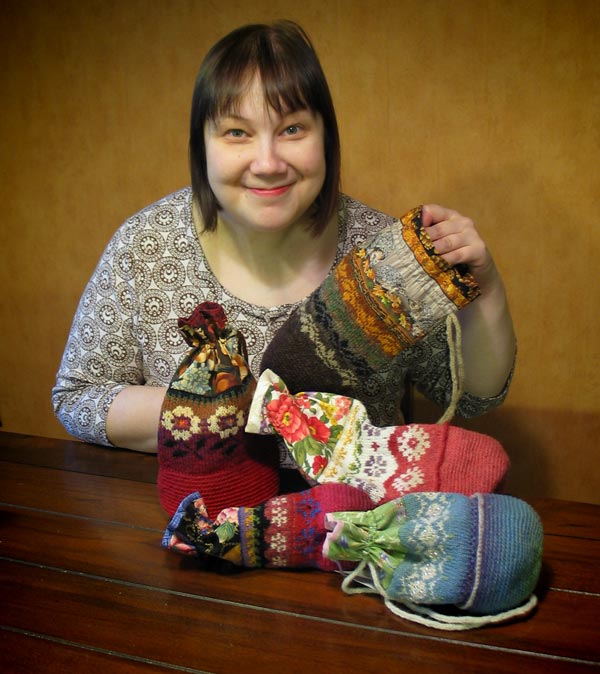
Later, I wrote a pattern for them. You can purchase it here!
When I grew my artist’s identity, I wanted not to talk about knitting anymore. I needed a hobby, not another job, and I felt that knitting and fine art don’t go so well together in public. People often have a hard time understanding that art can be a real job.
But last year, I decided that it’s time to approach art with greater confidence than before. It has made me more open, and maybe it has added a bit more self-acceptance too. So yes, I am both an artist and a knitter. Art is my work, and knitting is my hobby, but I would not be able to work without the hobby.
Does this make sense to you? Let me know what you think!
Can Fine Artists Craft? Can Crafters Make Art?
In this week’s post, I share my newest painting and other creative projects, and talk about linking art and crafts together.
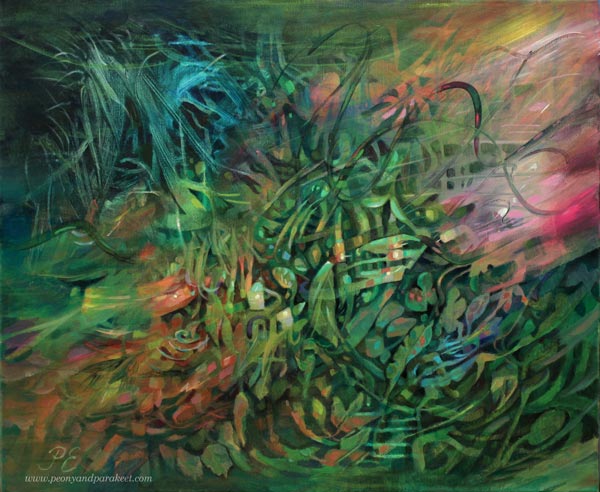
Here’s my new painting called “Elämän nälkä – Hunger for Life.” It’s made in acrylics. and the size is 54 x 65 cm (about 21 x 25,5 inches). I started it before my dog Cosmo passed way, but it feels very timely, expressing how we want to live and survive, even if life is not in our control.
How I Created This Painting
My paintings often start with a specific color in mind, and this one was all blue in the beginning, and the orientation was vertical.
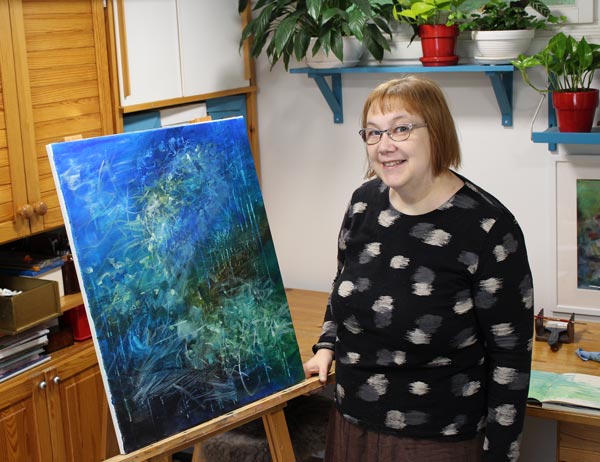
Then I turned it around and added more colors, then turned around again!
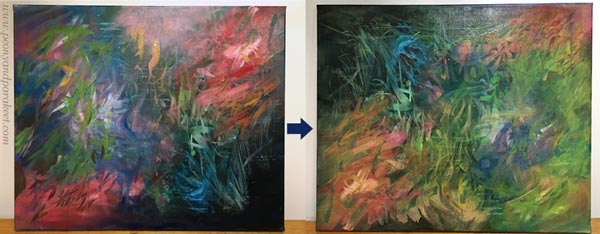
I wanted everything in this piece to be wild and free. It’s enjoyable to paint this way.
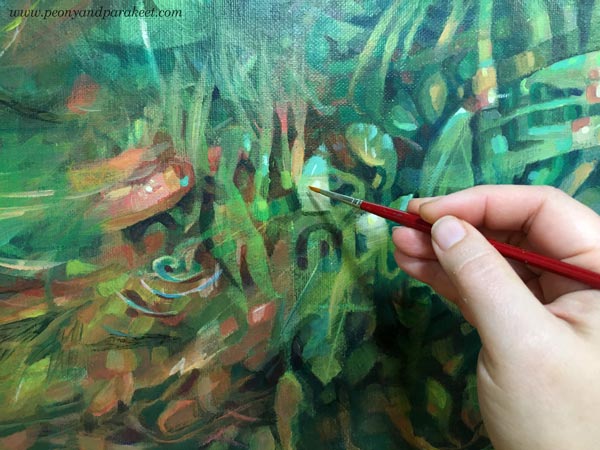
My favorite part of the painting is the top corner. It’s so sinister, and yet, so beautiful!
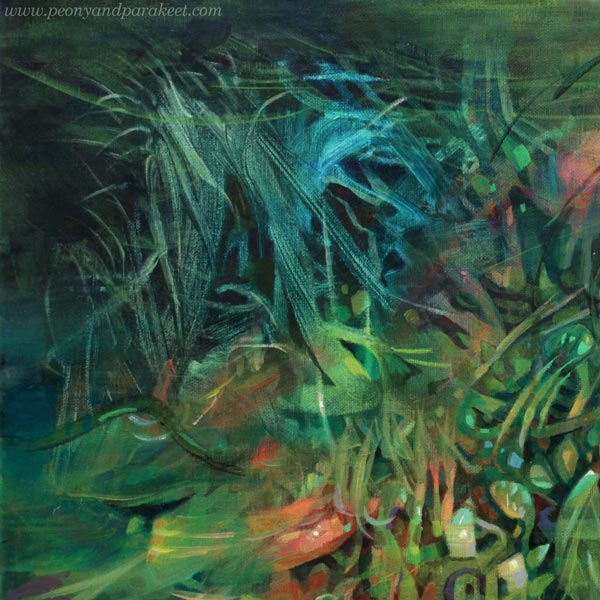
Here’s the whole painting again. I really like this one even if the atmosphere is gloomier than usual.
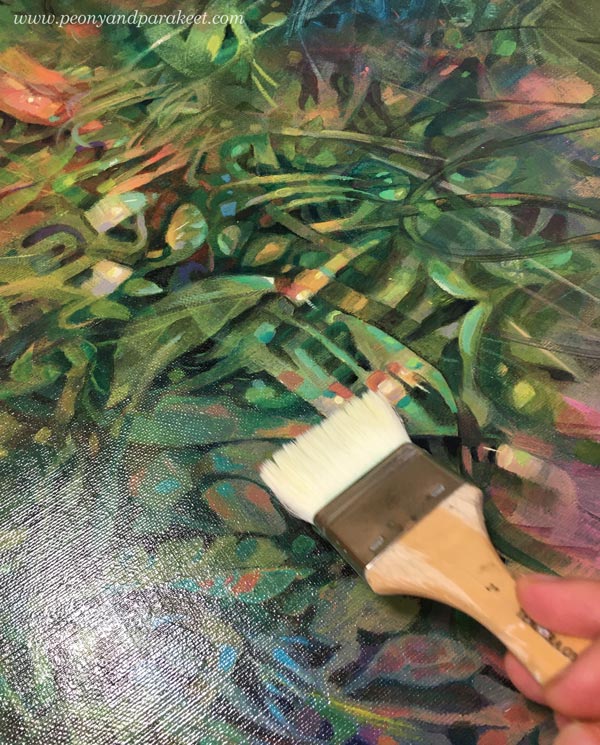
I always take the final photos before varnishing, because it’s easier to take pictures when the painting isn’t glistening. However, I love how the varnish makes the colors glow.
Painting Feels Different from Crafting
For me, creating art is a strange mixture of letting go and paying attention to the tiniest details. It’s like I am the mother and caretaker for my paintings, but can’t fully control the children’s personality and actions.
In my spare time, when quilting or knitting, it’s different. I can feel a sense of control, and I like it a lot. After saying goodbye to Cosmo, I sewed a quilt for Stella. I had the blocks ready, so the project was already half-way. About 20 years ago, I participated a quilt block lottery, where a group of quilters sewed similar kinds of blocks and happened to win them all. I had also sewn some more recently.
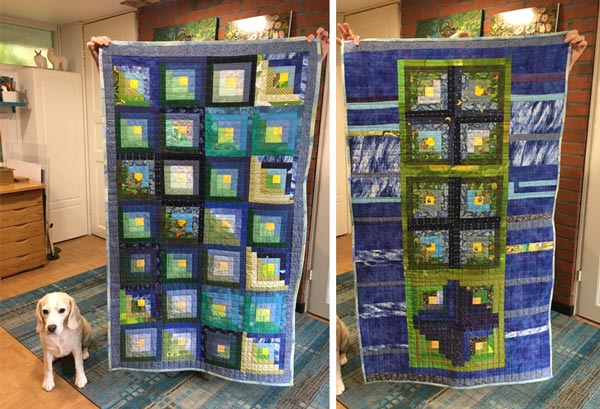
Art Inspiration from Crafting
My relationship for quilting and knitting has changed over the years. About 20 years ago, I thought that crafting is my way of creating art. But the more I got interested in painting and drawing, the less creative it felt. During the past 6 years, art-making and crafting have been strictly separated: visual art is the profession and crafting is the hobby.
This fall, my mindset has changed. I now realize that knitting is a way to give space for the internal processing that my paintings need. When I knit, my subconscious is sketching.
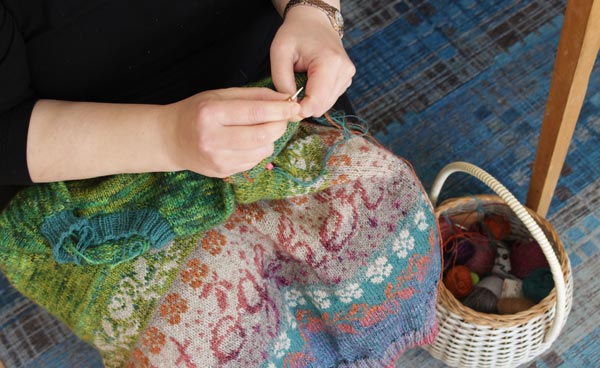
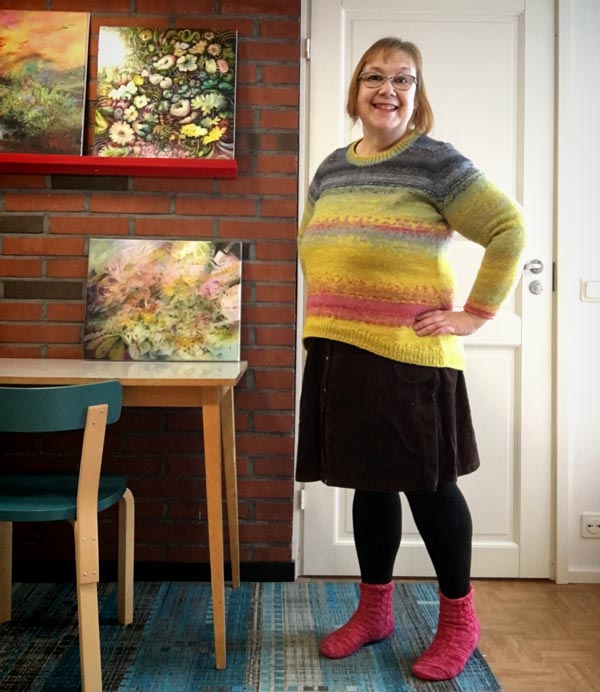
I love stranded knitting with many colors. My current project is Joji Locatelli’s All Together Sweater.
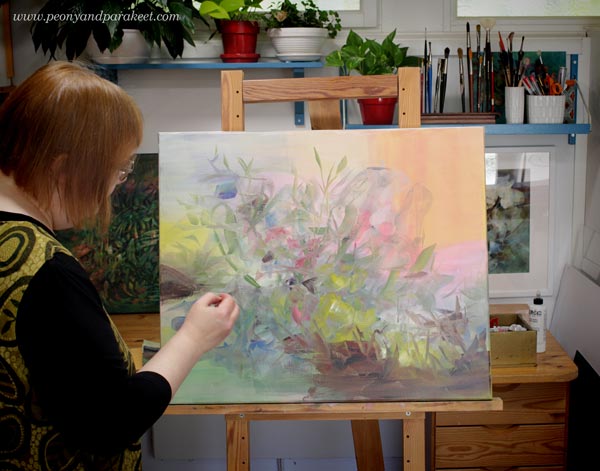
Here’s my current painting in progress. At least in this stage, it has some similarities with the sweater!
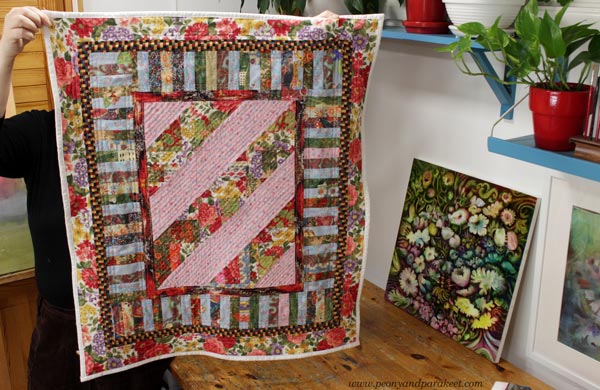
In general, I am more open to inspiration that I get from crafting, and vice versa. I made this quilt for my friend’s puppy.
Crafter, Craft Artist, Fine Artist – What’s Your Number One Creative Activity?
Many who create both art and crafts struggle with finding their style. For me, the working solution was to draw a clear line between the two. It made me see what things were missing in my artistic process, and what I needed to practice more. My artistic identity needed this isolation to make a clear hierarchy in what I create.
But now, I feel I can loosen up. Here’s what I wrote on Peony and Parakeet’s Facebook page last week:
“Art makes us more aware of what affects us and how we process it. Sometimes it means that we don’t want to immerse ourselves into something because it would not have a good impact on us. Other times it means that we want more of something because we know we need that. But for me, the most significant thing has been that accidental things happen, and I don’t need to filter everything. Both art and life run through us, and when the stream gets stronger, it will change not only us but our surroundings as well. When we say we want to loosen up, isn’t that what we really mean?”
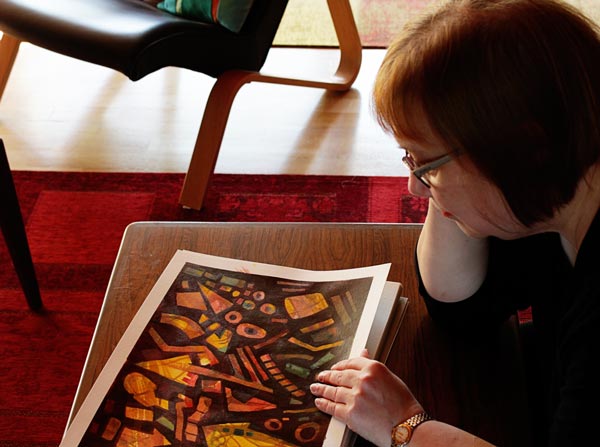
This month, I have done a lot more than just creating canvas paintings. I am working on a new class about abstract art and Paul Klee’s teachings. I have talked about Paul Klee before, but now I am creating a class that translates his teachings to a more expressive style. Hopefully, the class is launching at the end of November, stay tuned!
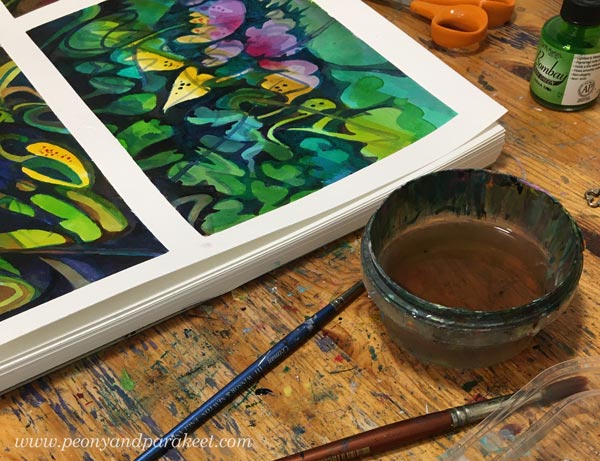
I have also finished an art journaling mini-course for an artist collaboration project. It will be for sale in October – so very soon!
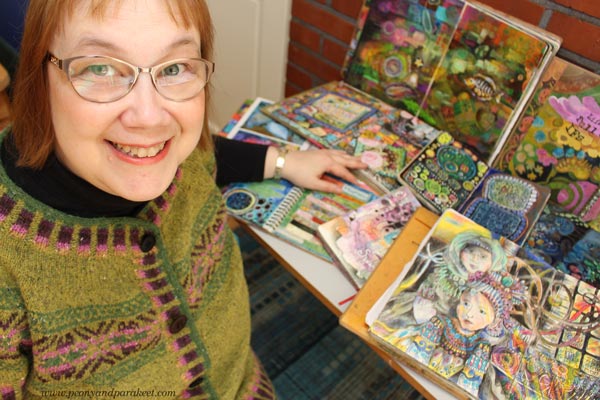
What’s Your Number One Creative Activity?
Here’s how I see myself now: I am a visual artist who creates abstract nature paintings mostly. I process my paintings by knitting, writing, art journaling, and doing daily walks. I live in a midcentury home, and my background is in design. I process my designs by growing plants and quilting. My paintings have design elements, and my designs have elements that are painted.
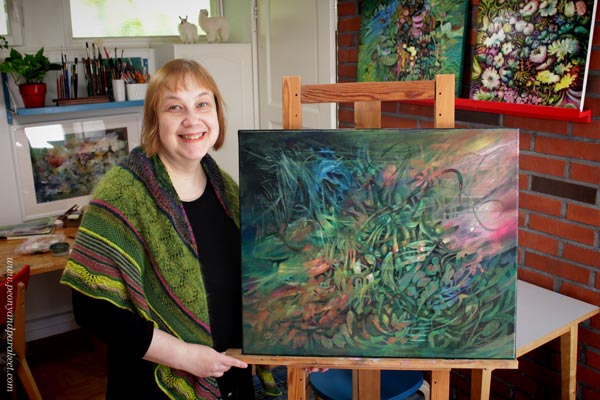
Painting is my number one thing. All the other activities serve it.
How would you define yourself through your creative activities? What’s your number one creative activity?