
What to Create with Colored Pencils? – Watch the Video!
This week I have a short inspirational video for you. I wanted to make a video that I can share on Instagram, so this has different portions than my videos usually are. You can watch it bigger by pressing the last icon on the menubar below the video.
Most of these drawings are made with regular colored pencils (or crayons as some call them) and some with watercolor pencils. I love both.
Coloring Freely on Blank Paper – Simple Start!
I am an advocate for coloring freely – starting with blank paper, adding colors on top of each other, and getting excited about what comes up. This doesn’t have to be anything difficult. Here’s an old picture from 2015 that I still find inspiring. You can illustrate your journaling with freely colored boxes.
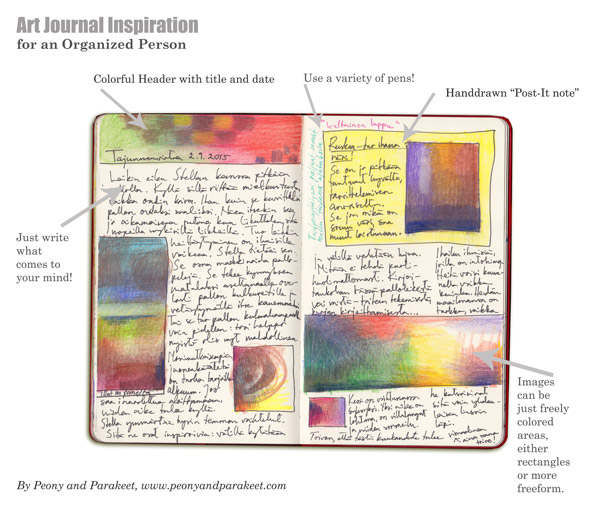
Children draw freely with colored pencils, but when they grow up and become “colored pencil artists” they need all kinds of references to get started. References are great for learning some techniques, but they don’t make anyone an artist. A big part of art is in our mind – how we open up and how we allow ourselves to break boundaries.
Growing Your Skills
My love for colored pencils is based on a promise that I have made for my inner child: I will color for you and help others to color for theirs. So even if I make oil paintings and media art too, colored pencils always have a special place in my heart.

So, welcome to my courses to improve your skills and expand your artistic thinking!
P.S. You can still sign up for Joyful Coloring!
Last Bloom – Watercolor Pencil Inspiration
This week we celebrate watercolor pencils and the lifecycle of flowers. I hope this post fills you with watercolor pencil inspiration!
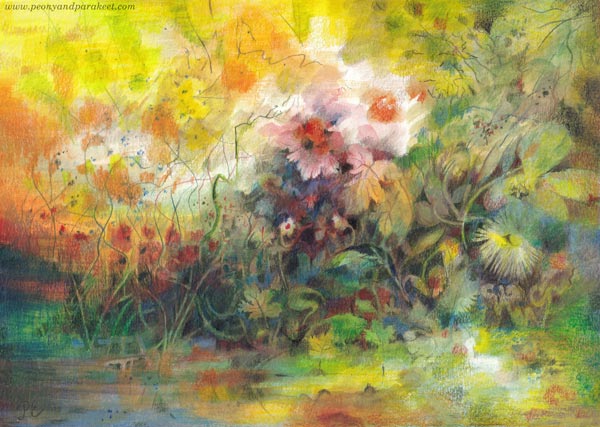
We in Finland have had a warm fall and many flowers are still blooming, even though it is already September. It inspired me to use yellows and oranges, which I love anyway.
Comforting Watercolor Pencil Inspiration
Lately, I’ve been editing videos for the upcoming course Joyful Coloring, which I recorded for the most part in the summer. I don’t know if the teacher can say it herself, the students decide that, but the videos are so inspiring!
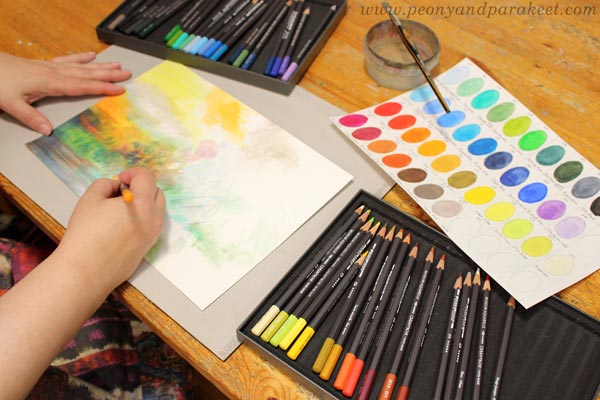
So watercolor pencils are really calling me now. I bought 20 more when I found them quite inexpensively, even though they are a good brand: Caran d’Ache Museum Aquarelle. And I also bought more paper – Fabriano Accademia Drawing Paper. It is not watercolor paper but works well for colored pencils and is more affordable. When you draw a lot, pencils and paper get used up.
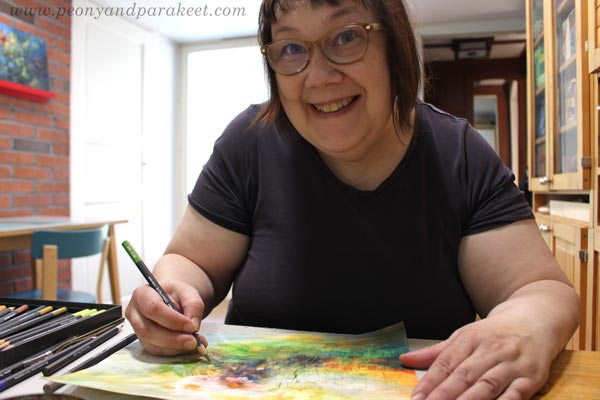
One of the best things about my job is that I can make “comfort drawings” for the blog. So, in the same way that there are comfort books, or comfort food, or comfort music, you can also make comfort drawings.
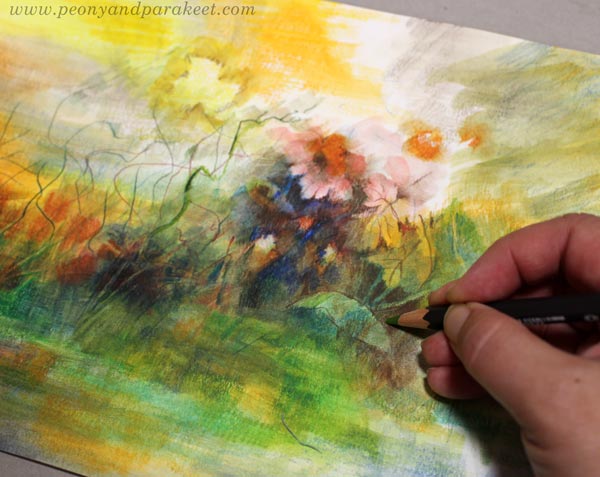
You can let colored pencils take care of all worries and unnecessary thoughts. Float in the sunshine and focus on everything beautiful!
Filling the Desert
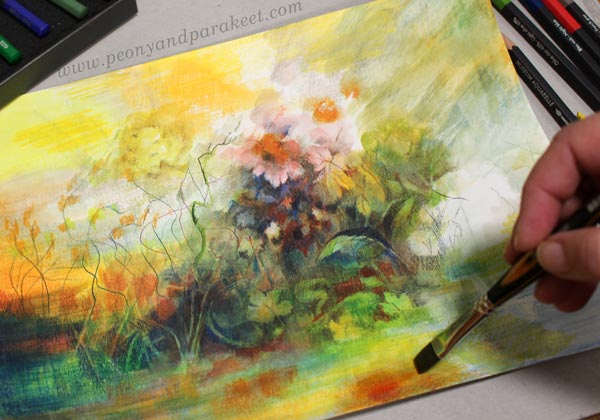
I like to start a drawing with a scenery, which I then fill. This method is also taught in the course Joyful Coloring.
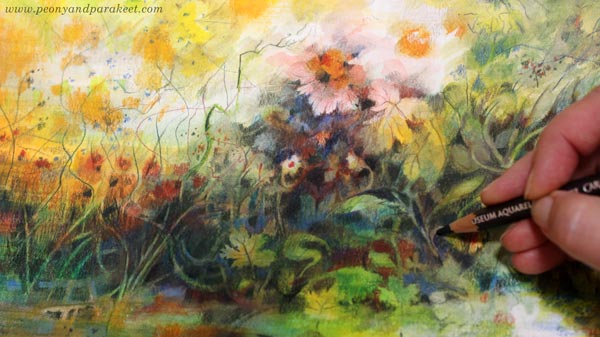
When immersing in the details, you can enjoy the fact that the world shrinks into a tiny area. I think that everything great and wonderful starts small. When thoughts decrease, possibilities expand. Then it is easier to invent and learn new things.
Meadow is a Town
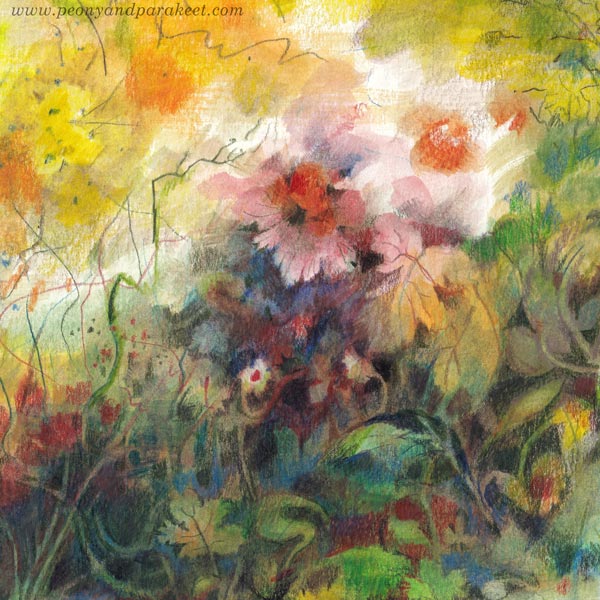
I have looked at the last flowers of summer and admired their details. It’s amazing how much there is in a small meadow flower: stems, seedcases, and flowers and leaves in different stages. And when you multiply those, the group of plants forms a busy town. A meadow is like an upright map of intersections, stations, and roads that guide the bees.
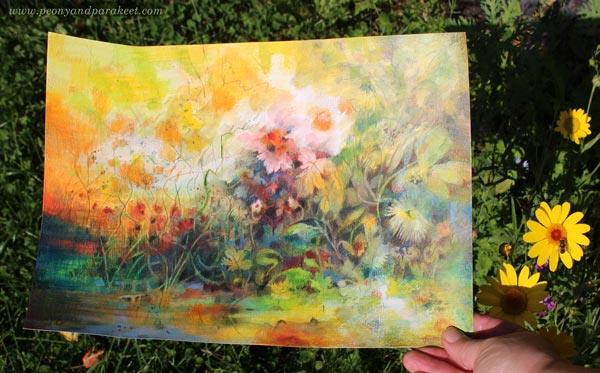
Colors of this kind of world are coming and going. Nothing is permanent and yet everything is so comforting and full of life.
Joyful Coloring – Sign up Now!
The new course Joyful Coloring begins on Sept 16!
Get your watercolor pencils and join me to create freely with joy and sunshine! >> Sign up now!
End of Summer – Freely with Watercolor Pencils
This week is about coloring freely with watercolor pencils. Let’s ponder about the change of season and how to process it through art-making!
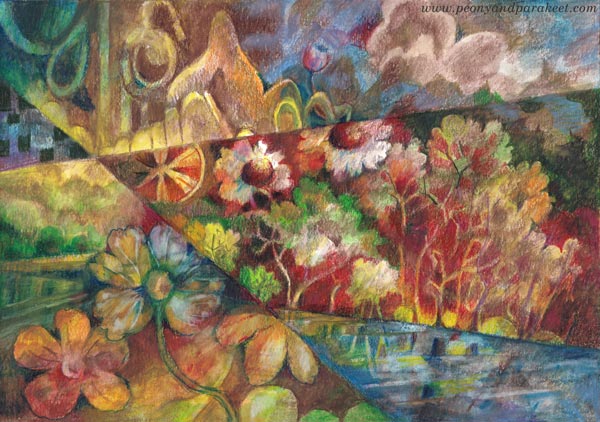
New Season – New Colors Are Calling!
Even though the weather has been warm, I find that my thoughts are already turning to fall.
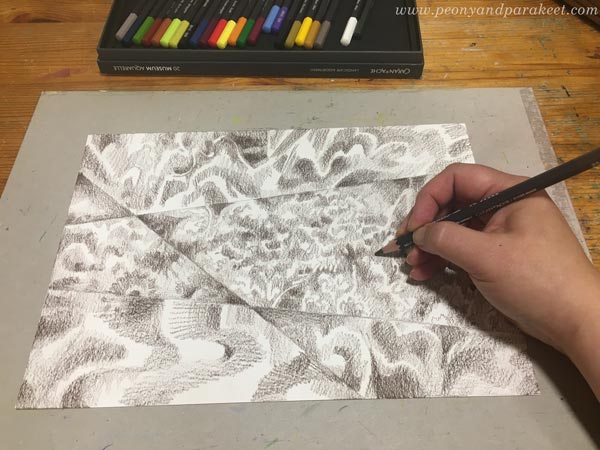
When I open the box of watercolor pencils, my eyes immediately go to the brown shades.
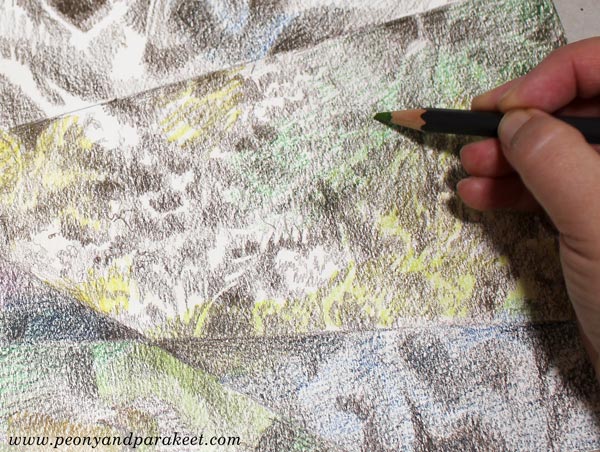
In the summer everything is bright and clear, the fall is darker and curlier.
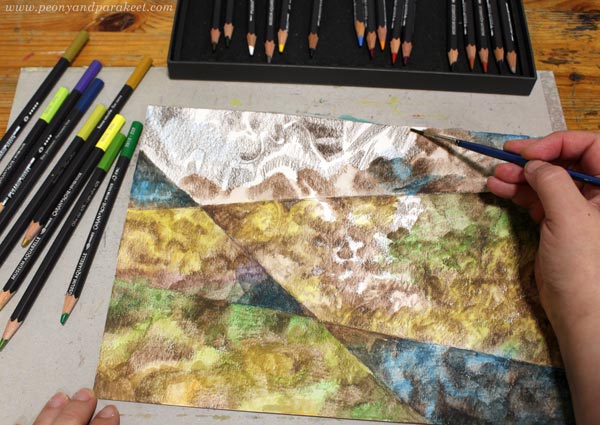
When Coloring Freely, Art Can Be Your Friend
10 years ago, I started as a full-time artist. At that time, art was a queen who I placed on a pedestal and looked up to. Today, art is not only my colleague but also my friend. We look at each other eye to eye and smile like-mindedly.
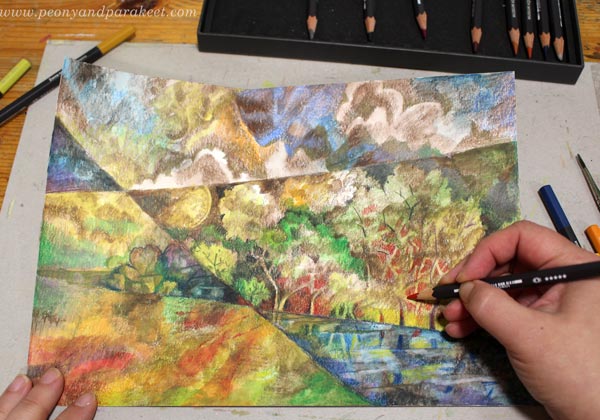
“It’s such a sad feeling when summer is coming to an end. There is only a dark autumn and a cold winter ahead” I told her last week. “Don’t worry” she said, we have recorded the summer and there are many wonderful things in the fall too.
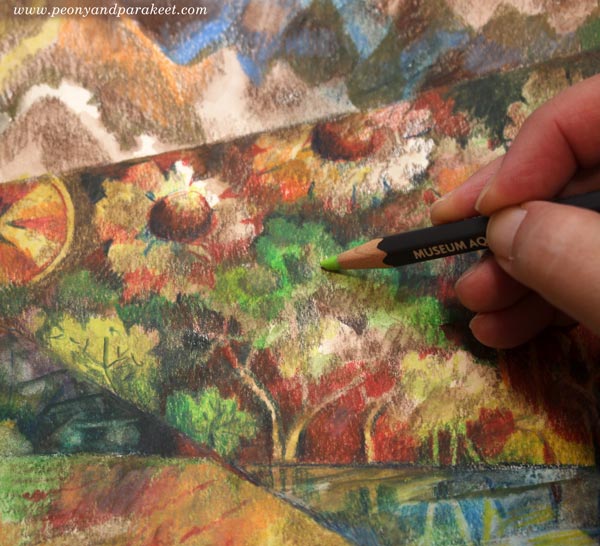
Indeed, summer is recorded. In July, I started working on the course Joyful Coloring. Now when I edit videos, I devour them like comfort food. The sun really shines there. Happiness can be heard in my speech and can also be seen on paper.
Everything indicates that I want others to have art as a friend too, not just on a pedestal.
Seasonal, But Freely with Watercolor Pencils
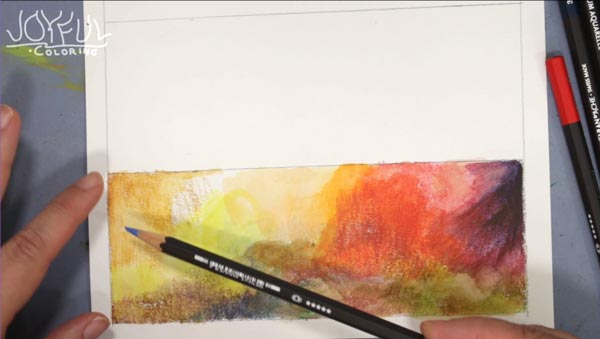
The watercolor pencils I bought in June (Caran d’Ache Museum Aquarelle) are already very dear. Because the color can be spread quickly with water, time is saved for details.
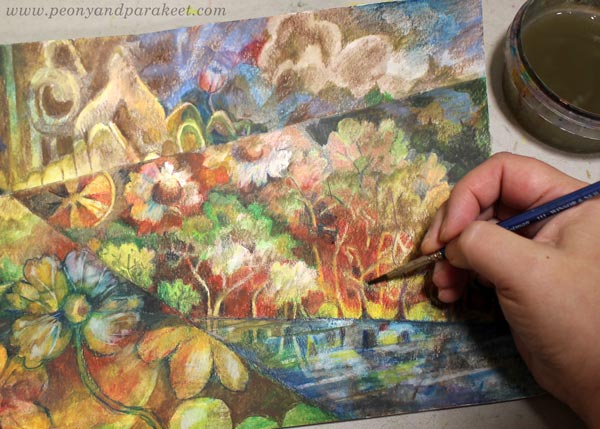
It is important for me to keep not only painting but also drawing. By drawing freely, we create a bridge between the outer and inner worlds. We can break the glass and travel between what we see and think.
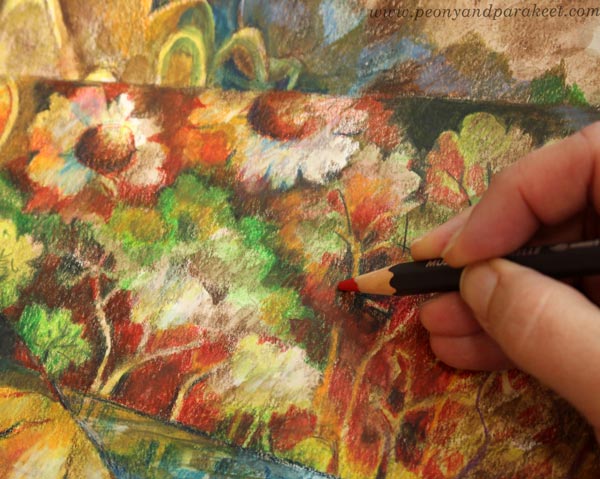
I gave this piece the title “End of Summer.”
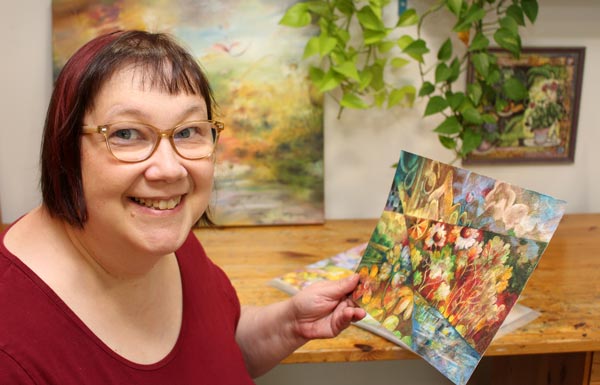
When I look at it, I get the feeling that an end can also be a new beginning. A joyful thought!
Joyful Coloring – Sign Up Now!
Start with blank paper and create freely with watercolor pencils!
The new online course Joyful Coloring will begin on Sept 16, 2024.
>> Sign up Now!
Four Art Mediums – Four Projects in Progress
Many Mediums – Many Versions of Style
I am not overly excited about the word “focus.” I have one artistic vision, but I don’t limit art mediums much. I think my style is evident in whatever I do. This year I have allowed myself to stretch even further than before, and embrace the challenges that different art mediums bring to me.
Cross Stitching – A Cat in Progress
Do you remember this cat from the course Magical Inkdom? In April, I asked what drawing should be my next cross-stitch design, and you voted for the cat.
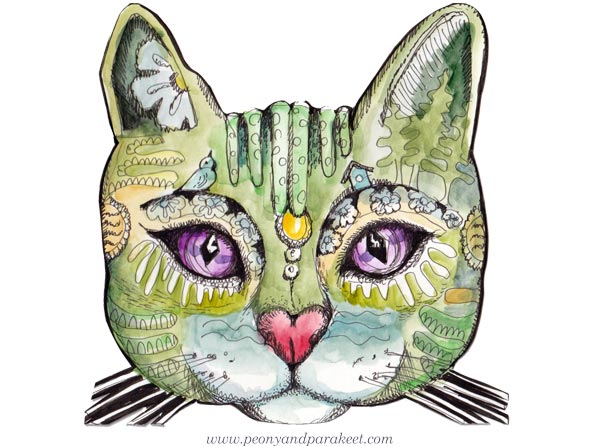
I have now made a design based on the drawing. To make sure that there are no errors in the chart, I have been stitching it myself first, going through every detail. The stitched piece is nearly finished as you can see in the picture!
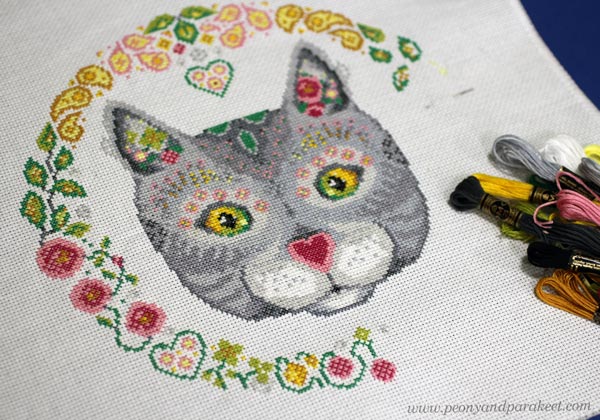
While stitching, I came up with the idea of including different colored versions of the cat to the final instructions. Maybe a black cat at least. What do you think?
I hope to get the chart for sale before December. This is a project I have been working on in the evenings.
Oil Painting – A Big Painting in Progress
My main medium – oils – were on a break for a few months so it was really nice to get a new painting started in July.
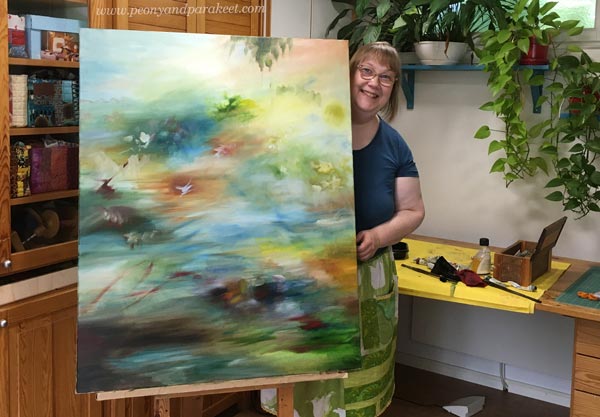
I work slowly from one layer to another, letting the painting dry between the sessions. Here’s where I am now.
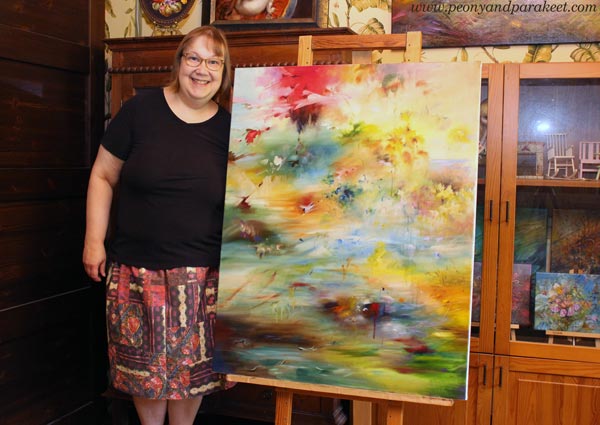
In the photo above, I am wearing a patchwork skirt sewed from the fabrics that I designed many years ago. The motifs are based on my drawings and knits.
I have still quite a lot of work to do with the painting. I hope to get it finished in October.
Digital Art – A Virtual Artwork in Progress
Transferring my painting style to digital three-dimensional modelshas been a year-long project. Watch this video to see what I made last spring for the project. The project is now coming to an end in September. I still have some things to adjust and add, but most of the things have been done.
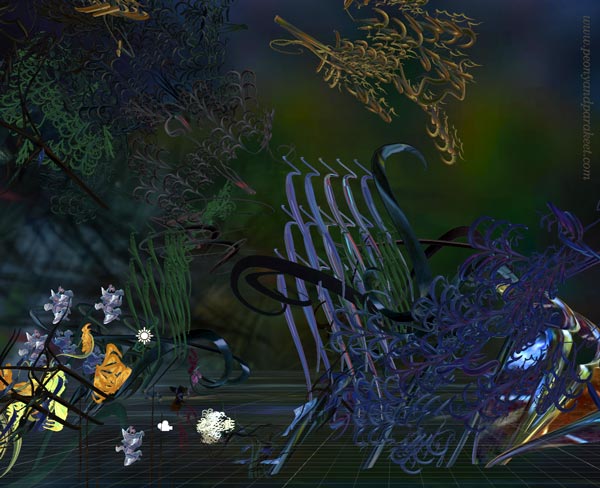
Sadly, the photos are nowhere near the overall experience that can be watched with VR glasses.
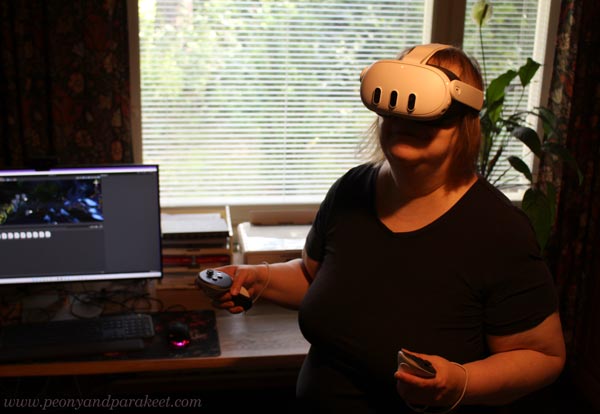
There’s a lot of movement. but also interaction: a user can move around, open a flower, create new objects etc.

Still images are not the same as seeing everything in moving 3D, but at least you get a glimpse of the atmosphere. I will make a separate video in September where I will share more of this project.
Watercolor Pencils – A New Course in Progress!

I am super-excited to announce that a new course will begin in September 16, and the registration will open next week! The course is called Joyful Coloring, and it’s about using watercolor pencils for colorful happy art.

More about the course next week. I hope you will join!