
Sneak Peek at The New Course
This week, you get to see a sneak peek at the upcoming course! The course is about expressing yourself through drawing. It’s a journey into your artistry and teaches a way to work towards your style. We will draw mostly with black pens, and then color some of the drawings with watercolors and colored pencils.
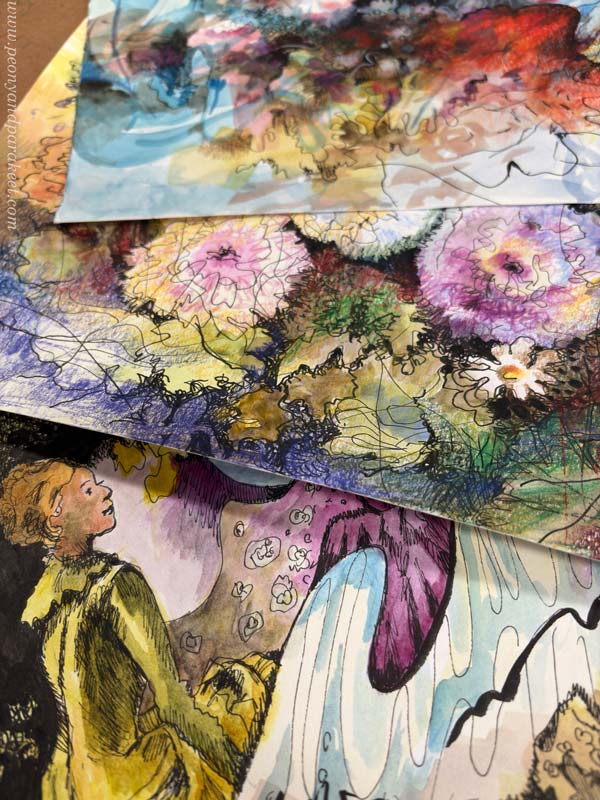
Drawing a line is in the center of the course. How to draw is not only about how to draw realistic objects so that they are recognizable, but also about how to find a living, soulful line that makes you want to pick up a pen again and again.
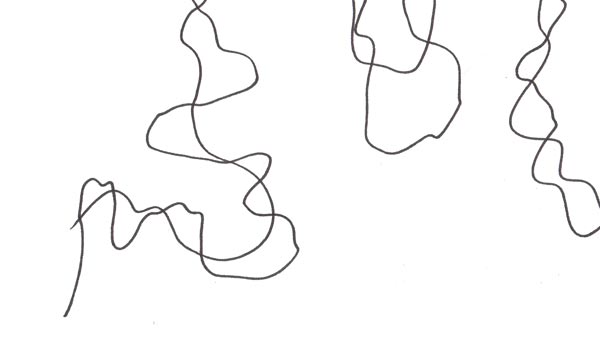
I believe that without the ability to draw, it’s impossible to create any visual art. Everything is based on a line, and thus, on drawing. And not just any kind of drawing but …
Drawing is not about sketching something that you quickly erase and change. When you draw soulfully, the pen opens up a new horizon, and you live within your drawing.
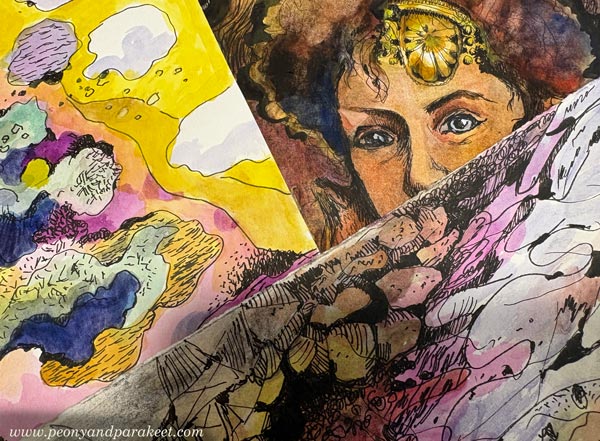
We will use reference images for some projects, but in a creative way that broadens your perspective.
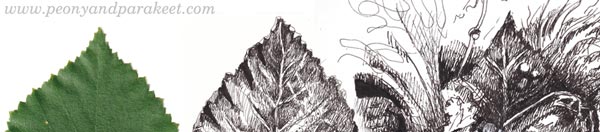
You not only learn how to draw but also how to get the most out of the practice.
Your Journey to Drawing
In Drawing Soulfully, I want you to think about your artistic roots – the cultural history that touches you. At the end of the 19th century, many artists who studied or worked in central Europe came back to Finland for the summer. They read, wrote, and painted in their summer cottages, and thus, captured the best season in their souls.
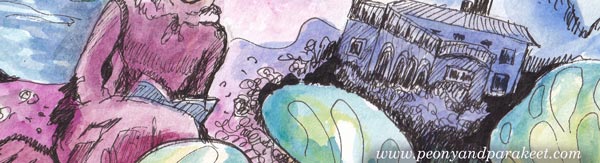
But it is also so that in the past, they didn’t have all the ways to express their emotions. There was suffocation, which no longer exists. Nowadays, we can free up our pens, the colors, and pour it all out on paper.
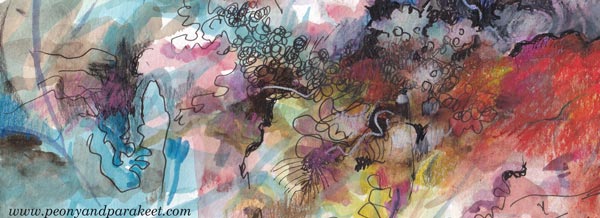
When lines are soulful, so will the art be.
Drawing Soulfully will begin on August 25th. The course will be published in three parts and will last three months. The early-bird sale will begin next week.
What do you think? Will you join me?
Drawing a Summer Ornament
This week, I want to show that an ornament can be more than just a decoration. An ornament can be a framework for expression in the same way as a portrait, a still life, or a landscape.
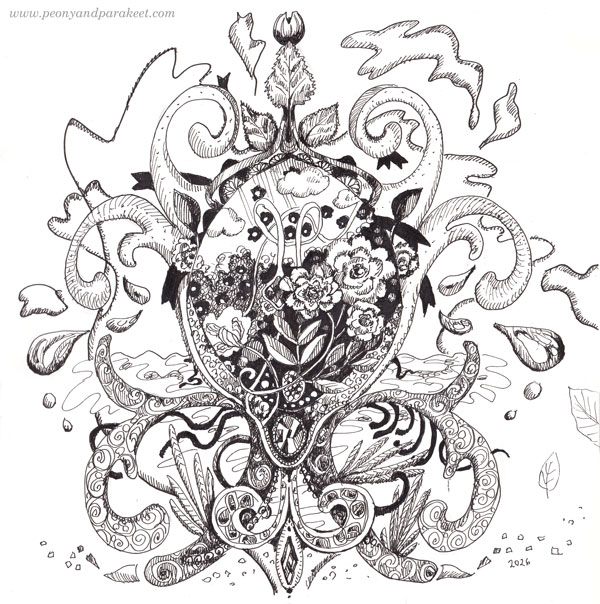
I love drawing ornaments. It feels as though the universe is shouting at me: “This is right, this is a good thing!” If I’ve had past lives, I’d think this is the work I’ve always done in some form, because it feels so natural.
Step 1 – Grid
If I decide to draw an ornament, nothing holds me back—not even the requirement of symmetry. This time, I made a grid to help me achieve similarity on both sides more easily.
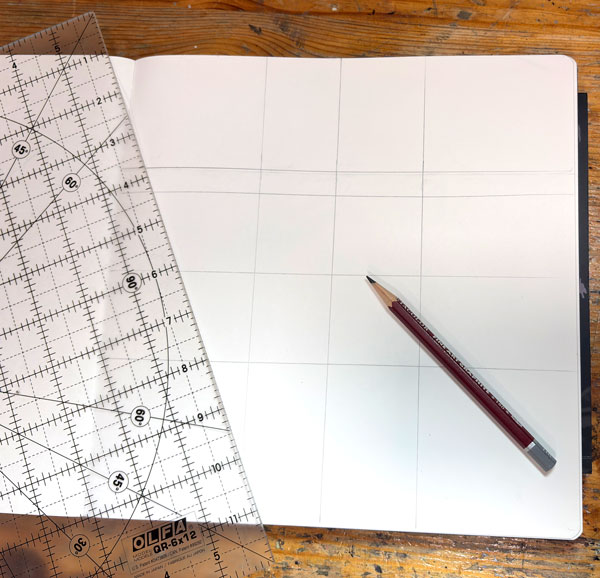
It’s good to have center guidelines, but there can be more and placed anywhere. All guidelines are helpful when drawing the ornament freely.
Step 2 – Pencil Sketch
I sketch the biggest symmetrical parts in pencil. But I try to keep this phase short because the best part of drawing ornaments is letting loose and discovering how the symmetry can be broken.
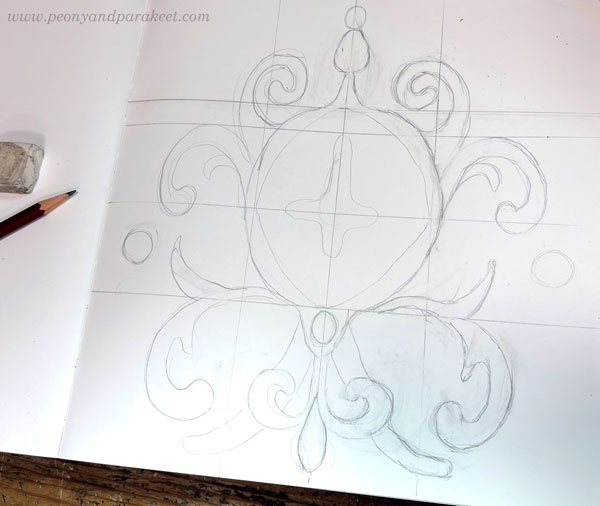
Drawing an ornament is like putting your soul into a lion’s cage and then watching it break out with cleverness, rather than violence.
Step 3 – Getting Creative with a Non-Erasable Pen
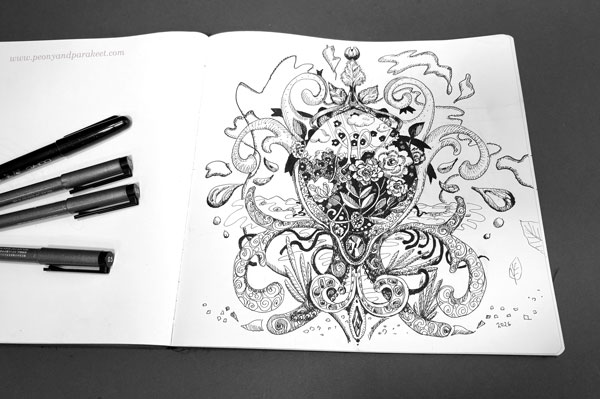
For the actual drawing, I use black markers. Here, I’m using Copic FineLiner pens and a Copic Gasenfude brush pen. An ornament is like a meandering canvas where you can draw anything. You can draw both the realistic and the abstract, and it all looks great because it’s embedded in the ornamental structure.
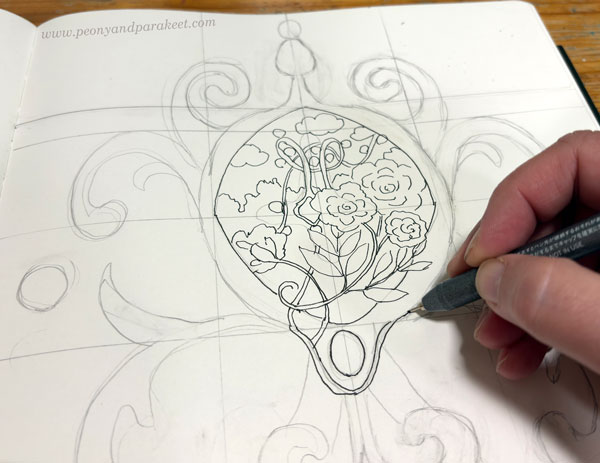
We currently have summer here in Finland, so I wanted to draw summer-related things: the sea, a garden, and birch leaves.
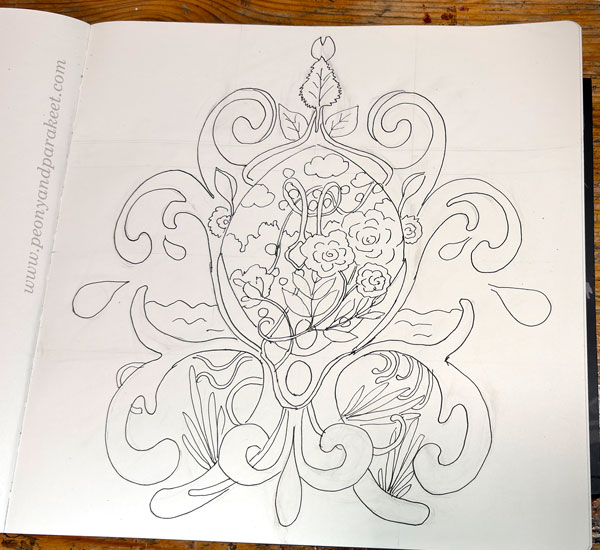
Step 4 – Getting Lost in the Details
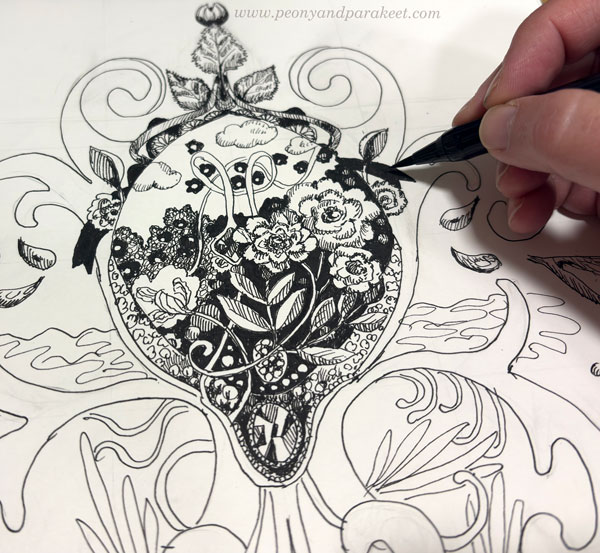
When I have most of the things in place, I put on an audiobook or a talk show and focus on the details!
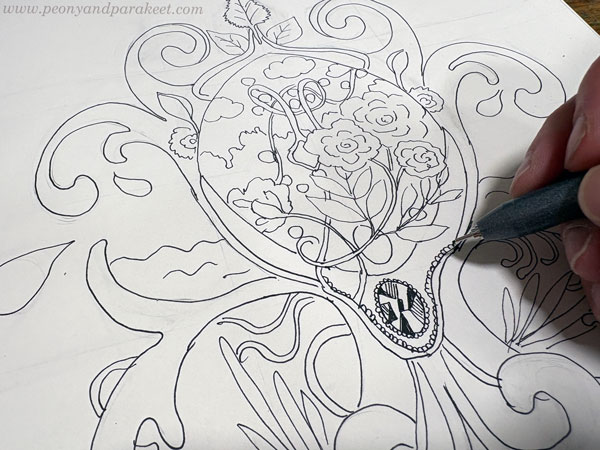
My ornaments almost always have jewels because I find them fun to draw and the result rewarding. A jewel comes to life when you draw geometric shapes with a fine pen and fill them differently.
I always include elements that are pitch-black to create contrast. The brush pen is quick in these details.
The Freedom in Drawing Ornaments
The longer I draw, the more I want to create tension and asymmetry. In this ornament, the lines took on a life of their own and spread beyond its borders. Ah, so liberating!
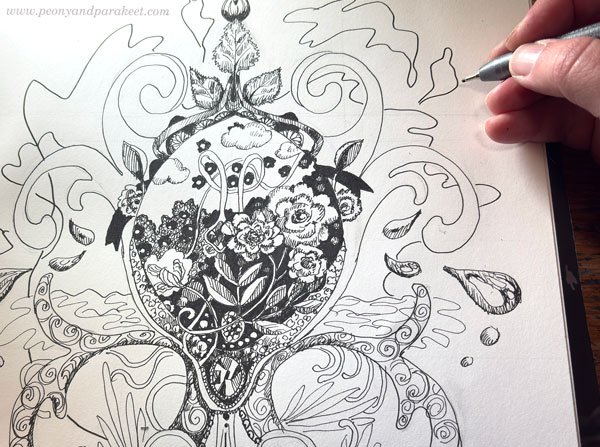
It’s exciting and even contradictory that such freedom can be evoked from a rigid ornament.
The Summer Ornament
Here you can see how I’ve used the pens for the fine details in the center.
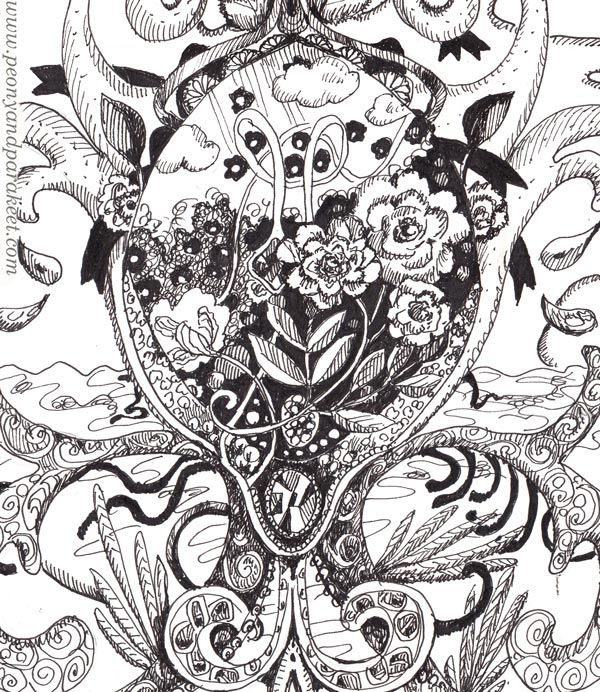
I hope this summer ornament inspires you to pick up your pens and start drawing!
For more inspiration, see also these blog posts:
Dramatic Peonies with Colored Pencils and Black Pens
This week, I have a free video for you. Create these dramatic peonies with me!
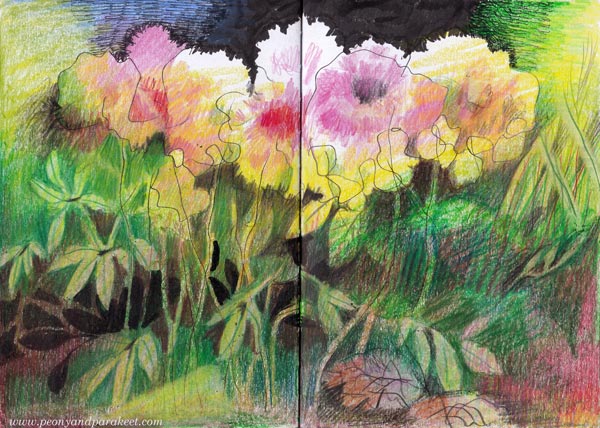
Use colored pencils to add the softness and color, and black pens to bring in the drama!
I used regular colored pencils and two black pens – thick and thin. My thick pen is the Copic Gasenfude brush pen, and the thin one is a Copic fineliner, size 0.5. You can use any brands. This is an exciting project with many things to learn.
Dramatic Peonies – Watch the Video!
By following the video, you can create your dramatic peonies. Start with the soil, and then grow a garden on it. Watch the video below!
It took me about an hour to create the dramatic peonies, so this is not a big project. The effect is based on sharp contrasts rather than details.
Dramatic Peonies and Your Living Line
In the video, I talk about discovering your living line. The longer I have been an artist, the more significant that has started to feel. When I look at my past work and compare it with the current paintings, I can see a glimpse of my style here and there. It all started with a simple line, so I wish I could inspire you to wake up your line and let it show the way. I am currently building a new course where learning from your line is the key content. Stay tuned!
Inspiration for Colored Pencil Journal
You can create dramatic peonies either on a separate sheet of paper or in an art journal. I created mine in an A5-size colored pencil journal, and the drawing fills the whole spread.
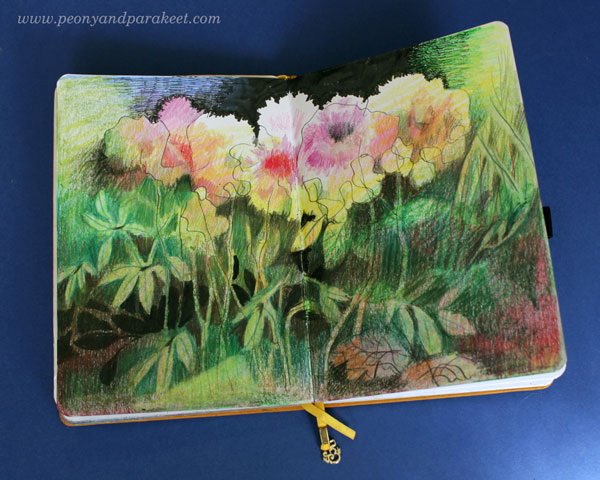
Useful links for you who want to start or make more pages for the colored pencil journal:
- Starting a Colored Pencil Journal
- All posts tagged with “Archer & Olive notebook”
- The course Fun Botanicum – Make a chapter for your colored pencil journal!
Artistic Line Drawing – What Do You Think About This Course Idea?
To me, all visual art begins with drawing. When you want to get to know yourself, draw! When you want to develop as an artist—say, as a painter—draw! To draw is to think. Make your lines come alive, and gradually, a whole new world will emerge, even on a small piece of paper. That’s what artistic line drawing is about.
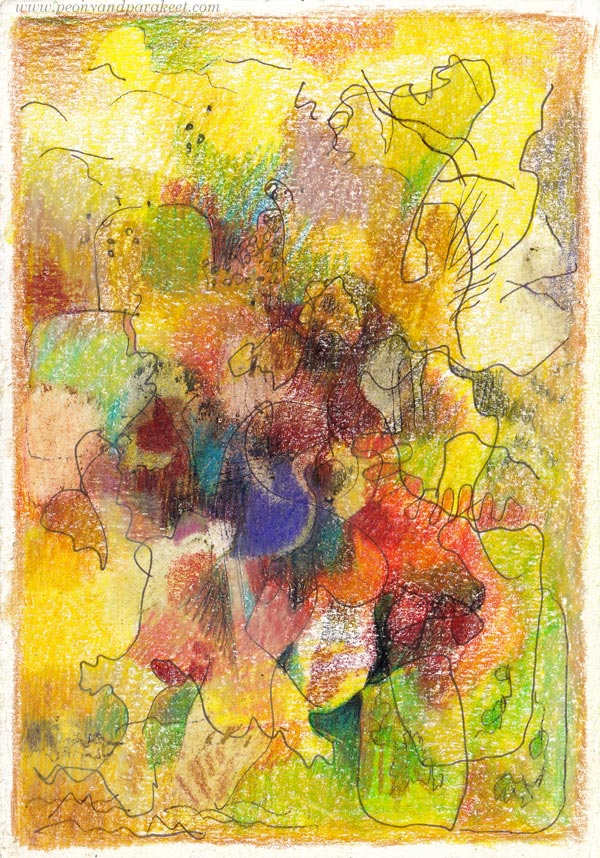
Black drawing pen and colored pencils.
Past and Present Drawing Courses
In most of my courses, drawing plays some role. Free and artistic line drawing is especially close to my heart. In the past, I have taught two courses on the subject: Inspirational Drawing and Inspirational Drawing 2.0. These are already retired. Of my current courses, Mystical Minis comes closest to these.

Passion For Teaching Artistic Line Drawing
For some time, I have wanted to offer more help with line drawing. Not just how to draw, but also how to alter the process to take it in a more artistic direction. By “artistic,” I mean moving beyond the conventional and creating something that is both personal and at least partly abstract. I want to speak especially to those of you who want to create freely and push your boundaries—both in how you think and how you create.
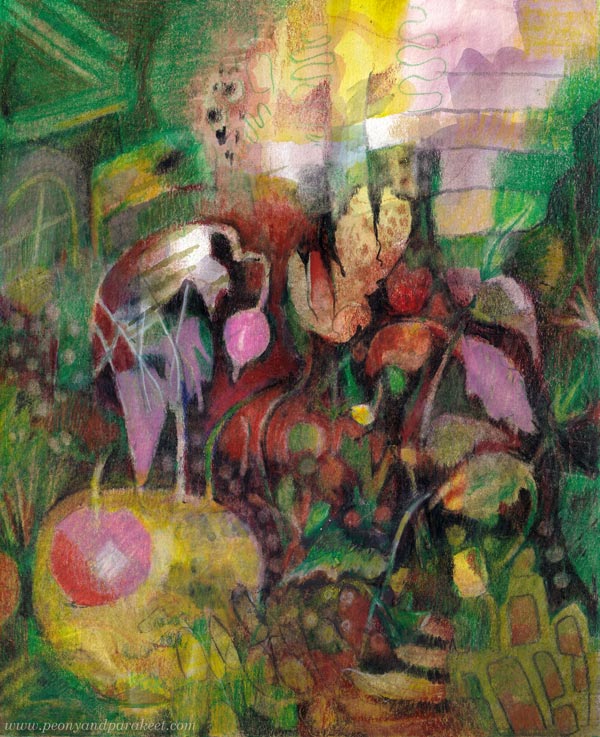
Watercolors and colored pencils.
At first, I thought the material I had gathered over the past few months would be just for these blog posts. But as I have started to unpack the topics, I find myself wanting to share more than what fits into a single post—to show things in both theory and practice. So, I’ve started developing a new course, under the working title Artistic Drawing.
Artistic Line Drawing – Course Themes
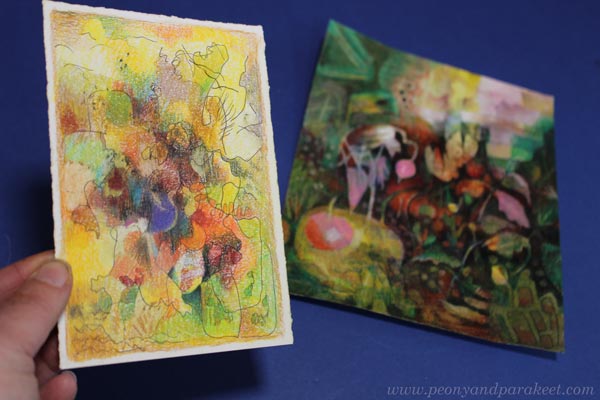
Here are the themes I have selected for the upcoming course:
- Ways to Start a Drawing: I want to help you explore how you begin. You can approach your drawing like an architect, building a clear structure first—or like a gardener, letting everything grow from a single seed.
- Letting Go: If drawing does not make sense and feels directionless, letting go can be difficult. I want to give tips on how to feel free and draw anything without too much inner resistance.
- Interaction: I want to help you notice the possibilities of interaction in the creative process. This is about both how you speak to yourself and how you work with drawing. For example, a line you draw can invite another line to join the conversation.
- The Scale of Shapes: An impressionist draws in a pixel-like manner, placing tiny dots one after another. An expressionist creates larger, vector-like shapes. I want to help you use both approaches and find the combination you enjoy most.
- Presence: At its best, your drawing radiates presence. I want to help you become like a singer who doesn’t just go through the notes, but pours their whole soul out to the audience.
- Clarity: You can begin a drawing with plenty of elements, but towards the end, it is worth striving for clarity. I want to help you discover a minimalism that is not based on scarcity, but on the ability to pick the essential.
- Sense of Style: I want to help you find the things you want to add to your drawings, and the ones you want to get rid of. It is not just about developing a style, but also about developing your sense of style.
Which of these themes interests you the most? What else do you hope to be included in the course?